


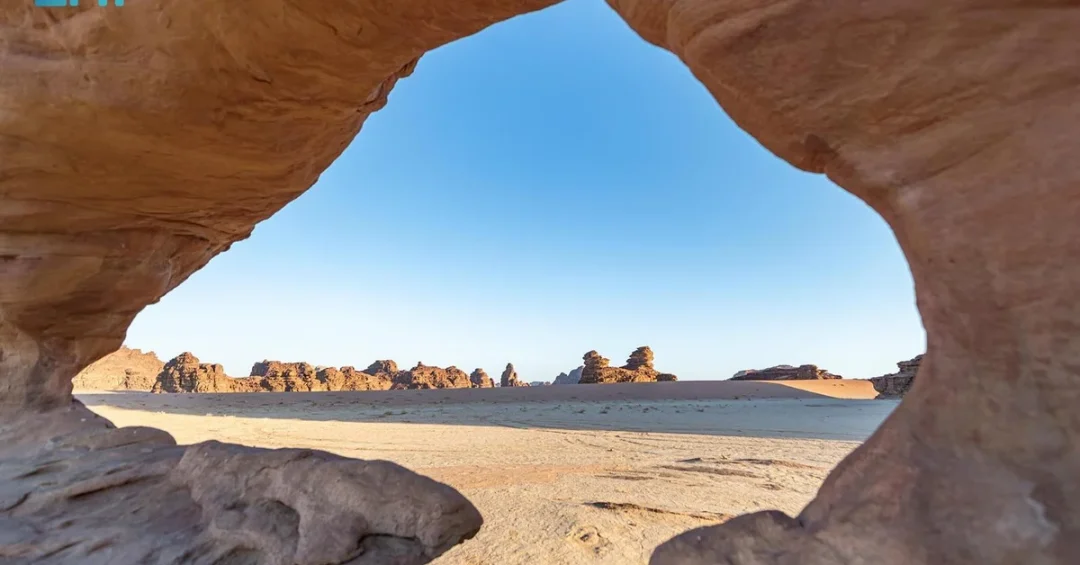
The Hisma Desert in northwestern Saudi Arabia’s Tabuk region hosts a remarkable collection of naturally formed rock arches, according to the Saudi Press Agency (SPA). These geological formations, described as exceptional natural marvels, draw tourists and researchers alike with their unique circular shapes and intricate patterns that become more detailed upon closer inspection. The arches, located both in the heart and along the peripheries of the desert, stand as testaments to the enduring power of natural processes over millennia.
Context and Background
The Hisma Desert, part of the larger Arabian Desert system, is known for its ancient sandstone landscapes that have been shaped by wind and erosion over millions of years. Scientific studies cited by SPA attribute the formation of these rock arches to the combined effects of wind and underlying geological composition. Wind acts as the primary agent, propelling sand particles along the incline of fossilized terrain and causing accumulation on leeward sides. Over vast time scales, this cyclic process molds distinctive arches, with factors such as wind velocity, sediment availability, and geological composition determining their size, configuration, and evolutionary stage.
Key Details
These arches are typically found in sandy regions with stable rock foundations, and the specific conditions of the Hisma Desert enhance their beauty and uniqueness. The desert’s location in the western part of the Tabuk region, near the Red Sea, contributes to its distinctive geological features. The SPA report highlights that these structures captivate explorers and prompt contemplation on the temporal and spatial dimensions of landscapes, reflecting Saudi Arabia’s commitment to showcasing its natural heritage.
Implications and Impact
The recognition of the Hisma Desert’s rock arches supports Saudi Arabia’s growing tourism sector, particularly under the Vision 2030 initiative to diversify the economy. The Tabuk region, including the NEOM project area, is emerging as a hub for sustainable tourism and geological research. International travelers and geologists are increasingly drawn to the Kingdom’s lesser-known natural wonders, which offer unique opportunities for eco-tourism and scientific study. This development also reinforces Saudi Arabia’s role as a custodian of unique natural environments, aligning with global conservation efforts.
Vision 2030 Alignment
The preservation and promotion of the Hisma Desert’s geological wonders align directly with Saudi Arabia’s Vision 2030 goals of diversifying the economy through tourism and environmental stewardship. By highlighting such natural assets, the Kingdom aims to attract international visitors seeking authentic experiences while fostering a deeper appreciation for its natural heritage. As Saudi Arabia continues to open its doors to the world, the Hisma Desert’s rock arches stand as enduring symbols of nature’s artistry and the Kingdom’s commitment to sustainable development for future generations.
20 Questions
Q1. What are the rock arches in the Hisma Desert?
A1. The rock arches are natural geological formations found in the Hisma Desert, Tabuk region, known for their circular shapes and intricate patterns shaped by wind and erosion over millennia.
Q2. Where is the Hisma Desert located?
A2. The Hisma Desert is located in the western part of the Tabuk region in northwestern Saudi Arabia, near the Red Sea coastal area.
Q3. How are the rock arches scientifically explained?
A3. Scientific studies attribute their formation to wind propelling sand particles along fossilized terrain, accumulating on the leeward side in a cyclic process influenced by wind velocity and sediment availability.
Q4. When was the discovery of these arches reported?
A4. The Saudi Press Agency reported on the rock arches on August 11, 2024, highlighting them as geological marvels attracting tourists and researchers.
Q5. Why are these rock arches considered unique?
A5. Their unique circular shapes, detailed patterns, and size variability due to local geological conditions make them stand out among natural formations in arid regions.
Q6. What role does wind play in forming rock arches?
A6. Wind acts as the primary agent, carrying sand particles that erode and sculpt the rock over time, creating the distinctive arch shapes seen today.
Q7. How does the Hisma Desert’s geology contribute to arch formation?
A7. The stable rock foundations and sandy terrain in the Hisma Desert provide ideal conditions for wind-driven erosion to shape and preserve these arches.
Q8. Who benefits from the presence of the rock arches?
A8. Tourists, geologists, and local communities benefit through increased tourism, scientific research opportunities, and economic development under Vision 2030.
Q9. What is the significance of the Tabuk region in this context?
A9. Tabuk region is emerging as a hub for sustainable tourism and geological research, supporting Saudi Arabia’s economic diversification goals.
Q10. How does this relate to Vision 2030?
A10. Showcasing natural wonders like the rock arches aligns with Vision 2030’s aims to diversify the economy through tourism and environmental conservation.
Q11. Are there other similar formations in Saudi Arabia?
A11. Yes, Saudi Arabia has various geological wonders, including rock arches in other deserts, each shaped by local environmental processes over millions of years.
Q12. Can visitors access the Hisma Desert arches?
A12. Yes, the arches are accessible to tourists, with the Saudi government supporting eco-tourism initiatives to promote responsible visitation and preservation.
Q13. What is the size range of these rock arches?
A13. The size and configuration vary based on wind velocity, sediment availability, and geological composition, resulting in a diverse range of arch dimensions.
Q14. How long did it take for these arches to form?
A14. The formation process occurs over millions of years through continuous wind and erosion cycles, reflecting the gradual power of natural forces.
Q15. What is the Hisma Desert’s climate like?
A15. The Hisma Desert has an arid climate with strong winds, which are key factors in shaping the rock arches through persistent sand particle movement.
Q16. Why are rock arches important for scientific study?
A16. They provide insights into geological processes, climate history, and erosion patterns, helping researchers understand environmental changes over long time scales.
Q21. What makes the Hisma Desert special for geological tourism?
A21. Its unique combination of stable rock foundations, sandy terrain, and wind patterns creates ideal conditions for spectacular arches, attracting eco-tourists and geologists.
Q18. Are there any conservation efforts for these arches?
A18. The Saudi government promotes sustainable tourism and conservation through Vision 2030, ensuring these natural wonders are preserved for future generations.
Q19. How do the arches impact local tourism?
A19. The arches attract international visitors, boosting local economies and supporting the development of tourism infrastructure in the Tabuk region.
Q20. What is the main takeaway about Hisma Desert’s rock arches?
A20. They are stunning examples of nature’s artistry, formed by wind and erosion over millions of years, and represent Saudi Arabia’s commitment to showcasing its natural heritage under Vision 2030.
Reader Feedback
We value your thoughts. Please share your feedback on this article.
Your feedback helps us improve our coverage.