


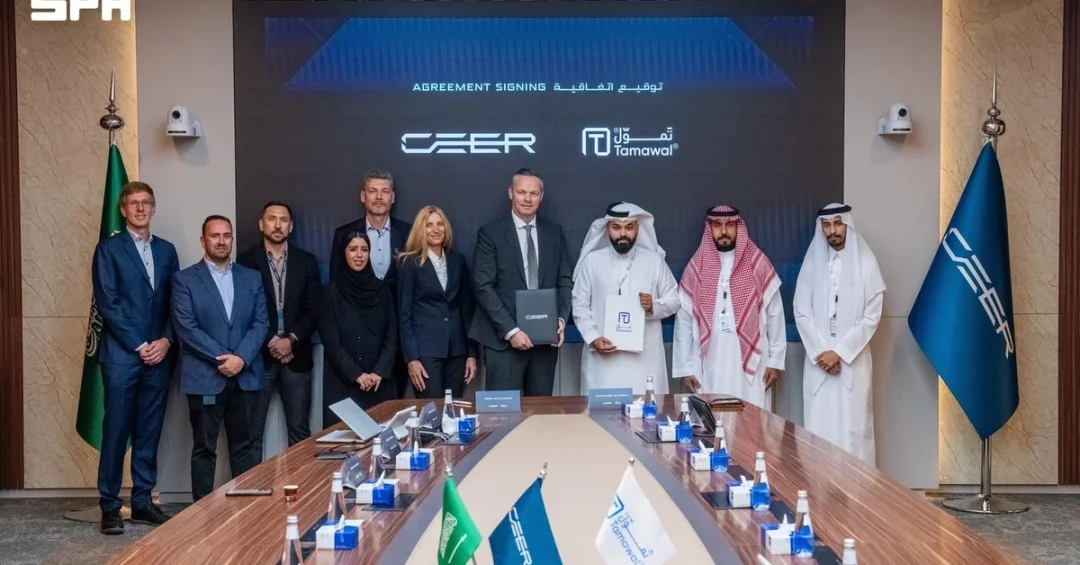
CEER, Saudi Arabia’s first homegrown automotive brand and original equipment manufacturer (OEM), has signed an agreement with Tamawal Digital Brokerage Company to deploy and operate a fully embedded digital automotive financing marketplace, according to an announcement carried by the Saudi Press Agency (SPA). The partnership, disclosed in Riyadh on November 29, 2026, brings together the Kingdom’s flagship electric vehicle manufacturer and a leading digital financing broker licensed and regulated by the Saudi Central Bank (SAMA). Under the arrangement, Tamawal will provide a technology-as-a-service (TaaS) platform integrated directly into CEER’s online vehicle configurator and buying journey, allowing customers to arrange vehicle financing entirely online. The agreement marks one of the clearest examples yet of how Saudi Arabia’s industrial ambitions are being paired with its rapidly maturing digital financial infrastructure, and it signals a new phase in the consumer experience of buying a vehicle in the Kingdom.
The announcement positions CEER not merely as a carmaker but as a builder of an integrated digital ecosystem around mobility. For an international audience accustomed to separate steps of choosing a vehicle, visiting a bank, and finalizing paperwork, the concept represents a meaningful shift: the financing decision is folded into the vehicle purchase itself. Officials from both organizations framed the deal as a step toward a more digital, customer-centric financial sector, explicitly linking the initiative to Saudi Vision 2030. The development comes as Saudi Arabia accelerates efforts to localize advanced manufacturing while modernizing consumer finance, two priorities that intersect directly in the electric vehicle market.
Context and Background
Why does an automotive financing agreement warrant attention beyond the showroom? The answer lies in the broader transformation of Saudi Arabia’s industrial and financial landscape. CEER was established as the Kingdom’s first domestic automotive brand and OEM, conceived to anchor a local electric vehicle manufacturing base and to support the diversification of the national economy away from hydrocarbon dependence. Its emergence reflects a deliberate strategy to build domestic capabilities in design, engineering, and production of electric vehicles — a sector positioned at the center of the global energy transition. The Tamawal agreement extends that strategy into the customer-facing dimension of the business, recognizing that owning an electric vehicle is as much a financial decision as an engineering one.
Tamawal, for its part, operates as a digital financing broker licensed and regulated by the Saudi Central Bank (SAMA). That regulatory status matters: it means the platform operates within a supervised framework designed to protect consumers while encouraging innovation in financial services. SAMA has been active in fostering a digital-first financial sector, and brokerages like Tamawal represent a newer category of regulated intermediaries connecting consumers with financial institutions. By integrating such a licensed broker into its configurator, CEER is aligning its commercial model with the Kingdom’s broader regulatory direction, where transparency, compliance, and digital efficiency are treated as interconnected priorities. The context is therefore not simply one company’s commercial convenience, but the maturation of a national ecosystem.
How did the vehicle-buying experience in Saudi Arabia arrive at this moment? Historically, arranging auto finance involved multiple in-person touchpoints — visiting a dealership, submitting documents to a bank branch, awaiting credit assessment, and coordinating between lenders and sellers. The digital economy has steadily compressed that process, and the COVID-era acceleration of online services reinforced consumer expectations for end-to-end digital journeys. CEER’s decision to embed financing into its online configurator reflects both technological capability and changing consumer habits. The Tamawal platform’s direct connectivity with national digital infrastructure enables real-time identity verification and income validation — capabilities that only recently became feasible at scale, and which now underpin a genuinely seamless online purchase.
Key Details of the Embedded Financing Marketplace
What exactly will customers experience under the new arrangement? According to the official announcement, Tamawal will provide a TaaS digital financing platform directly integrated into CEER’s online vehicle configurator and buying journey. This integration allows customers to explore tailored financing packages, check affordability, compare competitive bank rates, and track applications end-to-end — all without visiting branches or contacting lenders separately. In practical terms, a customer configuring a CEER vehicle online can move from vehicle selection to financing in a continuous digital flow, with multiple financing options presented transparently. The platform’s centralized order management capabilities enable real-time eligibility assessments, streamlined operations, and seamless coordination across the automotive value chain.
The technical backbone is equally significant. The platform delivers an end-to-end automated origination and compliance workflow, leveraging direct connectivity with key national digital infrastructure to enable real-time identity verification, income validation, credit assessment, anti-money laundering (AML) screening, and anti-fraud checks. These are the essential controls that any responsible lender requires, now automated within a single journey. While CEER maintains commercial relationships with participating banks and finance providers, Tamawal acts as the licensed digital broker, connecting buyers directly with financial institutions to secure pre-approved and highly competitive financing rates. The division of roles is clear: CEER owns the customer relationship and the vehicle, Tamawal owns the regulated brokerage and technology layer, and the banks provide the capital.
Leadership from both organizations described the collaboration in forward-looking terms. Joerg Schuessler, Chief Financial Officer at CEER, said: “With Tamawal, we are giving CEER customers a seamless digital path to trusted financing options, all in one place. The marketplace is also built to grow with us, opening CEER’s ecosystem to financial partners and supporting the Kingdom’s vision for a more digital, customer-centric financial sector.” Mohammed Alhathel, Chief Executive Officer at Tamawal, said: “We are proud to partner with CEER on a vision that fundamentally simplifies auto-financing. As a licensed digital broker, our mission is to leverage our smart financial technology to bring the most competitive rates directly to the consumer. Together, we are eliminating friction, bridging the gap between mobility and digital banking, and setting a brand-new benchmark for customer convenience in Saudi Arabia.” The statements underscore that the partnership is intended as a scalable platform rather than a one-off service arrangement.
International and Regional Impact
What does this mean for global observers of Saudi Arabia’s automotive and financial sectors? The agreement offers a concrete illustration of how the Kingdom is seeking to position itself as a regional hub for both advanced manufacturing and digital finance. For international automotive brands and financial technology firms, the CEER-Tamawal model demonstrates a template in which financing is embedded into the purchase journey by a domestic OEM and a licensed local broker. That template could influence how other manufacturers and lenders structure their offerings across the Gulf, where digital adoption is high and regulators are receptive to supervised innovation. It also reinforces Saudi Arabia’s credentials as a market where consumers can expect sophisticated digital services comparable to global benchmarks.
Regionally, the move aligns with a broader convergence of mobility and digital banking across the Middle East. Consumers increasingly expect the convenience of comparing financing options online, and regulated digital brokerages are emerging as a channel connecting buyers to institutions. By integrating with national digital infrastructure, the CEER marketplace leverages sovereign-grade verification and screening capabilities. For international partners — whether banks, finance companies, or technology providers watching the region — the agreement signals that Saudi Arabia’s electric vehicle ecosystem is being built with interoperability and partner participation in mind. Schuessler’s remark that the marketplace is “built to grow” and “opening CEER’s ecosystem to financial partners” points directly to this outward-facing, collaborative design.
Economic and Strategic Significance
Why does embedding finance into a vehicle configurator carry economic weight beyond convenience? Auto financing is a major driver of vehicle sales, and reducing friction in the financing journey can meaningfully support demand for CEER’s vehicles as they reach the market. A smooth path from configuration to approval shortens the sales cycle, lowers abandonment at the financing stage, and widens access for buyers who might otherwise find the process intimidating or time-consuming. For a new domestic brand seeking to establish itself, a seamless financing experience is a competitive asset. The arrangement also allows CEER to concentrate on manufacturing quality and design while relying on a regulated specialist for the financial workflow.
Strategically, the agreement illustrates the multiplier effect of Vision 2030: localizing manufacturing creates industrial capability, which attracts financial innovation, which in turn improves the consumer experience and supports further growth. Tamawal’s role as a licensed digital broker demonstrates how regulatory frameworks can enable new business models rather than merely constrain them. By leveraging direct connectivity with national digital infrastructure, the platform also contributes to the broader digitization of the financial sector that Saudi Arabia has pursued as a national priority. The partnership reflects both companies’ commitment to digital innovation, customer experience, regulatory compliance, and long-term ecosystem growth — a combination that is increasingly central to the Kingdom’s economic strategy.
Vision 2030 Alignment
How does this partnership embody the goals of Saudi Vision 2030? The initiative sits at the intersection of several core objectives: economic diversification through domestic manufacturing, development of the digital economy, and the enhancement of financial services for consumers and businesses alike. CEER represents the localization of an advanced industry, while Tamawal represents the growth of a regulated digital finance sector. Their collaboration transforms both ambitions into a tangible consumer service. It also supports the broader drive to build a knowledge-based, technology-enabled economy, where Saudi-based companies develop and operate sophisticated digital platforms in partnership with national infrastructure.
Looking ahead, the CEER-Tamawal agreement signals that Saudi Arabia’s mobility future will be built as much on digital rails as on assembly lines. For international readers seeking to understand the Kingdom’s modernization, the message is clear: industrial ambition and financial innovation are being woven together deliberately, with regulatory compliance as a foundation rather than an afterthought. As CEER’s ecosystem expands and additional financial partners join the marketplace, the model is positioned to strengthen consumer access to competitive financing while reinforcing the Kingdom’s reputation for digital-first, customer-centric services. The partnership is a practical expression of Vision 2030’s promise — a diversified economy, a modern financial sector, and a better experience for the people it serves.
20 Questions
Q1. What agreement did CEER sign with Tamawal?
A1. CEER signed an agreement with Tamawal Digital Brokerage Company to deploy and operate a fully embedded digital automotive financing marketplace integrated into its online vehicle configurator and buying journey.
Q2. When and where was the agreement announced?
A2. The agreement was announced in Riyadh on November 29, 2026, and reported through the Saudi Press Agency (SPA), the Kingdom’s official news authority.
Q3. What is CEER?
A3. CEER is Saudi Arabia’s first homegrown automotive brand and original equipment manufacturer (OEM), established to build a domestic electric vehicle manufacturing base supporting the Kingdom’s economic diversification.
Q4. What is Tamawal Digital Brokerage Company?
A4. Tamawal is a leading digital financing broker licensed and regulated by the Saudi Central Bank (SAMA), connecting consumers with financial institutions through smart financial technology.
Q5. What is a technology-as-a-service platform?
A5. A technology-as-a-service (TaaS) platform delivers technology capabilities as a hosted service. In this case, Tamawal provides the digital financing marketplace technology integrated into CEER’s online purchase journey.
Q6. How does the platform help CEER customers?
A6. It enables customers to explore tailored financing packages, check affordability, compare competitive bank rates, and track applications end-to-end without visiting branches or contacting lenders separately.
Q7. What is the role of CEER in the partnership?
A7. CEER maintains commercial relationships with participating banks and finance providers, owns the customer relationship and vehicle offerings, and integrates the financing marketplace into its buying journey.
Q8. What is the role of Tamawal in the partnership?
A8. Tamawal acts as the licensed digital broker, operating the technology platform and connecting buyers directly with financial institutions to secure pre-approved and highly competitive financing rates.
Q9. What compliance processes does the platform automate?
A9. The platform automates identity verification, income validation, credit assessment, anti-money laundering (AML) screening, and anti-fraud checks through direct connectivity with national digital infrastructure.
Q10. Why is SAMA regulation important?
A10. SAMA regulation means Tamawal operates within a supervised framework that protects consumers while encouraging innovation, digital efficiency, and transparency in financial services.
Q11. What did CEER’s Chief Financial Officer say?
A11. Joerg Schuessler said the partnership gives customers a seamless digital path to trusted financing in one place and supports the Kingdom’s vision for a more digital, customer-centric financial sector.
Q12. What did Tamawal’s Chief Executive Officer say?
A12. Mohammed Alhathel said the partnership simplifies auto-financing, brings competitive rates directly to consumers, eliminates friction, and sets a new benchmark for customer convenience in Saudi Arabia.
Q13. How does the platform support end-to-end processing?
A13. It delivers an automated origination and compliance workflow combined with centralized order management, enabling real-time eligibility assessments and seamless coordination across the automotive value chain.
Q14. What economic benefits does embedded financing offer?
A14. It shortens the sales cycle, lowers abandonment at the financing stage, and widens access for buyers, supporting demand for CEER’s vehicles as they reach the market.
Q15. How does the agreement relate to Vision 2030?
A15. It aligns with Vision 2030 goals of economic diversification, digital economy growth, and enhanced financial services, linking domestic manufacturing with regulated digital finance innovation.
Q16. What does “built to grow with us” mean for CEER’s ecosystem?
A16. It indicates the marketplace is designed to scale and open CEER’s ecosystem to additional financial partners over time, rather than serving as a fixed, one-off service arrangement.
Q17. What national infrastructure does the platform connect to?
A17. It leverages direct connectivity with key national digital infrastructure to enable real-time identity verification, income validation, credit assessment, AML screening, and anti-fraud checks.
Q18. Why does this matter for international audiences?
A18. It illustrates Saudi Arabia’s progress in building a sophisticated consumer finance and mobility ecosystem, offering a template for how financing can be embedded into vehicle purchases across the region.
Q19. Does the platform replace bank branches?
A19. It streamlines the journey by automating steps online, while banks and finance providers continue to supply capital. CEER maintains relationships with participating banks and finance providers.
Q20. What is the broader significance for Saudi Arabia’s automotive sector?
A20. The partnership demonstrates how the Kingdom’s industrial ambitions and digital financial innovation are being combined to deliver a modern, customer-centric experience, reinforcing the nation’s drive toward a diversified, technology-enabled economy.
Reader Feedback
We value your thoughts. Please share your feedback on this article.
Your feedback helps us improve our coverage.
Related articles
 20th Jeddah International Motor Show Concludes
 Commerce Ministry Recalls 4,565 Toyota Urban Cruisers
 Jeddah Motor Show 2026 Highlights Tech Innovation
 Jeddah International Motor Show Opens 20th Edition
 Jeddah Motor Show Highlights Four Powertrain Technologies Shaping Future Mobility in Saudi Arabia
 Jeddah International Motor Show Draws 10,000+ Visitors