


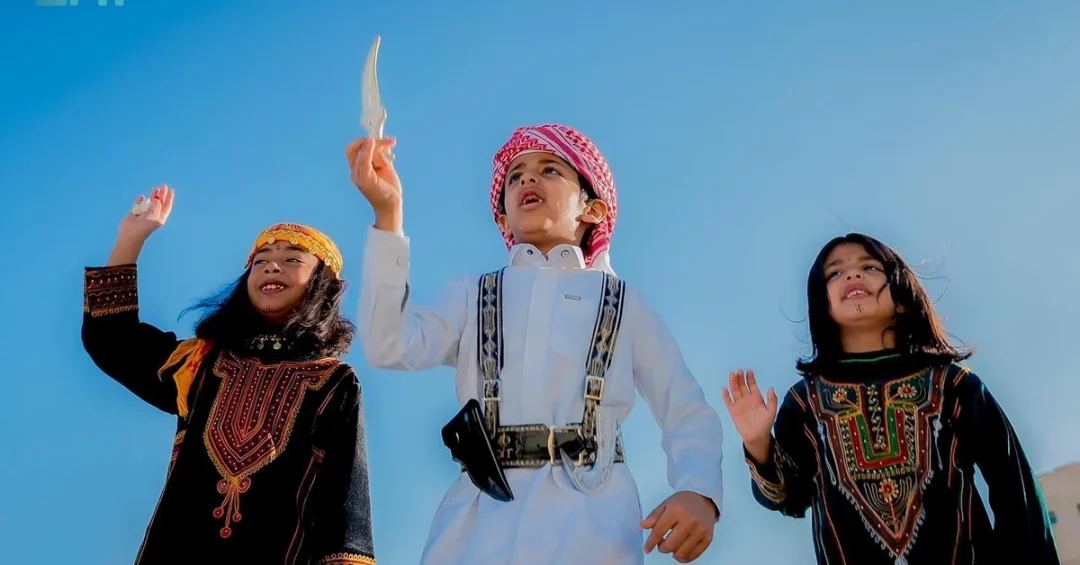
The people of Al-Baha Region celebrated Eid Al-Fitr in a vibrant atmosphere filled with enthusiasm and tradition, with the UNESCO-inscribed Alardah dance standing out as the centerpiece of folkloric performances in public squares and arenas across the region, the Saudi Press Agency reported on March 31, 2025. The traditional performance, which blends folk poetry with rhythmic drumbeats and coordinated group movements, embodied a profound sense of unity and pride among residents and visitors alike, making it the defining feature of this year’s Eid festivities in the southwestern highlands of the Kingdom.
Across several villages in Al-Baha, local troupes delivered exceptional Alardah performances that drew enthusiastic engagement from crowds of residents and visitors. The rhythmic beats of drums and traditional chants added a unique dimension to the performances, while participants completed the scene by wearing traditional attire that reflects the cultural identity of Al-Baha’s people. The celebrations underscored how Saudi Arabia’s cultural heritage continues to thrive as a living, breathing part of national life, even as the Kingdom accelerates its modernization under Vision 2030. For international observers, the scenes in Al-Baha offer a window into the authenticity and continuity of Saudi traditions that are being preserved, promoted, and shared with the world.
Context and Background
Why does a centuries-old dance continue to command such devotion in an era of rapid transformation? The answer lies in the deep-rooted cultural fabric of Saudi Arabia, where traditions like Alardah are not relics of the past but dynamic expressions of community identity. Alardah, inscribed by UNESCO on the Representative List of the Intangible Cultural Heritage of Humanity in 2015, is a traditional performing art that combines synchronized dancing, drumming, and the recitation of folk poetry. It is performed across the Kingdom, but each region, including Al-Baha, has developed its own distinct style, rhythm, and attire, reflecting local history and geography.
Al-Baha Region, known for its mountainous terrain, mild climate, and rich agricultural heritage, has long been a custodian of Saudi folk traditions. The region’s villages, such as those in the Baljurashi and Al-Mandaq governorates, have preserved Alardah as a communal activity performed during Eid, weddings, and national occasions. The involvement of local troupes in this year’s Eid celebrations highlights a generational chain of transmission, where elders pass down the poetry, drum patterns, and dance steps to younger participants. This continuity is central to Saudi Arabia’s cultural policy, which emphasizes heritage preservation as a pillar of national identity and a bridge to the global community.
The timing of the celebrations, immediately following the holy month of Ramadan, adds spiritual and social significance. Eid Al-Fitr is a time of joy, family reunions, and communal gatherings, and Alardah provides a structured yet exuberant way for communities to express gratitude and solidarity. The Saudi Press Agency’s coverage of the event reflects the official recognition of such traditions as assets of national pride and tools for cultural diplomacy.
Key Details of the Celebrations
What made this year’s Alardah performances in Al-Baha particularly memorable? According to the Saudi Press Agency, several villages hosted exceptional displays, with local troupes demonstrating impressive coordination and artistic skill. Participants formed lines or circles, moving in unison to the beat of large drums, while poets recited verses that celebrated community values, historical events, and religious devotion. The performances took place in public squares and dedicated arenas, allowing large audiences to gather and participate in the festive atmosphere.
The traditional attire worn by performers was a visual highlight, featuring colorful garments that reflect Al-Baha’s cultural identity. Men typically wear the thawb, a long white robe, often paired with a headdress and a bisht or cloak, while the drummers and dancers may add region-specific accessories. The attire is not merely decorative; it signals respect for the occasion and connects participants to their ancestors who performed the same dances in the same landscapes. The rhythmic beats of the drums, described by SPA as adding a unique dimension to the performances, served as the heartbeat of the celebration, driving the energy and synchronizing the movements of the dancers.
Residents and visitors alike engaged enthusiastically, with many joining the performances or cheering from the sidelines. The presence of visitors from other regions and countries underscores the growing appeal of Saudi cultural tourism, a sector that Vision 2030 aims to expand. The Alardah performances in Al-Baha thus served a dual purpose: reinforcing local identity and showcasing Saudi heritage to a broader audience.
International and Regional Impact
How does a regional folkloric celebration resonate beyond Saudi borders? Alardah’s UNESCO inscription already gives it global recognition as a shared human heritage. When international media and cultural organizations observe events like the Eid celebrations in Al-Baha, they see a Kingdom that values its roots while embracing openness. This narrative counters outdated perceptions and aligns with Saudi Arabia’s broader efforts to position itself as a destination for cultural exchange and tourism. Regional neighbors in the Gulf and the wider Arab world share similar traditions of drumming and group dance, and Saudi Arabia’s stewardship of Alardah can foster cultural diplomacy and mutual understanding.
Moreover, the celebration in Al-Baha contributes to the Kingdom’s soft power. By highlighting the diversity of its regions, from the coastal cities to the mountainous south, Saudi Arabia presents a multifaceted cultural landscape that appeals to travelers seeking authentic experiences. The Saudi Press Agency’s reporting on the event is part of a consistent effort to document and share such moments with international audiences. In a world where cultural tourism is highly competitive, Saudi Arabia’s intangible heritage, including Alardah, offers a unique selling point that complements its architectural and natural attractions.
Economic and Strategic Significance
What economic value can be derived from a traditional dance? The answer lies in the broader ecosystem of cultural tourism, handicrafts, and event management. The Eid celebrations in Al-Baha attracted visitors who spent on accommodation, food, and local products, providing a direct boost to the regional economy. As Saudi Arabia invests in tourism infrastructure under Vision 2030, including the development of Al-Baha as a destination for nature and heritage tourism, events like these serve as pilots for sustainable cultural festivals. The Alardah performances also create opportunities for local artisans who craft drums, costumes, and other heritage items, preserving skills and generating income.
Strategically, the promotion of Alardah supports the Kingdom’s goal of diversifying its economy away from oil. Cultural heritage is a renewable resource that can be leveraged year after year. By integrating Alardah into national events and international expos, Saudi Arabia can attract cultural tourists, researchers, and artists, fostering a creative economy. The Ministry of Culture, established in 2018, has made heritage preservation a priority, and the Al-Baha celebrations exemplify how local initiatives align with national strategies. The involvement of the Saudi Press Agency further amplifies the message, ensuring that the economic and cultural benefits are communicated to a wide audience.
Vision 2030 Alignment
How does a folk dance connect to a national transformation plan? Vision 2030 is not only about economic diversification and social reform; it is also about preserving and celebrating Saudi Arabia’s unique identity. The Alardah dance, with its poetry, music, and communal participation, embodies the values of unity, pride, and hospitality that are central to Saudi culture. By supporting such traditions, the Kingdom ensures that modernization does not come at the expense of heritage. The celebrations in Al-Baha reflect the Vision’s Quality of Life program, which aims to enrich the lives of citizens and residents by promoting cultural activities and community engagement.
Furthermore, the event highlights the role of regions in achieving Vision 2030 goals. Al-Baha, often overlooked in favor of major cities, is being positioned as a cultural and tourism hub, thanks to its natural beauty and living traditions. The Saudi Press Agency’s coverage underscores the official commitment to documenting and sharing these successes. As Saudi Arabia continues its journey toward 2030, the Alardah dance will remain a symbol of resilience and joy, connecting generations and inviting the world to experience the Kingdom’s warm and vibrant culture. The Eid celebrations in Al-Baha are a testament to a nation that honors its past while confidently building its future.
20 Questions
Q1. What is the Alardah dance?
A1. Alardah is a traditional Saudi performing art that combines synchronized dancing, drumming, and folk poetry. It is performed at celebrations and was inscribed by UNESCO on the Representative List of the Intangible Cultural Heritage of Humanity in 2015.
Q2. Where did the Eid Al-Fitr Alardah celebrations take place?
A2. The celebrations took place in Al-Baha Region, located in southwestern Saudi Arabia. Several villages hosted performances in public squares and arenas, drawing residents and visitors alike.
Q3. When did these celebrations occur?
A3. The celebrations occurred during Eid Al-Fitr, which in 2025 fell around March 31, as reported by the Saudi Press Agency. The festivities followed the holy month of Ramadan.
Q4. Who participated in the Alardah performances?
A4. Local troupes from Al-Baha’s villages performed, comprising men and youth who wore traditional attire. Residents and visitors enthusiastically engaged, either by joining the dance or cheering from the sidelines.
Q5. What makes Alardah unique to Al-Baha?
A5. Each region in Saudi Arabia has its own Alardah style. Al-Baha’s version features distinct rhythms, poetry, and attire that reflect the mountainous region’s cultural identity and history.
Q6. How does Alardah reflect Saudi cultural identity?
A6. Alardah embodies values of unity, pride, and hospitality. Its poetry often celebrates community, religion, and history, while the synchronized movements symbolize social cohesion and shared heritage.
Q7. Why is Alardah inscribed by UNESCO?
A7. UNESCO recognized Alardah as intangible cultural heritage because it is a living tradition that transmits knowledge, skills, and cultural values across generations, contributing to global cultural diversity.
Q8. What role did the Saudi Press Agency play?
A8. The Saudi Press Agency reported on the celebrations, documenting the event and sharing it with national and international audiences. This supports official efforts to promote Saudi heritage.
Q9. How does Alardah contribute to Vision 2030?
A9. Alardah supports Vision 2030 by preserving cultural heritage, boosting cultural tourism, and enriching quality of life. It aligns with the Ministry of Culture’s goals to celebrate Saudi identity.
Q10. What economic benefits do such celebrations bring?
A10. They attract visitors who spend on local goods and services, support artisans who make drums and costumes, and create jobs in event management and tourism, aiding economic diversification.
Q11. How does Alardah promote unity among residents?
A11. By bringing people together in a shared rhythmic performance, Alardah fosters social bonds and a sense of belonging. It allows different generations and social groups to participate collectively.
Q12. What traditional attire is worn during Alardah?
A12. Performers typically wear the thawb, a long white robe, often with a headdress and cloak. In Al-Baha, specific colorful garments and accessories may reflect regional identity.
Q13. What instruments are used in Alardah?
A13. Large drums are the primary instruments, providing rhythmic beats. Sometimes other percussion instruments are used. The drumming synchronizes the dancers’ movements and energizes the crowd.
Q14. How long has Alardah been performed in Saudi Arabia?
A14. Alardah has ancient roots, passed down through generations for centuries. It predates modern Saudi Arabia and continues to be a vital part of celebrations across the Kingdom.
Q15. Can tourists participate in Alardah celebrations?
A15. Yes, visitors are welcome to watch and sometimes join. Cultural tourism is growing, and events like Eid celebrations offer foreigners a chance to experience authentic Saudi traditions firsthand.
Q16. What other regions in Saudi Arabia perform Alardah?
A16. Alardah is performed nationwide, including in Riyadh, Jeddah, Asir, and the Eastern Province. Each region adds its own flavor, but the core elements of poetry, drumming, and dance remain.
Q17. How does the Ministry of Culture support Alardah?
A17. The Ministry of Culture funds heritage festivals, documents traditions, and promotes them locally and internationally. It also supports training and research to ensure transmission to future generations.
Q18. What is the significance of Eid Al-Fitr in Saudi Arabia?
A18. Eid Al-Fitr marks the end of Ramadan, a month of fasting and prayer. It is a time for family gatherings, feasts, and communal celebrations, with traditions like Alardah adding joy and cultural expression.
Q19. How does Alardah poetry function in the performance?
A19. The poetry, often recited or chanted, conveys messages of praise, history, or devotion. It is composed in local dialects and serves to inspire dancers and audiences, reinforcing shared values.
Q20. What does the future hold for Alardah in Saudi Arabia?
A20. With strong government support and growing public interest, Alardah will continue to thrive. It will be featured in national events, shared globally, and preserved as a key part of Saudi Arabia’s cultural legacy.
Reader Feedback
We value your thoughts. Please share your feedback on this article.
Your feedback helps us improve our coverage.
Related articles
 Saudi Embassy in U.S. Celebrates Eid Al-Fitr with Community
 KSGAAL Joins Bologna Book Fair 2025 to Promote Arabic
 Diriyah Governor Patronizes Saudi Ardah Eid Ceremony
 Northern Borders Region Hosts Wide-Ranging Eid Celebrations
 Jeddah’s Eid: Folk Art and Theater Take Center Stage
 Gilded Textiles Shine at Islamic Arts Biennale