


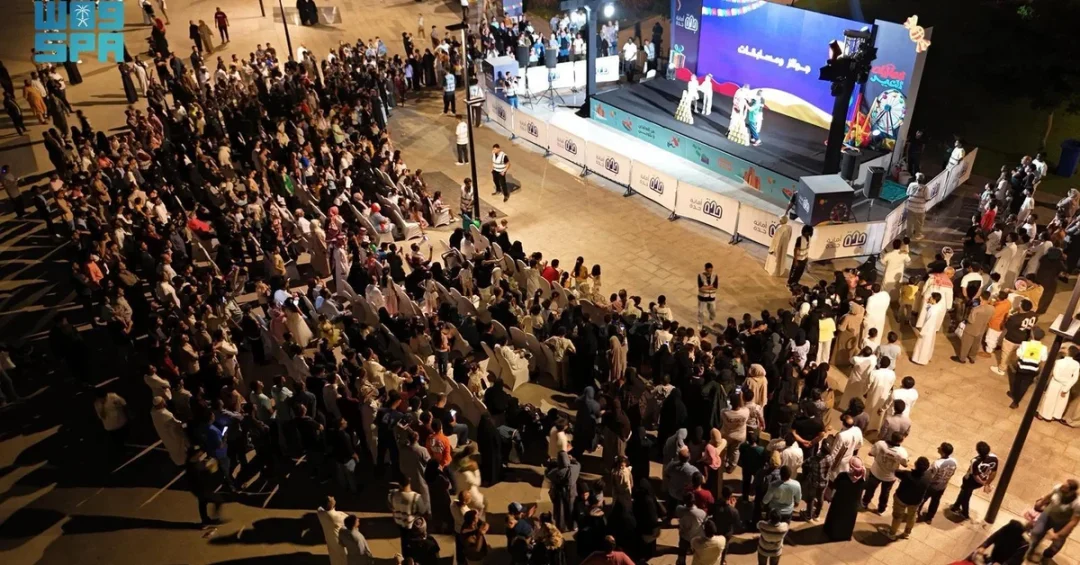
Jeddah Municipality’s two-day Eid Al-Fitr celebrations, held across the governorate on April 1 and 2, 2025, drew large crowds of residents and visitors who gathered for folk art performances, family competitions, gift distributions, and a dedicated puppet theater. The events, announced through official Saudi channels including the Saudi Press Agency, formed part of a wider national program of Eid festivities coordinated by municipal authorities across the Kingdom. Organizers designed the program to serve every age group, combining traditional cultural expression with modern entertainment in public spaces throughout Jeddah.
The scale of participation reflects how Eid Al-Fitr has evolved into a moment of shared civic celebration in Saudi Arabia, particularly as the Kingdom’s entertainment and tourism sectors expand under Vision 2030. Jeddah, the historic gateway city on the Red Sea and the second-largest urban center in the country, has increasingly positioned itself as a year-round destination for culture, heritage, and family recreation. The municipality’s decision to stage two full days of programming across multiple locations underscores a deliberate strategy: bring communities together, showcase Saudi heritage, and offer international visitors a welcoming, well-organized experience during one of the most important periods in the Islamic calendar. For a city that already welcomes millions of pilgrims and tourists each year, Eid is both a cultural anchor and a showcase of organizational capability.
Context and Background
How did Jeddah become the stage for such a broad celebration of Saudi folk traditions? The answer lies in the city’s unique place in the Kingdom’s cultural geography. Jeddah has long served as a meeting point for travelers, traders, and pilgrims arriving by sea and air, and its historic Al-Balad district, a UNESCO World Heritage Site, preserves centuries of architectural and social heritage. Municipal authorities have invested steadily in public programming that draws on this identity, turning holidays such as Eid Al-Fitr and Eid Al-Adha into occasions for cultural display rather than purely private gatherings.
The 2025 Eid Al-Fitr celebrations followed a well-established pattern of municipal involvement in national holidays. Jeddah Municipality, the local government body responsible for urban services and public amenities across the governorate, has in recent years expanded its role beyond infrastructure into community engagement, coordinating with the Ministry of Culture, the Saudi Tourism Authority, and other entities to deliver events that appeal to families, youth, and international guests alike. The two-day format allowed organizers to reach different neighborhoods and demographics, ensuring that the festivities were not confined to a single venue or audience.
Folk art, in particular, occupies a special position in Saudi cultural policy. Traditional performance forms such as the Ardah, the Mizmar, and regional dances from the Hejaz are actively promoted as living heritage, taught to younger generations and presented at national events. Eid provides a natural context for this transmission, since families are already gathered and receptive to communal activities. By placing folk art at the center of its Eid program, Jeddah Municipality reinforced a message that cultural continuity and modern urban life can coexist and reinforce one another.
Key Details of the Celebrations
What exactly did visitors experience during the two days of festivities? According to information released via official Saudi channels, the program featured a diverse lineup of recreational activities catering to all age groups. Folk art performances anchored the schedule, with troupes presenting traditional music and dance that reflect the Kingdom’s regional diversity. Competitions with gift distribution encouraged participation and rewarded engagement, while a puppet theater offered younger children a dedicated space for entertainment and storytelling. The combination was intentional, balancing performance, play, and prizes in a format that families could enjoy together.
The events were held across the governorate rather than at a single central location, a decision that broadened access and reduced crowding. Residents of different districts could participate without long journeys, and the distributed format allowed organizers to tailor activities to local audiences. Gift distribution added a tangible dimension to the celebrations, ensuring that children and families left with mementos of the occasion. The puppet theater, meanwhile, introduced a performance tradition that resonates across cultures, making the programming accessible to non-Arabic-speaking visitors as well.
Official reporting emphasized the large, participating crowd, indicating strong public response to the municipality’s outreach. Such turnout is consistent with broader trends in Saudi Arabia, where public entertainment events have seen rising attendance as the entertainment sector matures. The presence of international residents and tourists in Jeddah during Eid further diversified the audience, turning the celebrations into an informal exercise in cultural exchange. For the municipality, the two days represented both a service to the community and a demonstration of capacity in event management, crowd safety, and family-oriented programming.
International and Regional Impact
Why should audiences outside Saudi Arabia pay attention to a municipal Eid celebration? Because such events are increasingly part of how the Kingdom presents itself to the world. Jeddah’s Eid programming contributes to Saudi Arabia’s growing reputation as a destination for cultural tourism, complementing the religious tourism associated with Makkah and Madinah. International visitors who travel to the Kingdom during holidays encounter not only holy sites but also vibrant public culture, from folk performances to family entertainment. That experience shapes perceptions and encourages repeat visits, supporting the broader goal of attracting tens of millions of tourists annually by 2030.
Regionally, the celebrations reflect a wider pattern in the Gulf and the Middle East, where governments invest in public festivities to strengthen social cohesion and project stability. Saudi Arabia’s approach stands out for its scale and integration with national strategy. By aligning municipal events with cultural and tourism objectives, the Kingdom creates a coherent visitor experience that spans heritage sites, entertainment districts, and community programming. Jeddah’s Red Sea location gives it a particular advantage, linking Eid celebrations to beachfront recreation and the city’s emerging role as a cruise and leisure hub.
Economic and Strategic Significance
What economic value do Eid celebrations generate for Jeddah and the Kingdom? Public festivals stimulate spending in hospitality, retail, food and beverage, and transport, benefiting small businesses and large operators alike. Families attending events often combine them with shopping and dining, extending the economic footprint of the programming beyond the venues themselves. For Jeddah, a city with a diversified commercial base and a major port, holiday periods represent peak activity for restaurants, hotels, and entertainment venues, supporting employment and entrepreneurship.
Strategically, the municipality’s investment in Eid programming forms part of a larger effort to build a domestic entertainment industry. The General Entertainment Authority and related bodies have worked to expand the calendar of events throughout the year, reducing seasonality and creating a more predictable market for investors. Municipal celebrations complement these efforts at the local level, ensuring that the benefits of entertainment sector growth reach neighborhoods across the governorate. In this sense, the two-day Eid program is not merely a holiday diversion but a component of economic diversification, one of the central pillars of Vision 2030.
Vision 2030 Alignment
How does a folk art and theater celebration connect to Saudi Arabia’s long-term vision? Vision 2030 emphasizes quality of life, cultural preservation, and the growth of tourism and entertainment as engines of economic diversification. Jeddah Municipality’s Eid program advances all three. It enhances quality of life by providing free, family-friendly activities in public spaces. It preserves culture by giving folk art a prominent platform and passing traditions to younger generations. And it supports tourism and entertainment by creating reasons for visitors to spend time in the city during holidays, contributing to the target of welcoming 150 million visits annually by 2030.
The celebrations also reflect the vision’s emphasis on strong, responsive institutions. Municipal authorities planned and delivered a multi-site program that served diverse audiences, demonstrating the administrative capacity needed to host major events. As Saudi Arabia prepares for global gatherings such as Expo 2030 in Riyadh and continues to develop destinations along the Red Sea, the experience gained through community-level programming in Jeddah contributes to a national skill base in event management and cultural presentation. The Kingdom’s future as a global destination rests not only on iconic projects but also on the everyday experiences that residents and visitors share, and Eid in Jeddah is a clear example of that principle in action.
20 Questions
Q1. What were the Jeddah Eid Al-Fitr celebrations in 2025?
A1. Jeddah Municipality organized two-day Eid Al-Fitr celebrations across the governorate on April 1 and 2, 2025, featuring folk art performances, competitions with gift distribution, and a puppet theater for families and children.
Q2. When did the Jeddah Eid celebrations take place?
A2. The celebrations were held over two days, April 1 and 2, 2025, corresponding to Eid Al-Fitr, as reported by the Saudi Press Agency through official Saudi channels.
Q3. Who organized the Jeddah Eid Al-Fitr events?
A3. Jeddah Municipality, the local government body responsible for urban services and public amenities across the governorate, organized and delivered the two-day program in coordination with relevant national entities.
Q4. Where were the celebrations held?
A4. The events took place at multiple locations across Jeddah governorate rather than at a single venue, allowing residents from different districts to participate easily and reducing crowding.
Q5. What types of activities were offered during the celebrations?
A5. The program included folk art performances, recreational competitions with gift distribution, and a puppet theater, with activities designed to appeal to all age groups and family members.
Q6. Why are folk art performances important in Saudi culture?
A6. Folk art such as traditional dances and music represents living Saudi heritage, connecting generations and preserving regional identities. Eid celebrations provide a natural setting for sharing these traditions with broad audiences.
Q7. How did the puppet theater contribute to the celebrations?
A7. The puppet theater provided dedicated entertainment for younger children, using storytelling and performance to engage families. It also offered a culturally accessible format for international visitors attending the events.
Q8. What was the public response to the Eid celebrations?
A8. Official reporting indicated that the celebrations drew a large, participating crowd, reflecting strong community engagement and the popularity of family-oriented public programming during Eid holidays in Jeddah.
Q9. How do Eid celebrations support Saudi tourism?
A9. Eid festivities give international and domestic visitors reasons to spend time in Jeddah, combining cultural experiences with holiday travel. This supports the Kingdom’s goal of attracting 150 million visits annually by 2030.
Q10. What role does Jeddah Municipality play in community events?
A10. Jeddah Municipality manages urban services and public spaces and increasingly organizes community programming. Its Eid events demonstrate its capacity in event management, crowd safety, and family-oriented activities.
Q11. How do the celebrations reflect Vision 2030?
A11. The events advance Vision 2030 by improving quality of life, preserving cultural heritage, and supporting tourism and entertainment sector growth, three central pillars of the Kingdom’s long-term diversification strategy.
Q12. What economic benefits do Eid celebrations bring to Jeddah?
A12. Public festivities stimulate spending in hospitality, retail, dining, and transport. Families often combine event attendance with shopping and meals, extending economic benefits to businesses across the city.
Q13. Were the celebrations open to international visitors?
A13. Yes, the events were public and held across the governorate, welcoming residents and visitors. The programming, including puppet theater, was designed to be accessible to diverse audiences.
Q14. How does Jeddah’s history shape its cultural events?
A14. Jeddah has long been a meeting point for pilgrims and traders, and its historic Al-Balad district is a UNESCO World Heritage Site. This heritage informs the city’s cultural programming and identity.
Q15. What is the significance of gift distribution at the events?
A15. Gift distribution added a tangible, celebratory element to the competitions, ensuring children and families left with mementos. It encouraged participation and reinforced the festive, inclusive spirit of Eid.
Q16. How do municipal events complement national entertainment strategy?
A16. National bodies such as the General Entertainment Authority expand the events calendar, while municipal programs bring benefits to local neighborhoods. Together they create a more predictable market for investors.
Q17. What does the large turnout indicate about Saudi society?
A17. Strong attendance reflects a vibrant public culture and demand for family-friendly activities. It also shows trust in municipal organization and the appeal of heritage-based programming during religious holidays.
Q18. How does Eid programming support cultural preservation?
A18. By giving folk art a prominent platform, the events help transmit traditions to younger generations. This supports national efforts to document, teach, and celebrate Saudi heritage as living culture.
Q19. What skills does hosting such events build for Saudi Arabia?
A19. Organizing multi-site, multi-day programs builds expertise in logistics, crowd management, cultural programming, and visitor services, skills that support major upcoming events and destinations across the Kingdom.
Q20. What is the outlook for future Eid celebrations in Jeddah?
A20. As Saudi Arabia’s entertainment and tourism sectors grow under Vision 2030, Jeddah is expected to continue expanding its Eid programming, building on the 2025 model of folk art, family activities, and community engagement.
Reader Feedback
We value your thoughts. Please share your feedback on this article.
Your feedback helps us improve our coverage.
Related articles
 Gilded Textiles Shine at Islamic Arts Biennale
 Hail Eid Celebrations Draw Huge Crowds with Diverse Activities
 Camel Riders Celebrate Eid with Al-Hijini in Tabuk Desert
 Al-Baha Eid Festivities Draw Large Crowds
 Najran Eid Celebrations Showcase Saudi Cultural Heritage
 Islamic Arts Biennale Launches Eid Al-Fitr Celebrations