


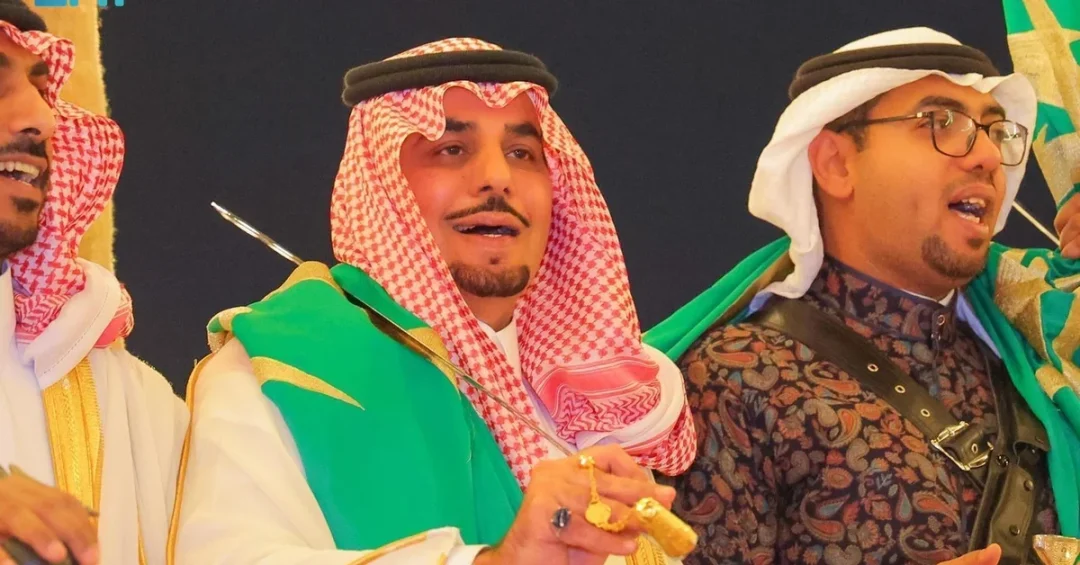
Diriyah Governor Prince Fahd bin Saad bin Abdullah bin Turki patronized a ceremony of the Saudi Ardah on the occasion of Eid Al-Fitr, joining residents and dignitaries in a vibrant celebration of the Kingdom’s enduring heritage. The event, reported by the Saudi Press Agency (SPA), took place in Diriyah, the historic heart of the Saudi state, and underscored the deep connection between national identity and cultural tradition during one of Islam’s most joyous festivals.
The governor’s active participation in the performance — a traditional sword dance accompanied by drums and poetry — highlighted the leadership’s commitment to preserving Saudi Arabia’s intangible cultural heritage. Eid Al-Fitr, marking the end of Ramadan, is a time of communal celebration across the Kingdom, and the Ardah remains a centerpiece of such festivities, symbolizing unity, strength, and pride. The ceremony in Diriyah, a UNESCO World Heritage site, also drew attention to the region’s growing role as a cultural and tourism destination under Vision 2030.
Context and Background
What makes the Ardah more than just a performance? The Saudi Ardah is a centuries-old tradition that originated in the Najd region and has become a national symbol of Saudi identity. Historically performed before battles to boost morale, it evolved into a celebratory art form showcased at weddings, national holidays, and official state functions. Recognized by UNESCO in 2015 as intangible cultural heritage, the Ardah involves rows of men carrying swords, moving in rhythmic unison to the beat of drums and the recitation of poetry. Its inclusion on the UNESCO list affirmed Saudi Arabia’s efforts to safeguard its cultural legacy for future generations.
Diriyah holds a unique place in this narrative. As the birthplace of the first Saudi state and the ancestral home of the Al Saud family, it is a living museum of the Kingdom’s history. The Diriyah Gate Development Authority, established to transform the area into a world-class cultural and lifestyle destination, has been instrumental in restoring and promoting heritage sites. The governor’s patronage of the Ardah ceremony during Eid Al-Fitr reinforces the link between Saudi Arabia’s past and its modern ambitions, demonstrating how tradition and progress coexist.
Eid Al-Fitr itself is a time when communities across Saudi Arabia come together, and the Ardah serves as a unifying force. In Diriyah, the ceremony attracted not only local residents but also visitors eager to experience authentic Saudi culture. The event reflects the Kingdom’s broader strategy to celebrate its heritage openly and share it with the world, aligning with the goals of Vision 2030 to diversify the economy and promote cultural tourism.
Key Details
Who participated in this celebration, and what did it entail? According to the Saudi Press Agency, Governor Prince Fahd bin Saad bin Abdullah bin Turki personally took part in the Ardah, joining other performers in the traditional dance. The ceremony was held in Diriyah, a city that has become synonymous with Saudi heritage and is currently undergoing significant development as part of the Diriyah Project. The event was timed to coincide with Eid Al-Fitr, which in 2025 fell on March 31, following the holy month of Ramadan.
The Ardah performance typically features two rows of men facing each other, each holding a sword, while drummers and poets provide the rhythm and verses. The governor’s participation is significant because it demonstrates the leadership’s hands-on engagement with cultural traditions. It also sends a message of unity and accessibility, as high-ranking officials join citizens in shared celebrations. The SPA report emphasized the festive atmosphere and the sense of community that pervaded the event.
While the SPA report did not specify the exact number of attendees, such ceremonies often draw hundreds of spectators, including families, tribal leaders, and cultural enthusiasts. The event was likely held in a prominent location within Diriyah, possibly near the historic At-Turaif District, which is a UNESCO World Heritage site. The governor’s presence added prestige to the occasion, highlighting the importance of Eid celebrations in Saudi society and the role of local leadership in fostering cultural continuity.
International and Regional Impact
How does a local celebration resonate beyond Saudi borders? The Ardah ceremony in Diriyah is part of Saudi Arabia’s broader efforts to project its cultural soft power internationally. By showcasing traditional arts during major religious festivals, the Kingdom presents itself as a guardian of heritage and a welcoming host to visitors from around the world. This aligns with the National Transformation Program and Vision 2030, which aim to attract millions of tourists and promote cross-cultural understanding.
Regionally, the event reinforces Saudi Arabia’s leadership in preserving Arab and Islamic traditions. In a rapidly changing Middle East, the Kingdom’s commitment to its roots serves as a stabilizing and unifying force. Diriyah, with its restored mud-brick architecture and world-class museums, has become a symbol of this cultural renaissance. International media and travel publications have increasingly highlighted Diriyah as a must-visit destination, and events like the Eid Ardah contribute to its growing reputation as a center of authentic Saudi experiences.
Moreover, the participation of a high-ranking governor in a traditional dance underscores the accessibility of Saudi leadership and their connection to the people. This image contrasts with outdated perceptions of the Kingdom and supports the narrative of a modern, open society that honors its past. For international audiences, it offers a glimpse into the warmth and vibrancy of Saudi celebrations, encouraging tourism and cultural exchange.
Economic and Strategic Significance
What economic benefits arise from cultural celebrations? The Ardah ceremony, while primarily a cultural and religious event, also has economic implications. Diriyah is a key pillar of Saudi Arabia’s tourism strategy, with the Diriyah Project expected to contribute significantly to GDP and create thousands of jobs. By hosting events like the Eid Ardah, Diriyah attracts visitors who spend on hospitality, retail, and entertainment, supporting local businesses and the broader economy.
Strategically, the promotion of cultural heritage is integral to Saudi Arabia’s efforts to diversify away from oil. Vision 2030 targets raising the tourism sector’s contribution to 10% of GDP by 2030, and cultural events play a vital role in drawing both domestic and international tourists. The Ardah, with its visual spectacle and historical significance, is a unique selling point that differentiates Saudi Arabia from other destinations. It also strengthens national pride and social cohesion, which are essential for sustainable development.
Furthermore, the event highlights the synergy between cultural preservation and urban development. The Diriyah Gate Development Authority has invested billions in restoring the area, creating a blend of heritage and modernity that appeals to investors and visitors alike. The governor’s patronage signals official support for these efforts, reassuring stakeholders that Diriyah remains a priority. As the Kingdom continues to open up, such cultural showcases will be crucial in shaping its global image and attracting foreign investment.
Vision 2030 Alignment
How does the Ardah ceremony connect to Saudi Arabia’s long-term vision? Vision 2030, launched by Crown Prince Mohammed bin Salman in 2016, seeks to transform the Kingdom into a global hub for tourism, culture, and entertainment. The preservation and promotion of traditional arts like the Ardah are explicitly part of this vision, as they celebrate Saudi identity and provide unique experiences for visitors. The Diriyah Project itself is a flagship initiative under Vision 2030, designed to become one of the world’s largest cultural and heritage destinations.
The governor’s participation in the Eid Ardah exemplifies the vision’s emphasis on community engagement and national pride. By honoring traditions, Saudi Arabia demonstrates that modernization does not mean abandoning heritage; rather, it means leveraging it for economic and social progress. As the Kingdom prepares to host major international events, such as Expo 2030 in Riyadh and the 2034 FIFA World Cup, cultural showcases like the Ardah will play a key role in welcoming the world and showcasing the best of Saudi Arabia. This celebration in Diriyah is a small but meaningful step toward realizing that ambitious future, where tradition and innovation walk hand in hand.
20 Questions
Q1. What event did the Governor of Diriyah patronize?
A1. Governor Prince Fahd bin Saad bin Abdullah bin Turki patronized a ceremony of the Saudi Ardah on the occasion of Eid Al-Fitr in Diriyah, as reported by the Saudi Press Agency.
Q2. When did the ceremony take place?
A2. The ceremony took place on March 31, 2025, coinciding with Eid Al-Fitr, which marks the end of the holy month of Ramadan.
Q3. What is the Saudi Ardah?
A3. The Saudi Ardah is a traditional sword dance performed in rows, accompanied by drums and poetry. It originated in the Najd region and is recognized by UNESCO as intangible cultural heritage.
Q4. Why is Diriyah significant for this event?
A4. Diriyah is the birthplace of the first Saudi state and a UNESCO World Heritage site. It is central to Saudi heritage and is being developed as a major cultural and tourism destination.
Q5. Did the governor participate in the Ardah?
A5. Yes, Governor Prince Fahd bin Saad bin Abdullah bin Turki actively took part in the Ardah, joining other performers in the traditional dance.
Q6. How does the Ardah reflect Saudi culture?
A6. The Ardah symbolizes unity, strength, and pride. It is performed at weddings, national holidays, and official events, showcasing Saudi Arabia’s rich cultural heritage.
Q7. What is the significance of Eid Al-Fitr in Saudi Arabia?
A7. Eid Al-Fitr is a joyous festival marking the end of Ramadan. It is celebrated with family gatherings, feasts, and cultural activities like the Ardah.
Q8. How does this event align with Vision 2030?
A8. The event supports Vision 2030’s goals of promoting cultural tourism and preserving heritage. It highlights Diriyah’s role as a cultural hub and attracts visitors.
Q9. What is the Diriyah Project?
A9. The Diriyah Project is a massive development initiative to transform Diriyah into a world-class cultural and lifestyle destination, featuring museums, restaurants, and heritage sites.
Q10. Who is Prince Fahd bin Saad bin Abdullah bin Turki?
A10. He is the Governor of Diriyah, appointed to oversee the region’s development and uphold its cultural traditions. He often participates in community events.
Q11. What does the Ardah performance involve?
A11. Performers stand in two rows holding swords, moving rhythmically to drumbeats and poetic verses. It is a dynamic and visually striking display.
Q12. Why is UNESCO recognition important for the Ardah?
A12. UNESCO recognition in 2015 affirms the Ardah’s global cultural value and supports Saudi Arabia’s efforts to safeguard its intangible heritage for future generations.
Q13. How does this event impact tourism in Diriyah?
A13. It showcases Diriyah’s cultural offerings, attracting tourists interested in authentic Saudi experiences. This boosts the local economy and promotes Diriyah as a destination.
Q14. What other cultural events occur in Diriyah?
A14. Diriyah hosts numerous events, including the Diriyah Season, art exhibitions, and heritage festivals. These celebrate Saudi culture and draw international visitors.
Q15. How does the governor’s participation affect the community?
A15. It demonstrates leadership’s commitment to cultural traditions and fosters a sense of unity and pride among residents, strengthening community bonds.
Q16. What is the economic impact of such celebrations?
A16. They stimulate local spending on hospitality, retail, and entertainment. They also support job creation and contribute to the tourism sector’s growth.
Q17. How does the Ardah promote Saudi soft power?
A17. By showcasing traditional arts to international audiences, the Ardah enhances Saudi Arabia’s image as a culturally rich and welcoming nation, fostering cross-cultural understanding.
Q18. What role does the Saudi Press Agency play?
A18. The Saudi Press Agency (SPA) is the official news agency of Saudi Arabia. It reported the event, ensuring accurate and timely dissemination of information.
Q19. Are there similar Ardah ceremonies elsewhere in Saudi Arabia?
A19. Yes, Ardah is performed across the Kingdom, especially during national holidays and festivals. Each region may have its own variations, but the core tradition remains.
Q20. What does the future hold for Diriyah’s cultural scene?
A20. Diriyah is set to become a global cultural destination with ongoing developments. It will host more events, attract international visitors, and showcase Saudi heritage on a world stage.
Reader Feedback
We value your thoughts. Please share your feedback on this article.
Your feedback helps us improve our coverage.
Related articles
 Northern Borders Region Hosts Wide-Ranging Eid Celebrations
 Jeddah’s Eid: Folk Art and Theater Take Center Stage
 Gilded Textiles Shine at Islamic Arts Biennale
 Hail Eid Celebrations Draw Huge Crowds with Diverse Activities
 Camel Riders Celebrate Eid with Al-Hijini in Tabuk Desert
 Al-Baha Eid Festivities Draw Large Crowds