


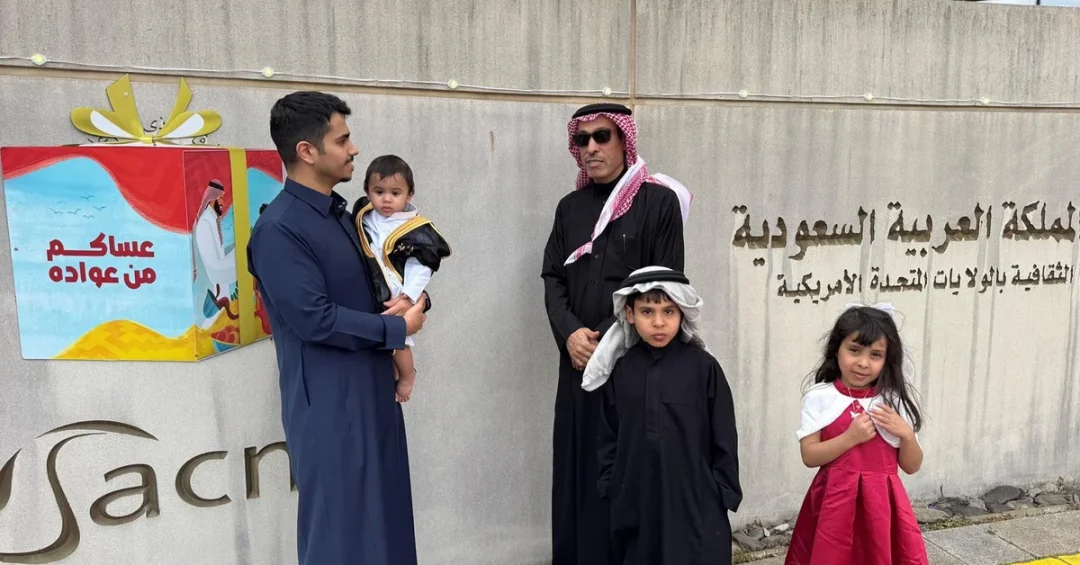
The Saudi Embassy in Washington, D.C., under the patronage of Saudi Ambassador to the United States Princess Reema bint Bandar bin Sultan bin Abdulaziz, celebrated Eid Al-Fitr with a diplomatic reception that brought together Saudi families, Arab and Muslim community members, and American guests, according to the Saudi Press Agency (SPA). The event marked the conclusion of the holy month of Ramadan and highlighted the Kingdom’s commitment to cultural exchange and community engagement in the United States. The Saudi Arabian Cultural Mission (SACM) to the United States also hosted a separate two-day Eid celebration in the capital, welcoming Saudi students and their families alongside members of the broader Arab and Muslim communities.
The celebrations reflect Saudi Arabia’s enduring tradition of hospitality and its dedication to strengthening people-to-people ties between the Kingdom and the United States. Eid Al-Fitr, one of the most significant festivals in the Islamic calendar, commemorates the completion of Ramadan’s month of fasting, prayer, and reflection. This year’s events in Washington underscored the embassy’s role not only as a diplomatic mission but also as a cultural bridge connecting Saudis abroad with their heritage and with their host communities. The gatherings provided an opportunity for Saudis studying and working in the United States to celebrate together, reinforcing a sense of belonging and shared identity. Isn’t it remarkable how such celebrations transcend borders and foster mutual understanding?
Context and Background
The Eid Al-Fitr celebrations hosted by the Saudi Embassy and the Saudi Arabian Cultural Mission are part of a long-standing tradition of Saudi diplomatic outreach in the United States. Ambassador Princess Reema bint Bandar bin Sultan bin Abdulaziz, who has served as the Kingdom’s top diplomat in Washington since 2019, has consistently emphasized the importance of cultural diplomacy and community building. Under her leadership, the embassy has become a hub for Saudi cultural events, educational initiatives, and interfaith dialogue. The SACM, which operates under the embassy’s umbrella, supports Saudi students across the United States, providing academic guidance, cultural orientation, and opportunities for community engagement.
Eid Al-Fitr holds profound spiritual and social significance for Muslims worldwide. It marks the end of Ramadan, during which observant Muslims fast from dawn to sunset, engage in heightened prayer, and practice charity. The festival itself is characterized by communal prayers, festive meals, gift-giving, and acts of generosity toward those in need. For Saudis abroad, celebrating Eid in a foreign country can evoke feelings of nostalgia for family gatherings in the Kingdom, making embassy-hosted events particularly meaningful. These gatherings also serve as a platform for introducing American friends and colleagues to Saudi customs and Islamic traditions, thereby promoting cross-cultural understanding. How often do diplomatic missions successfully create such warm, inclusive spaces for cultural exchange?
The Saudi Arabian Cultural Mission’s two-day celebration was especially significant for Saudi students, many of whom are pursuing degrees in fields critical to the Kingdom’s Vision 2030 objectives, such as engineering, medicine, business, and technology. By organizing these events, SACM not only supports students’ emotional well-being but also reinforces their connection to Saudi values and identity. The presence of families and community members further enriched the experience, creating a family-friendly atmosphere that mirrored the communal spirit of Eid in Saudi Arabia. Such initiatives demonstrate the Kingdom’s holistic approach to education abroad, where academic excellence is complemented by cultural and social support.
Key Details
The embassy’s Eid celebration, held in Washington, D.C., was attended by a diverse array of guests, including Saudi diplomats, American officials, members of the Arab and Muslim communities, and friends of the Kingdom. The event featured traditional Saudi cuisine, cultural performances, and opportunities for networking and fellowship. Ambassador Princess Reema bint Bandar bin Sultan bin Abdulaziz personally welcomed attendees, underscoring the embassy’s open-door policy and its commitment to fostering a welcoming environment for all. The celebration also provided a platform to highlight Saudi Arabia’s rich heritage and its modern achievements, aligning with the embassy’s broader mission of presenting a dynamic and forward-looking image of the Kingdom.
Meanwhile, the SACM’s two-day event drew a large number of Saudi students and their families, who participated in activities ranging from communal prayers to children’s games and cultural showcases. The SACM’s efforts to organize such a comprehensive celebration reflect its dedication to student welfare and its understanding of the unique challenges faced by those studying far from home. The event also allowed students to connect with peers from other universities and disciplines, fostering a sense of solidarity and shared purpose. Many attendees expressed appreciation for the opportunity to celebrate Eid in a manner that felt both authentic and inclusive. Could there be a better way to strengthen the bonds of community among Saudis abroad?
The celebrations were not limited to Saudis alone; they actively invited participation from the wider Arab and Muslim communities in the Washington metropolitan area. This inclusive approach reflects the Kingdom’s belief in the importance of interfaith and intercultural harmony. By opening its doors to neighbors of all backgrounds, the embassy and SACM exemplified the spirit of Eid, which emphasizes generosity, compassion, and togetherness. Such gestures go a long way in building goodwill and dispelling misconceptions about Saudi Arabia and Islam. In a world where misunderstandings can often prevail, these gatherings serve as beacons of hope and mutual respect. What better way to build bridges than through shared joy and celebration?
International and Regional Impact
The Saudi Embassy’s Eid celebration in Washington is a testament to the enduring strength of Saudi-American relations. Despite geopolitical shifts and global challenges, the cultural and people-to-people ties between the two nations remain robust. Events like these reinforce the foundation of mutual respect and shared values that underpin the strategic partnership. They also provide an informal setting for diplomats, students, and community leaders to interact, fostering networks that can lead to collaboration in areas such as education, business, and innovation. In this sense, the celebration is not merely a festivity but a soft-power tool that enhances Saudi Arabia’s image and influence abroad.
Regionally, the celebrations resonate with Saudi Arabia’s broader efforts to promote moderation, tolerance, and cultural exchange. As the custodian of the Two Holy Mosques, the Kingdom holds a unique position in the Islamic world, and its diplomatic missions often serve as conduits for sharing Saudi Arabia’s message of peace and coexistence. The Washington event, by bringing together Muslims from various backgrounds, highlighted the diversity within the Islamic community and the shared values that unite them. It also showcased Saudi Arabia’s leadership in fostering interfaith dialogue, a key component of its foreign policy. How many nations can claim such a vibrant and inclusive approach to cultural diplomacy?
The participation of American guests and officials at the embassy event also signals the importance the United States places on its relationship with Saudi Arabia. Such high-level engagement, even in a cultural context, underscores the depth of the bilateral relationship and the mutual desire to strengthen it. As the two countries continue to collaborate on economic, security, and technological fronts, cultural diplomacy remains a vital pillar of the partnership. The Eid celebration thus served as a gentle reminder that beyond political agreements and business deals, the human connection between Saudis and Americans is alive and thriving.
Economic and Strategic Significance
While Eid celebrations are primarily cultural and spiritual, they also carry economic and strategic significance. The presence of Saudi students and professionals in the United States contributes to the exchange of knowledge and expertise that is vital for Saudi Arabia’s economic diversification. Many of these individuals are future leaders who will return to the Kingdom to contribute to Vision 2030 initiatives. By supporting them through events like the SACM’s Eid gathering, the Kingdom invests in its human capital and ensures that they remain connected to their roots and motivated to give back. This is a strategic investment in the nation’s future prosperity.
Moreover, the embassy’s cultural outreach can have indirect economic benefits by enhancing Saudi Arabia’s reputation as a modern, welcoming nation open to business and tourism. As the Kingdom continues to open its doors to international visitors and investors, positive impressions formed through cultural diplomacy can translate into increased tourism, foreign investment, and trade partnerships. The Eid celebration, with its warm hospitality and inclusive spirit, projects an image of Saudi Arabia that aligns with its Vision 2030 goal of becoming a global hub for culture, entertainment, and commerce. Isn’t it fascinating how a single celebration can ripple out to impact so many facets of national development?
From a strategic standpoint, the United States remains a key ally for Saudi Arabia in areas ranging from defense to energy to technology. Maintaining strong people-to-people ties is essential for sustaining this multifaceted relationship. The embassy’s efforts to engage with the Arab and Muslim communities in the U.S. also help counter negative stereotypes and build a reservoir of goodwill that can be tapped during times of challenge. By investing in these relationships, Saudi Arabia strengthens its soft power and ensures that its voice is heard and respected in American society. Such long-term strategic thinking is characteristic of the Kingdom’s approach to international relations.
Vision 2030 Alignment
The Eid celebrations hosted by the Saudi Embassy and the Saudi Arabian Cultural Mission are a clear reflection of Vision 2030’s emphasis on cultural enrichment, global engagement, and human development. Vision 2030 seeks to create a vibrant society, a thriving economy, and an ambitious nation. By supporting Saudi students abroad and fostering cultural exchange, these events contribute directly to the social and cultural pillars of the vision. They also promote the Kingdom’s image as a forward-looking nation that values its heritage while embracing global cooperation. The embassy’s role in this regard is indispensable, as it serves as a bridge between Saudi Arabia and the international community.
Furthermore, the celebrations align with Vision 2030’s goal of increasing Saudi Arabia’s global presence and influence. Through cultural diplomacy, the Kingdom can share its story of transformation and progress with the world, attracting partners and friends who share its aspirations. The Eid gatherings in Washington are a microcosm of this broader effort, demonstrating that Saudi Arabia is not only a nation of rich traditions but also a dynamic player on the world stage. As the Kingdom continues its journey toward a brighter future, such events will remain vital in building the soft power and international goodwill necessary for success. What better way to showcase the best of Saudi Arabia than through the universal language of celebration and community?
20 Questions
Q1. What was the occasion celebrated by the Saudi Embassy in the United States?
A1. The Saudi Embassy in Washington, D.C., celebrated Eid Al-Fitr, marking the end of the holy month of Ramadan, with a reception that brought together Saudi families, Arab and Muslim community members, and American guests.
Q2. Who patronized the Eid Al-Fitr celebration at the Saudi Embassy?
A2. The celebration was held under the patronage of Saudi Ambassador to the United States Princess Reema bint Bandar bin Sultan bin Abdulaziz, who has been a strong advocate for cultural diplomacy and community engagement.
Q3. Which Saudi organization also hosted a two-day Eid celebration in Washington?
A3. The Saudi Arabian Cultural Mission (SACM) to the United States hosted a separate two-day Eid Al-Fitr celebration in the capital, specifically for Saudi students and their families, as well as members of the Arab and Muslim communities.
Q4. Who attended the SACM’s Eid celebration?
A4. The SACM’s celebration was attended by Saudi students and their families, along with many Saudi families and members of the Arab and Muslim communities, fostering a sense of unity and belonging.
Q5. What is the significance of Eid Al-Fitr for Muslims?
A5. Eid Al-Fitr is a joyous festival that marks the completion of Ramadan, a month of fasting, prayer, and reflection. It is a time for communal prayers, festive meals, gift-giving, and charity, celebrated by Muslims worldwide.
Q6. Why is it important for Saudi students abroad to celebrate Eid together?
A6. Celebrating Eid together helps Saudi students abroad maintain a connection to their culture and heritage, combats homesickness, and strengthens community bonds. It also provides an opportunity to share Saudi traditions with others.
Q7. How does the Saudi Embassy’s Eid celebration contribute to Saudi-American relations?
A7. The celebration fosters people-to-people ties and cultural exchange, enhancing mutual understanding and goodwill between Saudis and Americans. It reinforces the strong bilateral relationship beyond political and economic dimensions.
Q8. What role does the Saudi Arabian Cultural Mission play in supporting Saudi students?
A8. The SACM provides academic guidance, cultural orientation, and community engagement opportunities for Saudi students in the U.S. It organizes events like the Eid celebration to support their well-being and connection to Saudi values.
Q9. How does the Eid celebration reflect Saudi Arabia’s Vision 2030?
A9. The celebration aligns with Vision 2030’s goals of cultural enrichment, global engagement, and human development. It showcases Saudi Arabia’s commitment to fostering a vibrant society and building international partnerships.
Q10. What message does the inclusive nature of the Eid celebration send?
A10. By inviting Arab and Muslim community members and Americans, the celebration promotes interfaith and intercultural harmony, demonstrating Saudi Arabia’s values of tolerance, generosity, and coexistence.
Q11. How does cultural diplomacy benefit Saudi Arabia’s global image?
A11. Cultural diplomacy helps present Saudi Arabia as a modern, welcoming nation, countering stereotypes and building soft power. It attracts tourism, investment, and partnerships, supporting the Kingdom’s economic diversification.
Q12. What economic benefits can arise from such cultural events?
A12. While primarily cultural, these events can enhance Saudi Arabia’s reputation, leading to increased tourism, foreign investment, and trade. They also strengthen networks that facilitate business and educational collaborations.
Q13. How does the Saudi Embassy engage with the Arab and Muslim communities in the U.S.?
A13. The embassy regularly hosts cultural and religious events, including Eid celebrations, that welcome diverse community members. This engagement builds goodwill and fosters a sense of shared identity and mutual respect.
Q14. What is the significance of Ambassador Princess Reema’s patronage?
A14. Her patronage underscores the embassy’s commitment to cultural diplomacy and community outreach. As a prominent Saudi diplomat, she personally champions initiatives that strengthen Saudi-American ties and support Saudi citizens abroad.
Q15. How do such celebrations help Saudi students academically and socially?
A15. They provide emotional support and a sense of community, reducing isolation. Socially, they create networking opportunities; academically, they reinforce motivation by connecting students to the Kingdom’s future needs and Vision 2030.
Q16. In what ways does the Eid celebration promote moderation and tolerance?
A16. By bringing together people of different backgrounds, the celebration exemplifies moderation and tolerance. It showcases Islam’s inclusive spirit and Saudi Arabia’s leadership in fostering interfaith dialogue and peaceful coexistence.
Q17. How does the event reflect Saudi Arabia’s role as custodian of the Two Holy Mosques?
A17. As custodian, Saudi Arabia has a special responsibility to serve Muslims worldwide. The embassy’s Eid celebration extends this role by providing a spiritual and communal home away from home for Muslims in the U.S.
Q18. What can other nations learn from Saudi Arabia’s cultural diplomacy?
A18. Other nations can learn the value of using cultural and religious celebrations to build bridges, foster goodwill, and strengthen people-to-people ties. Such diplomacy complements traditional foreign policy and enhances soft power.
Q19. How does the SACM’s two-day celebration differ from the embassy’s event?
A19. The SACM’s celebration specifically targets Saudi students and their families, offering a more intimate, student-focused program. The embassy’s event is broader, including diplomats, officials, and diverse community members.
Q20. What is the long-term impact of such cultural events on Saudi-American relations?
A20. They build a foundation of mutual respect and understanding that transcends political cycles. By nurturing people-to-people connections, they ensure that the Saudi-American partnership remains strong and resilient for generations to come.
Reader Feedback
We value your thoughts. Please share your feedback on this article.
Your feedback helps us improve our coverage.
Related articles
 KSGAAL Joins Bologna Book Fair 2025 to Promote Arabic
 Diriyah Governor Patronizes Saudi Ardah Eid Ceremony
 Northern Borders Region Hosts Wide-Ranging Eid Celebrations
 Jeddah’s Eid: Folk Art and Theater Take Center Stage
 Gilded Textiles Shine at Islamic Arts Biennale
 Hail Eid Celebrations Draw Huge Crowds with Diverse Activities