


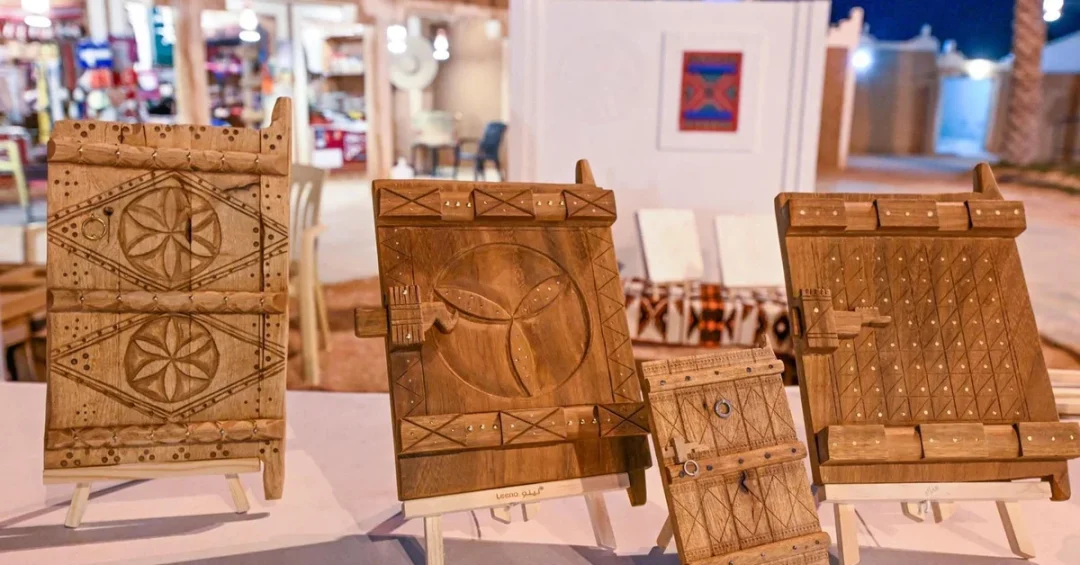
The “Haili Wooden Doors and Gypsum Carvings” pavilion at the third edition of the Beit Hail Festival in Aja Park is drawing visitors from across the region and beyond, offering a firsthand look at traditional Saudi craftsmanship. The pavilion, part of the festival’s activities, showcases the methods, techniques, and tools used in crafting and engraving these artworks, which add an authentic traditional touch to the event.
Context and Background
The Beit Hail Festival, now in its third edition, celebrates the rich heritage of the Hail region and the broader Najd area. Aja Park serves as the venue for this cultural gathering, which highlights traditional arts, crafts, and customs. The “Haili Wooden Doors and Gypsum Carvings” pavilion is a key attraction, allowing visitors to observe artisans at work and learn about the historical significance of these crafts. Hail, known for its distinctive architectural and artistic traditions, is a fitting host for such a festival, which aligns with Saudi Arabia’s efforts to preserve and promote its cultural heritage under Vision 2030.
Key Details
Craftsman Abdullah Al-Khazzam, a native of Hail registered with the National Handicrafts Program (Bari), is the featured artisan at the pavilion. Al-Khazzam’s journey began in childhood, fueled by a passion for clay building and a determination to master the craft of making wooden doors and engravings. He specializes in the old Haili house door, crafted from tamarisk and other types of wood. His repertoire includes various models, such as the Najdi door, which consists of three beams, unlike the Haili door, which has four beams. These models have received admiration from festival visitors for their precise craftsmanship in the smallest structural details.
In his pavilion, Al-Khazzam also presents Islamic gypsum carvings inspired by the region’s environment. These carvings are an integral part of Najdi architecture, used to adorn buildings, entrances, and majlises. He showcases traditional carvings for historical majlises in Hail, which symbolized the owner’s social and economic status in the past. Many visitors have purchased these doors to decorate their current majlises with a heritage feature. Al-Khazzam’s talent extends beyond wooden doors to various models such as the pulley known as “Al-Suwani” and “Al-Shadad” placed on camel backs. He also creates drawings and engravings that adorned old mud houses, some containing Quranic verses, wise sayings, and decorative engravings, while others take shapes from trees and plants.
Implications and Impact
The popularity of Al-Khazzam’s work at the Beit Hail Festival underscores a growing interest in traditional Saudi crafts among both local and international audiences. By providing a platform for artisans to demonstrate their skills, the festival helps preserve intangible cultural heritage and transmits it to future generations. Moreover, it contributes to the local economy by attracting tourism and creating opportunities for craftsmen to sell their products. The festival also serves as a cultural bridge, introducing international visitors to the depth and beauty of Saudi traditions, thereby enhancing the Kingdom’s global cultural image.
Vision 2030 Alignment
This celebration of traditional crafts aligns closely with Saudi Vision 2030, which emphasizes the preservation and promotion of national heritage as part of the Kingdom’s cultural and economic diversification. By supporting artisans like Abdullah Al-Khazzam and events like the Beit Hail Festival, Saudi Arabia not only honors its past but also invests in a future where cultural tourism and creative industries play a vital role in sustainable development. Such initiatives showcase the Kingdom’s commitment to maintaining its identity while embracing modernization and global engagement.
20 Questions
Q1. What is the “Haili Wooden Doors and Gypsum Carvings” pavilion?
A1. It is a pavilion at the Beit Hail Festival that showcases traditional Haili wooden doors and gypsum carvings, allowing visitors to observe the crafting methods, techniques, and tools used in creating these artworks.
Q2. Where is the Beit Hail Festival held?
A2. The festival is held at Aja Park in Hail, Saudi Arabia. It is currently in its third edition, attracting visitors from the region and beyond to celebrate traditional culture and crafts.
Q3. Who is Abdullah Al-Khazzam?
A3. Abdullah Al-Khazzam is a craftsman from Hail registered with the National Handicrafts Program (Bari). He is renowned for his expertise in making traditional wooden doors and gypsum carvings, which he displays at the festival.
Q4. What is the National Handicrafts Program (Bari)?
A4. The National Handicrafts Program (Bari) is a Saudi initiative that supports and promotes traditional handicrafts. It registers artisans like Abdullah Al-Khazzam and helps preserve Saudi Arabia’s cultural heritage.
Q5. What types of wood are used in Haili doors?
A5. Traditional Haili doors are made from tamarisk and other types of wood. These materials are chosen for their durability and suitability for intricate carving, reflecting the region’s architectural heritage.
Q6. How does the Haili door differ from the Najdi door?
A6. The Haili door consists of four beams, while the Najdi door consists of three beams. Both styles are traditional to Saudi Arabia, but they have distinct structural characteristics that reflect regional craftsmanship.
Q7. What are Islamic gypsum carvings?
A7. Islamic gypsum carvings are decorative plaster works inspired by the region’s environment. They are part of Najdi architecture and are used to adorn buildings, entrances, and majlises with intricate geometric and floral patterns.
Q8. What is a majlis?
A8. A majlis is a traditional gathering place or sitting room in Saudi homes. It often features decorative elements like gypsum carvings and wooden doors that reflect the owner’s social and economic status.
Q9. What other models does Abdullah Al-Khazzam create?
A9. Besides wooden doors, Al-Khazzam creates models such as the pulley known as “Al-Suwani” and “Al-Shadad” placed on camel backs. He also engraves drawings on mud houses and other structures.
Q10. What is “Al-Suwani”?
A10. “Al-Suwani” is a traditional pulley used in the past. Abdullah Al-Khazzam creates models of it, showcasing his versatility in preserving various aspects of traditional Saudi craftsmanship.
Q11. What is “Al-Shadad”?
A11. “Al-Shadad” is a traditional device placed on camel backs, likely used for carrying loads. Al-Khazzam’s models of it highlight the practical and cultural heritage of the region.
Q12. What kind of engravings adorned old mud houses?
A12. Old mud houses were adorned with engravings that included Quranic verses, wise sayings, and decorative patterns. Some engravings took shapes from trees and plants, reflecting the environment.
Q13. Why are these crafts important to Saudi heritage?
A13. These crafts are important because they represent the artistic and architectural traditions of Saudi Arabia. They preserve historical techniques and cultural identity, passing them on to future generations.
Q14. How does the festival benefit local artisans?
A14. The festival provides artisans with a platform to showcase and sell their work, gaining recognition and income. It also helps sustain traditional crafts by creating demand and appreciation.
Q15. What is the significance of the Beit Hail Festival?
A15. The festival celebrates the cultural heritage of Hail and the wider Najd region. It attracts tourists, promotes traditional arts, and fosters community pride, aligning with Saudi Arabia’s cultural preservation efforts.
Q16. How does this event align with Vision 2030?
A16. It aligns with Vision 2030 by preserving and promoting national heritage, supporting cultural tourism, and contributing to economic diversification. It showcases the Kingdom’s commitment to maintaining its identity while modernizing.
Q17. Can visitors purchase the crafts at the festival?
A17. Yes, visitors can purchase items such as wooden doors and gypsum carvings to decorate their homes. This supports artisans and helps keep traditional crafts alive in contemporary settings.
Q18. What tools are used in crafting Haili doors and gypsum carvings?
A18. Craftsmen use traditional tools such as chisels, hammers, and carving knives. These tools allow for precise detailing and are part of the heritage demonstrated at the festival.
Q19. How long has Abdullah Al-Khazzam been practicing this craft?
A19. Al-Khazzam began in childhood with a hobby of clay building and has continuously honed his skills over the years. His lifelong passion and ambition have made him a master of the craft.
Q20. What impact does the festival have on international visitors?
A20. International visitors gain insight into Saudi Arabia’s rich cultural heritage, fostering cross-cultural understanding. The festival enhances the Kingdom’s global image as a destination for authentic cultural experiences.
Reader Feedback
We value your thoughts. Please share your feedback on this article.
Your feedback helps us improve our coverage.
Related articles
 Jeddah Historic District Marks a Decade Since Its UNESCO World Heritage Site Designation
 Almadinah Book Fair 2024 to Kick Off July 30
 Sadu Weaving Shines at Beit Hail Festival
 Rawiyah: Bedouin Survival Tool for Water Transportation
 King Saud University Hosts International Conference on Camels in Arab Culture
 Saudi Arabia Weather Forecast: Dust, Rain, and Rising Temps