


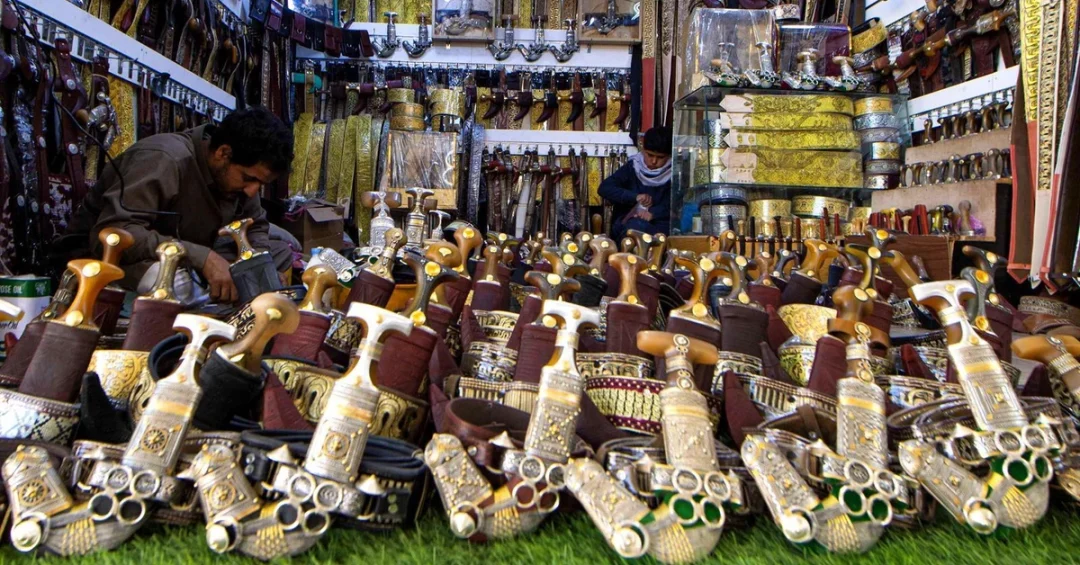
Najran’s traditional janbiya dagger remains a defining symbol of cultural heritage and identity in southern Saudi Arabia, worn with pride during Eid celebrations, national occasions, and social gatherings across the region, according to the Saudi Press Agency. The dagger, handcrafted with exceptional skill and passed down through generations, continues to serve as a testament to the Kingdom’s rich cultural tapestry, reflecting the authenticity and history of Najran’s people. As Saudi Arabia undergoes a remarkable cultural renaissance under Vision 2030, the janbiya stands as a living link between the past and the future, embodying the pride, joy, and belonging that define the region’s festive spirit.
In the bustling markets of Najran, the janbiya is more than a mere accessory; it is a statement of identity. Designs vary widely, from traditional styles suited for young men to luxurious types adorned with silver and intricate engravings, each reflecting the distinctive craftsmanship of the region’s artisans. During Eid Al-Fitr and other public festivities, the janbiya is worn by all age groups, symbolizing a deep-rooted heritage that is renewed with each celebration. This enduring tradition not only highlights the region’s unique cultural identity but also contributes to the broader narrative of Saudi Arabia’s commitment to preserving its heritage while embracing modernity.
Context and Background
How did the janbiya become such an integral part of Najran’s cultural identity? The dagger’s history in the region stretches back centuries, rooted in the traditions of the Arabian Peninsula. Historically, the janbiya served both as a utilitarian tool and a symbol of status and manhood. In Najran, a region known for its fertile lands and strategic location near the Yemeni border, the dagger evolved into a distinctive art form. Local craftsmen developed unique techniques, blending engraving on silver, leather, and wood with blades forged from steel. This craftsmanship has been passed down through generations, ensuring that each janbiya is not just a weapon but a unique artistic masterpiece that embodies a long history of creativity.
The janbiya’s significance extends beyond its practical uses. It is a marker of cultural identity, worn during Eid and national and social occasions. As local citizen Saleh Hussein Al-Yami emphasized, the janbiya is prominently worn during these events, symbolizing authenticity, joy, pride, and belonging. It stands as a testament to a rich cultural heritage, renewed with each celebration. This cultural practice is not static; it evolves with the times, incorporating new designs and materials while preserving traditional methods. The janbiya thus remains a dynamic symbol of Najran’s heritage, adapting to contemporary tastes while staying true to its roots.
In recent years, Saudi Arabia has placed increasing emphasis on preserving its cultural heritage as part of Vision 2030. The janbiya of Najran is a prime example of this effort. By supporting local artisans and promoting traditional crafts, the Kingdom ensures that these cultural treasures continue to thrive. The janbiya is not just a relic of the past; it is a living tradition that contributes to the nation’s cultural diversity and economic development. As Saudi Arabia opens up to the world through tourism and cultural exchange, the janbiya serves as a unique ambassador of Najran’s heritage, inviting visitors to appreciate the region’s rich history and craftsmanship.
Key Details
What makes the Najran janbiya so distinctive? The dagger’s design and construction are a testament to the region’s artisanal excellence. In Najran’s markets, one can find a variety of janbiyas, each with its own character. Traditional styles are often simpler, suited for daily wear or young men, while luxurious types feature elaborate silver adornments and intricate engravings. The blade is typically forged from high-quality steel, while the handle and sheath are crafted from wood, leather, and silver. The engraving techniques used are highly specialized, often involving delicate patterns that reflect Najrani cultural motifs. Each janbiya is a unique piece, requiring hours of meticulous work by skilled craftsmen.
The process of making a janbiya is a labor of love. Artisans begin by selecting the finest materials, such as silver for the handle and sheath, and steel for the blade. The silver is then engraved with intricate designs, often using traditional tools passed down through generations. The leather sheath is crafted to fit the blade perfectly, while the wood handle is shaped and polished. The final assembly requires precision and patience, ensuring that the janbiya is both functional and beautiful. This craftsmanship is not just a job; it is a heritage that artisans are proud to uphold. As a result, each janbiya is a unique artistic masterpiece, embodying the region’s history and creativity.
The janbiya is worn in a specific manner, typically tucked into a belt at the waist. During festive occasions, men of all ages wear their finest janbiyas, often coordinating with traditional attire. The dagger is not just an accessory; it is a symbol of pride and belonging. In Najran, the janbiya is also a popular gift, exchanged during weddings and other significant life events. Its presence at celebrations adds a touch of authenticity and joy, reinforcing community bonds. The janbiya’s role in these festivities highlights its enduring importance in Najrani society, bridging generations and preserving cultural continuity.
International and Regional Impact
How does Najran’s janbiya resonate beyond Saudi Arabia’s borders? The dagger is a symbol of the broader Arabian Peninsula’s cultural heritage, shared with neighboring countries like Yemen and Oman. However, Najran’s janbiya is distinct in its design and craftsmanship, making it a unique cultural export. As Saudi Arabia promotes cultural tourism under Vision 2030, the janbiya attracts interest from international visitors and collectors. Exhibitions and cultural festivals showcasing Saudi heritage often feature the janbiya, allowing global audiences to appreciate its artistry. This exposure not only boosts cultural exchange but also supports local artisans by creating new markets for their work.
Regionally, the janbiya fosters a sense of shared identity among Gulf Cooperation Council (GCC) countries. While each nation has its own traditional daggers, the janbiya is a common thread that binds the region’s history. In international forums, Saudi Arabia often showcases its cultural heritage, including the janbiya, as part of its soft power diplomacy. By highlighting such traditions, the Kingdom demonstrates its commitment to preserving cultural diversity and promoting intercultural dialogue. The janbiya thus serves as a bridge between Saudi Arabia and the world, enhancing mutual understanding and respect.
Economic and Strategic Significance
What economic opportunities does the janbiya industry present? The craft of janbiya-making supports local economies in Najran, providing livelihoods for artisans and traders. The market for janbiyas ranges from affordable traditional pieces to high-end luxury items, catering to diverse customers. As tourism grows in Saudi Arabia, demand for authentic cultural products like the janbiya is expected to rise. This presents an opportunity for small businesses and entrepreneurs to expand their reach. Additionally, the Saudi government, through agencies like the Ministry of Culture and the Heritage Commission, supports artisans by providing training, funding, and platforms to showcase their work.
Strategically, the janbiya contributes to Saudi Arabia’s cultural security by preserving intangible heritage. It reinforces national identity and social cohesion, especially among younger generations who might otherwise be drawn to globalized trends. By integrating the janbiya into cultural festivals and educational programs, the Kingdom ensures its transmission to future generations. Furthermore, the janbiya is a symbol of resilience and adaptability, reflecting the Saudi people’s ability to honor their past while embracing the future. As Vision 2030 aims to diversify the economy and promote cultural tourism, the janbiya stands as a valuable asset, embodying the intersection of tradition and modernity.
Vision 2030 Alignment
How does the janbiya align with Vision 2030’s goals? Vision 2030 seeks to preserve Saudi Arabia’s cultural heritage while fostering economic growth and global engagement. The janbiya is a prime example of this dual objective. By supporting traditional crafts, the Kingdom creates jobs, boosts tourism, and enhances its cultural footprint. The dagger also plays a role in the Quality of Life program, which aims to enrich the lives of citizens and residents by promoting cultural activities. As Saudi Arabia hosts international events and welcomes visitors, the janbiya serves as a tangible representation of the nation’s proud history and bright future.
In conclusion, Najran’s janbiya is more than a dagger; it is a symbol of identity, craftsmanship, and heritage. As Saudi Arabia marches toward a prosperous future under Vision 2030, the janbiya remains a cherished emblem of the past, worn with pride during celebrations and festivities. Its enduring presence in Najrani culture underscores the Kingdom’s commitment to preserving its roots while embracing modernity. For international audiences, the janbiya offers a glimpse into the rich cultural tapestry of Saudi Arabia, inviting them to explore and appreciate the nation’s unique traditions. The janbiya’s story is one of continuity and change, a testament to the resilience and creativity of the Saudi people.
20 Questions
Q1. What is a janbiya?
A1. A janbiya is a traditional dagger worn in Najran and other parts of Saudi Arabia. It is a symbol of cultural heritage, often worn during celebrations and social occasions, and is handcrafted with intricate designs.
Q2. Why is the janbiya important in Najran?
A2. The janbiya is important in Najran because it represents authenticity, history, and cultural identity. It is worn during Eid, national events, and social gatherings, symbolizing joy, pride, and belonging among the local people.
Q3. How is the janbiya made?
A3. The janbiya is handcrafted using engraving techniques on silver, leather, and wood, with a steel blade. Artisans use traditional tools and methods passed down through generations, making each piece a unique artistic masterpiece.
Q4. What materials are used in a janbiya?
A4. Materials include silver for the handle and sheath, leather for the sheath, wood for the handle, and steel for the blade. These materials are carefully selected and crafted to create a durable and beautiful dagger.
Q5. Who wears a janbiya?
A5. The janbiya is worn by men of all age groups in Najran during festive occasions. It is also worn by younger men in simpler styles, while luxurious versions are favored for special events.
Q6. When is the janbiya worn?
A6. The janbiya is prominently worn during Eid Al-Fitr, national holidays, and social occasions such as weddings. It is an essential part of festive attire in Najran.
Q7. What does the janbiya symbolize?
A7. The janbiya symbolizes authenticity, joy, pride, and belonging. It represents a rich cultural heritage that is renewed with each celebration, reflecting the identity of Najran’s people.
Q8. How does the janbiya reflect Saudi heritage?
A8. The janbiya reflects Saudi heritage through its traditional craftsmanship and use in cultural events. It embodies centuries of history and creativity, showcasing the Kingdom’s commitment to preserving its cultural roots.
Q9. Are there different types of janbiya?
A9. Yes, janbiya designs vary. There are traditional styles for young men and luxurious types adorned with silver and intricate engravings. Each type reflects different levels of craftsmanship and occasion.
Q10. Where can you buy a janbiya in Najran?
A10. Janbiyas can be purchased in Najran’s local markets, where artisans and traders sell a variety of designs. These markets are hubs of cultural activity and craftsmanship.
Q11. How long does it take to make a janbiya?
A11. The time varies depending on the complexity of the design. A simple janbiya may take days, while a luxurious one with intricate engravings can take weeks of meticulous work by skilled artisans.
Q12. Is the janbiya still relevant today?
A12. Yes, the janbiya remains highly relevant. It is worn during modern celebrations and is supported by Saudi cultural initiatives under Vision 2030, ensuring its continued significance.
Q13. How does Vision 2030 support the janbiya?
A13. Vision 2030 supports the janbiya by promoting cultural heritage, providing training for artisans, and creating economic opportunities through tourism and cultural festivals, helping preserve this traditional craft.
Q14. What is the cultural significance of the janbiya?
A14. The janbiya is a symbol of cultural identity and pride. It connects generations, reinforces community bonds, and serves as a tangible link to Najran’s rich history and traditions.
Q15. Can foreigners buy a janbiya?
A15. Yes, foreigners can buy janbiyas as cultural souvenirs. However, they should be aware of local laws and customs regarding the purchase and transport of such items.
Q16. How is the janbiya worn?
A16. The janbiya is typically tucked into a belt at the waist. It is worn with traditional attire, often on the right side, and is considered a mark of honor and dignity.
Q17. What is the difference between a janbiya and a khanjar?
A17. The janbiya is a specific style of dagger from Najran, while khanjar is a broader term for daggers in the region. The janbiya has distinct design features and craftsmanship unique to Najran.
Q18. Are there any festivals dedicated to the janbiya?
A18. While there is no dedicated festival solely for the janbiya, it features prominently in cultural festivals and heritage events across Saudi Arabia, especially in Najran during Eid and national celebrations.
Q19. How does the janbiya contribute to tourism?
A19. The janbiya attracts tourists interested in authentic Saudi culture. It is a unique souvenir and a highlight of cultural tours, contributing to the growth of heritage tourism in the Kingdom.
Q20. What is the future of the janbiya?
A20. The future of the janbiya looks bright. With ongoing support from the Saudi government and continued interest from younger generations, this traditional craft will thrive as a symbol of Saudi heritage.
Reader Feedback
We value your thoughts. Please share your feedback on this article.
Your feedback helps us improve our coverage.
Related articles
 Umluj Celebrates Eid with Marine Arts and Folkloric Performances
 Najran Celebrates Eid at Al-Ukhdood Heritage Event
 Folk Arts Enrich Eid Celebrations in Qassim Region
 Eid Al-Basta in Abha: A Celebration of Saudi Heritage
 Saudi Arabia Opens Pavilion at Bologna Book Fair 2025
 Madinah Celebrates Eid with Deep-Rooted Traditions and Community Spirit