


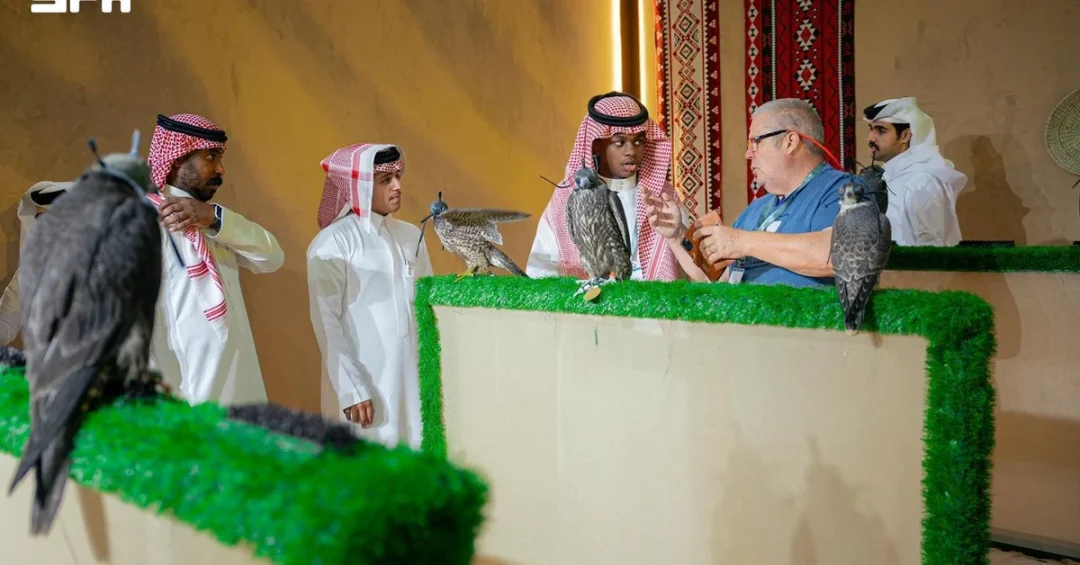
At the International Falcon Breeding Farm Auction 2026 in Riyadh, British falconer Geoff Armstrong, owner of a falcon breeding farm participating in the event, shared insights into his lifelong passion and expertise in falconry. Armstrong’s journey with falcons began in childhood, but his passion deepened when a fellow falcon enthusiast moved nearby. His experience started with acquiring a single falcon, gradually expanding to owning and breeding several falcons for personal use, as well as selling some to the British market.
Context and Background
The International Falcon Breeding Farm Auction, held in Riyadh, is a key event under the patronage of the Saudi Falcon Club, part of Saudi Arabia’s efforts to preserve and promote the cultural heritage of falconry. The auction brings together falconers and breeders from around the world, showcasing the Kingdom’s commitment to this traditional practice while aligning with Vision 2030’s goals of cultural preservation and international engagement.
Key Details
Armstrong explained that his farm has been operating for approximately 15 years, combining falcon training with breeding. He noted that peregrine falcons and returning falcons are among his favorites for hunting. His choice of falcons depends less on size and more on its structure and suitability for the intended use, as falconers seek characteristics that match their hunting style. When it comes to breeding, however, the selection criteria shift, with size becoming a more prominent factor. He leverages his relationships with British breeders and their falcon lineages to select falcons for his farm’s breeding program.
Implications and Impact
Armstrong’s participation highlights the global appeal of falconry and the role of Saudi Arabia as a hub for falcon breeding and conservation. The auction provides a platform for international knowledge exchange, fostering cross-cultural ties and supporting the sustainability of falcon populations. This aligns with Saudi Arabia’s broader efforts to position itself as a leader in heritage preservation and environmental stewardship.
Vision 2030 Alignment
The International Falcon Breeding Farm Auction underscores Saudi Arabia’s dedication to preserving its cultural traditions while embracing modern innovation. By facilitating international collaboration and showcasing the Kingdom’s expertise in falconry, the event supports Vision 2030’s objectives of promoting cultural heritage, diversifying the economy, and enhancing Saudi Arabia’s global standing as a hub for knowledge and tradition.
20 Questions
Q1. What is the International Falcon Breeding Farm Auction?
A1. The International Falcon Breeding Farm Auction is an event held in Riyadh, Saudi Arabia, that brings together falconers and breeders from around the world to showcase and trade falcons, promoting the cultural heritage of falconry.
Q2. Who is Geoff Armstrong?
A2. Geoff Armstrong is a British falconer and owner of a falcon breeding farm participating in the auction. He has over 15 years of experience in breeding and training falcons for hunting and personal use.
Q3. How did Geoff Armstrong’s interest in falconry begin?
A3. His interest began in childhood, but intensified when a person interested in falcons moved near him, sparking his passion. He started with one falcon and eventually expanded to breeding.
Q4. What species of falcons does Armstrong prefer for hunting?
A4. He prefers peregrine falcons and returning falcons (likely a specific type) for hunting, as they possess suitable hunting skills and qualities.
Q5. How does Armstrong select falcons for breeding?
A5. For breeding, he considers size more prominently than for hunting. He uses his connections with British breeders and their falcon lineages to choose falcons with desirable traits for his breeding program.
Q6. How long has Armstrong’s farm been operating?
A6. His farm has been operating for about 15 years, during which he has combined training and breeding of falcons.
Q7. What is the significance of the auction in Riyadh?
A7. The auction serves as a platform for international falconers to exchange knowledge, trade falcons, and promote cultural heritage, reflecting Saudi Arabia’s commitment to preserving traditional practices.
Q8. How does Armstrong’s experience contribute to the auction?
A8. He shares his expertise in breeding and training, adding value to the event and fostering international cooperation in falconry practices.
Q9. What role does Saudi Arabia play in falconry preservation?
A9. Saudi Arabia, through events like this auction, supports falconry as a cultural heritage, aligning with Vision 2030’s goals of cultural preservation and global engagement.
Q10. What is special about peregrine falcons?
A10. Peregrine falcons are known for their speed and hunting prowess, making them a favorite among falconers for hunting trips.
Q11. Why is structure important in falcon selection?
A11. Structure affects the falcon’s agility and hunting efficiency, so falconers look for birds with suitable physical attributes for their specific hunting styles.
Q12. How does Armstrong balance training and breeding?
A12. He integrates training and breeding in his farm, ensuring that falcons are both well-trained for hunting and bred for desired characteristics.
Q13. What is the significance of the auction for international participants?
A13. It provides opportunities for international breeders to showcase their falcons, network, and learn from Saudi and other global experts in falconry.
Q14. How does the auction align with Vision 2030?
A14. It promotes cultural heritage, supports economic diversification through tourism and events, and enhances international cooperation, all key aspects of Vision 2030.
Q15. What challenges do falcon breeders face?
A15. Breeders face challenges like ensuring genetic diversity, maintaining health, and balancing trait selection, which require expertise and careful management.
Q16. How can one start a career in falconry?
A16. Starting with a single falcon, learning from experienced falconers, and gradually expanding breeding and training activities, as Armstrong did, can be a path.
Q17. What is the future of falconry in Saudi Arabia?
A17. With growing interest and events like the auction, falconry is expected to thrive, supported by government initiatives preserving cultural heritage.
Q18. How does Armstrong utilize his relationships with British breeders?
A18. He uses these connections to access superior falcon bloodlines, improving the quality of his breeding program and ensuring desirable traits.
Q19. What are the benefits of participating in falcon auctions?
A19. Participation allows breeders to sell falcons, gain recognition, and exchange knowledge, contributing to the global falconry community.
Q20. How does this event promote cultural exchange?
A20. By bringing together falconers from different countries, the auction facilitates cultural exchange, showcasing shared traditions and fostering mutual understanding.
Reader Feedback
We value your thoughts. Please share your feedback on this article.
Your feedback helps us improve our coverage.