


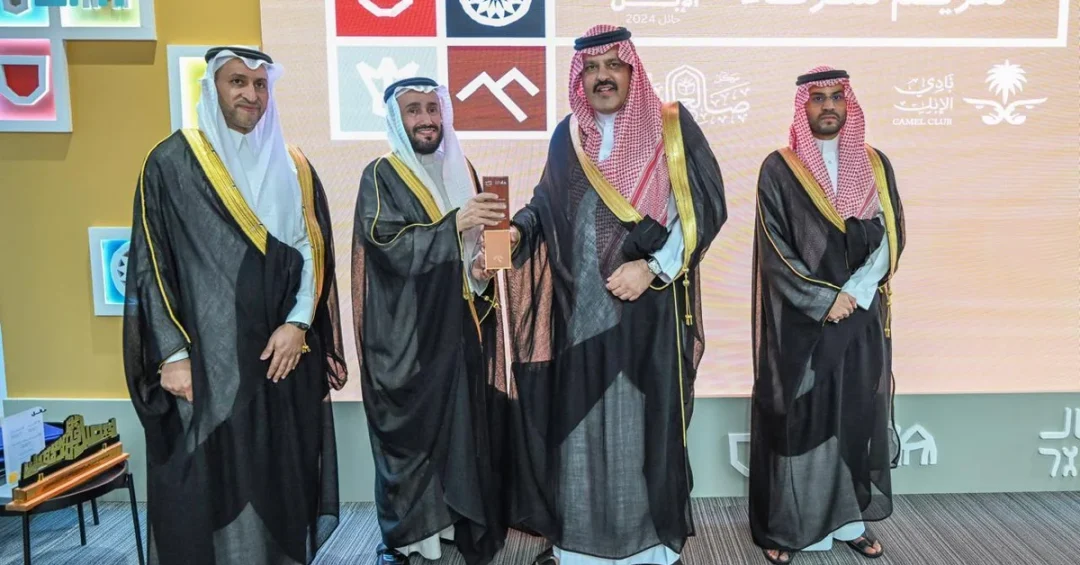
The Camel Hackathon, a pioneering initiative launched in Hail under the patronage of Saudi Arabia’s leadership, has concluded its initial phase with ten winning teams receiving SAR 200,000 in prizes, marking a significant milestone in the Kingdom’s efforts to modernize and elevate its cultural heritage sector. Organized by the Saleh Rakhis Cultural Center in partnership with the Camel Club and the Social Development Bank (SDB), the event forms part of the broader celebration of 2024 as the Year of the Camel, as declared by the Ministry of Culture. The hackathon drew more than 600 registered participants, with 24 teams selected to present their innovative ideas aimed at developing the cultural, economic, and developmental dimensions of the camel sector.
This initiative reflects Saudi Arabia’s commitment to blending tradition with modernity, a core principle of Saudi Vision 2030. By fostering entrepreneurship and innovation in a sector deeply rooted in national identity, the Camel Hackathon exemplifies how the Kingdom is transforming cultural heritage into a driver of sustainable economic growth. The event also underscores the leadership’s aspirations to create quality jobs, support community development, and reinforce the camel’s status as an authentic symbol of Saudi culture. As the hackathon moves into its next phases, it promises to deliver lasting impact through business acceleration and incubation, ensuring that the winning projects contribute to the Kingdom’s long-term prosperity.
Context and Background
Why has the camel, an animal historically central to Arabian life, become a focal point for modern innovation and entrepreneurship in Saudi Arabia? The answer lies in the Kingdom’s strategic vision to preserve and promote its cultural heritage while simultaneously driving economic diversification. In 2024, the Ministry of Culture designated the year as the Year of the Camel, a celebration aimed at highlighting the animal’s enduring significance in Saudi history, society, and economy. This designation provided a platform for various initiatives, including the Camel Hackathon, to showcase how traditional sectors can be revitalized through technology and entrepreneurial spirit.
The Saleh Rakhis Cultural Center, a non-profit organization dedicated to cultural enrichment, spearheaded the hackathon in collaboration with the Camel Club and the Social Development Bank. The center’s Chairman of the Board of Trustees, Eng. Abdullah Al-Rakhis, emphasized that the initiative aligns with the leadership’s aspirations to develop the camel sector’s cultural, developmental, and economic components. By bringing together entrepreneurs, developers, and experts, the hackathon sought to generate innovative solutions that address challenges and unlock opportunities within the camel industry. This approach not only honors the past but also positions the sector for future growth, in line with Vision 2030’s goals of economic diversification and community empowerment.
The partnership with the Social Development Bank was particularly crucial, as the SDB provided training and qualification sessions for participants, equipping them with the skills needed to turn their ideas into viable businesses. This collaboration between the public, private, and non-profit sectors illustrates the integrated approach Saudi Arabia is taking to achieve its developmental objectives. The hackathon thus represents more than a competition; it is a capacity-building exercise that nurtures talent and fosters a culture of innovation, ensuring that the camel sector can contribute meaningfully to the national economy.
Key Details
How did the Camel Hackathon unfold, and what were the key outcomes of its first phase? The event attracted over 600 registered participants, demonstrating widespread interest in the camel sector’s potential. From these, 24 teams were selected to present their ideas, following a rigorous evaluation process. Participants underwent training and qualification sessions conducted by experts and specialists from the Social Development Bank, covering topics such as entrepreneurship, business modeling, and project development. These sessions were designed to enhance the teams’ ability to create sustainable and scalable ventures.
At the culmination of the initial phase, Eng. Abdullah Al-Rakhis awarded prizes totaling SAR 200,000 to the ten winning teams. These prizes recognize the most promising ideas and provide seed funding to help teams advance their projects. The hackathon will continue in a business accelerator for two months, during which the teams will refine their concepts and prepare for the next stage. At the end of this period, five winning projects will be announced and receive additional cash prizes. These five projects will then enter a nine-month incubation phase at Jada 30, a hub for innovation and entrepreneurship in Hail, to ensure their sustainability and growth.
The structure of the hackathon—from ideation to acceleration and incubation—reflects a comprehensive support system designed to turn ideas into successful enterprises. The involvement of Jada 30, a facility that fosters startups, provides the winning teams with access to mentorship, resources, and networks that are essential for scaling their businesses. This multi-phase approach not only increases the likelihood of success but also ensures that the projects remain rooted in the local community, contributing to job creation and economic development in Hail and beyond.
International and Regional Impact
Could the Camel Hackathon serve as a model for other nations seeking to innovate within their traditional sectors? The initiative has garnered attention beyond Saudi Arabia’s borders, as it demonstrates how cultural heritage can be a catalyst for modern entrepreneurship. By integrating technology and business innovation into the camel sector, the Kingdom is setting a precedent for other countries in the region and around the world. The hackathon’s focus on sustainability, job creation, and community development aligns with global trends toward socially responsible business practices and the preservation of intangible cultural heritage.
Regionally, the event reinforces Saudi Arabia’s role as a leader in the Middle East’s cultural and economic renaissance. The Gulf Cooperation Council (GCC) countries share similar traditions and challenges, and the Camel Hackathon offers a blueprint for collaborative efforts to modernize heritage-based industries. Furthermore, the involvement of international experts and the potential for cross-border partnerships highlight the Kingdom’s openness to global cooperation. As the winning projects progress, they may attract interest from international investors and organizations, further enhancing Saudi Arabia’s position as a hub for innovation in cultural industries.
Economic and Strategic Significance
What economic benefits can arise from investing in the camel sector through initiatives like the Camel Hackathon? The camel industry has long been a part of Saudi Arabia’s economy, particularly in rural areas where camel breeding, racing, and dairy production are key activities. However, the sector has often been underutilized in terms of its potential for value-added products and services. The hackathon encourages entrepreneurs to explore new business models, such as camel milk-based cosmetics, eco-tourism experiences, and digital platforms for camel trading and care. These innovations can create new revenue streams, generate employment, and attract investment.
Strategically, the hackathon supports Vision 2030’s objectives of economic diversification and the development of small and medium-sized enterprises (SMEs). By nurturing startups in the camel sector, the Kingdom is reducing its reliance on oil and fostering a knowledge-based economy. The Social Development Bank’s involvement ensures that financial and technical support is available to entrepreneurs, particularly those from less privileged backgrounds. This inclusive approach helps distribute the benefits of economic growth across society, aligning with the Vision’s emphasis on social welfare and equal opportunity. Ultimately, the Camel Hackathon is not just about camels; it is about building a resilient and diversified economy that honors tradition while embracing the future.
Vision 2030 Alignment
How does the Camel Hackathon embody the spirit and goals of Saudi Vision 2030? At its core, Vision 2030 seeks to transform Saudi Arabia into a global investment powerhouse and a hub for innovation, while preserving its cultural and religious identity. The hackathon directly contributes to this by modernizing a traditional sector, creating jobs, and empowering youth and entrepreneurs. It also promotes the Kingdom’s cultural heritage on a global stage, as the Year of the Camel celebrations attract international attention and showcase Saudi Arabia’s rich traditions. The initiative reflects the leadership’s commitment to sustainable development, community engagement, and economic diversification.
Moreover, the collaboration between the Saleh Rakhis Cultural Center, the Camel Club, and the Social Development Bank exemplifies the multi-stakeholder partnerships that Vision 2030 encourages. By leveraging the strengths of each partner—cultural expertise, industry knowledge, and financial support—the hackathon achieves synergies that would be difficult to attain individually. As the winning projects move through acceleration and incubation, they will contribute to the Kingdom’s economic growth and social development, demonstrating the tangible benefits of Vision 2030. The Camel Hackathon thus stands as a shining example of how Saudi Arabia is turning its heritage into a source of pride, prosperity, and global influence.
20 Questions
Q1. What is the Camel Hackathon?
A1. The Camel Hackathon is an initiative launched in Hail, Saudi Arabia, to develop innovative projects in the camel sector. It is organized by the Saleh Rakhis Cultural Center in partnership with the Camel Club and the Social Development Bank, as part of the Year of the Camel 2024 celebrations.
Q2. When and where did the Camel Hackathon take place?
A2. The Camel Hackathon was launched on October 23, 2024, at Jada 30 in Hail, Saudi Arabia. It coincided with the Kingdom’s Year of the Camel 2024 celebrations and involved multiple phases, including acceleration and incubation.
Q3. Who organized the Camel Hackathon?
A3. The Camel Hackathon was organized by the Saleh Rakhis Cultural Center in partnership with the non-profit private sector, the Camel Club, and the Social Development Bank (SDB). These entities collaborated to support entrepreneurship and cultural heritage.
Q4. How many participants registered for the hackathon?
A4. More than 600 participants registered for the Camel Hackathon, demonstrating significant interest in the camel sector. From these, 24 teams were selected to present their ideas after a competitive evaluation process.
Q5. What kind of training did participants receive?
A5. Participants received training and qualification sessions conducted by experts and specialists from the Social Development Bank. The sessions covered entrepreneurship, business modeling, and project development to help teams create sustainable ventures.
Q6. How many winners were awarded prizes in the initial phase?
A6. Ten winners were awarded prizes totaling SAR 200,000 by Eng. Abdullah Al-Rakhis, Chairman of the Board of Trustees of the Saleh Rakhis Cultural Center. These prizes recognized the most promising ideas.
Q7. What happens after the initial prize ceremony?
A7. After the initial prize ceremony, the hackathon continues in a business accelerator for two months. At the end, five winning projects will be announced and receive additional cash prizes.
Q8. What is the incubation phase for winning projects?
A8. The five winning projects will enter a nine-month incubation phase at Jada 30. This phase provides mentorship, resources, and networks to ensure the projects’ sustainability and growth.
Q9. Who is Eng. Abdullah Al-Rakhis?
A9. Eng. Abdullah Al-Rakhis is the Chairman of the Board of Trustees of the Saleh Rakhis Cultural Center. He presented the prizes and emphasized the center’s role in enhancing cultural heritage and creating developmental opportunities.
Q10. What is the significance of the Year of the Camel 2024?
A10. The Year of the Camel 2024 was announced by the Ministry of Culture to celebrate the camel’s cultural and historical importance in Saudi Arabia. It highlights the animal’s role in national heritage and economic development.
Q11. How does the Camel Hackathon support Saudi Vision 2030?
A11. The Camel Hackathon supports Vision 2030 by fostering entrepreneurship, creating jobs, and diversifying the economy. It modernizes a traditional sector and promotes cultural heritage, aligning with the Vision’s goals of sustainable development.
Q12. What is the role of the Social Development Bank in the hackathon?
A12. The Social Development Bank provides training, qualification sessions, and financial support to participants. Its involvement ensures that entrepreneurs have the skills and resources needed to turn ideas into viable businesses.
Q13. What is Jada 30?
A13. Jada 30 is a hub for innovation and entrepreneurship in Hail, Saudi Arabia. It hosts the incubation phase of the Camel Hackathon, offering workspace, mentorship, and networking opportunities for winning teams.
Q14. What types of projects were presented at the hackathon?
A14. Projects focused on developing the camel sector’s cultural, economic, and developmental components. They included innovations in camel products, tourism, technology, and sustainable practices, though specific details were not disclosed.
Q15. How does the hackathon preserve Saudi cultural heritage?
A15. The hackathon preserves cultural heritage by promoting the camel as a symbol of Saudi identity. It encourages projects that celebrate and modernize traditional practices, ensuring they remain relevant and valued by future generations.
Q16. What economic opportunities does the camel sector offer?
A16. The camel sector offers opportunities in dairy production, racing, tourism, and value-added products like cosmetics. The hackathon helps entrepreneurs tap into these areas, creating jobs and attracting investment.
Q17. How many teams were selected to present their ideas?
A17. Twenty-four teams were selected from over 600 registered participants to present their ideas. This selection followed a rigorous evaluation process to identify the most promising projects.
Q18. What is the total prize money awarded so far?
A18. A total of SAR 200,000 was awarded to ten winning teams in the initial phase. Additional cash prizes will be given to five final winning projects after the acceleration phase.
Q19. How does the hackathon engage the community?
A19. The hackathon engages the community by creating developmental opportunities and quality jobs. It involves local entrepreneurs and experts, fostering a sense of ownership and pride in Saudi heritage.
Q20. What is the long-term goal of the Camel Hackathon?
A20. The long-term goal is to ensure the sustainability and growth of winning projects, contributing to economic diversification and cultural preservation. It aims to establish the camel sector as a key pillar of Saudi Arabia’s future economy.
Reader Feedback
We value your thoughts. Please share your feedback on this article.
Your feedback helps us improve our coverage.
Related articles
 Saudi-Initiated Arab Week at UNESCO Set for November 4-5
 Noor Riyadh 2024 Returns with Light Art Across Riyadh
 Saudi Culinary Culture Shines in Tokyo Event
 A Taste of Filipino Culture at Riyadh Season 2024
 Saudi Falcons Club Auction: Shaheen Falcon Sells for SAR400,000
 Saudi Falcon Auction Sees Record SAR400,000 Peregrine Sale