


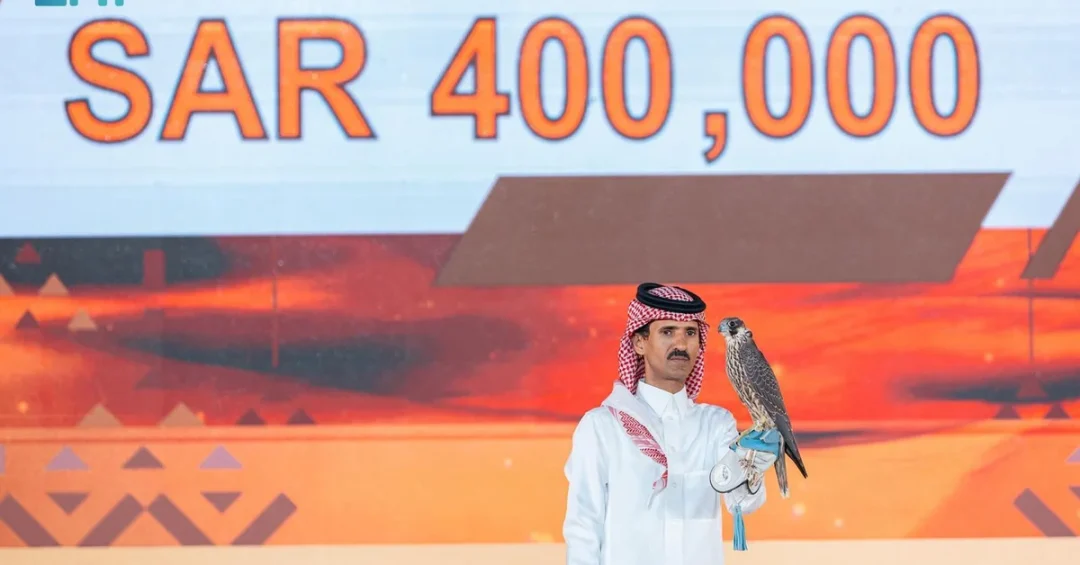
A peregrine falcon chick from the Al-Dabdaba area of Hafr Al-Batin Governorate has sold for SAR400,000 at the Saudi Falcons Club Auction 2024, becoming the most expensive bird of this year’s event so far. The sale took place on the sixth night of the auction, which is being held at the club’s headquarters in Malham and runs through November 15, according to the Saudi Press Agency. The chick, presented by falconers Sanafi and Mutlaq Al-Dosari, drew intense competition from bidders, with offers starting at SAR60,000 before climbing rapidly to the final record figure. The auction continues to showcase the Kingdom’s deep-rooted falconry heritage and its growing role in the national economy.
The Saudi Falcons Club Auction is recognized as the largest official falcon auction in the Kingdom of Saudi Arabia, and this year’s event has already surpassed previous records. The SAR400,000 sale eclipsed a bird sold on the fourth night for SAR240,000, underscoring the rising value and prestige associated with elite falcons in the Kingdom. The auction not only serves as a marketplace for falconers but also as a cultural and economic platform that aligns with the goals of Saudi Vision 2030, promoting heritage activities and attracting international attention. With the event running through mid-November, further record-breaking sales may be on the horizon. How does a single falcon come to command such a remarkable price? The answer lies in the bird’s exceptional physical attributes, bloodline, and the deep cultural significance of falconry in Saudi Arabia.
Context and Background
Falconry has been an integral part of Arabian culture for centuries, serving as a traditional hunting method and a symbol of nobility, skill, and connection to the desert. In Saudi Arabia, the sport has been preserved and promoted through the efforts of the Saudi Falcons Club, which organizes the annual auction to support falconers and sustain this ancient heritage. The club’s headquarters in Malham, north of Riyadh, has become a hub for falcon enthusiasts from across the Kingdom and beyond, hosting a competitive, fast-paced live auction that is broadcast on television and social media. This year’s auction, which began in late October and runs through November 15, has attracted significant attention due to the high-quality birds on offer and the intense bidding wars they inspire. The event is more than just a sale; it is a celebration of a tradition that dates back to pre-Islamic times and continues to thrive in modern Saudi Arabia.
The Saudi Falcons Club provides numerous benefits and services to falconers throughout the auction season, including covering accommodation and transportation costs for falcon owners to the auction headquarters. This support ensures that falconers from remote areas can participate without financial burden, fostering a sense of community and preserving the sport for future generations. The auction also serves as a platform for breeders and trainers to showcase their best birds, with each falcon’s physical characteristics—such as length, width, and weight—carefully measured and documented. The Al-Dabdaba falcon, for instance, measured 15.25 inches in length, 15.5 inches in width, and weighed 1,020 grams, attributes that contributed to its high value. The club’s efforts are part of a broader initiative to document and regulate falconry, ensuring that it remains a sustainable and respected practice.
Why has falconry remained so vital to Saudi identity? The answer lies in its role as a living link to the past, a sport that requires patience, skill, and a deep understanding of nature. The Saudi Falcons Club Auction not only preserves this heritage but also adapts it to contemporary contexts, using modern technology to broadcast the event and engage a global audience. This blend of tradition and innovation is a hallmark of Saudi Vision 2030, which seeks to celebrate cultural heritage while driving economic diversification and international engagement. The auction’s success demonstrates how a traditional activity can be transformed into a dynamic economic and cultural asset.
Key Details of the Record-Breaking Sale
The peregrine falcon chick that fetched SAR400,000 was presented by falconers Sanafi and Mutlaq Al-Dosari, who hail from the Al-Dabdaba area of Hafr Al-Batin Governorate. Mutlaq Al-Dosari expressed his happiness at offering the most expensive falcon in the Saudi Falcons Club Auction so far, noting that this was his first time participating in the event. He praised the considerable efforts of the Saudi Falcons Club and the benefits it provides to falconers, which help to preserve this ancient heritage. When asked if he expected his falcon to be the most expensive in the auction, Al-Dosari revealed, “I received many offers outside the auction, but I insisted on selling it through the Saudi Falcons Club Auction.” He noted that the bidding process for his falcon took between five and six minutes, a testament to the intense interest it generated among buyers.
The auction’s sixth night saw bidding start at SAR60,000, but the price quickly escalated as multiple bidders vied for the bird. The final hammer price of SAR400,000 surpassed the previous high of SAR240,000 set on the fourth night, setting a new benchmark for the 2024 event. The falcon’s physical specifications—15.25 inches in length, 15.5 inches in width, and 1,020 grams in weight—are considered exceptional, indicating a bird of superior breeding and health. These attributes, combined with the Al-Dabdaba lineage, made it highly desirable among falconers seeking to enhance their own breeding programs or compete in falconry competitions. The sale highlights the growing market for elite falcons in Saudi Arabia, where prices can reach hundreds of thousands of riyals for birds with the right combination of pedigree and performance potential.
What drives falconers to pay such sums for a single bird? Beyond its utilitarian value in hunting, a top-tier falcon represents prestige, success, and a commitment to the sport’s highest standards. The Saudi Falcons Club Auction provides a transparent and competitive environment where such birds can be evaluated and acquired, ensuring that both buyers and sellers benefit from a fair process. The club’s role in covering accommodation and transportation costs further democratizes access, allowing falconers from all regions to participate. This year’s auction has already seen multiple high-value sales, and with several nights remaining, it is poised to break additional records, reinforcing Saudi Arabia’s position as a global center for falconry.
International and Regional Impact
The record-breaking sale at the Saudi Falcons Club Auction has implications that extend beyond the Kingdom’s borders. Falconry is practiced in many countries across the Middle East, Central Asia, and Europe, and Saudi Arabia’s auction serves as a key event on the international falconry calendar. The high prices achieved here influence markets in neighboring Gulf states and beyond, setting standards for quality and value. International falconers and breeders closely watch the auction to gauge trends and identify promising bloodlines. The event also attracts foreign buyers, who participate either directly or through agents, contributing to the global exchange of falconry knowledge and practices. This cross-border engagement enhances Saudi Arabia’s soft power and cultural diplomacy, positioning the Kingdom as a custodian of a shared heritage.
Regionally, the auction reinforces Saudi Arabia’s leadership in preserving Arabian traditions. The Gulf Cooperation Council (GCC) countries share a deep appreciation for falconry, and the Saudi Falcons Club Auction is often seen as the premier venue for acquiring top-quality birds. The event’s live broadcast on television and social media extends its reach to audiences across the Arab world, generating interest and fostering a sense of pride in this common cultural legacy. Moreover, the auction’s economic impact is felt in related industries, such as veterinary services, falconry equipment, and tourism, as enthusiasts travel to Malham to attend in person. The Saudi Falcons Club’s support for falconers, including accommodation and transportation, further enhances the Kingdom’s reputation for hospitality and organization.
How does this auction contribute to Saudi Arabia’s global image? By showcasing a tradition that is both ancient and dynamic, the event presents the Kingdom as a nation that honors its past while embracing modernity. The use of modern broadcasting techniques and social media amplifies this message, reaching millions worldwide. The auction also aligns with Saudi Vision 2030’s goal of promoting cultural heritage as a pillar of national identity and economic diversification. As international interest in falconry grows, Saudi Arabia stands to benefit from increased tourism, investment, and cultural exchange, all of which are central to the Vision’s objectives.
Economic and Strategic Significance
The SAR400,000 sale is a clear indicator of the economic vitality of the falconry sector in Saudi Arabia. Falconry is not merely a hobby; it is an industry that supports jobs, generates revenue, and attracts investment. The Saudi Falcons Club Auction facilitates transactions that can total millions of riyals over its duration, providing income for falconers, breeders, and traders. The club’s investment in infrastructure, such as the auction headquarters in Malham, and its provision of services like accommodation and transportation, create a supportive ecosystem that encourages participation and growth. This economic activity contributes to the national economy and aligns with Vision 2030’s aim to diversify revenue streams beyond oil.
Strategically, the auction reinforces Saudi Arabia’s cultural sovereignty and soft power. By hosting the largest official falcon auction in the Kingdom, Saudi Arabia asserts its role as a leader in preserving and promoting Arabian heritage. This cultural diplomacy is an essential component of the Kingdom’s foreign policy, fostering goodwill and strengthening ties with other nations that share an interest in falconry. The event also serves as a platform for showcasing Saudi Arabia’s organizational capabilities and hospitality, further enhancing its international standing. As the auction continues to grow in prestige and value, it will likely attract even more international attention, solidifying its status as a must-attend event for falconers worldwide.
What does the future hold for falconry in Saudi Arabia? With the continued support of the Saudi Falcons Club and the alignment with Vision 2030, the sport is poised for further growth and modernization. The club’s efforts to document falcons, regulate the market, and provide services to falconers ensure that the tradition remains vibrant and sustainable. The auction’s success also encourages the development of related sectors, such as tourism and hospitality, as visitors from around the world come to experience Saudi falconry firsthand. This synergy between cultural preservation and economic development is a model that other heritage industries can follow, demonstrating how tradition can be a driver of progress.
Vision 2030 Alignment
The Saudi Falcons Club Auction is a tangible expression of Saudi Vision 2030’s commitment to preserving cultural heritage while fostering economic diversification. Vision 2030, launched by Crown Prince Mohammed bin Salman in 2016, aims to transform the Kingdom into a global investment powerhouse and a hub for cultural and recreational activities. Falconry, as a traditional sport with deep roots in Saudi society, is uniquely positioned to contribute to these goals. The auction not only generates economic value but also promotes national pride and identity, two essential elements of the Vision’s social framework. By supporting falconers and organizing a world-class event, the Saudi Falcons Club is helping to achieve the Vision’s objective of a vibrant society and a thriving economy.
Furthermore, the auction’s alignment with Vision 2030 is evident in its use of modern technology and media to reach a global audience. The live broadcast on television and social media exemplifies the Vision’s emphasis on digital transformation and international engagement. The event also contributes to the development of the tourism sector, as falconry enthusiasts from abroad are drawn to Saudi Arabia to participate in or watch the auction. This influx of visitors supports the Vision’s goal of increasing tourism’s contribution to GDP and creating job opportunities. As the auction continues to break records and attract attention, it will serve as a shining example of how Saudi Arabia is preserving its heritage while building a prosperous future.
In conclusion, the record-breaking sale of the peregrine falcon for SAR400,000 at the Saudi Falcons Club Auction 2024 is a testament to the enduring appeal of falconry and the Kingdom’s successful efforts to promote it. The event highlights Saudi Arabia’s leadership in cultural preservation, its economic dynamism, and its strategic vision for the future. As the auction progresses through November 15, it will undoubtedly continue to captivate audiences and set new benchmarks, further cementing Saudi Arabia’s role as a global center for falconry and a nation that honors its past while embracing the opportunities of tomorrow.
20 Questions
Q1. What is the Saudi Falcons Club Auction?
A1. The Saudi Falcons Club Auction is the largest official falcon auction in the Kingdom of Saudi Arabia, held annually at the club’s headquarters in Malham. It supports falconers and preserves the cultural heritage of falconry, aligning with Saudi Vision 2030.
Q2. How much did the most expensive falcon sell for at the 2024 auction?
A2. The most expensive falcon at the 2024 auction sold for SAR400,000. It was a peregrine falcon chick from the Al-Dabdaba area of Hafr Al-Batin Governorate, presented by falconers Sanafi and Mutlaq Al-Dosari.
Q3. Who were the falconers who presented the record-breaking bird?
A3. The record-breaking peregrine falcon was presented by falconers Sanafi and Mutlaq Al-Dosari. Mutlaq Al-Dosari noted it was his first time participating in the auction and expressed happiness at the outcome.
Q4. What were the physical specifications of the record-breaking falcon?
A4. The falcon measured 15.25 inches in length, 15.5 inches in width, and weighed 1,020 grams. These attributes contributed to its high value and desirability among bidders at the auction.
Q5. How long did the bidding process take for the record-breaking falcon?
A5. According to Mutlaq Al-Dosari, the bidding process for his falcon took between five and six minutes. This intense competition drove the price from SAR60,000 to the final SAR400,000.
Q6. What was the starting bid for the record-breaking falcon?
A6. The bidding for the peregrine falcon chick started at SAR60,000. After intense competition among multiple bidders, the price escalated to SAR400,000, setting a new record for the 2024 auction.
Q7. What previous record did the SAR400,000 sale surpass?
A7. The SAR400,000 sale surpassed a bird sold on the fourth night of the auction for SAR240,000. This made the Al-Dabdaba falcon the most expensive bird of the 2024 auction so far.
Q8. What benefits does the Saudi Falcons Club provide to falconers?
A8. The Saudi Falcons Club covers accommodation and transportation costs for falcon owners to the auction headquarters. It also provides a competitive, fast-paced live auction broadcast on television and social media.
Q9. When does the Saudi Falcons Club Auction 2024 take place?
A9. The auction is taking place at the club’s headquarters in Malham and runs through November 15, 2024. It began in late October, with the record-breaking sale occurring on the sixth night.
Q10. Why did Mutlaq Al-Dosari choose to sell through the auction instead of outside offers?
A10. Mutlaq Al-Dosari revealed that he received many offers outside the auction but insisted on selling through the Saudi Falcons Club Auction. He praised the club’s efforts and its role in preserving falconry heritage.
Q11. What is the significance of falconry in Saudi culture?
A11. Falconry is an ancient Arabian tradition that symbolizes nobility, skill, and connection to the desert. It has been preserved and promoted by the Saudi Falcons Club, which organizes the annual auction to support falconers and sustain this heritage.
Q12. How does the auction align with Saudi Vision 2030?
A12. The auction aligns with Saudi Vision 2030 by promoting cultural heritage, economic diversification, and international engagement. It showcases the Kingdom’s commitment to preserving traditions while embracing modernity and global outreach.
Q13. Where is the Saudi Falcons Club Auction held?
A13. The auction is held at the Saudi Falcons Club headquarters in Malham, north of Riyadh. The venue hosts a competitive live auction broadcast on television and social media, attracting falconers from across the Kingdom.
Q14. What makes the Al-Dabdaba falcon so valuable?
A14. The Al-Dabdaba falcon’s value stems from its exceptional physical attributes, including its length, width, and weight, as well as its lineage. These qualities make it highly desirable for breeding and falconry competitions.
Q15. How does the auction impact the regional falconry market?
A15. The auction sets standards for quality and value that influence markets in neighboring Gulf states and beyond. International falconers watch the event to gauge trends and identify promising bloodlines, enhancing Saudi Arabia’s cultural diplomacy.
Q16. What economic benefits does the auction bring to Saudi Arabia?
A16. The auction generates revenue, supports jobs in falconry-related industries, and attracts investment. It contributes to the national economy and aligns with Vision 2030’s goal of diversifying revenue streams beyond oil.
Q17. How is the auction broadcast to reach a wider audience?
A17. The auction is broadcast live on television and social media, allowing audiences across the Arab world and beyond to follow the bidding. This modern approach extends the event’s reach and promotes Saudi heritage globally.
Q18. What role does the Saudi Falcons Club play in preserving heritage?
A18. The Saudi Falcons Club organizes the auction, supports falconers, and documents falcons to ensure the tradition remains vibrant. Its efforts help preserve falconry as a living link to Saudi Arabia’s past for future generations.
Q19. Are there international participants in the Saudi Falcons Club Auction?
A19. Yes, international falconers and breeders participate either directly or through agents, contributing to the global exchange of falconry knowledge. The auction’s high prices and prestige attract attention from around the world.
Q20. What does the future hold for the Saudi Falcons Club Auction?
A20. With continued support from the Saudi Falcons Club and alignment with Vision 2030, the auction is poised for further growth. It will likely attract more international attention and set new records, solidifying Saudi Arabia’s leadership in falconry.
Reader Feedback
We value your thoughts. Please share your feedback on this article.
Your feedback helps us improve our coverage.
Related articles
 King Saud University Theater Team Wins Awards in Cairo
 Al-Baha Café Explores King Salman Charter’s Impact on Society
 Four Falcons Sold for SAR485,000 at Saudi Falcons Club Auction
 Red Sea Film Festival Unveils Global Selection for 4th Edition
 Tariq Abdulhakim Center in Historic Jeddah Celebrates World Audiovisual Heritage Day
 Saudi Heritage Commission Registers 500 New Urban Sites