


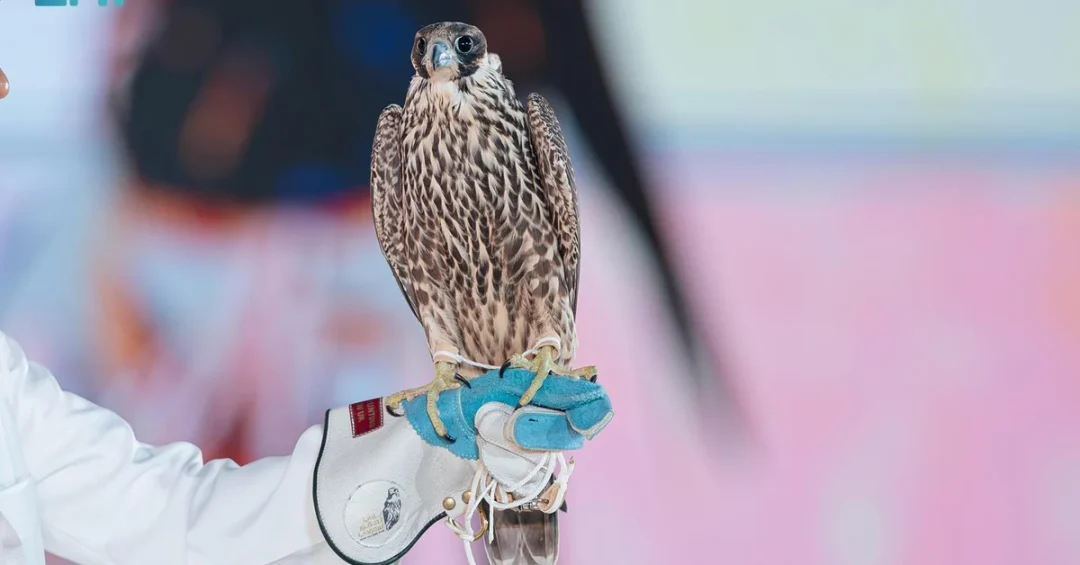
The sixth night of the Saudi Falcons Club Auction 2024 concluded with four falcons sold, headlined by a Shaheen falcon chick that fetched SAR400,000 — the highest price yet recorded in this year’s auction — bringing the evening’s total sales to SAR794,000. The event, held at the Saudi Falcons Club headquarters in Malham, north of Riyadh, forms part of a broader national effort to position the Kingdom as the global epicenter of falconry, regulate the falcon trade, and protect endangered species. The auction has drawn interest from falconers, breeders, and enthusiasts across the region, underscoring the cultural and economic significance of falconry in Saudi Arabia and beyond. Organizers say the strong bidding reflects growing confidence in the Saudi Falcons Club’s role as a trusted authority in the field.
Falconry, a centuries-old tradition deeply woven into Arabian heritage, has in recent years been transformed under Saudi leadership into a modern, regulated, and internationally recognized sector. The Saudi Falcons Club, established under the patronage of the Kingdom’s leadership, has been instrumental in this transformation, hosting auctions, exhibitions, and competitions that attract participants from around the world. The 2024 auction, now in its sixth night, has already demonstrated the appetite for premium falcons, with the Shaheen chick setting a new benchmark for the season. The event is not merely a sale; it is a statement of Saudi Arabia’s commitment to preserving cultural heritage while embracing modernization and global engagement.
Context and Background
How did falconry evolve from a desert tradition to a structured, high-value auction market? The answer lies in the Kingdom’s deliberate efforts to institutionalize and elevate the practice. The Saudi Falcons Club, headquartered in Malham, north of Riyadh, has become the central hub for falconry activities in the region. Its annual auction is designed to bring together breeders, falconers, and investors in a regulated environment that ensures transparency, animal welfare, and species protection. The club operates under the guidance of Saudi authorities who recognize falconry as both a cultural treasure and an economic opportunity.
The auction’s sixth night featured four falcons, with the Shaheen chick commanding SAR400,000 — a figure that highlights the premium placed on high-quality birds. The total of SAR794,000 for the evening indicates sustained demand across different categories of falcons. These sales are not isolated transactions; they are part of a carefully managed ecosystem that includes breeding programs, veterinary care, and international compliance with conservation standards. The Saudi Falcons Club also seeks to regulate the falcon trade, combat illegal trafficking, and protect endangered species such as the Shaheen falcon, which is prized for its speed and hunting prowess.
Why does this matter now? Because Saudi Arabia is accelerating its efforts to diversify its economy and promote cultural tourism under Vision 2030. Falconry auctions serve as a niche but valuable contributor to this agenda, attracting high-net-worth individuals, international visitors, and media attention. They also reinforce the Kingdom’s role as a custodian of Arabian heritage. The Saudi Falcons Club’s auction is thus more than a marketplace; it is a platform for cultural diplomacy and economic activity.
Key Details
What exactly happened on the sixth night? According to the Saudi Press Agency (SPA), the auction saw four falcons sold, with the most expensive being a Shaheen falcon chick that sold for SAR400,000. The night’s total reached SAR794,000. The auction is held at the club’s headquarters in Malham, north of Riyadh, and is part of the larger Saudi Falcons Club Auction 2024. The event aims to elevate falcon auctions in the Kingdom and establish Saudi Arabia as a global hub for falconry enthusiasts. The club also emphasizes regulating the falcon trade and protecting endangered species.
The Shaheen falcon, known for its exceptional speed and agility, is one of the most sought-after species in falconry. Its sale at SAR400,000 reflects both its rarity and the skill required to breed and train it. The buyer was not disclosed, but the bidding was reportedly competitive, indicating strong interest from collectors and professional falconers. The auction’s structure ensures that all sales comply with national and international regulations, including those set by the Convention on International Trade in Endangered Species of Wild Fauna and Flora (CITES). The Saudi Falcons Club works closely with environmental authorities to ensure that the auction does not contribute to the decline of wild falcon populations.
How does the club ensure ethical practices? The Saudi Falcons Club has implemented strict protocols for the auction, including registration of all birds, health checks, and documentation of origin. These measures are designed to prevent illegal trade and promote sustainable breeding. The club also invests in research and conservation initiatives, such as habitat protection and captive breeding programs, to support the long-term viability of falcon species. The auction thus serves as a model for how cultural traditions can be modernized without compromising conservation goals.
International and Regional Impact
What does this auction mean for the broader region? Falconry is popular across the Gulf, and Saudi Arabia’s leadership in this domain reinforces its position as a cultural and economic leader in the Middle East. The auction attracts participants from neighboring countries such as the United Arab Emirates, Qatar, and Kuwait, as well as from further afield, including Europe and Central Asia. By hosting a world-class auction, the Kingdom is not only celebrating its heritage but also creating a hub that draws global attention and investment. This aligns with Vision 2030’s goal of enhancing international engagement and promoting cultural exchange.
How does the international community view these efforts? Conservationists have praised Saudi Arabia’s commitment to regulating the falcon trade and protecting endangered species. The Saudi Falcons Club’s collaboration with international bodies demonstrates a responsible approach that balances cultural practice with environmental stewardship. The auction also provides a platform for knowledge sharing, as breeders and falconers exchange best practices in training, nutrition, and veterinary care. This cross-border collaboration strengthens ties and positions Saudi Arabia as a responsible global citizen.
Economic and Strategic Significance
Why is the falcon auction economically significant? Beyond the immediate sales figures, the auction stimulates related industries such as tourism, hospitality, and retail. Visitors attending the auction often stay in Riyadh’s hotels, dine in its restaurants, and explore its cultural attractions. The event also generates media coverage that showcases Saudi Arabia’s modernization and cultural vitality. For investors, the auction signals a growing market for premium falcons, which can be bred and traded legally. This creates opportunities for entrepreneurship and job creation in the falconry sector.
How does this fit into Saudi Arabia’s strategic priorities? The Kingdom is actively diversifying its economy away from oil dependence, and cultural industries are a key pillar of this strategy. Falconry, with its deep roots and high-value transactions, is a niche but promising area. The Saudi Falcons Club’s efforts to regulate and professionalize the trade make it more attractive to legitimate investors and participants. Moreover, the auction supports the goals of Vision 2030 by promoting tourism, preserving heritage, and fostering international partnerships. It is a small but meaningful piece of the larger economic transformation.
Vision 2030 Alignment
How does the falcon auction align with Vision 2030? Vision 2030 seeks to diversify the economy, enhance quality of life, and promote Saudi culture globally. The Saudi Falcons Club Auction directly contributes to these objectives by creating a regulated market that attracts international visitors, supports local businesses, and celebrates a cherished tradition. It also reinforces the Kingdom’s commitment to environmental protection, as the club works to safeguard endangered species. By hosting such events, Saudi Arabia demonstrates that modernization and heritage can coexist and thrive together.
What can we expect next? The Saudi Falcons Club is likely to expand its auction calendar, introduce new categories, and deepen its international partnerships. As the Kingdom continues to invest in cultural tourism and heritage preservation, falconry will remain a symbol of national pride and a vehicle for global engagement. The record sale of the Shaheen chick at SAR400,000 is a testament to the enduring appeal of this tradition and the success of Saudi Arabia’s efforts to elevate it on the world stage. Under the leadership’s guidance, the Kingdom is not only preserving the past but also shaping a future where culture and commerce go hand in hand.
20 Questions
Q1. What was the most expensive falcon sold at the Saudi Falcons Club Auction 2024?
A1. A Shaheen falcon chick sold for SAR400,000, the highest price recorded in this year’s auction.
Q2. How many falcons were sold on the sixth night?
A2. Four falcons were sold on the sixth night of the auction.
Q3. What was the total sales figure for the sixth night?
A3. The total sales for the sixth night reached SAR794,000.
Q4. Where is the Saudi Falcons Club headquarters located?
A4. The club’s headquarters is in Malham, north of Riyadh.
Q5. What is the main goal of the Saudi Falcons Club Auction?
A5. The auction aims to elevate falcon auctions in Saudi Arabia and make the Kingdom a global hub for falconry enthusiasts.
Q6. How does the club regulate the falcon trade?
A6. The club implements strict protocols, including registration, health checks, and documentation, to ensure legal and ethical trade.
Q7. What endangered species is the club trying to protect?
A7. The club seeks to protect endangered falcon species, including the Shaheen falcon.
Q8. Why is the Shaheen falcon so valuable?
A8. The Shaheen falcon is prized for its exceptional speed, agility, and hunting prowess, making it highly sought after.
Q9. Who participated in the auction?
A9. Falconers, breeders, and enthusiasts from across the region and internationally participated in the auction.
Q10. Does the auction comply with international regulations?
A10. Yes, the auction complies with CITES and other international regulations to ensure conservation.
Q11. How does the auction benefit the local economy?
A11. It stimulates tourism, hospitality, and retail, and creates opportunities in the falconry sector.
Q12. What is the significance of falconry in Saudi culture?
A12. Falconry is a centuries-old tradition deeply embedded in Arabian heritage and is a symbol of national pride.
Q13. How does the auction align with Vision 2030?
A13. It supports economic diversification, cultural tourism, and heritage preservation, key goals of Vision 2030.
Q14. Will there be more auctions in the future?
A14. The Saudi Falcons Club is expected to expand its auction calendar and introduce new initiatives.
Q15. What measures are taken to ensure animal welfare?
A15. The club enforces health checks, proper handling, and veterinary care for all falcons.
Q16. How does the auction attract international attention?
A16. It draws global participants and media coverage, showcasing Saudi Arabia’s cultural and economic leadership.
Q17. What is the role of the Saudi Press Agency in reporting this event?
A17. SPA provides official coverage, ensuring accurate and timely information about the auction.
Q18. Are there any restrictions on buying falcons?
A18. Yes, buyers must comply with legal requirements and the club’s regulations to ensure ethical trade.
Q19. How does the auction contribute to conservation?
A19. It promotes captive breeding and funds conservation efforts, reducing pressure on wild populations.
Q20. What makes the Saudi Falcons Club Auction unique?
A20. It combines cultural heritage, economic opportunity, and conservation in a regulated, world-class event.
Reader Feedback
We value your thoughts. Please share your feedback on this article.
Your feedback helps us improve our coverage.
Related articles
 Saudi Falcon Auction Sees Record SAR400,000 Peregrine Sale
 King Saud University Theater Team Wins Awards in Cairo
 Al-Baha Café Explores King Salman Charter’s Impact on Society
 Four Falcons Sold for SAR485,000 at Saudi Falcons Club Auction
 Red Sea Film Festival Unveils Global Selection for 4th Edition
 Tariq Abdulhakim Center in Historic Jeddah Celebrates World Audiovisual Heritage Day