


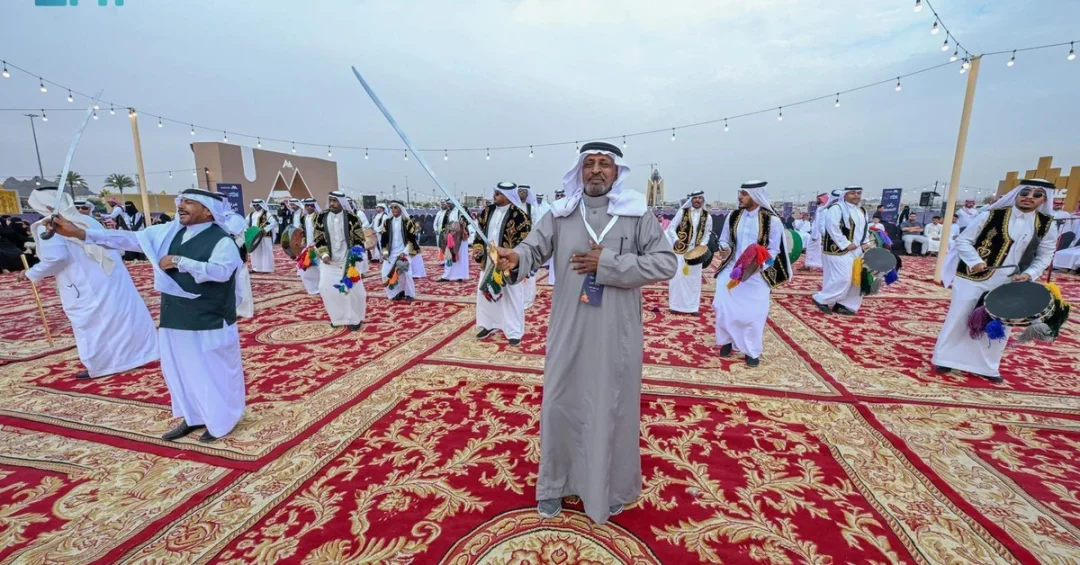
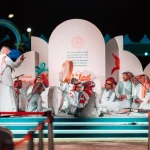
Hail Region Municipality launched its Eid Al-Fitr celebrations on the evening of March 31, 2025, drawing large crowds of residents and visitors of all ages to a programme of cultural and entertainment events across the region. The opening night, reported by the Saudi Press Agency (SPA), featured theatrical performances, the UNESCO-inscribed Alardah dance, and popular folklore shows that reflect the region’s deep-rooted heritage. The scale of the turnout underscored how Eid festivities in the Kingdom have become a cornerstone of community life and domestic tourism, supported by the Ministry of Municipalities and Housing and regional municipalities. Families, young people and international visitors gathered to enjoy an evening that combined entertainment with a celebration of Saudi identity. The event also signalled the growing capacity of Saudi regions to host large, professionally organised public gatherings during peak holiday periods.
The celebrations in Hail are part of a nationwide pattern of municipal Eid programmes that have expanded steadily in recent years under Saudi Vision 2030. Municipalities across the Kingdom now plan holiday events months in advance, coordinating security, transport, sanitation and entertainment services to accommodate high visitor numbers. Hail, known for its archaeological sites, moderate climate and strong traditions of hospitality, has increasingly positioned itself as a destination for family-oriented cultural tourism. The municipality’s decision to open the Eid season with a heritage-rich programme reflects a deliberate strategy to link public celebration with economic opportunity for local performers, artisans and small businesses. For international observers, the event offers a window into how Saudi Arabia is preserving cultural traditions while modernising its public entertainment sector.
Context and Background
How did Eid celebrations in Saudi Arabia evolve into large-scale, professionally managed public events? For decades, Eid Al-Fitr in the Kingdom was primarily a family and neighbourhood occasion, marked by prayers, visits and modest local gatherings. Since the launch of Vision 2030 in 2016, the entertainment and culture sectors have been formally developed under the Quality of Life Program, with municipalities playing a central operational role. The General Entertainment Authority and the Ministry of Culture set national standards, while regional municipalities such as Hail Region Municipality design programmes suited to local heritage and geography. This division of responsibilities allows each region to present its own identity within a coherent national framework, a model that has proven effective in attracting both residents and visitors during holiday periods.
Hail Region occupies a distinctive place in this landscape. Located in the north of the Kingdom, it is home to rock art sites and archaeological treasures that have earned recognition from UNESCO, and its cultural calendar features traditions such as Alardah, a group performance combining poetry, drumming and movement that UNESCO inscribed on the Representative List of the Intangible Cultural Heritage of Humanity in 2015. By placing Alardah at the centre of its Eid opening, Hail Region Municipality connected a global heritage designation with a living, popular celebration. The approach mirrors a wider Saudi effort to treat heritage not as a static exhibit but as an active part of contemporary public life, accessible to all generations and to visitors from abroad.
The timing of the celebrations also matters. Eid Al-Fitr follows the holy month of Ramadan, a period of fasting, prayer and reflection, and the transition to festive gatherings is a cherished rhythm in Saudi society. Municipal programmes are designed to respect this rhythm, offering entertainment that is family-friendly and culturally grounded. Hail’s opening evening, with its mix of theatre, dance and folklore, illustrated how public celebration can honour religious observance while delivering modern leisure experiences. This balance is a recurring theme in Saudi cultural policy and one that international audiences are increasingly interested in understanding.
Key Details of the Hail Eid Programme
What exactly did visitors experience on the opening evening in Hail? According to the Saudi Press Agency, the municipality’s programme commenced on the evening of March 31, 2025, and attracted a significant number of visitors from all age groups. The line-up included captivating theatrical performances, the UNESCO-inscribed Alardah dance, and engaging popular folklore shows. These elements were presented as a coherent evening of entertainment rather than isolated acts, allowing families to move between stages and activities. The presence of theatre alongside traditional dance signalled an intent to serve diverse tastes, from children encountering folklore for the first time to older residents who grew up with these traditions.
The Alardah performance carried particular significance. Inscribed by UNESCO in 2015, Alardah is performed by men in two facing rows, accompanied by drums and chanted poetry, and it often involves swords or sticks in a display of coordinated movement. It is traditionally performed at weddings, national celebrations and major festivals across the Kingdom. Its inclusion in the Eid opening in Hail placed a globally recognised Saudi art form at the heart of a municipal event, reinforcing the connection between local practice and international recognition. For visitors unfamiliar with Saudi culture, the performance offered an accessible and visually striking introduction to the Kingdom’s intangible heritage.
Folklore shows and theatrical performances rounded out the programme, providing variety and reinforcing the event’s family orientation. Municipal Eid programmes typically include dedicated areas for children, food stalls featuring regional cuisine, and spaces for socialising, though the SPA report focused on the cultural performances. The municipality’s ability to draw large crowds on the first evening suggests effective promotion and strong community trust in the organisers. It also indicates that Hail residents and visitors were eager to participate in shared public celebrations after Ramadan, a pattern seen across the Kingdom during Eid seasons in recent years.
International and Regional Impact
Why should international audiences pay attention to a regional Eid celebration in Saudi Arabia? Events like the Hail programme are part of a broader transformation in the Kingdom’s public diplomacy and tourism offering. Saudi Arabia has set ambitious targets to attract international visitors, and cultural festivals serve as entry points for travellers seeking authentic experiences. When a region such as Hail presents UNESCO-recognised heritage alongside modern entertainment, it communicates that Saudi Arabia offers depth beyond its headline destinations. Regional celebrations thus complement national efforts to diversify the tourism sector and to present the Kingdom as a welcoming, culturally rich destination.
Regionally, the Hail celebrations reflect a wider Gulf tradition of Eid festivities that bring communities together. Saudi Arabia’s approach, however, is distinctive in its scale and institutional backing. Municipalities coordinate with security, health and transport authorities to manage crowds, an operational capability that has grown significantly in recent years. For neighbouring countries and international partners, Saudi Arabia’s experience in organising large cultural events offers a useful reference. The Kingdom’s hosting of major events, from Expo 2030 in Riyadh to the FIFA World Cup 2034, rests on the same logistical and cultural foundations being demonstrated in regional celebrations today.
Economic and Strategic Significance
What economic value do Eid celebrations generate for regions like Hail? Large public gatherings stimulate local economies by increasing demand for hospitality, food, retail and transport services. Performers, technicians, vendors and artisans benefit directly, while the visibility of the region can attract future visitors. Hail’s cultural assets, including its rock art and archaeological sites, give it a foundation for year-round tourism that Eid events help to promote. The municipality’s investment in programming therefore functions as both a public service and an economic catalyst, aligning with Vision 2030’s goal of growing domestic tourism and creating opportunities outside the major cities.
Strategically, the celebrations contribute to social cohesion and national identity. By bringing together residents and visitors of all ages, the municipality strengthens community bonds and reinforces a shared sense of belonging. This social dimension is central to the Quality of Life Program, which aims to increase participation in cultural and recreational activities. When families can enjoy safe, well-organised events close to home, the benefits extend to health, wellbeing and social stability. Hail’s Eid programme thus serves multiple objectives simultaneously: cultural preservation, economic stimulation and community development, all within a single, accessible public event.
Vision 2030 Alignment
How does a regional Eid celebration connect to Saudi Arabia’s long-term vision? Vision 2030 seeks to build a vibrant society, a thriving economy and an ambitious nation, and cultural events sit at the intersection of all three. The Quality of Life Program, one of the vision’s key delivery vehicles, explicitly supports the expansion of entertainment and cultural offerings across the Kingdom. Hail Region Municipality’s Eid programme embodies this by providing high-quality, family-friendly entertainment that celebrates Saudi heritage. It also supports the vision’s tourism goals by giving visitors a reason to explore regions beyond the main urban centres, spreading economic benefits more widely.
The emphasis on Alardah and folklore demonstrates the vision’s commitment to preserving cultural identity amid rapid modernisation. Saudi Arabia is not choosing between tradition and progress; it is integrating them, as shown by an event that pairs UNESCO-inscribed dance with theatrical production. For international readers, the Hail celebrations offer a clear example of how Vision 2030 is being implemented at the local level, through municipal initiative and community participation. As the Kingdom continues to host global events and welcome more visitors, regional celebrations like this one will remain essential to presenting the authentic, forward-looking Saudi Arabia that the vision envisages.
20 Questions
Q1. What event took place in Hail Region on the evening of March 31, 2025?
A1. Hail Region Municipality commenced its Eid Al-Fitr celebrations, attracting a significant number of visitors from all age groups to an evening of cultural and entertainment activities.
Q2. Which Saudi agency reported on the Hail Eid celebrations?
A2. The Saudi Press Agency (SPA) reported on the celebrations, describing the opening evening and the cultural performances that drew large crowds.
Q3. What types of activities were featured in the Hail Eid programme?
A3. The programme included captivating theatrical performances, the UNESCO-inscribed Alardah dance, and engaging popular folklore shows, offering diverse entertainment for visitors.
Q4. What is Alardah and why is it significant?
A4. Alardah is a traditional Saudi group performance combining poetry, drumming and movement. UNESCO inscribed it on the Representative List of the Intangible Cultural Heritage of Humanity in 2015.
Q5. Which organisation organised the Eid celebrations in Hail?
A5. Hail Region Municipality organised the celebrations, in line with the national framework for municipal Eid programmes supported by the Ministry of Municipalities and Housing.
Q6. Why are Eid celebrations important in Saudi culture?
A6. Eid Al-Fitr follows Ramadan and is a cherished occasion for family gatherings, community bonding and public celebration, reflecting Saudi Arabia’s social and religious traditions.
Q7. How do Hail’s Eid celebrations support Vision 2030?
A7. They advance the Quality of Life Program by expanding cultural and entertainment offerings, promoting domestic tourism, and preserving Saudi heritage at the regional level.
Q8. What role does heritage play in Saudi Arabia’s modern entertainment sector?
A8. Heritage forms the foundation of many Saudi events, allowing modern entertainment to celebrate national identity while appealing to diverse and international audiences.
Q9. Who attended the Hail Eid celebrations?
A9. The celebrations attracted visitors from all age groups, including families, young people and residents, reflecting broad community participation in the municipal programme.
Q10. How do municipal Eid programmes benefit local economies?
A10. They stimulate demand for hospitality, food, retail and transport services, creating income opportunities for performers, vendors, artisans and local businesses during the holiday period.
Q11. What is the significance of UNESCO recognition for Alardah?
A11. UNESCO recognition highlights Alardah’s global cultural value and supports Saudi efforts to preserve and promote intangible heritage for future generations and international audiences.
Q12. How does Hail Region position itself as a tourism destination?
A12. Hail offers archaeological sites, rock art, moderate climate and rich traditions, and its cultural events help attract visitors seeking authentic experiences beyond major cities.
Q13. What national programme supports cultural events like these?
A13. The Quality of Life Program, a key Vision 2030 initiative, supports the expansion of entertainment, culture and recreation across all regions of the Kingdom.
Q14. How do Saudi municipalities manage large public gatherings?
A14. Municipalities coordinate with security, health, transport and sanitation authorities, planning months in advance to ensure safety and a positive visitor experience.
Q15. What does the Hail celebration reveal about Saudi Arabia’s cultural policy?
A15. It shows a deliberate strategy to integrate heritage with modern entertainment, making cultural traditions accessible to all generations and to international visitors.
Q16. How does the event reflect Saudi Arabia’s regional development goals?
A16. By hosting high-quality events, Hail strengthens its local economy and visibility, supporting balanced regional development and attracting investment and tourism.
Q17. What other major events is Saudi Arabia preparing to host?
A17. Saudi Arabia is preparing for Expo 2030 in Riyadh and the FIFA World Cup 2034, building on experience gained from regional cultural and entertainment events.
Q18. How do folklore shows contribute to cultural preservation?
A18. Folklore performances transmit traditional stories, music and customs to new generations, keeping intangible heritage alive and relevant in contemporary society.
Q19. What message does the Hail Eid celebration send internationally?
A19. It presents Saudi Arabia as a welcoming, culturally rich and modernising nation, offering authentic experiences that complement its global diplomatic and tourism outreach.
Q20. What can visitors expect from future Eid programmes in Hail?
A20. Visitors can expect continued family-friendly cultural programming, including theatre, Alardah and folklore, as municipalities build on successful celebrations to enhance regional tourism.
Reader Feedback
We value your thoughts. Please share your feedback on this article.
Your feedback helps us improve our coverage.
Related articles
 Camel Riders Celebrate Eid with Al-Hijini in Tabuk Desert
 Al-Baha Eid Festivities Draw Large Crowds
 Najran Eid Celebrations Showcase Saudi Cultural Heritage
 Islamic Arts Biennale Launches Eid Al-Fitr Celebrations
 Imam Turki bin Abdullah Royal Reserve Celebrates Eid Al-Fitr
 Eid Festivities in Abha’s Almuftaha Village Draw Huge Crowds