


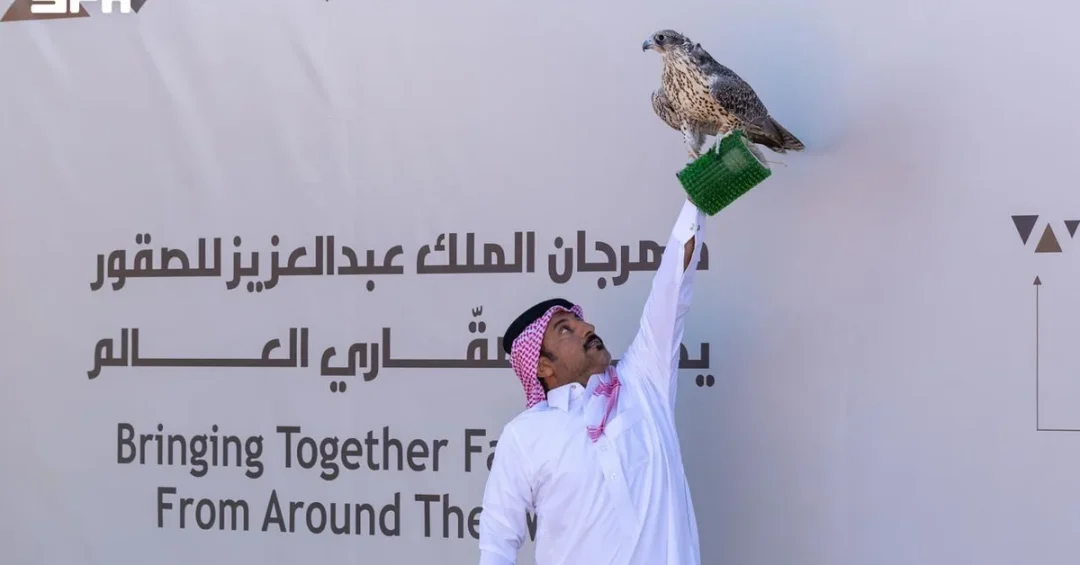
Preparing a falcon for the Milwah Race at the King Abdulaziz Falconry Festival 2026 begins well before it reaches the starting line, through training stages that raise its physical and psychological readiness and strengthen its ability to cover 400 meters in the fastest possible time, according to Adel bin Abdullah Al-Otaibi, a falcon trainer participating in the event. The festival, organized by the National Center for Falcons in Malham, north of Riyadh, continues until November 30, with local and international falconers competing in 140 heats for cash prizes and the King Abdulaziz cups. The event underscores Saudi Arabia’s commitment to preserving its rich falconry heritage while advancing Vision 2030 goals in tourism, culture, and economic diversification.
Al-Otaibi explained that preparation requires training programs suited to each falcon’s abilities and needs, combining traditional lure-based methods with modern aids such as training drones, while regulating its weight and building its fitness. Since falcons differ in temperament, trainers must monitor each bird’s behavior and schedule sessions close to the actual heats to simulate competition conditions. At the starting line, the trainer must remove the hood, let the falcon arrange its feathers, and choose the release position that suits it, as any slip can cost fractions of a second that are hard to make up. This meticulous approach reflects the deep expertise of Saudi falconers and the festival’s role as a global stage for the sport.
Context and Background
What makes the King Abdulaziz Falconry Festival a cornerstone of Saudi cultural heritage and a magnet for international falconers? The festival, held annually in Malham, north of Riyadh, has grown into the world’s largest gathering of falconry enthusiasts, attracting participants from across the Gulf and beyond. It is organized by the National Center for Falcons, a government body dedicated to preserving and promoting falconry as a traditional sport and cultural practice. The event features various competitions, including the Milwah Race, where falcons compete to cover 400 meters in the shortest time, showcasing the speed and agility of these magnificent birds.
Falconry has been an integral part of Arabian Peninsula culture for centuries, used historically for hunting and survival in the desert. Today, it represents a proud link to the past and a symbol of Saudi Arabia’s commitment to safeguarding its heritage. The King Abdulaziz Falconry Festival, named after the Kingdom’s founder, King Abdulaziz Al Saud, honors this legacy by bringing together falconers to compete and share knowledge. The festival also serves as a platform for education and awareness, with workshops and exhibitions that highlight the importance of falconry in Saudi society. As the event continues until November 30, it draws thousands of visitors, boosting local tourism and reinforcing the Kingdom’s position as a destination for cultural tourism.
Key Details
How does a trainer like Adel bin Abdullah Al-Otaibi prepare a falcon to excel in the Milwah Race? Al-Otaibi, a seasoned falcon trainer, outlined the stages of preparation, emphasizing that each falcon requires a tailored training regimen. The process begins with assessing the bird’s physical condition and temperament, followed by a gradual increase in exercise to build stamina and speed. Trainers use traditional lures, such as a piece of meat attached to a rope, to encourage the falcon to fly towards a target. In recent years, modern tools like training drones have been incorporated to simulate prey and enhance the falcon’s hunting instincts. Weight regulation is critical; falcons must be kept at an optimal weight to ensure peak performance without compromising health.
Al-Otaibi noted that falcons differ in temperament, so trainers must monitor each bird’s behavior closely and adjust training sessions accordingly. Sessions are often scheduled close to the actual race times to simulate competition conditions, helping the falcon adapt to the environment and reduce stress. At the starting line, the trainer’s role is crucial: removing the hood, allowing the falcon to arrange its feathers, and selecting the best release position. Any mistake can cost fractions of a second, which are vital in a race where victory is measured in milliseconds. The festival features 140 heats, with falcons competing for cash prizes and the prestigious King Abdulaziz cups. The competition is fierce, but the emphasis remains on sportsmanship and the preservation of falconry traditions.
International and Regional Impact
Why does the King Abdulaziz Falconry Festival attract international falconers and what does it mean for Saudi Arabia’s global standing? The festival has become a major international event, drawing participants from countries such as the UAE, Kuwait, Qatar, Bahrain, and even beyond the Gulf region. This international participation fosters cultural exchange and strengthens diplomatic ties, as falconers share techniques and experiences. For Saudi Arabia, hosting such a prestigious event reinforces its role as a leader in preserving intangible cultural heritage, as recognized by UNESCO. The festival also aligns with Saudi Vision 2030 by promoting tourism and showcasing the Kingdom’s rich cultural offerings to the world.
Regionally, the festival underscores the shared heritage of the Gulf Cooperation Council (GCC) countries, where falconry is a common tradition. It provides a platform for friendly competition and cooperation, enhancing regional unity. The event also contributes to the local economy by attracting visitors, creating jobs, and supporting businesses in Riyadh and surrounding areas. The National Center for Falcons works tirelessly to ensure the festival meets the highest standards, further elevating Saudi Arabia’s reputation as a premier destination for cultural and sporting events.
Economic and Strategic Significance
What economic and strategic benefits does the King Abdulaziz Falconry Festival bring to Saudi Arabia? The festival is a significant economic driver, generating revenue through tourism, hospitality, and related industries. Visitors from around the world spend on accommodation, dining, and transportation, boosting the local economy. The event also creates opportunities for small and medium enterprises, such as those selling falconry equipment and traditional crafts. Moreover, the festival aligns with Vision 2030’s goal of diversifying the economy away from oil by promoting tourism and cultural events.
Strategically, the festival enhances Saudi Arabia’s soft power by showcasing its cultural heritage and modern capabilities. It demonstrates the Kingdom’s ability to host large-scale international events, which is crucial for attracting future investments and partnerships. The National Center for Falcons plays a key role in this regard, ensuring the festival’s success and promoting falconry as a sustainable practice. The event also supports environmental conservation efforts, as falconry relies on healthy ecosystems and wildlife. By integrating traditional sports with modern economic strategies, Saudi Arabia sets an example for other nations seeking to leverage cultural heritage for development.
Vision 2030 Alignment
How does the King Abdulaziz Falconry Festival contribute to Saudi Vision 2030? Vision 2030 aims to diversify the economy, promote cultural heritage, and enhance the quality of life for citizens and residents. The festival directly supports these objectives by attracting tourists, creating economic opportunities, and preserving a cherished tradition. It also aligns with the Vision’s focus on developing tourism as a key sector, as the event draws visitors from around the world and showcases Saudi Arabia’s hospitality and cultural richness.
Furthermore, the festival empowers local communities and engages youth in cultural activities, fostering a sense of pride and identity. The National Center for Falcons’ efforts to organize the event reflect the Vision’s emphasis on government efficiency and innovation. By combining traditional falconry with modern technology and global outreach, Saudi Arabia demonstrates its commitment to honoring its past while building a prosperous future. As the festival continues to grow, it will remain a shining example of how cultural heritage can drive economic and social progress in line with Vision 2030.
20 Questions
Q1. What is the King Abdulaziz Falconry Festival?
A1. The King Abdulaziz Falconry Festival is an annual event held in Malham, north of Riyadh, organized by the National Center for Falcons. It celebrates traditional falconry with competitions like the Milwah Race, attracting local and international participants.
Q2. When does the 2026 festival take place?
A2. The 2026 festival runs until November 30, featuring 140 heats. It began earlier in November and includes various falconry competitions for cash prizes and the King Abdulaziz cups.
Q3. What is the Milwah Race?
A3. The Milwah Race is a falconry competition where falcons fly 400 meters in the shortest time. It tests the bird’s speed and the trainer’s skill in preparation and release.
Q4. Who is Adel bin Abdullah Al-Otaibi?
A4. Adel bin Abdullah Al-Otaibi is a falcon trainer participating in the festival. He outlined the preparation stages for falcons, emphasizing tailored training programs and modern aids like drones.
Q5. How are falcons prepared for the Milwah Race?
A5. Preparation includes training programs suited to each falcon’s abilities, combining traditional lure-based methods with modern aids such as training drones, weight regulation, and fitness building.
Q6. Why is weight regulation important for falcons?
A6. Weight regulation ensures falcons are at optimal health and performance. Overweight or underweight birds may lack speed or stamina, affecting their race performance.
Q7. What role do training drones play?
A7. Training drones simulate prey, enhancing the falcon’s hunting instincts and speed. They complement traditional methods and help trainers prepare birds for competition conditions.
Q8. How does a trainer handle a falcon at the starting line?
A8. The trainer removes the hood, lets the falcon arrange its feathers, and chooses the best release position. Any slip can cost fractions of a second, crucial in a race.
Q9. Why is each falcon’s temperament considered?
A9. Falcons differ in temperament, so trainers monitor behavior and adjust training sessions. This ensures each bird is physically and psychologically ready for the race.
Q10. What prizes are awarded at the festival?
A10. Winners compete for cash prizes and the prestigious King Abdulaziz cups. The festival features 140 heats, with awards for top performers in various categories.
Q11. How does the festival promote Saudi culture?
A11. The festival showcases traditional falconry, a key part of Saudi heritage. It educates visitors and strengthens cultural identity, aligning with Vision 2030’s cultural goals.
Q12. What is the National Center for Falcons?
A12. The National Center for Falcons is a Saudi government body that organizes the festival and works to preserve falconry. It promotes the sport locally and internationally.
Q13. How does the festival impact the local economy?
A13. The festival attracts tourists, creating revenue for hotels, restaurants, and businesses. It supports SMEs and contributes to economic diversification under Vision 2030.
Q14. Which countries participate in the festival?
A14. Falconers from Gulf countries like the UAE, Kuwait, Qatar, and Bahrain, as well as other international participants, compete, fostering cultural exchange and regional ties.
Q15. How does falconry align with Vision 2030?
A15. Falconry preservation supports cultural heritage and tourism, key Vision 2030 pillars. The festival boosts economic growth and enhances Saudi Arabia’s global image.
Q16. What is the significance of the 400-meter distance?
A16. The 400-meter sprint tests falcons’ speed and endurance. It is a standard distance in Milwah races, allowing fair competition and showcasing the birds’ capabilities.
Q17. How long has falconry been part of Saudi culture?
A17. Falconry has been practiced in the Arabian Peninsula for centuries, traditionally for hunting. It remains a cherished sport and cultural symbol in Saudi Arabia.
Q18. What modern techniques are used in falcon training?
A18. Trainers use drones, GPS tracking, and specialized diets alongside traditional methods. These innovations enhance training efficiency and falcon performance.
Q19. How does the festival support environmental conservation?
A19. Falconry depends on healthy ecosystems. The festival promotes sustainable practices and awareness about protecting falcons and their habitats.
Q20. What is the future of the King Abdulaziz Falconry Festival?
A20. The festival is expected to grow, attracting more international participants and visitors. It will continue to play a vital role in preserving heritage and supporting Vision 2030.
Reader Feedback
We value your thoughts. Please share your feedback on this article.
Your feedback helps us improve our coverage.
Related articles
 AlUla Languages Institute Marks Five Years of Language and Heritage Learning
 Performing Arts Program Draws Strong Turnout in Dammam
 Al Shannah Day in AlUla Celebrates Heritage and Hospitality
 Anti-Doping Procedures Safeguard Integrity of Milwah Races at King Abdulaziz Falconry Festival
 AlUla Date Season Concludes with ‘Al Shannah Day’
 Tabuk Art Exhibition Celebrates International Day of Islamic Art