


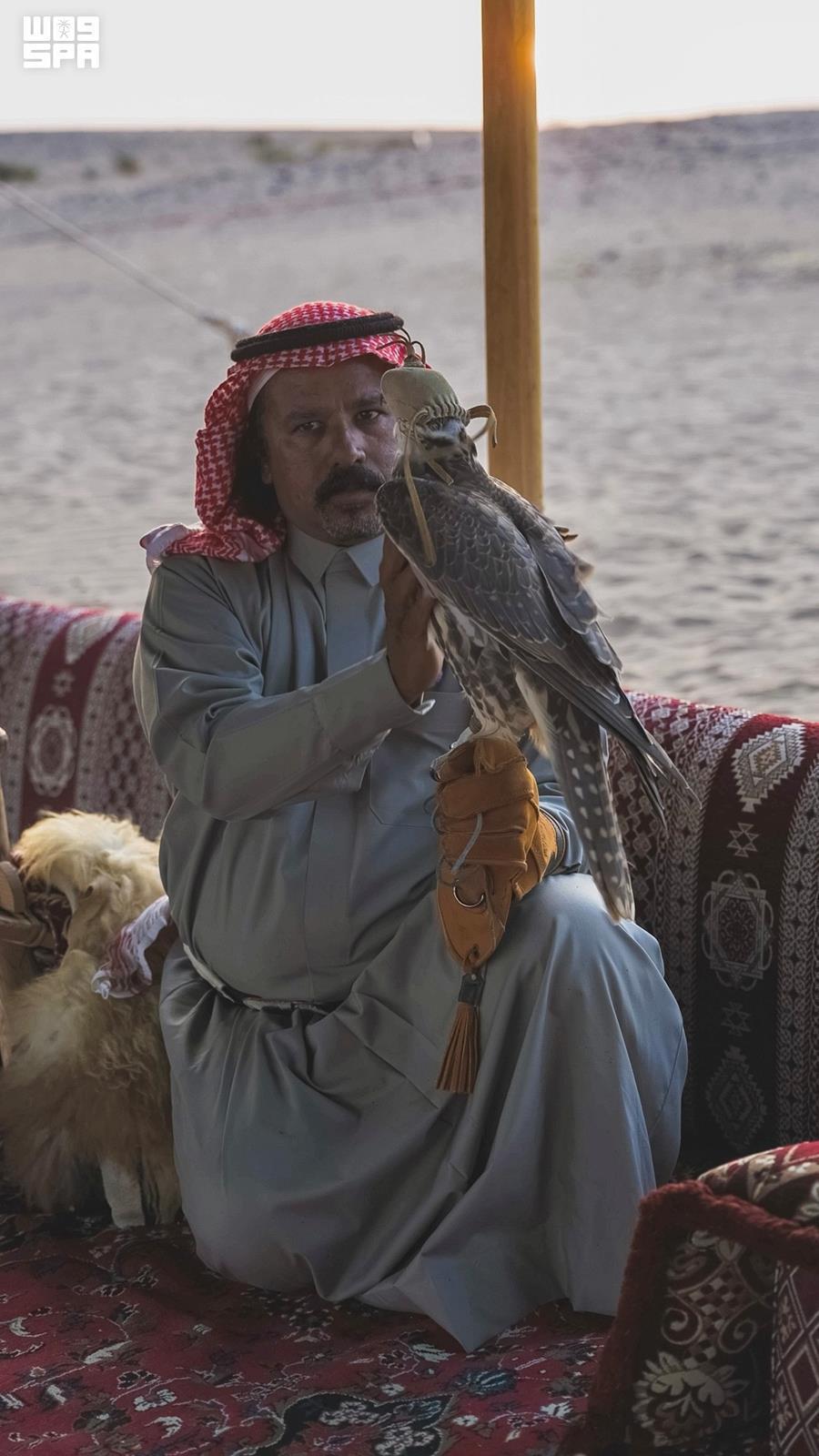
Falconry camps are springing up across open areas of Umluj Governorate in Tabuk Region as temperatures become milder in November, turning the governorate into a daily gathering place for falconers, hobbyists, and their guests during the maqnas season. The camps add a seasonal dimension to social life in the governorate through outdoor outings, socializing, and time spent in nature.
In a report carried by the Saudi Press Agency (SPA), falconer Abdulhadi Awwad said the maqnas season means more than just a hobby to him and many other falconry enthusiasts. It is a way of life they look forward to every year as the weather improves, offering them the chance to spend long hours outdoors, away from their daily routines.
A falconer’s day begins very early and requires patience, concentration, and hours of watching the birds’ movements, Awwad explained. Yet much of the season’s enjoyment comes from the camps themselves and the social gatherings they host. Throughout the season, the camps welcome friends and visitors from within and beyond the governorate. Some come to practice falconry, while others simply enjoy the atmosphere and learn about the hobby.
So what draws so many people to these open-air camps year after year? Awwad noted that the number of people interested in maqnas has grown in recent years, particularly given Umluj’s mild weather at this time of year and its varied natural landscapes, from coastal areas to open terrain. These settings offer enthusiasts an experience that combines falconry, outdoor recreation, and social interaction.
Welcoming guests is part of the camps’ daily routine. Hosts prepare seating areas and serve traditional hospitality, including coffee. In the evenings, the camps become open-air gathering places where visitors discuss a range of topics, with falcons and hunting experiences naturally dominating much of the conversation.
These gatherings also give newcomers to falconry an opportunity to learn about the hobby firsthand and benefit from experienced falconers’ knowledge of bird behavior, hunting equipment, and the daily routines that shape the season.
Why does the maqnas season carry such weight for those who practice it? For Awwad, the answer lies in the way the season blends discipline with companionship. The early starts and long hours of observation are demanding, but the camps reward that effort with a social life that unfolds outdoors, away from the usual rhythms of daily work.
The camps’ location in Umluj Governorate, part of Tabuk Region, places them within a landscape that shifts from coastal areas to open terrain. That variety gives falconers and their guests a range of settings to move through during the season, and it helps explain why the governorate has become a draw for enthusiasts from within and beyond its boundaries.
What does a typical day at a falconry camp look like? According to Awwad, it begins very early. Patience, concentration, and hours of watching the birds’ movements are all part of the routine. The reward is not only the practice of falconry itself but the hours spent in the company of others who share the same interest.
Hosts at the camps prepare seating areas and serve traditional hospitality, including coffee, as part of the daily routine. That hospitality extends into the evenings, when the camps become open-air gathering places. Visitors discuss a range of topics, and falcons and hunting experiences naturally dominate much of the conversation.
Could the growing interest in maqnas be tied to something beyond the birds themselves? Awwad pointed to Umluj’s mild weather at this time of year and its varied natural landscapes as factors. The combination of falconry, outdoor recreation, and social interaction offers enthusiasts an experience that is difficult to replicate elsewhere.
Newcomers to falconry find the camps particularly useful. The gatherings give them an opportunity to learn about the hobby firsthand and to benefit from experienced falconers’ knowledge of bird behavior, hunting equipment, and the daily routines that shape the season. That transfer of knowledge happens informally, in the course of conversation and observation.
What keeps the camps going through the season? The daily rhythm of welcoming guests, preparing seating areas, and serving coffee sustains a social life that extends well beyond the practice of falconry. Friends and visitors come from within and beyond the governorate, some to practice the sport and others simply to enjoy the atmosphere and learn about the hobby.
The maqnas season, as described by Awwad, is a way of life that enthusiasts look forward to every year as the weather improves. It offers them the chance to spend long hours outdoors, away from their daily routines, and to reconnect with a pastime that has deep roots in the region’s outdoor culture.
Why do the evenings matter so much at these camps? As the day’s falconry activities wind down, the camps become open-air gathering places. The conversations that unfold there cover a range of topics, but falcons and hunting experiences naturally dominate much of the discussion. It is a setting where experienced falconers and newcomers share the same space.
The camps spring up across open areas of Umluj Governorate as temperatures become milder in November. They become daily gathering places for falconers, hobbyists, and their guests, adding a seasonal dimension to social life in the governorate through outdoor outings, socializing, and time spent in nature.
What role does patience play in a falconer’s day? Awwad explained that the day begins very early and requires patience, concentration, and hours of watching the birds’ movements. Much of the season’s enjoyment, however, comes from the camps themselves and the social gatherings they host, which balance the solitary demands of the sport with communal life.
The growth in interest in maqnas in recent years has been notable, according to Awwad, particularly given Umluj’s mild weather at this time of year and its varied natural landscapes. From coastal areas to open terrain, these settings offer enthusiasts an experience that combines falconry, outdoor recreation, and social interaction.
How do the camps handle the flow of visitors? Welcoming guests is part of the camps’ daily routine. Hosts prepare seating areas and serve traditional hospitality, including coffee. In the evenings, the camps become open-air gathering places where visitors discuss a range of topics, with falcons and hunting experiences naturally dominating much of the conversation.
Newcomers benefit from the presence of experienced falconers, who share knowledge of bird behavior, hunting equipment, and the daily routines that shape the season. The gatherings give them an opportunity to learn about the hobby firsthand, in a setting where questions are welcomed and observation is part of the experience.
What does the maqnas season mean to those who return to it every year? For Awwad and many other falconry enthusiasts, it is more than just a hobby. It is a way of life they look forward to as the weather improves, offering the chance to spend long hours outdoors, away from daily routines, and to share that time with friends and visitors from within and beyond the governorate.
The camps’ presence across open areas of Umluj Governorate adds a seasonal dimension to social life in the governorate. Outdoor outings, socializing, and time spent in nature are all part of what the season brings, alongside the practice of falconry itself.
Why does Umluj in particular host these gatherings? Awwad cited the governorate’s mild weather at this time of year and its varied natural landscapes, from coastal areas to open terrain. Those conditions offer enthusiasts an experience that combines falconry, outdoor recreation, and social interaction in a way that has drawn growing interest in recent years.
The source did not include the total number of camps, the number of participants, or a closing date for the maqnas season.
Where do the falconry camps appear during the maqnas season? The camps spring up across open areas of Umluj Governorate in Tabuk Region as temperatures become milder in November. During the maqnas season, these camps become daily gathering places for falconers, hobbyists, and their guests. According to SPA, the camps add a seasonal dimension to social life in the governorate through outdoor outings, socializing, and time spent in nature. Falconer Abdulhadi Awwad described the season as a way of life that enthusiasts look forward to every year as the weather improves.
What does a falconer’s day involve, according to Abdulhadi Awwad? Awwad said a falconer’s day begins very early and requires patience, concentration, and hours of watching the birds’ movements. Yet much of the season’s enjoyment comes from the camps themselves and the social gatherings they host. Throughout the season, the camps welcome friends and visitors from within and beyond the governorate. Some come to practice falconry, while others simply enjoy the atmosphere and learn about the hobby. The daily routine also includes welcoming guests and preparing seating areas.
Why has interest in maqnas grown in recent years? Awwad noted that the number of people interested in maqnas has grown in recent years, particularly given Umluj’s mild weather at this time of year and its varied natural landscapes, from coastal areas to open terrain. These settings offer enthusiasts an experience that combines falconry, outdoor recreation, and social interaction. The camps also give newcomers an opportunity to learn about the hobby firsthand and benefit from experienced falconers’ knowledge of bird behavior, hunting equipment, and daily routines.
What happens at the camps in the evenings? Welcoming guests is part of the camps’ daily routine, with hosts preparing seating areas and serving traditional hospitality, including coffee. In the evenings, the camps become open-air gathering places where visitors discuss a range of topics, with falcons and hunting experiences naturally dominating much of the conversation. The gatherings also allow newcomers to learn about falconry from experienced falconers, covering bird behavior, hunting equipment, and the daily routines that shape the season.
What did the source not include about the maqnas season? The source did not include the total number of camps, the number of participants, or a closing date for the maqnas season. It also did not specify how long the season lasts or provide figures on how many visitors come from outside the governorate. What it did describe is the daily rhythm of the camps, the early start to a falconer’s day, the hospitality offered to guests, and the evening gatherings where falcons and hunting experiences dominate conversation.
Related articles
 Saudi Artist Shines at ‘Forever Is Now’ Exhibition in Cairo
 Qatif Art Exhibition: Where Creativity Meets Heritage
 Saudi Fine Arts Society Shines at Jeddah Motor Show
 RCU Launches ‘An Ongoing Story’ Exhibition in AlUla
 Manga Productions Showcases Saudi National Day Anime at TOKYO ANIME NEXT
 Saudi Arabia Concludes Guest of Honor Role at Algiers Book Fair