


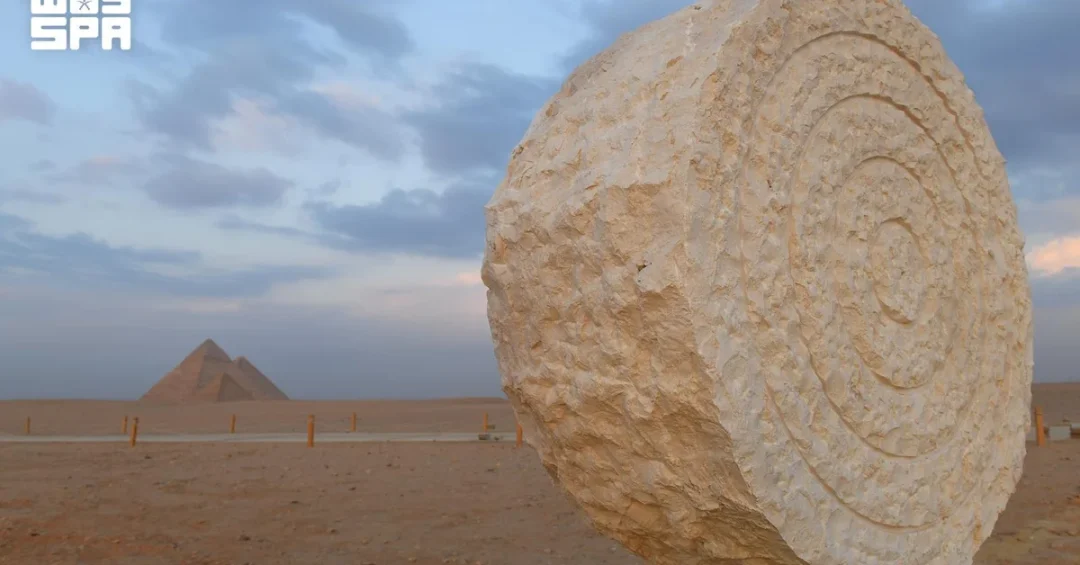
The sixth edition of the international exhibition “Forever Is Now” opened today at the Giza Pyramids archaeological site, with the participation of eight contemporary artists from around the world, including Saudi artist Abdulrahman Taha. The exhibition, which runs until November 28, is organized by Art D’Égypte and showcases a diverse range of artworks inspired by philosophy and heritage, exploring the relationship between people and place through natural materials and visual techniques.
This year’s edition holds particular significance as it underscores the growing cultural ties between Saudi Arabia and Egypt, two nations with rich historical legacies and a shared vision for promoting arts and culture on the global stage. The participation of Saudi artist Abdulrahman Taha highlights the Kingdom’s commitment to fostering artistic talent and engaging in international cultural dialogue, a key pillar of Saudi Vision 2030. As the exhibition draws visitors from around the world, it also serves as a platform for cross-cultural exchange, allowing artists to reflect on human existence and cultural transformations. How does such an exhibition contribute to bridging cultural divides and fostering mutual understanding? It is through these shared artistic endeavors that nations can build bridges and celebrate common humanity.
Context and Background
The “Forever Is Now” exhibition has become a landmark event in the global art calendar since its inception. Held annually at the iconic Giza Pyramids, it is the first and only exhibition of its kind to take place at this ancient site, a UNESCO World Heritage property. Organized by Art D’Égypte, a leading cultural enterprise founded by Nadine Abdel Ghaffar, the exhibition aims to juxtapose contemporary art with one of the world’s most recognizable ancient wonders, creating a dialogue between past and present. Over the years, it has featured renowned artists from Egypt and abroad, drawing attention to Egypt’s rich cultural heritage and its vibrant contemporary art scene.
The sixth edition continues this tradition, bringing together eight contemporary artists who explore themes of philosophy, heritage, and the relationship between people and place. The works are created using natural materials and visual techniques that reflect different perspectives on human existence and cultural transformations. This year’s exhibition is particularly notable for its inclusion of Saudi artist Abdulrahman Taha, whose participation signifies the deepening cultural cooperation between Saudi Arabia and Egypt. In recent years, the two countries have strengthened their ties across various sectors, including culture, as part of their respective national visions—Saudi Vision 2030 and Egypt’s Vision 2030. Why is it important for ancient sites like the Giza Pyramids to host contemporary art exhibitions? Such events not only revitalize historical locations but also attract global audiences, fostering tourism and cultural appreciation.
Key Details
At the heart of this year’s exhibition is Saudi artist Abdulrahman Taha’s artwork titled “Al-Lammah.” Inspired by the traditional board game associated with gatherings of friends and families in Egypt, the piece consists of carved stone pieces arranged in concentric rings. Each piece bears engravings resembling those on the game’s tokens, while the edges remain irregular, reflecting the natural character and authenticity of the raw material. In a statement to the Saudi Press Agency (SPA), Taha explained that the artwork is a tribute to the social bonds formed through such traditional games, which transcend generations and cultures. The use of stone as a medium connects the piece to the ancient heritage of the region, while the concentric arrangement evokes themes of unity and continuity.
Taha’s participation in “Forever Is Now” is a testament to the thriving contemporary art scene in Saudi Arabia, which has gained international recognition in recent years. The Kingdom has been actively promoting its artists through initiatives such as the Saudi Art Council, the Ministry of Culture’s various programs, and the establishment of institutions like the Diriyah Biennale Foundation. These efforts align with Vision 2030’s goal to diversify the economy and enhance cultural exchange. The exhibition also features works by artists from other countries, each contributing unique perspectives on the overarching theme. The diverse range of artworks, from large-scale installations to intricate sculptures, invites visitors to reflect on the interplay between humanity and the environment. How does the use of natural materials in contemporary art enhance our connection to heritage? It allows artists to ground their creations in the physical world, making abstract concepts tangible and resonant.
International and Regional Impact
The “Forever Is Now” exhibition has significant implications for international and regional cultural diplomacy. By hosting artists from around the world at the Giza Pyramids, Egypt reinforces its position as a cultural hub and a bridge between civilizations. The presence of Saudi artists further strengthens the cultural axis between Riyadh and Cairo, two capitals that have historically been centers of learning and artistic expression. This collaboration is part of a broader trend of increasing cultural exchange within the Arab world, as countries invest in their creative economies and leverage heritage for soft power. The exhibition also attracts global media attention, shining a spotlight on the Middle East’s contemporary art scene and challenging stereotypes.
For Saudi Arabia, participation in such a prestigious event underscores its commitment to international engagement and cultural openness. It showcases the Kingdom’s talented artists and provides them with a platform to share their work with a global audience. This aligns with Vision 2030’s objectives to promote cultural diplomacy and foster a positive image of Saudi Arabia abroad. Moreover, the exhibition serves as a catalyst for tourism, drawing visitors to Egypt and, by extension, to the region. As cultural tourism continues to grow, events like “Forever Is Now” contribute to economic diversification and job creation. What role can art play in fostering dialogue and understanding between nations? Art transcends language and borders, offering a universal medium for expressing shared human experiences and values.
Economic and Strategic Significance
The economic and strategic significance of the “Forever Is Now” exhibition extends beyond the art world. Cultural events of this magnitude stimulate local economies by attracting tourists, generating revenue for hospitality and retail sectors, and creating employment opportunities. In Egypt, where tourism is a vital source of foreign currency, the exhibition helps to revitalize the sector, which has faced challenges in recent years. The collaboration between Egyptian and Saudi entities also opens doors for further joint ventures in the creative industries, from art galleries to cultural festivals. Saudi Arabia’s investment in culture is part of its broader economic diversification strategy, reducing dependence on oil and fostering a knowledge-based economy.
Strategically, the exhibition reinforces the strong bilateral relations between Saudi Arabia and Egypt. The two countries share a common vision for regional stability and prosperity, and cultural diplomacy is an essential component of this partnership. By supporting each other’s cultural initiatives, they project a unified front that promotes Arab heritage and contemporary creativity. This synergy is particularly important in a rapidly changing global landscape, where cultural soft power is increasingly recognized as a tool for international influence. How can cultural collaborations between nations lead to broader economic and diplomatic benefits? They build trust and mutual respect, which are foundations for lasting partnerships and shared prosperity.
Vision 2030 Alignment
Saudi Arabia’s participation in the sixth edition of “Forever Is Now” is a clear reflection of the Kingdom’s Vision 2030, which seeks to transform Saudi society and economy by nurturing cultural and artistic expression. One of the vision’s key pillars is to promote Saudi culture and heritage, both domestically and internationally. By supporting artists like Abdulrahman Taha and facilitating their participation in global exhibitions, the Kingdom demonstrates its commitment to cultural exchange and the development of a vibrant creative sector. The Ministry of Culture, under the leadership of Prince Badr bin Abdullah bin Farhan, has launched numerous initiatives to empower artists, preserve heritage, and enhance Saudi Arabia’s cultural presence worldwide.
Furthermore, Vision 2030 emphasizes the importance of international partnerships and soft power. Cultural diplomacy, as exemplified by this exhibition, helps to build bridges with other nations and showcases Saudi Arabia’s modernization and openness. The Kingdom’s active engagement in events like “Forever Is Now” also aligns with its goal to increase tourism and attract visitors to its own cultural sites, such as AlUla and Diriyah. As Saudi Arabia continues to invest in its cultural infrastructure, including museums, galleries, and festivals, it positions itself as a global leader in the arts. How does cultural exchange contribute to achieving the goals of Vision 2030? It fosters mutual understanding, drives economic growth, and enhances the Kingdom’s image on the world stage. In conclusion, the sixth edition of “Forever Is Now” not only celebrates contemporary art but also symbolizes the enduring partnership between Saudi Arabia and Egypt and their shared commitment to a future where culture thrives.
20 Questions
Q1. What is the “Forever Is Now” exhibition?
A1. “Forever Is Now” is an annual international contemporary art exhibition held at the Giza Pyramids in Egypt, organized by Art D’Égypte, showcasing artworks that dialogue with the ancient site.
Q2. When did the sixth edition of “Forever Is Now” open?
A2. The sixth edition opened on November 8, 2026, at the Giza Pyramids archaeological site, according to the Saudi Press Agency.
Q3. How long will the exhibition run?
A3. The exhibition runs until November 28, offering visitors nearly three weeks to experience the artworks at the iconic site.
Q4. Which Saudi artist is participating in the exhibition?
A4. Saudi artist Abdulrahman Taha is participating, presenting his artwork titled “Al-Lammah,” which draws inspiration from a traditional Egyptian board game.
Q5. What is the title of Abdulrahman Taha’s artwork?
A5. The artwork is titled “Al-Lammah,” inspired by the traditional board game associated with gatherings of friends and families in Egypt.
Q6. What materials did Abdulrahman Taha use for his artwork?
A6. Taha used carved stone pieces arranged in concentric rings, with engravings resembling game tokens and irregular edges to reflect natural authenticity.
Q7. How many artists are participating in this year’s exhibition?
A7. Eight contemporary artists from around the world are participating, bringing diverse perspectives on philosophy and heritage.
Q8. What themes does the exhibition explore?
A8. The exhibition explores the relationship between people and place, human existence, and cultural transformations through natural materials and visual techniques.
Q9. Where is the exhibition being held?
A9. It is held at the Giza Pyramids archaeological site in Egypt, a UNESCO World Heritage property and one of the world’s most iconic ancient wonders.
Q10. Who organizes the “Forever Is Now” exhibition?
A10. The exhibition is organized by Art D’Égypte, a leading cultural enterprise founded by Nadine Abdel Ghaffar, dedicated to promoting contemporary art in Egypt.
Q11. What is the significance of holding the exhibition at the Giza Pyramids?
A11. It creates a unique dialogue between contemporary art and ancient heritage, attracting global attention and revitalizing the site as a cultural destination.
Q12. How does Saudi participation reflect Vision 2030?
A12. It demonstrates Saudi Arabia’s commitment to cultural exchange, supporting artists, and enhancing international soft power, key goals of Vision 2030.
Q13. What did Abdulrahman Taha say about his artwork?
A13. In a statement to SPA, Taha explained that the carved stone pieces with irregular edges reflect the natural character and authenticity of the raw material.
Q14. What is the traditional board game that inspired “Al-Lammah”?
A14. The game is associated with gatherings of friends and families in Egypt, though the specific name is not mentioned; it involves tokens and social interaction.
Q15. How does the exhibition contribute to cultural diplomacy?
A15. It fosters cross-cultural dialogue, strengthens ties between nations, and showcases the Middle East’s vibrant contemporary art scene to a global audience.
Q16. What economic benefits does the exhibition bring?
A16. It boosts tourism, generates revenue for local businesses, and creates jobs, supporting Egypt’s economy and promoting regional cultural tourism.
Q17. Which Saudi government body supports cultural initiatives like this?
A17. The Saudi Ministry of Culture, led by Prince Badr bin Abdullah bin Farhan, supports such initiatives through programs that empower artists and promote cultural exchange.
Q18. How can international audiences view the exhibition?
A18. The exhibition is open to the public at the Giza Pyramids until November 28; details on visiting hours and tickets are available through Art D’Égypte’s official channels.
Q19. What other Saudi cultural initiatives are gaining global recognition?
A19. Initiatives like the Diriyah Biennale, AlUla Arts Festival, and Saudi Film Festival are gaining international acclaim, showcasing Saudi creativity and heritage.
Q20. How does “Forever Is Now” align with Saudi Arabia’s long-term vision?
A20. It aligns with Vision 2030’s goals of cultural enrichment, economic diversification, and global engagement, positioning Saudi Arabia as a leader in arts and culture.
Reader Feedback
We value your thoughts. Please share your feedback on this article.
Your feedback helps us improve our coverage.
Related articles
 Qatif Art Exhibition: Where Creativity Meets Heritage
 Saudi Fine Arts Society Shines at Jeddah Motor Show
 RCU Launches ‘An Ongoing Story’ Exhibition in AlUla
 Manga Productions Showcases Saudi National Day Anime at TOKYO ANIME NEXT
 Saudi Arabia Concludes Guest of Honor Role at Algiers Book Fair
 Jazan Pottery: Cultural Identity and Artistic Innovation