


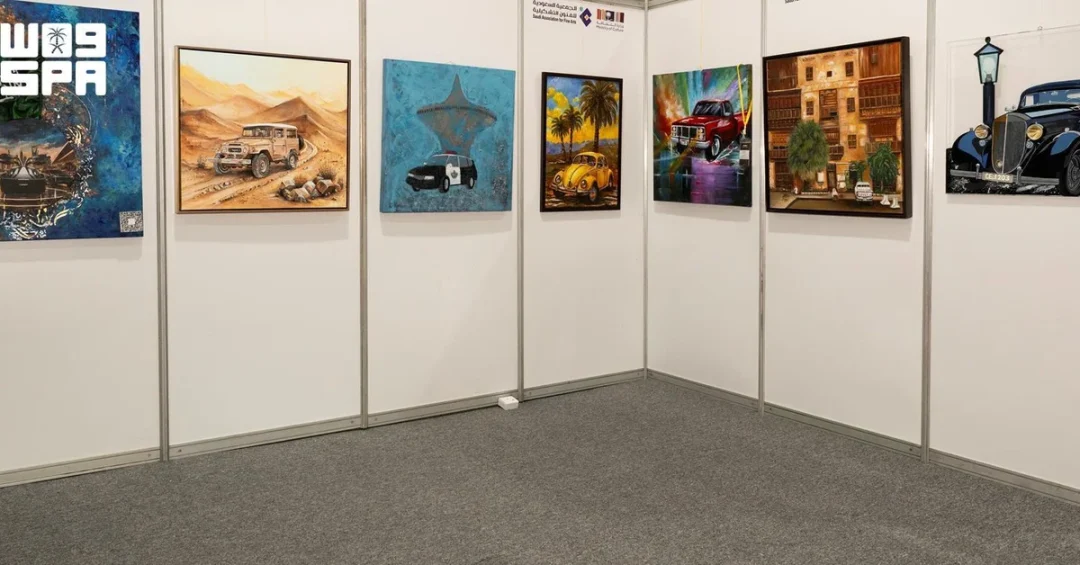
The Jeddah branch of the Saudi Society for Fine Arts is participating in the Jeddah International Motor Show 2026 with a pavilion themed “Cars: From Authenticity to Modernity,” showcasing a curated collection of artworks that bridge visual art and automotive engineering. The exhibition, which opened on November 7, 2026, at the Jeddah Superdome, features paintings that explore the structural beauty of vehicles through bold colors, contemporary compositions, and expressive techniques. This unique fusion of art and automotive design highlights the Kingdom’s growing cultural dynamism and its ability to celebrate both heritage and modernity on an international stage.
The participation of the Saudi Society for Fine Arts in one of the region’s premier automotive events underscores the increasingly interconnected nature of Saudi Arabia’s cultural and economic sectors. As the Kingdom continues to diversify its economy under Vision 2030, such cross-disciplinary collaborations are becoming a hallmark of its progress. The pavilion not only draws attention to the artistic talent flourishing within Saudi Arabia but also enriches the visitor experience at the motor show, offering a contemplative counterpoint to the high-octane world of automotive innovation. Through this initiative, the Society reinforces its role as a catalyst for creative expression and cultural exchange.
Context and Background
How did the Saudi Society for Fine Arts come to play such a pivotal role in the Kingdom’s cultural landscape? Established in 1970, the Society has long been a cornerstone of Saudi Arabia’s artistic community, nurturing generations of painters, sculptors, and mixed-media artists. Its Jeddah branch, in particular, has been instrumental in organizing exhibitions that reflect the city’s reputation as a cosmopolitan hub on the Red Sea. The Society’s mission is to promote fine arts across the Kingdom, encourage experimentation, and integrate art into public life. Over the decades, it has collaborated with various government entities, including the Ministry of Culture, to advance the objectives of Vision 2030, which seeks to elevate culture as a key driver of economic growth and national identity.
The Jeddah International Motor Show, now in its 2026 edition, has itself evolved into a significant platform for automotive innovation and design in the Middle East. Held annually at the Jeddah Superdome, the event attracts global car manufacturers, industry experts, and enthusiasts from around the world. By inviting the Saudi Society for Fine Arts to participate, the organizers have created a space where artistic interpretation meets industrial design, allowing visitors to appreciate vehicles not merely as machines but as objects of aesthetic value. This alignment reflects a broader trend in Saudi Arabia, where cultural institutions are increasingly engaging with sectors beyond the traditional arts to foster dialogue and innovation.
Key Details of the Exhibition
What can visitors expect to see at the “Cars: From Authenticity to Modernity” pavilion? The exhibition features a diverse array of paintings that range from depictions of classic cars to interpretations of modern and futuristic models. Artists have employed acrylics and mixed media to capture the interplay of light and shadow on polished metallic surfaces, highlighting the relationship between streamlined engineering and free artistic lines. The works are characterized by bold colors and contemporary compositions, bringing a human dimension to mechanical forms. Some pieces focus on the nostalgia of vintage automobiles, while others envision the sleek, aerodynamic designs of tomorrow, reflecting the dynamic evolution of the automotive industry.
The pavilion is organized into thematic zones that guide visitors through different artistic approaches to movement and stillness. One section is dedicated to classic cars, with paintings that evoke the elegance and craftsmanship of bygone eras. Another zone showcases futuristic concepts, where artists have imagined vehicles that blend sustainability with cutting-edge technology. The use of mixed media adds texture and depth, allowing the artists to experiment with materials that mimic chrome, glass, and leather. This innovative approach not only demonstrates technical skill but also invites viewers to reconsider the relationship between art and engineering, a theme that resonates with Saudi Arabia’s push for innovation in all fields.
International and Regional Impact
How does this exhibition contribute to Saudi Arabia’s cultural diplomacy on the global stage? By participating in an international motor show, the Saudi Society for Fine Arts positions Saudi creativity within a global conversation about design, technology, and heritage. Visitors from Europe, Asia, and the Americas are exposed to the talent of Saudi artists, fostering cross-cultural appreciation and opening doors for future collaborations. The pavilion also serves as a soft power tool, showcasing the Kingdom’s commitment to nurturing a vibrant arts scene that coexists with its rapid modernization. In a region where automotive events are traditionally dominated by commercial displays, the inclusion of fine art adds a distinctive layer of cultural enrichment that sets Jeddah apart.
Regionally, the exhibition reinforces Saudi Arabia’s leadership in promoting cultural exchange within the Gulf Cooperation Council (GCC) and beyond. Artists from neighboring countries have expressed interest in similar interdisciplinary projects, inspired by the Society’s initiative. This ripple effect could lead to more joint exhibitions and cultural partnerships, further integrating the region’s creative economies. Moreover, the motor show itself benefits from the added cultural dimension, attracting a broader audience that includes art collectors, critics, and enthusiasts who might not otherwise attend an automotive event. This synergy exemplifies how Saudi Arabia is forging a multifaceted national identity that honors tradition while embracing the future.
Economic and Strategic Significance
What economic benefits arise from integrating art into large-scale commercial events? The Jeddah International Motor Show draws significant investment and tourism to the Kingdom, and the addition of a fine arts pavilion enhances its appeal as a destination for cultural tourism. Visitors who come for the cars may stay longer to explore the art, boosting hotel occupancy, restaurant revenues, and retail sales. The Society’s participation also highlights the potential for creative industries to contribute to GDP, a key objective of Vision 2030. By demonstrating that art can thrive alongside industry, the exhibition encourages further investment in cultural infrastructure, such as galleries, studios, and art education programs.
Strategically, this collaboration aligns with Saudi Arabia’s efforts to diversify its economy away from oil dependence. The creative sector is identified as a high-growth area, with the Ministry of Culture spearheading initiatives to support artists and cultural entrepreneurs. The Society’s presence at the motor show serves as a case study for how traditional art forms can intersect with modern industries to create new value. It also signals to international investors that Saudi Arabia offers a supportive environment for innovation across sectors. As the Kingdom continues to host world-class events—from Expo 2030 to the FIFA World Cup 2034—such interdisciplinary showcases will become increasingly important in shaping its global image.
Vision 2030 Alignment
How does this exhibition embody the core principles of Saudi Vision 2030? Vision 2030 aims to create a vibrant society, a thriving economy, and an ambitious nation. The “Cars: From Authenticity to Modernity” pavilion directly supports the first pillar by enriching cultural life and promoting national identity. It also contributes to the second pillar by stimulating creative industries and attracting tourism. Furthermore, it reflects the ambitious spirit of the third pillar by pushing boundaries and fostering innovation. The Society’s initiative is a microcosm of the broader transformation underway in Saudi Arabia, where art, technology, and commerce converge to build a dynamic and diversified future.
In conclusion, the Saudi Society for Fine Arts’ participation in the Jeddah International Motor Show 2026 is more than an exhibition; it is a statement of the Kingdom’s cultural confidence and its unwavering commitment to Vision 2030. By bridging the worlds of art and automotive engineering, the Society not only showcases the talents of Saudi artists but also contributes to a narrative of progress and creativity that resonates globally. As Saudi Arabia continues to host international events and invest in its cultural sector, such initiatives will play a vital role in shaping a legacy of innovation and heritage for generations to come. The pavilion invites the world to see Saudi Arabia through a new lens—one where the beauty of a classic car and the boldness of a contemporary painting are celebrated in equal measure.
20 Questions
Q1. What is the theme of the Saudi Society for Fine Arts pavilion at the Jeddah International Motor Show 2026?
A1. The pavilion is themed “Cars: From Authenticity to Modernity,” featuring artworks that connect visual art with automotive engineering and design. It showcases paintings that explore the structural beauty of vehicles through bold colors and contemporary compositions.
Q2. Where and when is the exhibition taking place?
A2. The exhibition is taking place at the Jeddah International Motor Show 2026, which opened on November 7, 2026, at the Jeddah Superdome in Jeddah, Saudi Arabia. The event runs for several days and attracts a global audience.
Q3. Who is organizing the participation of the artworks?
A3. The Jeddah branch of the Saudi Society for Fine Arts is organizing the participation, building on its longstanding role in enriching Saudi Arabia’s cultural and creative landscape and strengthening the place of visual arts within Saudi cultural identity.
Q4. What types of vehicles are depicted in the paintings?
A4. The paintings range from depictions of classic cars to interpretations of modern and futuristic models, reflecting diverse artistic approaches to movement and stillness. Artists explore both nostalgia and innovation through their chosen subjects.
Q5. What artistic techniques and materials are used in the artworks?
A5. Artists used acrylics and mixed media to capture the interplay of light and shadow on polished metallic surfaces. The works feature bold colors, contemporary compositions, and expressive techniques that bring a human dimension to mechanical forms.
Q6. How does the exhibition connect art with automotive engineering?
A6. The paintings highlight the relationship between streamlined engineering and free artistic lines, bringing a human dimension to mechanical forms. They explore the structural beauty of vehicles, bridging the gap between technical precision and creative expression.
Q7. What is the significance of the Saudi Society for Fine Arts’ participation?
A7. The participation builds on the society’s role in enriching Saudi Arabia’s cultural and creative landscape and reflects its commitment to strengthening the place of visual arts within Saudi cultural identity. It also showcases Saudi artistic talent to a global audience.
Q8. How does this event align with Saudi Vision 2030?
A8. The event supports Vision 2030 by promoting cultural enrichment, stimulating creative industries, and contributing to economic diversification. It reflects the goals of creating a vibrant society and a thriving economy through cross-sector collaboration.
Q9. What is the Jeddah International Motor Show?
A9. The Jeddah International Motor Show is a premier automotive event in the Middle East, held annually at the Jeddah Superdome. It attracts global car manufacturers, industry experts, and enthusiasts, showcasing the latest models and innovations.
Q10. How does the pavilion enhance the visitor experience at the motor show?
A10. The pavilion offers a contemplative counterpoint to the high-octane world of automotive innovation, allowing visitors to appreciate vehicles as objects of aesthetic value. It adds a cultural dimension that enriches the overall event.
Q11. What role does the Jeddah branch of the Society play in the Kingdom’s art scene?
A11. The Jeddah branch has been instrumental in organizing exhibitions that reflect the city’s cosmopolitan character. It nurtures local talent and collaborates with government entities to advance cultural objectives under Vision 2030.
Q12. Are there any international artists participating?
A12. The exhibition features works by Saudi artists from the Jeddah branch of the Saudi Society for Fine Arts. While the focus is on Saudi talent, the international setting of the motor show facilitates cross-cultural dialogue.
Q13. What impact does this exhibition have on Saudi Arabia’s cultural diplomacy?
A13. It positions Saudi creativity within a global conversation about design and heritage, fostering cross-cultural appreciation. It serves as a soft power tool, showcasing the Kingdom’s commitment to a vibrant arts scene alongside modernization.
Q14. How does the exhibition reflect the theme of movement and stillness?
A14. Artists explore movement through dynamic compositions that capture the essence of speed and flow, while stillness is depicted in contemplative portrayals of parked vehicles. This duality invites viewers to reflect on the relationship between motion and rest.
Q15. What economic benefits does the exhibition bring to Jeddah?
A15. The exhibition attracts cultural tourism, boosting hotel occupancy, restaurant revenues, and retail sales. It also highlights the potential of creative industries to contribute to GDP, aligning with Vision 2030’s economic diversification goals.
Q16. How does the Society support emerging artists?
A16. The Society provides a platform for emerging artists to showcase their work at high-profile events, offering exposure and networking opportunities. It also organizes workshops, mentorship programs, and exhibitions throughout the year.
Q17. What is the historical significance of the Saudi Society for Fine Arts?
A17. Established in 1970, the Society has been a cornerstone of Saudi Arabia’s artistic community for over five decades. It has nurtured generations of artists and advocated for the integration of art into public life.
Q18. How can visitors learn more about the artworks?
A18. Visitors can explore the pavilion at the Jeddah Superdome during the motor show. Information about the artists and their works is available on-site, and the Society’s website provides additional details.
Q19. What future collaborations might arise from this exhibition?
A19. The exhibition could lead to joint projects with automotive brands, international art institutions, and cultural festivals. It sets a precedent for interdisciplinary collaborations that blend art with other industries.
Q20. Why is this exhibition important for Saudi Arabia’s global image?
A20. It showcases the Kingdom’s cultural confidence and its ability to host world-class events that merge tradition with modernity. It reinforces Saudi Arabia’s position as a leader in cultural innovation and a destination for global audiences.
Reader Feedback
We value your thoughts. Please share your feedback on this article.
Your feedback helps us improve our coverage.
Related articles
 RCU Launches ‘An Ongoing Story’ Exhibition in AlUla
 Manga Productions Showcases Saudi National Day Anime at TOKYO ANIME NEXT
 Saudi Arabia Concludes Guest of Honor Role at Algiers Book Fair
 Jazan Pottery: Cultural Identity and Artistic Innovation
 Saudi Pavilion Unveils Public Program at Venice Biennale
 Tarjim Initiative, Saudi Comics Draw Crowds at Algiers Book Fair