


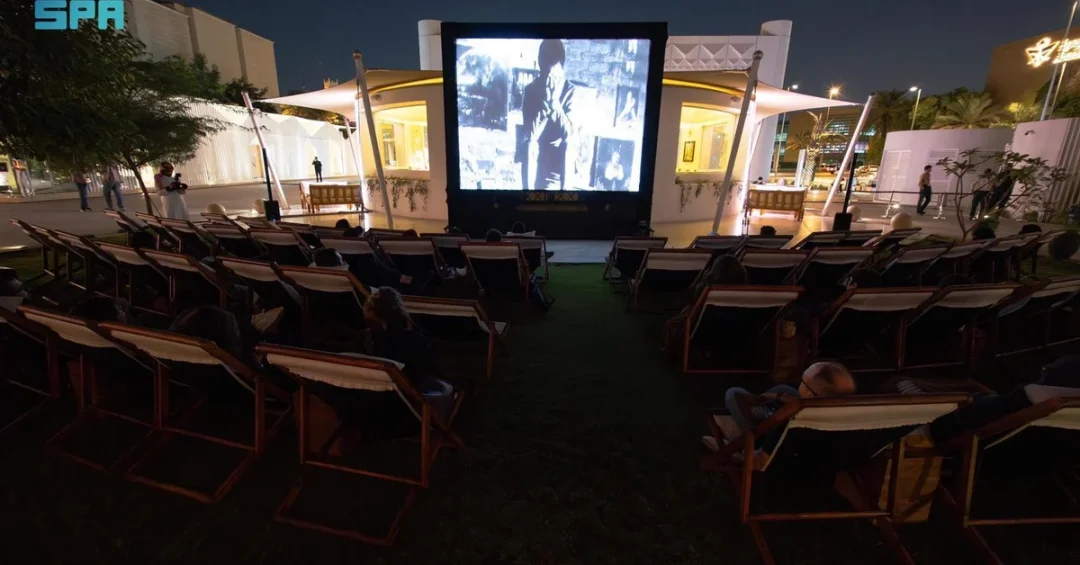
Fenaa Alawwal, the prominent cultural center located in Riyadh’s Diplomatic Quarter, announced on Sunday the launch of its first-ever “Art Films Week,” an event running until November 21 that celebrates independent cinema and aims to foster dialogue and engagement between filmmakers and audiences, according to an official news release carried by the Saudi Press Agency (SPA). The inaugural edition of Art Films Week brings a diverse program of art documentaries and animated films to the Saudi capital, with screenings presented in the center’s outdoor area, reinforcing Riyadh’s growing reputation as a regional hub for creative expression and cultural exchange.
The event opened with the screening of “Nam June Paik: Moon is the Oldest TV,” a documentary exploring the visionary work of Asian artist Nam June Paik and his groundbreaking exploration of personalized media channels. Over the following four days, audiences will be treated to a curated selection of independent films, including “Van Gogh and Japan,” “Omar Sharif: A Nomad’s Life,” “The King and Mister Bird,” and “The Prince Voyage.” The program is designed to appeal to a wide range of viewers, from art enthusiasts to families with children, reflecting Fenaa Alawwal’s commitment to inclusivity and accessibility in the cultural sector. Tickets for all screenings are available for purchase on WeBook through the link: https://webook.com/en/events/art-films-week-moc.
Why does a single week of art films matter in a city already buzzing with cultural energy? Because each screening is a doorway to cross-cultural understanding, and Fenaa Alawwal is opening that door wide for Riyadh’s diverse community and international visitors alike.
Context and Background
What makes Fenaa Alawwal’s first Art Films Week a milestone for Saudi Arabia’s cultural landscape? Fenaa Alawwal, whose name means “First Space,” was established as a cultural center in the Diplomatic Quarter of Riyadh with a mission to bring together thinkers, creatives, and individuals with diverse talents, creating a space for knowledge exchange and cross-cultural dialogue. Since its inception, the center has hosted a variety of exhibitions, workshops, and events that align with the Kingdom’s broader Vision 2030 goals of enriching cultural life and promoting international engagement. The launch of Art Films Week marks a significant expansion of its programming into the realm of independent cinema, a genre that often challenges conventional narratives and invites audiences to see the world through different lenses.
The timing of this event is particularly noteworthy, as it coincides with a period of unprecedented growth in Saudi Arabia’s arts and entertainment sector. In recent years, the Kingdom has witnessed a surge in film festivals, art biennales, and cultural initiatives, all supported by the Ministry of Culture and the General Entertainment Authority. These efforts are part of a strategic push to diversify the economy, create new job opportunities, and enhance the quality of life for citizens and residents. Art Films Week thus represents another step in this cultural renaissance, offering a platform for independent filmmakers and artists to showcase their work to a receptive and curious audience.
Moreover, the event’s focus on art documentaries and animations for children underscores a deliberate effort to cater to all age groups, fostering a love for the arts from an early age. By screening films like “Van Gogh and Japan” and “The King and Mister Bird,” Fenaa Alawwal is not only entertaining but also educating, providing insights into different cultures and historical periods. This educational component is vital in a society that is rapidly transforming and opening up to global influences while preserving its own rich heritage.
Key Details
What exactly can attendees expect from the inaugural Art Films Week? The event features a carefully selected lineup of independent films, each chosen for its artistic merit and ability to spark conversation. The opening film, “Nam June Paik: Moon is the Oldest TV,” offers a deep dive into the life and work of Nam June Paik, a Korean-American artist often hailed as the father of video art. The documentary explores his pioneering use of television and media as artistic mediums, a theme that resonates in today’s digital age. Following this, “Van Gogh and Japan” examines the profound influence of Japanese art on Vincent van Gogh’s style, highlighting the cross-cultural exchanges that have shaped art history.
“Omar Sharif: A Nomad’s Life” presents a biographical portrait of the legendary Egyptian actor, whose career spanned continents and cultures, while “The King and Mister Bird” and “The Prince Voyage” are animated features designed to captivate younger audiences with engaging stories and moral lessons. All screenings are held in the center’s outdoor area, creating a relaxed and inviting atmosphere under the Riyadh sky. This outdoor setting not only enhances the viewing experience but also aligns with the center’s goal of making art accessible and enjoyable for everyone.
Tickets are affordably priced and can be purchased exclusively through WeBook, a leading Saudi ticketing platform. The link provided by Fenaa Alawwal (https://webook.com/en/events/art-films-week-moc) directs users to the event page, where they can select their preferred screenings and complete their purchase. The center encourages early booking, as seating may be limited. By partnering with WeBook, Fenaa Alawwal ensures a seamless and secure ticketing process, further demonstrating the integration of digital solutions in Saudi Arabia’s cultural sector.
International and Regional Impact
How does an event like Art Films Week contribute to Saudi Arabia’s international cultural diplomacy? By showcasing films from around the world—ranging from Korean video art to Japanese-influenced European paintings and Egyptian cinema—Fenaa Alawwal positions Riyadh as a meeting point for global artistic traditions. This not only attracts international attention but also fosters a deeper understanding of different cultures among Saudi residents. In a region often characterized by political tensions, such cultural exchanges can build bridges and promote mutual respect. The event also aligns with the Kingdom’s efforts to attract tourists and expatriates by offering world-class cultural experiences.
Regionally, Art Films Week complements similar initiatives in neighboring countries, such as the Dubai International Film Festival and the Carthage Film Festival in Tunisia. However, what sets Fenaa Alawwal’s event apart is its specific focus on art films and independent cinema, a niche that is often overlooked in mainstream festivals. This specialization could position Riyadh as a destination for cinephiles seeking alternative and thought-provoking content. Furthermore, the inclusion of Arabic films like “Omar Sharif: A Nomad’s Life” highlights the richness of Arab cinema and its contribution to global film heritage.
Could this be the beginning of a new tradition that will grow in stature year after year? The enthusiastic response from the community and the support from official channels suggest that Art Films Week has the potential to become a recurring fixture on Riyadh’s cultural calendar, attracting filmmakers, critics, and audiences from across the region and beyond.
Economic and Strategic Significance
What economic benefits can be derived from cultural events like Art Films Week? The event stimulates local spending on tickets, dining, and transportation, providing a boost to businesses in the Diplomatic Quarter and surrounding areas. It also creates temporary employment opportunities in event management, security, and hospitality. In the long term, successful cultural events enhance the city’s appeal as a tourist destination, which is a key pillar of Vision 2030. By diversifying the entertainment options available, Saudi Arabia can attract a larger share of the global tourism market, which in turn generates revenue and creates jobs.
Strategically, Art Films Week supports the Kingdom’s goal of fostering a vibrant civil society and promoting cultural participation. It encourages dialogue and critical thinking, values that are essential for a knowledge-based economy. The event also strengthens the relationship between the public and private sectors, as seen in the collaboration with WeBook, a private ticketing company. Such partnerships are crucial for the sustainable development of the cultural sector. Moreover, by hosting international films, Fenaa Alawwal contributes to the exchange of ideas and best practices, which can inspire local filmmakers and artists to push creative boundaries.
Vision 2030 Alignment
How does Art Films Week reflect the objectives of Saudi Vision 2030? Vision 2030 aims to transform Saudi Arabia into a global investment powerhouse and a hub for cultural and entertainment activities. The event directly supports the Quality of Life Program, one of the Vision’s executive programs, which seeks to improve the lives of citizens and residents by providing diverse cultural and recreational opportunities. By offering a platform for independent cinema, Fenaa Alawwal is helping to cultivate a creative economy that values innovation and artistic expression. This aligns with the Vision’s emphasis on developing the arts and culture sector as a contributor to GDP and job creation.
Furthermore, the event embodies the spirit of cross-cultural dialogue that is central to Vision 2030’s international engagement strategy. By bringing together films from Asia, Europe, and the Arab world, Fenaa Alawwal demonstrates Saudi Arabia’s openness to the world and its commitment to building bridges of understanding. As the Kingdom continues on its path of modernization, initiatives like Art Films Week will play a vital role in showcasing its rich cultural tapestry and its embrace of global artistic movements. The event is a testament to the leadership’s vision of a Saudi Arabia that is confident, inclusive, and forward-looking.
20 Questions
Q1. What is Fenaa Alawwal and where is it located?
A1. Fenaa Alawwal is a cultural center in Riyadh’s Diplomatic Quarter. It aims to bring together thinkers and creatives to foster knowledge exchange and cross-cultural dialogue.
Q2. When did Art Films Week take place?
A2. The first edition of Art Films Week ran until November 21, 2024, as announced by Fenaa Alawwal on Sunday, November 18, 2024.
Q3. What types of films are featured in Art Films Week?
A3. The event features art documentaries and animations for kids, including independent films that celebrate artistic expression and cultural diversity.
Q4. Which film opened the event?
A4. The opening film was “Nam June Paik: Moon is the Oldest TV,” a documentary about the visionary Asian artist Nam June Paik and his exploration of media channels.
Q5. Where are the screenings held?
A5. Screenings are held in Fenaa Alawwal’s outdoor area, providing a relaxed and inviting atmosphere for attendees.
Q6. How can interested individuals purchase tickets?
A6. Tickets can be purchased on WeBook through the link: https://webook.com/en/events/art-films-week-moc.
Q7. What other films are being shown during the event?
A7. Other films include “Van Gogh and Japan,” “Omar Sharif: A Nomad’s Life,” “The King and Mister Bird,” and “The Prince Voyage.”
Q8. Is the event suitable for children?
A8. Yes, the event includes animations for kids, making it a family-friendly cultural outing.
Q9. What is the mission of Fenaa Alawwal?
A9. Its mission is to bring together thinkers, creatives, and individuals with diverse talents, creating a space for knowledge exchange and cross-cultural dialogue.
Q10. How does Art Films Week contribute to cross-cultural dialogue?
A10. By screening films from different countries and cultures, the event sparks conversations and fosters understanding among diverse audiences.
Q11. Who organized Art Films Week?
A11. The event was organized by Fenaa Alawwal, a cultural center in Riyadh’s Diplomatic Quarter.
Q12. What is the significance of the opening film?
A12. “Nam June Paik: Moon is the Oldest TV” highlights the artist’s pioneering work in video art, setting a creative and thought-provoking tone for the week.
Q13. Are the films in English or Arabic?
A13. The films are likely in various languages with subtitles, as they are international productions. Specific language details were not provided in the release.
Q14. How long does Art Films Week last?
A14. The event runs for four days, from its opening on November 18 until November 21, 2024.
Q15. Is there an entrance fee?
A15. Yes, tickets are required and can be purchased via WeBook. Prices are not specified in the release.
Q16. What is the target audience for Art Films Week?
A16. The event targets art enthusiasts, families, and the general public interested in independent cinema and cultural experiences.
Q17. How does this event align with Saudi Vision 2030?
A17. It supports the Quality of Life Program by enriching cultural offerings, promoting cross-cultural dialogue, and contributing to a vibrant creative economy.
Q18. Will there be opportunities to meet filmmakers?
A18. The release mentions fostering dialogue between filmmakers and audiences, suggesting possible interactions, though specific details were not provided.
Q19. What is the venue’s capacity?
A19. The outdoor area’s capacity was not specified in the release. Interested attendees are encouraged to book early.
Q20. Will Art Films Week become an annual event?
A20. While not confirmed, the positive reception and alignment with cultural goals suggest it could become a recurring fixture. Future announcements will clarify.
Reader Feedback
We value your thoughts. Please share your feedback on this article.
Your feedback helps us improve our coverage.
Related articles
 Saudi Cultural Scholarship Training Program Launches
 Al-Daha: Saudi Folk Heritage Bridging Generations
 King Abdulaziz Falconry Festival Rescheduled to December 3
 Diriyah Art Futures Debuts Landmark AI Art Exhibition
 Ministry of Culture Celebrates Yemeni Orchestra in Riyadh
 Fashion Commission Launches Luxury Retail White Paper