


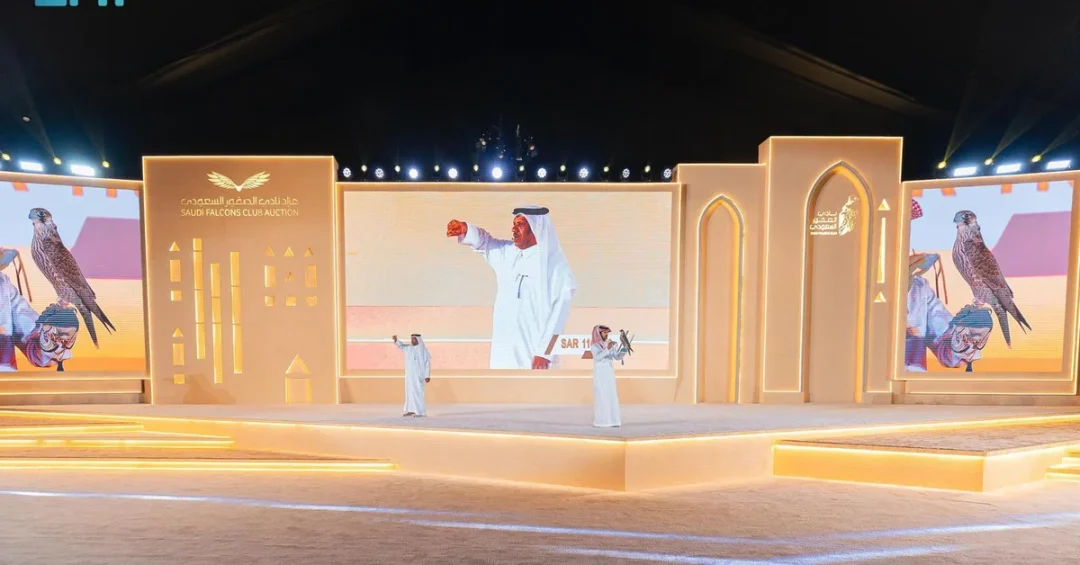
Four falcons were sold for a total of SAR485,000 during the eighth night of the Saudi Falcons Club Auction 2024, held at the club’s headquarters in Malham and running through November 15. The auction, the largest official falcon auction in the Kingdom, showcased intense bidding and highlighted the enduring cultural and economic significance of falconry in Saudi Arabia. The event is part of the Kingdom’s broader efforts to preserve its heritage while advancing economic diversification under Saudi Vision 2030.
The Saudi Falcons Club Auction, organized by the Saudi Falcons Club, has become a cornerstone of the Kingdom’s cultural calendar, attracting falconers and enthusiasts from across the region. This year’s eighth night demonstrated the auction’s growing prominence, with four falcons fetching impressive prices. The event not only celebrates a traditional sport but also contributes to the local economy and promotes Saudi Arabia’s rich cultural legacy on an international stage. As the auction continues, it underscores the Kingdom’s commitment to preserving its heritage while embracing modernization.
Context and Background
What makes the Saudi Falcons Club Auction a pivotal event in the Kingdom’s cultural and economic landscape? Falconry, a centuries-old tradition in the Arabian Peninsula, has been an integral part of Saudi heritage, symbolizing nobility, skill, and a deep connection to nature. The Saudi Falcons Club, established to regulate and promote this tradition, organizes the annual auction to provide a platform for falconers to trade and showcase their birds. The auction is not merely a commercial event; it is a celebration of a cultural practice that has been passed down through generations. By hosting such events, Saudi Arabia reinforces its commitment to preserving its intangible cultural heritage, as recognized by UNESCO.
The auction’s location at the club’s headquarters in Malham, a region known for its association with falconry, adds to its authenticity. Running from late October through November 15, the event spans several nights, each featuring multiple falcons with diverse origins and characteristics. The eighth night, in particular, drew significant attention due to the high-quality birds on offer and the competitive bidding they attracted. This event is part of a larger strategy to integrate cultural heritage into the Kingdom’s economic diversification efforts, aligning with Vision 2030’s goals of promoting tourism, creating jobs, and fostering a vibrant society. The auction also serves as a meeting point for falconers, breeders, and investors, facilitating knowledge exchange and strengthening community ties.
Key Details of the Eighth Night
The eighth night of the auction featured four falcons, each with distinct origins and ownership, resulting in a total sale of SAR485,000. The evening commenced with a falcon owned by falconer Salem Al-Harbi, which sparked intense competition among bidders. Starting at SAR80,000, the bidding quickly escalated, reflecting the bird’s exceptional qualities, and it was ultimately sold for SAR150,000. This falcon set a high bar for the night, demonstrating the premium placed on well-bred and trained birds. The second falcon, originating from east Yanbu and owned by falconer Mohammed Al-Jahni, was auctioned for SAR83,000. While it fetched a lower price than the first, it still represented a significant sum, underscoring the consistent demand for falcons in the market.
The third falcon, from Hail and owned by Naif and Mubarak Al-Rashedi, opened bidding at SAR60,000 and eventually sold for SAR132,000. Hail is renowned for producing high-quality falcons, and this bird’s performance in the auction reflected that reputation. The night concluded with the fourth falcon, from Mastoura and owned by Muhannad Al-Balawi, which began bidding at SAR50,000 and was sold for SAR120,000. Mastoura, another region with a strong falconry tradition, contributed to the diverse geographical representation of the birds. These details highlight the auction’s role in showcasing regional specialties and the expertise of Saudi falconers. The prices achieved indicate a robust market for falcons, driven by both cultural passion and investment potential.
International and Regional Impact
How does the Saudi Falcons Club Auction influence the global perception of Saudi Arabia’s cultural diplomacy? The auction serves as a bridge between Saudi Arabia and the international community, attracting participants and observers from neighboring Gulf countries and beyond. Falconry is practiced in many parts of the world, and Saudi Arabia’s dedication to preserving and promoting it enhances the Kingdom’s soft power. By hosting a world-class auction, Saudi Arabia positions itself as a leader in cultural heritage preservation, fostering goodwill and mutual respect among nations. This aligns with Vision 2030’s objective of strengthening international partnerships and showcasing the Kingdom’s rich history.
Regionally, the auction reinforces Saudi Arabia’s role as a cultural hub in the Gulf Cooperation Council (GCC) region. Falconers from countries like the United Arab Emirates, Qatar, and Kuwait often participate or follow the event, creating a sense of shared heritage and friendly competition. The economic impact extends beyond the auction floor, as related industries such as falcon training, veterinary services, and equipment manufacturing benefit from the increased activity. Moreover, the auction promotes tourism, drawing visitors who are interested in experiencing authentic Saudi culture. This influx of visitors supports local businesses and contributes to the Kingdom’s goal of increasing tourism’s share of GDP. The event also serves as a platform for cultural exchange, where traditional knowledge is shared and celebrated.
Economic and Strategic Significance
What economic benefits does the Saudi Falcons Club Auction bring to the Kingdom? The auction generates direct revenue through the sale of falcons, but its economic impact is far-reaching. It stimulates the local economy by creating demand for goods and services related to falconry, such as specialized diets, training facilities, and transportation. Additionally, the event attracts high-net-worth individuals and investors, who may explore other business opportunities in Saudi Arabia. The auction also supports the growth of the domestic falcon breeding industry, reducing reliance on imports and enhancing self-sufficiency. This aligns with Vision 2030’s aim to diversify the economy away from oil and develop new revenue streams.
Strategically, the auction reinforces Saudi Arabia’s commitment to preserving its cultural identity while modernizing. Falconry is not just a hobby; it is a symbol of national pride and a link to the past. By investing in such events, the Kingdom ensures that future generations remain connected to their heritage. The auction also serves as a case study for how traditional practices can be integrated into a modern economy, providing a model for other cultural initiatives. Furthermore, the event enhances Saudi Arabia’s global image as a country that values its traditions and is open to the world. This balance between tradition and progress is a key pillar of Vision 2030, and the auction exemplifies this synergy.
Vision 2030 Alignment
How does the Saudi Falcons Club Auction contribute to the objectives of Saudi Vision 2030? Vision 2030 is a comprehensive plan to transform Saudi Arabia into a diversified, sustainable economy and a vibrant society. The auction directly supports several of its goals, including the preservation of cultural heritage, the promotion of tourism, and the creation of economic opportunities. By celebrating falconry, the Kingdom showcases its unique cultural assets, attracting tourists and fostering a sense of national identity. The event also aligns with the Quality of Life Program, which aims to enhance the lives of citizens and residents by providing cultural and recreational activities. Through such initiatives, Saudi Arabia is building a future where tradition and modernity coexist harmoniously.
Looking ahead, the Saudi Falcons Club Auction is set to continue growing in prominence, further solidifying the Kingdom’s position as a global leader in cultural heritage preservation. As the auction runs through November 15, it will undoubtedly attract more attention and participation, contributing to the local economy and promoting Saudi Arabia’s rich traditions. The event is a testament to the Kingdom’s forward-looking vision, where cultural pride and economic progress go hand in hand. By supporting such initiatives, Saudi Arabia is not only preserving its past but also building a prosperous and inclusive future for all. The success of the eighth night is a clear indication that the auction will remain a highlight of the Kingdom’s cultural calendar for years to come.
20 Questions
Q1. What was the total amount raised from the four falcons sold on the eighth night?
A1. The four falcons sold for a total of SAR485,000, reflecting strong demand and competitive bidding at the auction.
Q2. Who owned the first falcon that was auctioned, and what was its selling price?
A2. The first falcon was owned by falconer Salem Al-Harbi and sold for SAR150,000 after starting at SAR80,000.
Q3. Where did the second falcon originate, and who was its owner?
A3. The second falcon originated from east Yanbu and was owned by falconer Mohammed Al-Jahni, selling for SAR83,000.
Q4. What was the starting bid for the third falcon, and what was its final price?
A4. The third falcon, from Hail and owned by Naif and Mubarak Al-Rashedi, started at SAR60,000 and sold for SAR132,000.
Q5. Which falcon was sold last on the eighth night, and what was its price?
A5. The fourth falcon, from Mastoura and owned by Muhannad Al-Balawi, began at SAR50,000 and sold for SAR120,000.
Q6. Where is the Saudi Falcons Club Auction held?
A6. The auction is held at the Saudi Falcons Club’s headquarters in Malham, a region known for its falconry heritage.
Q7. How long does the Saudi Falcons Club Auction run?
A7. The auction runs through November 15, featuring multiple nights of falcon sales and cultural activities.
Q8. What is the significance of the Saudi Falcons Club Auction?
A8. It is the largest official falcon auction in the Kingdom, promoting Saudi cultural heritage and supporting Vision 2030 goals.
Q9. How does the auction support Saudi Vision 2030?
A9. It preserves cultural heritage, boosts tourism, creates economic opportunities, and enhances quality of life, aligning with Vision 2030’s objectives.
Q10. What role does falconry play in Saudi culture?
A10. Falconry is a centuries-old tradition symbolizing nobility, skill, and a deep connection to nature, passed down through generations.
Q11. Which regions are known for producing high-quality falcons in Saudi Arabia?
A11. Regions like Hail, Yanbu, and Mastoura are renowned for their falcons, as seen in the diverse origins of the auctioned birds.
Q12. How does the auction impact the local economy?
A12. It generates revenue, stimulates related industries, attracts investors, and supports tourism, contributing to economic diversification.
Q13. Who organizes the Saudi Falcons Club Auction?
A13. The auction is organized by the Saudi Falcons Club, which regulates and promotes falconry in the Kingdom.
Q14. What types of falcons are typically auctioned?
A14. Falcons of various breeds and origins are auctioned, with quality and lineage determining their value and bidding intensity.
Q15. Can international participants join the auction?
A15. Yes, the auction attracts participants and observers from the Gulf region and beyond, fostering cultural exchange and competition.
Q16. How does the auction promote Saudi heritage internationally?
A16. It showcases Saudi Arabia’s cultural traditions, enhances soft power, and positions the Kingdom as a leader in heritage preservation.
Q17. What is the historical background of falconry in Saudi Arabia?
A17. Falconry has been practiced for centuries in the Arabian Peninsula, serving as a vital hunting method and a symbol of status.
Q18. How does the auction align with the Quality of Life Program?
A18. It provides cultural and recreational activities, enhancing the lives of citizens and residents as part of Vision 2030’s Quality of Life Program.
Q19. What economic sectors benefit from the auction?
A19. Sectors such as falcon breeding, training, veterinary services, equipment manufacturing, and tourism benefit from the auction’s activities.
Q20. What does the future hold for the Saudi Falcons Club Auction?
A20. The auction is expected to grow in prominence, further solidifying Saudi Arabia’s role as a global leader in cultural heritage preservation.
Reader Feedback
We value your thoughts. Please share your feedback on this article.
Your feedback helps us improve our coverage.
Related articles
 Red Sea Film Festival Unveils Global Selection for 4th Edition
 Tariq Abdulhakim Center in Historic Jeddah Celebrates World Audiovisual Heritage Day
 Saudi Heritage Commission Registers 500 New Urban Sites
 Saudi Arabia Marks World Audiovisual Heritage Day
 Red Sea Film Festival Unveils 2024 Global Selections
 Record-Breaking Night at Saudi Falcon Auction