


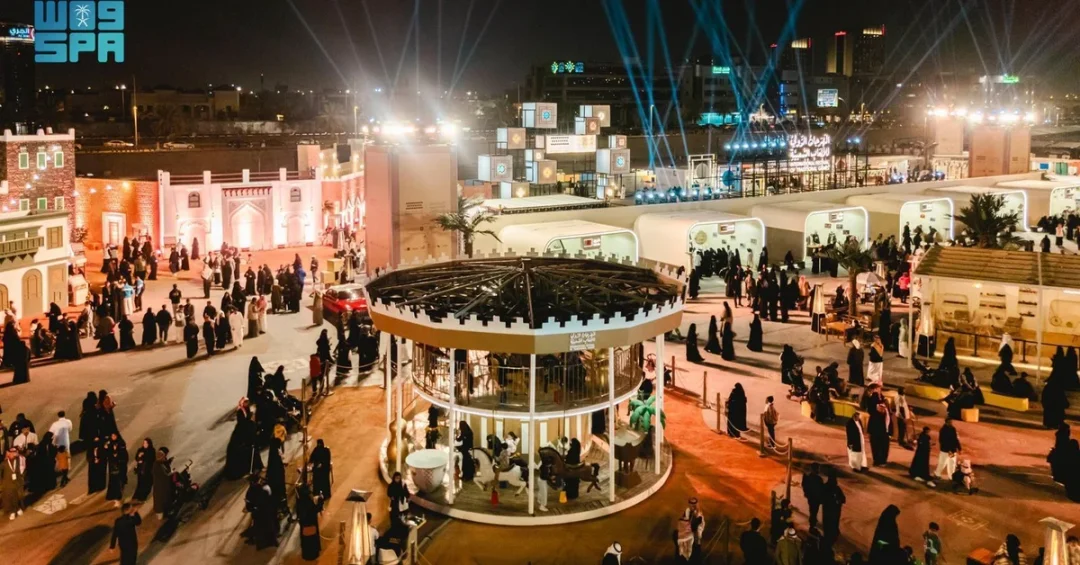
The International Festival of Traditional Games, organized by the Heritage Commission, concluded its seven-day run on December 25, 2024, at a dedicated site east of the King Abdullah Financial District in Riyadh, drawing significant public interest and international participation from Oman, Kuwait, Bahrain, the United Arab Emirates, Greece, and Egypt. The festival, announced and documented through the Saudi Press Agency, formed part of the Kingdom’s widening effort to celebrate cultural heritage as a living, participatory experience rather than a static museum display. Over the course of a week, visitors moved through recreated neighborhoods, archaeological storytelling zones, and hands-on workshops that placed traditional games at the center of a broader conversation about identity, memory, and modernization. For a capital city that now hosts world-class entertainment, sporting, and cultural events throughout the year, the festival offered a distinctively Saudi contribution to the global calendar.
Why does a seven-day celebration of folk games in Riyadh matter beyond the borders of the Kingdom? The answer lies in how Saudi Arabia has chosen to present its heritage: not as a relic to be preserved behind glass, but as an interactive inheritance that families, young people, and international guests can touch, play, and carry forward. The event reflected the priorities of the Heritage Commission, the body responsible for documenting, protecting, and promoting Saudi cultural heritage under the wider framework of Vision 2030. Its closing, reported by the Saudi Press Agency, capped a week in which traditional games served as a bridge between generations and between nations.
Context and Background
What does it take to turn centuries of folk tradition into a contemporary public festival? The Heritage Commission, the Saudi authority tasked with safeguarding the Kingdom’s material and intangible cultural heritage, designed the International Festival of Traditional Games as a comprehensive showcase rather than a single exhibition. The choice of location — a dedicated site east of the King Abdullah Financial District in Riyadh — placed the event at the intersection of the capital’s modern financial architecture and its cultural memory. Visitors could move from the glass towers of one of the region’s leading business hubs into spaces rebuilt to evoke the neighborhoods of old.
The festival’s timing, in the final week of December 2024, aligned with a period of intense cultural activity across Saudi Arabia, when domestic tourism and family entertainment reach a seasonal peak. By anchoring the program in traditional games, the organizers tapped into a form of heritage that is inherently social: games are played, not merely observed, and they pass between generations through participation. The event therefore functioned simultaneously as entertainment, education, and cultural diplomacy, inviting international pavilions to present their own traditions alongside Saudi ones.
The presence of pavilions from Oman, Kuwait, Bahrain, the United Arab Emirates, Greece, and Egypt gave the festival a genuinely international character. Each participating country brought its own traditional games, creating a comparative exhibition of play cultures from the Arabian Peninsula, the wider Middle East, and the Eastern Mediterranean. For Saudi audiences, this was an opportunity to see familiar pastimes reflected in neighboring traditions; for international visitors, it was a window into a region whose shared heritage often receives less attention than its contemporary transformations.
Key Details and Festival Zones
What did visitors actually experience inside the festival grounds? The site was organized into distinct zones, each with a different approach to storytelling. The “Neighborhoods” area recreated traditional architectural styles and hosted demonstrations of folk games from different regions of the Kingdom, allowing guests to encounter the diversity of Saudi heritage within a single walk. Regional variations in games, costumes, and building techniques were presented side by side, underlining the breadth of a country that stretches from the Red Sea to the Arabian Gulf.
The “Secrets of Al-Faw” exhibit offered an engaging narrative about the ancient city of Al-Faw, a major archaeological site in the Kingdom’s south. By connecting contemporary play traditions to one of Arabia’s most significant ancient settlements, the exhibit framed traditional games as part of a continuum of civilization that reaches back millennia. The “Traditional Games Journey” zone complemented this by tracing the evolution of games from their ancient origins to modern electronic versions, a progression that resonates with younger visitors who encounter heritage through digital interfaces as much as through physical play.
Interactive elements played a central role throughout the festival, encouraging visitors to do more than watch. Workshops on pottery coloring, doll making, and leather engraving enriched the experience, giving participants the chance to work with materials and techniques rooted in Saudi craft traditions. A marketplace offered a wide selection of handicrafts, including textiles, leatherwork, woodwork, and pottery, allowing artisans and small producers to reach a large public audience. Together, these components turned the festival into an integrated cultural economy, not merely an exhibition.
International and Regional Impact
How does a cultural festival in Riyadh project influence beyond the Kingdom’s borders? The participation of Gulf neighbors — Oman, Kuwait, Bahrain, and the United Arab Emirates — reinforced the cultural cohesion of the region, presenting the Arabian Peninsula as a shared civilizational space with distinct national expressions. For Greek and Egyptian pavilions, the festival offered a platform to present Mediterranean and North African traditions to Saudi and international audiences, deepening people-to-people connections that complement diplomatic and economic ties.
Such exchanges matter at a moment when Saudi Arabia is hosting an expanding array of global events, from sporting championships to investment summits. Cultural festivals of this kind demonstrate that the Kingdom’s international engagement is not limited to economics and security; it also includes the softer terrain of heritage, art, and everyday tradition. By inviting foreign pavilions into a Saudi-organized event, the Heritage Commission positioned the Kingdom as a convener of cultures, a role consistent with its growing diplomatic weight and its ambition to be a global destination.
Economic and Strategic Significance
Why should traditional games be treated as an economic as well as a cultural asset? The festival’s marketplace and workshops supported artisans, craft producers, and small businesses, linking heritage directly to livelihoods. Textiles, leatherwork, woodwork, and pottery represent skills that can be commercialized sustainably, creating income for families and communities while preserving techniques that might otherwise fade. In this sense, the event embodied a practical model of heritage-led development, in which cultural preservation and economic participation reinforce one another.
Strategically, the festival contributed to the diversification of Riyadh’s event economy. A city that now hosts major concerts, conferences, and sports fixtures benefits from a cultural calendar that includes distinctly Saudi offerings, attracting both domestic visitors and international tourists curious about the Kingdom’s traditions. The event also supported the broader goal of extending tourism beyond the traditional pilgrimage seasons, encouraging visitors to explore the capital’s cultural life and, by extension, the Kingdom’s regional heritage destinations.
Vision 2030 Alignment
How does a celebration of traditional games connect to Saudi Arabia’s long-term national transformation? Vision 2030 places quality of life, cultural pride, and the preservation of national identity alongside economic diversification as core objectives. The Heritage Commission’s work sits at the heart of that agenda, ensuring that rapid modernization does not come at the expense of the traditions that define Saudi society. By making heritage interactive and family-oriented, the festival helped translate an abstract policy goal into an experience that ordinary residents and visitors could enjoy.
The event also advanced the Vision’s ambition to position the Kingdom as a global cultural destination. International pavilions, foreign visitors, and extensive media coverage through the Saudi Press Agency combined to present Saudi Arabia as a confident, open, and culturally rooted nation. As the Kingdom continues to invest in museums, archaeological projects, and cultural festivals, the International Festival of Traditional Games stands as a clear example of how heritage can be mobilized — respectfully and creatively — in service of a forward-looking national vision. With its closing in Riyadh, the festival left behind not only memories of play but a template for how Saudi Arabia intends to share its story with the world.
20 Questions
Q1. What was the International Festival of Traditional Games?
A1. It was a seven-day cultural event organized by the Heritage Commission in Riyadh, celebrating traditional games from Saudi Arabia and several participating countries, with interactive zones, workshops, and a handicrafts marketplace for visitors and families.
Q2. Where was the festival held?
A2. The festival took place at a dedicated site east of the King Abdullah Financial District in Riyadh, placing the event near one of the capital’s most prominent modern business and lifestyle districts.
Q3. When did the festival conclude?
A3. According to the Saudi Press Agency, the festival concluded its seven-day run on December 25, 2024, following a week of public activities, international pavilions, and cultural programming in Riyadh.
Q4. Which organization arranged the festival?
A4. The Heritage Commission, the Saudi authority responsible for documenting, protecting, and promoting the Kingdom’s cultural heritage, organized the event as part of its wider mission under Vision 2030.
Q5. Which countries participated with pavilions?
A5. Oman, Kuwait, Bahrain, the United Arab Emirates, Greece, and Egypt presented pavilions, giving the festival an international character that spanned the Gulf, the wider Middle East, and the Eastern Mediterranean.
Q6. What was the “Neighborhoods” area?
A6. The “Neighborhoods” zone recreated traditional architectural styles and hosted demonstrations of folk games from different regions of the Kingdom, allowing visitors to experience Saudi heritage in a single walk.
Q7. What did the “Secrets of Al-Faw” exhibit present?
A7. It offered an engaging narrative about the ancient city of Al-Faw, connecting Saudi Arabia’s contemporary play traditions to one of the Kingdom’s most significant archaeological sites and its long civilizational history.
Q8. What was the “Traditional Games Journey” zone?
A8. This zone traced the evolution of traditional games from ancient origins to modern electronic versions, showing how play has adapted across centuries while retaining cultural meaning for successive generations.
Q9. Were visitors able to play the games themselves?
A9. Yes. Interactive elements played a central role, encouraging visitors to actively participate in traditional games rather than only observing demonstrations, which made the festival especially appealing to families and young people.
Q10. What kinds of workshops were offered?
A10. Workshops included pottery coloring, doll making, and leather engraving, giving participants hands-on experience with materials and techniques rooted in Saudi craft traditions and regional heritage practices.
Q11. What could visitors buy at the festival?
A11. A marketplace offered a wide selection of handicrafts, including textiles, leatherwork, woodwork, and pottery, supporting artisans and small producers while giving visitors authentic Saudi cultural products to take home.
Q12. Why are traditional games important culturally?
A12. Traditional games carry social memory, teach cooperation, and connect generations through shared play. They are a form of intangible heritage that survives best when communities continue to practice them together.
Q13. How does the festival support Saudi artisans?
A13. By providing a marketplace and workshop space, the festival links heritage skills to real income opportunities, helping artisans and small businesses sustain crafts such as textiles, leatherwork, woodwork, and pottery.
Q14. What does the event say about Saudi cultural policy?
A14. It reflects a policy of presenting heritage as a living, participatory experience, consistent with the Heritage Commission’s mandate and the Vision 2030 goal of strengthening national identity alongside modernization.
Q15. How does the festival relate to Vision 2030?
A15. Vision 2030 emphasizes quality of life, cultural pride, and economic diversification. The festival advanced all three by offering family entertainment, celebrating Saudi identity, and supporting heritage-based livelihoods.
Q16. Did the festival attract international attention?
A16. The participation of six foreign pavilions and coverage by the Saudi Press Agency gave the event international visibility, presenting Riyadh as a convener of cultures and a growing global cultural destination.
Q17. What role did the Saudi Press Agency play?
A17. The Saudi Press Agency reported the festival’s conclusion and details, serving as the official channel through which the event’s program, participants, and outcomes were communicated to domestic and international audiences.
Q18. Why is the King Abdullah Financial District location significant?
A18. Situating the festival east of the King Abdullah Financial District placed traditional heritage in dialogue with the capital’s modern financial hub, symbolizing the balance between economic progress and cultural continuity.
Q19. How does the festival fit into Saudi tourism goals?
A19. It enriches Riyadh’s cultural calendar, attracts domestic and international visitors, and encourages tourism that extends beyond traditional seasons, supporting the Kingdom’s ambition to become a leading global destination.
Q20. What is the lasting value of such festivals?
A20. They preserve intangible heritage, strengthen community bonds, support artisans, and project Saudi Arabia’s cultural confidence globally, providing a replicable model for future heritage events across the Kingdom.
Reader Feedback
We value your thoughts. Please share your feedback on this article.
Your feedback helps us improve our coverage.
Related articles
 Saudi Camel Club’s Rai Alnadhar Sets Guinness World Record
 Second Riyadh Theater Festival Concludes Successfully
 Souq Al-Awaleen: A Journey Through Time at Riyadh Season
 Year of the Camel’: A Celebration of Saudi Heritage and Identity
 Saudi Winter Beverages Celebrate Heritage and Warmth
 Sculpture: A Living Symbol of Saudi Cultural Identity