


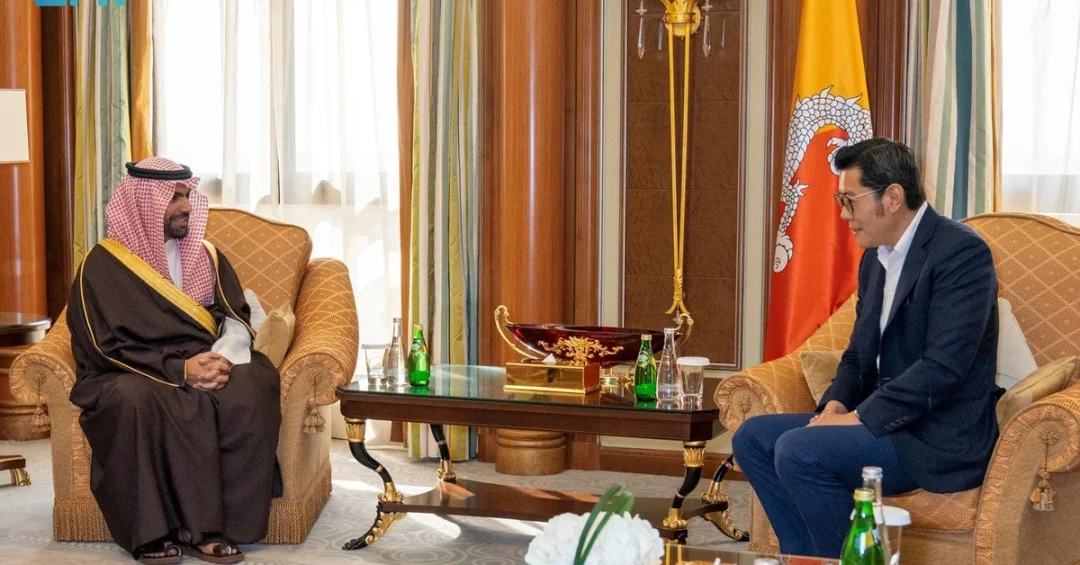
Saudi Minister of Culture Prince Badr bin Abdullah bin Farhan was received by King Jigme Khesar Namgyel Wangchuck of the Kingdom of Bhutan at the King’s residence in Riyadh on October 28, 2024, in a meeting that underscored the growing role of cultural diplomacy in Saudi Arabia’s international engagement. The audience, announced by the Saudi Press Agency, brought together two kingdoms separated by geography but increasingly connected by a shared interest in preserving heritage and deepening people-to-people ties. Saudi Assistant Minister of Culture Rakan bin Ibrahim Al-Touq attended the meeting, reflecting the seriousness with which the Kingdom treats cultural exchange as a pillar of its foreign policy.
The encounter took place during a period of expanding Saudi cultural outreach, as the Ministry of Culture pursues a broad mandate to strengthen the Kingdom’s international partnerships. Could a single meeting between a monarch and a minister signal something larger about how nations now conduct diplomacy? In this case, the discussion centered on the importance of culture in fostering connections between peoples, with both sides stressing the need to enhance, develop, and promote cultural cooperation while safeguarding heritage. The presence of a senior Bhutanese monarch and a Saudi cultural delegation in Riyadh highlights how cultural dialogue has moved from the margins of statecraft to its center.
Context and Background
Why has culture become such a central instrument of Saudi diplomacy? The answer lies in the transformation that has reshaped the Kingdom’s international posture over the past decade. Under the leadership of the Custodian of the Two Holy Mosques, King Salman bin Abdulaziz Al Saud, and His Royal Highness Crown Prince and Prime Minister Mohammed bin Salman bin Abdulaziz Al Saud, Saudi Arabia has invested heavily in cultural institutions, festivals, and global partnerships. The Ministry of Culture, established in 2018 and led by Prince Badr bin Abdullah bin Farhan, has become a key vehicle for this effort, overseeing sectors ranging from museums and heritage to film, music, and literature.
The meeting with King Jigme Khesar Namgyel Wangchuck fits a pattern of high-level cultural engagement that has seen Saudi Arabia host and participate in major international cultural events. Bhutan, a Himalayan kingdom renowned for its commitment to preserving its cultural identity and its philosophy of Gross National Happiness, offers a natural partner for a dialogue about heritage conservation. Both nations place a premium on tradition even as they modernize, and both have made culture a defining element of their national narratives. The Riyadh audience therefore represents a meeting of two countries that view cultural preservation not as nostalgia but as a foundation for future prosperity.
The timing is significant. Saudi Arabia is preparing to host major global events, including Expo 2030 in Riyadh, and is positioning itself as a hub for cultural exchange between East and West, North and South. Bhutan, for its part, has been expanding its international cultural footprint while carefully managing the balance between openness and the protection of its unique traditions. The conversation in Riyadh thus brought together two models of culturally grounded development, each with lessons for the other.
Key Details of the Meeting
What exactly was discussed behind the doors of the King’s residence in Riyadh? According to the official Saudi Press Agency report, the two sides discussed the importance of culture in fostering connections between people. They emphasized the need to enhance, develop, and promote cultural cooperation while also preserving and safeguarding heritage. These themes align directly with the Ministry of Culture’s mandate to promote Saudi culture internationally and to build partnerships that benefit both the Kingdom and its partners.
The meeting was attended by Saudi Assistant Minister of Culture Rakan bin Ibrahim Al-Touq, a senior official who has played a role in the Ministry’s international engagement. His presence signals that the discussion was not merely ceremonial but touched on concrete areas of potential collaboration. Cultural cooperation between Saudi Arabia and Bhutan could encompass heritage restoration, museum exchanges, participation in cultural festivals, and joint efforts to protect intangible cultural heritage such as traditional crafts, music, and performing arts.
Both Saudi Arabia and Bhutan have rich heritage traditions. Saudi Arabia is home to UNESCO World Heritage sites including Hegra, the historic area of Diriyah, and the rock art of the Hail region, and has invested in restoring and promoting these treasures. Bhutan is known for its monasteries, fortresses, and distinctive architectural heritage, as well as its emphasis on maintaining cultural practices in the face of globalization. A partnership built on shared respect for heritage could therefore take many forms, from expert exchanges to joint cultural programming.
International and Regional Impact
How does a meeting between Saudi Arabia and Bhutan resonate beyond the two countries? The audience in Riyadh reflects Saudi Arabia’s broader strategy of building bridges with Asia, a region of growing economic and strategic importance. Bhutan, situated between China and India, occupies a unique position in South Asia and maintains a distinct foreign policy rooted in its cultural values. By engaging with Bhutan at the highest level, Saudi Arabia signals its willingness to build relationships across the Asian continent that are grounded in mutual respect and shared interests.
The cultural dimension of the meeting also reinforces Saudi Arabia’s message to the world that its modernization goes hand in hand with the preservation of its identity. This narrative is central to the Kingdom’s international image as it pursues Vision 2030. For Bhutan, engagement with Saudi Arabia offers access to a global cultural stage and potential partnerships in areas such as sustainable tourism and heritage management. The meeting therefore has implications for regional diplomacy, cultural policy, and the broader trend of nations using culture as a tool for soft power and mutual understanding.
Economic and Strategic Significance
What economic and strategic value can be derived from cultural cooperation? Cultural diplomacy often opens doors to broader collaboration. Saudi Arabia’s cultural sector is a growing part of its economy, with investments in entertainment, tourism, and creative industries creating jobs and attracting international visitors. Partnerships with countries like Bhutan can support the exchange of expertise in areas such as sustainable tourism, which is a priority for both nations. Bhutan’s model of high-value, low-impact tourism offers lessons that could inform Saudi Arabia’s own approach to developing destinations beyond the major cities.
Strategically, the meeting strengthens Saudi Arabia’s network of relationships in Asia and demonstrates that the Kingdom is a reliable partner for countries of all sizes. Bhutan’s participation in this dialogue highlights the Kingdom’s ability to engage with diverse cultural traditions. For Saudi Arabia, such engagements also support the goals of Vision 2030 by diversifying international partnerships and promoting the Kingdom as a global center for cultural exchange. The meeting is a small but meaningful step in a larger strategy of cultural and economic diversification.
Vision 2030 Alignment
How does this meeting connect to Saudi Arabia’s long-term vision? Vision 2030, the Kingdom’s comprehensive reform program, places culture at the heart of efforts to diversify the economy and enhance the quality of life. The Ministry of Culture’s initiatives, from the Diriyah Biennale to the Red Sea International Film Festival, are designed to showcase Saudi heritage and creativity to the world. International partnerships, such as the one discussed with Bhutan, amplify these efforts by bringing global perspectives and audiences to Saudi cultural initiatives.
The meeting between King Jigme Khesar Namgyel Wangchuck and Prince Badr bin Abdullah bin Farhan is a testament to the Kingdom’s growing role as a convener of cultural dialogue. It reflects the vision of Crown Prince Mohammed bin Salman to position Saudi Arabia as a global hub for culture, tourism, and investment. As the Kingdom continues to open up and engage with the world, such encounters will become increasingly common, building bridges of understanding that serve the interests of all involved. The audience in Riyadh is a reminder that culture, in the end, is one of the most enduring and effective forms of diplomacy.
20 Questions
Q1. Who received the Saudi Minister of Culture in Riyadh?
A1. King Jigme Khesar Namgyel Wangchuck of the Kingdom of Bhutan received Saudi Minister of Culture Prince Badr bin Abdullah bin Farhan at his residence in Riyadh on October 28, 2024.
Q2. What was the main topic of discussion during the meeting?
A2. The two sides discussed the importance of culture in fostering connections between people and emphasized the need to enhance, develop, and promote cultural cooperation while preserving and safeguarding heritage.
Q3. Who else attended the meeting from the Saudi side?
A3. Saudi Assistant Minister of Culture Rakan bin Ibrahim Al-Touq attended the meeting, reflecting the Ministry of Culture’s engagement in international cultural dialogue.
Q4. Where did the meeting take place?
A4. The meeting took place at the residence of King Jigme Khesar Namgyel Wangchuck in Riyadh, the capital of the Kingdom of Saudi Arabia.
Q5. When did the meeting occur?
A5. The meeting occurred on October 28, 2024, as reported by the Saudi Press Agency, which announced the audience in an official statement.
Q6. What is the significance of cultural diplomacy for Saudi Arabia?
A6. Cultural diplomacy helps Saudi Arabia build bridges with other nations, showcase its heritage and modernization, and strengthen people-to-people ties as part of its Vision 2030 goals.
Q7. How does Bhutan’s approach to culture align with Saudi Arabia’s?
A7. Both nations place a high value on preserving heritage and cultural identity while pursuing modernization, making them natural partners for cultural cooperation and exchange.
Q8. What areas of cultural cooperation could be explored?
A8. Potential areas include heritage restoration, museum exchanges, participation in cultural festivals, and joint efforts to protect intangible cultural heritage such as crafts and performing arts.
Q9. Why is this meeting important for Saudi Arabia’s international relations?
A9. It reflects Saudi Arabia’s strategy of engaging with Asian nations and using culture as a tool for soft power, mutual understanding, and broader diplomatic and economic partnerships.
Q10. What role does the Saudi Ministry of Culture play in such meetings?
A10. The Ministry of Culture, led by Prince Badr bin Abdullah bin Farhan, oversees Saudi Arabia’s cultural sector and promotes international partnerships that support Vision 2030 and cultural exchange.
Q11. How does this meeting relate to Vision 2030?
A11. Vision 2030 places culture at the heart of economic diversification and quality-of-life improvements, and international partnerships like this one amplify Saudi cultural initiatives globally.
Q12. What is the significance of Bhutan in this context?
A12. Bhutan is known for its commitment to preserving cultural heritage and its philosophy of Gross National Happiness, offering a unique perspective on balancing tradition and modernization.
Q13. What are the potential economic benefits of cultural cooperation?
A13. Cultural cooperation can open doors to collaboration in sustainable tourism, creative industries, and heritage management, supporting economic diversification and job creation in both countries.
Q14. How does this meeting fit into Saudi Arabia’s broader Asian outreach?
A14. It is part of Saudi Arabia’s efforts to build strong relationships across Asia, a region of growing economic and strategic importance, through cultural and diplomatic engagement.
Q15. What message does this meeting send to the international community?
A15. It signals that Saudi Arabia is open to cultural exchange and partnership with countries of all sizes, and that it values heritage as a foundation for modern development.
Q16. What are some examples of Saudi cultural initiatives?
A16. Examples include the Diriyah Biennale, the Red Sea International Film Festival, and efforts to restore and promote UNESCO World Heritage sites such as Hegra and Diriyah.
Q17. How can Bhutan benefit from this engagement?
A17. Bhutan can gain access to a global cultural stage, potential partnerships in sustainable tourism and heritage management, and greater international visibility for its cultural treasures.
Q18. What is the role of heritage preservation in Saudi cultural policy?
A18. Heritage preservation is central to Saudi cultural policy, as the Kingdom invests in restoring historical sites and safeguarding traditions to share its rich history with the world.
Q19. Will there be follow-up actions after this meeting?
A19. While specific follow-up actions were not announced, the discussion emphasized the need to enhance cultural cooperation, suggesting further dialogue and potential initiatives in the future.
Q20. How does this meeting reflect Saudi Arabia’s global role?
A20. It demonstrates Saudi Arabia’s growing role as a convener of cultural dialogue and a global hub for culture, tourism, and investment, aligned with the Kingdom’s forward-looking vision.
Reader Feedback
We value your thoughts. Please share your feedback on this article.
Your feedback helps us improve our coverage.
Related articles
 Two Falcons Sell for SAR305,000 at Saudi Auction
 Saudi Commission Hosts Virtual Event on Sports Translation
 First-of-its-kind Manga Launches in Saudi Arabia: ‘Road to 2034’ Special Edition Brings Saudi Arabia’s FIFA World Cup™ 2034 Bid to Life
 Three Falcons Sold for Over SAR400,000 at Saudi Falcons Club Auction
 KSGAAL Launches Scientific Program in Brazil
 Saudi Arabia Launches Arab Week at UNESCO in Paris