


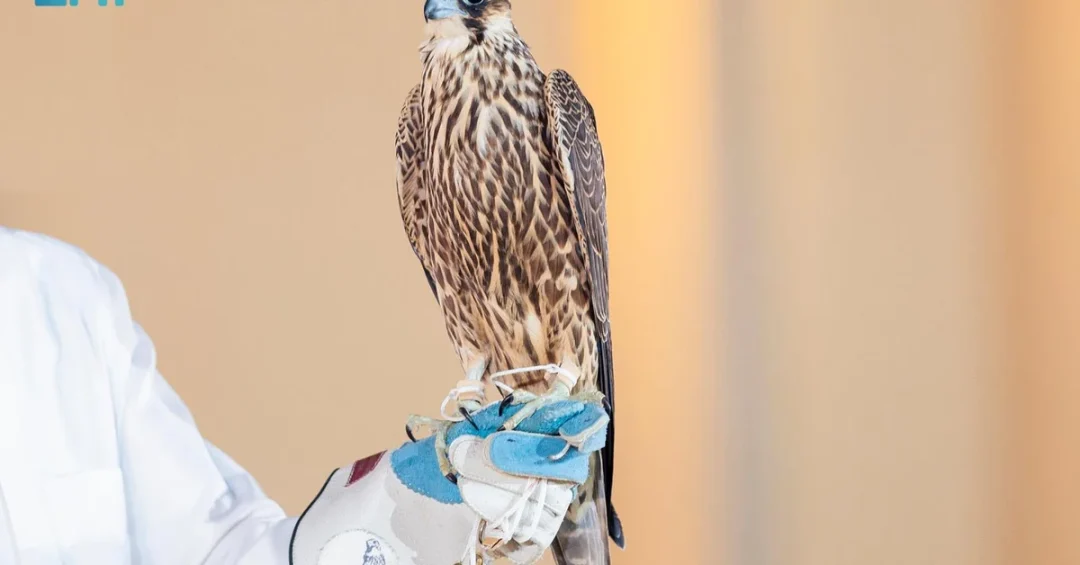
Three falcons sold for a combined SAR412,000 during the 15th night of the Saudi Falcons Club Auction, held at the club’s headquarters in Malham, north of Riyadh, and running until November 15, according to the Saudi Press Agency. The evening’s bidding opened with a young Shaheen presented by Khaled Al-Harbi, which sold for SAR76,000, followed by a second young Shaheen presented by Badr Al-Azmi that fetched SAR135,000. The night concluded with a fierce competition for a third young Shaheen presented by Abdullah Al-Thalabi, which started at SAR50,000 and ultimately sold for SAR201,000.
Could the enduring appeal of falconry offer a window into how Saudi Arabia balances heritage with modern ambition? The auction, now in its 15th night, has become a landmark event on the Kingdom’s cultural calendar, drawing falconers, breeders, and enthusiasts from across the region. The Saudi Falcons Club, which organizes the auction, provides a structured and transparent platform for the sale of these prized birds, ensuring that traditional practices are upheld alongside contemporary standards of fairness and quality. The event not only celebrates the deep-rooted bond between Saudis and falcons but also reinforces the Kingdom’s commitment to preserving its intangible cultural heritage for future generations.
Context and Background
Why does falconry continue to hold such a central place in Saudi culture and identity? Falconry, known in Arabic as “al-qanas,” has been practiced on the Arabian Peninsula for thousands of years, serving as both a means of hunting and a symbol of nobility, patience, and skill. The falcon is revered as a national bird, and its image is woven into the fabric of Saudi history, poetry, and art. The Saudi Falcons Club, established under the patronage of the Kingdom’s leadership, works year-round to regulate and promote falconry, organizing exhibitions, auctions, and training programs that cater to both seasoned falconers and newcomers.
The annual auction at Malham, located north of Riyadh, is the largest official falcon auction in Saudi Arabia. It attracts a wide array of participants, from local breeders to international falconry experts, all eager to acquire birds known for their speed, endurance, and beauty. The event is not merely a marketplace; it is a cultural festival that includes educational workshops, heritage displays, and opportunities for falconers to share knowledge. By hosting such a gathering, the Kingdom reinforces its role as a custodian of Arabian heritage and a hub for traditional sports and pastimes.
How does the auction reflect the broader changes taking place in Saudi society? In recent years, Saudi Arabia has witnessed a cultural renaissance driven by Vision 2030, which seeks to diversify the economy and enhance quality of life. Falconry has benefited from this momentum, with increased investment in infrastructure, veterinary services, and breeding programs. The Saudi Falcons Club has also embraced digital tools, broadcasting the auction live on television and social media, thereby reaching a global audience and allowing overseas enthusiasts to participate remotely. This blend of tradition and technology exemplifies the Kingdom’s forward-looking approach to heritage preservation.
Key Details
What made the 15th night of this year’s auction particularly noteworthy? The sale of three falcons for a total of SAR412,000 underscores the high value placed on well-bred Shaheen falcons, a subspecies known for its agility and hunting prowess. The first bird, presented by Khaled Al-Harbi, sold for SAR76,000, setting a steady tone for the evening. The second, presented by Badr Al-Azmi, more than doubled that figure, reaching SAR135,000, indicating the premium attached to birds with exceptional lineage and training. The third falcon, presented by Abdullah Al-Thalabi, ignited the most intense bidding of the night, with the price climbing from SAR50,000 to SAR201,000 as multiple buyers vied for ownership.
The Saudi Falcons Club ensures that every bird offered at auction meets strict health and quality standards. Prior to the sale, each falcon undergoes veterinary examinations and is evaluated by experts who assess its physical condition, feather quality, and temperament. This rigorous process protects buyers and upholds the reputation of the auction as a trusted venue. The club also provides comprehensive services for falconers, including assistance with accommodation and transportation. Teams stationed in the Eastern, Northern, Northwestern, and Southwestern regions help falcon owners bring their birds to Malham, ensuring that distance is not a barrier to participation.
How does the live auction format enhance the experience for buyers and spectators? The fast-paced bidding is broadcast on television and streamed via the club’s social media platforms, allowing viewers to follow the action in real time. This transparency not only builds trust but also amplifies the excitement, as audiences can witness the competition unfold. For falconers who cannot attend in person, the broadcast offers a chance to gauge market trends and perhaps place bids through authorized representatives. The integration of media coverage has turned the auction into a national event, celebrating falconry as a shared cultural treasure.
International and Regional Impact
Why does an auction in Riyadh resonate with audiences far beyond Saudi Arabia’s borders? Falconry is practiced in more than 90 countries, and in 2010, UNESCO inscribed falconry on its Representative List of the Intangible Cultural Heritage of Humanity, recognizing it as a living tradition that fosters cross-cultural dialogue. Saudi Arabia, as a signatory to the UNESCO convention, has been instrumental in safeguarding falconry and promoting its values of conservation and sustainable hunting. The Saudi Falcons Club Auction thus serves as a meeting point for international falconers, who come to admire the birds and exchange expertise.
Regionally, the auction strengthens ties among Gulf Cooperation Council (GCC) states, where falconry is equally cherished. Participants from the United Arab Emirates, Qatar, Kuwait, and Bahrain frequently attend, contributing to a friendly rivalry that elevates the standard of breeding and training. The event also attracts buyers from Central Asia, Europe, and North America, who seek out Arabian falcons for their renowned speed and stamina. By facilitating these exchanges, Saudi Arabia positions itself as a global leader in falconry and a promoter of cultural diplomacy.
Economic and Strategic Significance
What economic value does falconry bring to the Kingdom? Beyond the auction itself, falconry supports a network of businesses, including breeders, veterinarians, equipment suppliers, and tourism operators. The Saudi Falcons Club estimates that the falconry sector contributes significantly to the local economy, with the auction generating millions of riyals in sales each season. The high prices paid for top-tier birds reflect a robust demand that sustains livelihoods and encourages investment in breeding facilities and research. Moreover, the auction draws visitors to the Riyadh region, boosting hospitality and retail sectors during the event’s run.
Strategically, falconry aligns with Vision 2030’s goals of diversifying revenue streams and promoting cultural tourism. The Kingdom has invested in state-of-the-art facilities, such as the Saudi Falcons Club headquarters in Malham, which includes a hospital, museum, and training center. These developments create jobs and attract international events, further integrating Saudi Arabia into the global heritage economy. The auction also showcases the Kingdom’s ability to host large-scale, well-organized gatherings, reinforcing its reputation as a capable and modern nation.
Vision 2030 Alignment
How does the Saudi Falcons Club Auction exemplify the spirit of Vision 2030? Vision 2030 seeks to preserve Saudi Arabia’s cultural heritage while embracing progress and innovation. The auction embodies this dual commitment by honoring a time-honored tradition through modern means—live broadcasting, digital bidding, and rigorous quality control. It also contributes to the Vision’s quality-of-life objectives by providing recreational and cultural opportunities for citizens and residents. By supporting falconry, the Kingdom ensures that future generations remain connected to their roots even as they build a diversified, knowledge-based economy.
As the auction continues until November 15, it stands as a testament to Saudi Arabia’s enduring love for falcons and its determination to share that passion with the world. The event not only celebrates the birds themselves but also the values they represent: patience, skill, and respect for nature. Through such initiatives, the Kingdom reinforces its role as a guardian of heritage and a forward-looking global player, proving that tradition and modernity can soar together.
20 Questions
Q1. What was the total amount raised from the sale of three falcons on the 15th night?
A1. The three falcons sold for a combined total of SAR412,000, according to the Saudi Press Agency. This figure reflects the strong demand for high-quality Shaheen falcons at the Saudi Falcons Club Auction.
Q2. Where and when is the Saudi Falcons Club Auction taking place?
A2. The auction is held at the Saudi Falcons Club headquarters in Malham, north of Riyadh, and runs until November 15. It is the largest official falcon auction in Saudi Arabia, attracting participants from across the region.
Q3. Who presented the first falcon and how much did it sell for?
A3. The first falcon, a young Shaheen, was presented by Khaled Al-Harbi and sold for SAR76,000. Its sale set a positive tone for the evening’s bidding.
Q4. What was the price of the second falcon and who presented it?
A4. The second falcon, another young Shaheen, was presented by Badr Al-Azmi and sold for SAR135,000. This higher price indicated the premium placed on birds with excellent lineage.
Q5. Which falcon attracted the most intense bidding and what was its final price?
A5. The third falcon, a young Shaheen presented by Abdullah Al-Thalabi, attracted intense competition. Starting at SAR50,000, it ultimately sold for SAR201,000, the highest price of the night.
Q6. What services does the Saudi Falcons Club provide to falconers during the auction?
A6. The club offers comprehensive services, including assistance with accommodations and transportation. Teams in the Eastern, Northern, Northwestern, and Southwestern regions help falcon owners bring their birds to the auction site.
Q7. How are the falcons showcased during the auction?
A7. Each falcon is showcased in a fast-paced live auction that is broadcast on television and via the club’s social media platforms. This allows a wide audience to follow the bidding in real time.
Q8. Why is the Saudi Falcons Club Auction important for Saudi heritage?
A8. The auction plays a key role in preserving and promoting the Kingdom’s cultural, economic, and heritage traditions. It aligns with Saudi Vision 2030, particularly in supporting falconry-related activities and keeping the tradition alive.
Q9. What is the significance of falconry in Saudi culture?
A9. Falconry, or al-qanas, has been practiced on the Arabian Peninsula for thousands of years. It symbolizes nobility, patience, and skill, and the falcon is revered as a national bird in Saudi Arabia.
Q10. How does the auction support Vision 2030?
A10. The auction supports Vision 2030 by preserving cultural heritage while embracing modernization. It contributes to economic diversification, cultural tourism, and quality-of-life initiatives, showcasing the Kingdom’s ability to blend tradition with progress.
Q11. Are there international participants in the auction?
A11. Yes, the auction attracts falconers and buyers from across the Gulf region and beyond, including Central Asia, Europe, and North America. This international participation promotes cultural exchange and elevates breeding standards.
Q12. What types of falcons are typically sold at the auction?
A12. The auction primarily features Shaheen falcons, a subspecies known for its agility and hunting prowess. Other species may also be offered, but Shaheens are highly prized for their speed and endurance.
Q13. How does the club ensure the health and quality of the falcons?
A13. Prior to the sale, each falcon undergoes veterinary examinations and is evaluated by experts. This rigorous process protects buyers and upholds the auction’s reputation for quality and trustworthiness.
Q14. What economic impact does the auction have on the local region?
A14. The auction generates millions of riyals in sales and supports a network of breeders, veterinarians, and equipment suppliers. It also boosts hospitality and retail sectors by drawing visitors to the Riyadh area.
Q15. How has technology enhanced the auction experience?
A15. The auction is broadcast live on television and social media, allowing remote participation and real-time viewing. This digital integration makes the event accessible to a global audience and modernizes the traditional auction format.
Q16. What is the role of the Saudi Falcons Club in regulating falconry?
A16. The club regulates and promotes falconry year-round, organizing auctions, exhibitions, and training programs. It also sets standards for breeding and care, ensuring the tradition remains sustainable and respected.
Q17. How long has the Saudi Falcons Club Auction been running?
A17. The auction is an annual event that has grown in stature over the years. This year’s edition is currently in its 15th night, indicating a multi-night format that extends until November 15.
Q18. What makes Shaheen falcons so valuable?
A18. Shaheen falcons are prized for their exceptional speed, agility, and hunting ability. Their lineage, training, and physical condition determine their value, with top birds fetching hundreds of thousands of riyals.
Q19. Does the auction include any educational or cultural activities?
A19. Yes, the event often features heritage displays, workshops, and opportunities for falconers to share knowledge. These activities complement the auction and deepen appreciation for falconry as a cultural tradition.
Q20. How can falconers from remote areas participate in the auction?
A20. The Saudi Falcons Club provides transportation and accommodation assistance through its regional teams. Falconers from the Eastern, Northern, Northwestern, and Southwestern regions can bring their birds to Malham with the club’s support.
Reader Feedback
We value your thoughts. Please share your feedback on this article.
Your feedback helps us improve our coverage.
Related articles
 KSGAAL Launches Scientific Program in Brazil
 Saudi Arabia Launches Arab Week at UNESCO in Paris
 Saudi Falconry Shines at Arab Week at UNESCO in Paris
 Saudi Calligraphy Center Shines at UNESCO Arab Week
 Arab Week at UNESCO: 22 Nations Showcase Culture
 Saudi Pavilion at UNESCO Showcases Camel Culture to the World