


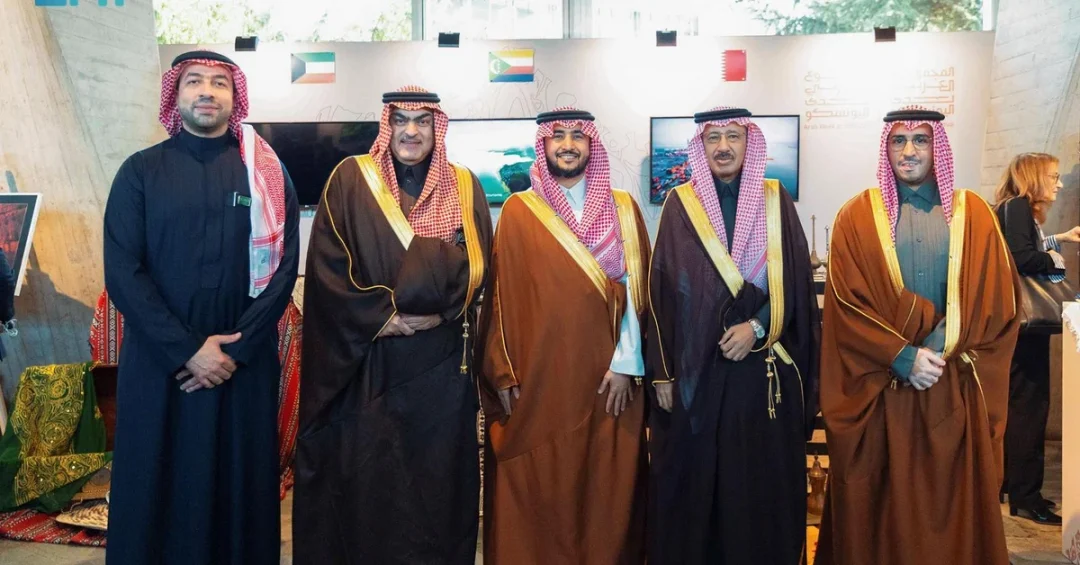
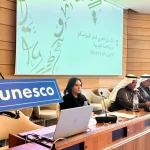
Saudi Arabia has inaugurated the first Arab Week at UNESCO in Paris, an initiative organized by the Arab Group at the United Nations Educational, Scientific, and Cultural Organization (UNESCO) and hosted at the organization’s headquarters in the French capital. The event, held on November 4, 2024, marked the first gathering of its kind in more than half a century, bringing together permanent Arab representatives, several ambassadors, Arab and international diplomats accredited to France, and a distinguished group of UNESCO officials and cultural leaders.
The launch was presided over by Jordanian Ambassador to France Leena Al-Hadid, who serves as chair of the Arab Group at UNESCO. In her opening remarks, Al-Hadid described the occasion as a unique opportunity to spotlight the rich cultural heritage of the Arab world, a heritage that spans centuries and has contributed extensively to science, philosophy, literature, and the arts. She extended the Arab Group’s appreciation to the Kingdom of Saudi Arabia for its valuable initiative and to Minister of Culture Prince Badr bin Abdullah bin Farhan for his efforts and support in making the event possible. The initiative drew significant cultural participation from various nations, underscoring a shared commitment to celebrating Arab identity on the global stage.
Context and Background
Why has it taken more than fifty years for the Arab world to present a unified cultural week at UNESCO? The answer lies in the evolving nature of multilateral cultural diplomacy and the growing recognition that collective heritage can be a powerful bridge between civilizations. UNESCO, founded in 1945, has long served as a platform for member states to showcase their cultural achievements, yet a coordinated Arab Week had not been staged since the organization’s early decades. The inaugural event in Paris therefore represents both a historic milestone and a strategic recalibration of how Arab nations engage with global cultural institutions.
Saudi Arabia’s role as the driving force behind the initiative reflects its broader cultural strategy under Vision 2030, which seeks to diversify the Kingdom’s economy and elevate its international profile through heritage, arts, and education. The Ministry of Culture, led by Prince Badr bin Abdullah bin Farhan, has been instrumental in forging partnerships with UNESCO and other international bodies. By supporting Arab Week, the Kingdom is not only honoring its own cultural legacy but also strengthening the collective voice of the Arab region in global dialogues about heritage preservation, education, and creative industries.
The event also comes at a time when cultural diplomacy is increasingly seen as a vital tool for fostering mutual understanding and countering stereotypes. In a world often divided by political and economic tensions, platforms like Arab Week offer a space for nuanced exchange and appreciation. The presence of diplomats and UNESCO officials from diverse backgrounds signals a genuine interest in learning about Arab contributions to human civilization, from the golden age of Islamic scholarship to contemporary artistic movements.
Key Details
What exactly does Arab Week at UNESCO entail, and how are the participating nations presenting their heritage? Throughout the week, 22 booths representing Arab countries are showcasing their cultural heritage, history, and civilizational achievements. These pavilions are designed to interact with visitors, engage audiences, and boost cultural ties among organizers and attendees from around the globe. Each booth offers a distinct window into the traditions, crafts, and narratives of its respective nation, creating a vibrant tapestry of Arab identity that is both diverse and interconnected.
In addition to the exhibitions, the program features seven seminars covering a wide range of topics: language, calligraphy, Arabic literature, artificial intelligence, education and fine arts, intangible cultural heritage, and world heritage. These seminars have attracted academic institutions, experts, and specialists from the fields of education, culture, and science. The discussions aim to generate ambitious ideas based on deep research rooted in Arab experiences tied to centuries-long heritage, civilization, and history. By integrating contemporary issues such as artificial intelligence with traditional fields like calligraphy, the seminars highlight the Arab world’s ability to adapt and innovate while preserving its cultural roots.
The opening ceremony itself was a testament to the collaborative spirit of the initiative. Ambassador Leena Al-Hadid’s leadership as chair of the Arab Group was pivotal in coordinating the efforts of 22 nations, ensuring that each country’s contributions were represented. Her remarks emphasized that the event provides a unique opportunity to spotlight the Arab world’s extensive contributions to science, philosophy, literature, and arts, reinforcing the message that Arab culture is not a relic of the past but a living, evolving force. The Kingdom of Saudi Arabia’s initiative, supported by Prince Badr bin Abdullah bin Farhan, was repeatedly acknowledged as the catalyst that made this exceptional event possible.
International and Regional Impact
How will Arab Week at UNESCO influence perceptions of the Arab world beyond its immediate participants? The event sends a powerful signal that Arab nations are united in their commitment to cultural diplomacy and international cooperation. By presenting a cohesive front at a major global institution, the participating countries are challenging outdated narratives and showcasing the region’s dynamism. For international audiences, particularly in Europe, the week offers an immersive introduction to Arab heritage that goes beyond headlines, fostering people-to-people connections and mutual respect.
Regionally, the initiative strengthens ties among Arab states by providing a shared platform for collaboration. The 22 booths and seven seminars required extensive coordination, demonstrating that cultural cooperation can transcend political differences. This unity is likely to have ripple effects, encouraging further joint projects in fields such as education, tourism, and creative industries. For Saudi Arabia, the event reinforces its leadership role in the Arab world and its ability to convene diverse stakeholders around a common goal. It also aligns with the Kingdom’s efforts to position itself as a global hub for cultural exchange, a key pillar of Vision 2030.
Economic and Strategic Significance
What economic and strategic benefits can flow from a cultural initiative like Arab Week? Cultural diplomacy often serves as a precursor to deeper economic engagement. By raising the profile of Arab heritage, the event can stimulate interest in tourism, investment, and partnerships in creative sectors. Saudi Arabia, which is investing heavily in tourism infrastructure and heritage sites, stands to gain from increased international awareness of the region’s cultural offerings. The seminars on artificial intelligence and education also point to opportunities for knowledge transfer and technological collaboration, areas where Arab nations are eager to advance.
Strategically, the initiative enhances the soft power of the Arab world at a time when global influence is increasingly measured not only by military or economic might but by cultural appeal. UNESCO provides a neutral, prestigious venue for projecting that soft power. Saudi Arabia’s support for the event demonstrates its commitment to multilateralism and its willingness to invest in platforms that promote dialogue and understanding. This approach aligns with the Kingdom’s broader foreign policy objectives, which emphasize stability, cooperation, and sustainable development. By championing Arab Week, Saudi Arabia is helping to shape a narrative of a region that is open, innovative, and proud of its heritage.
Vision 2030 Alignment
How does Arab Week at UNESCO fit into Saudi Arabia’s long-term vision for the future? Vision 2030 is fundamentally about transforming the Kingdom’s economy and society while preserving its cultural identity. The Ministry of Culture, under Prince Badr bin Abdullah bin Farhan, has been tasked with nurturing that identity and sharing it with the world. Arab Week is a concrete manifestation of this mandate, showcasing Saudi Arabia’s leadership in cultural preservation and its commitment to international cultural exchange. It also supports the Vision’s goals of increasing cultural participation, fostering tolerance, and building bridges with global communities.
As the week unfolds in Paris, it serves as a reminder that Saudi Arabia’s modernization is not about abandoning tradition but about leveraging it for global relevance. The Kingdom’s initiative to bring together 22 Arab nations at UNESCO reflects a forward-looking approach that values heritage as a source of strength and a tool for diplomacy. By investing in such initiatives, Saudi Arabia is not only enriching Arab culture but also contributing to a more interconnected and culturally vibrant world, in line with the aspirations of Vision 2030 and the enduring values of the Arab people.
20 Questions
Q1. What is Arab Week at UNESCO?
A1. Arab Week at UNESCO is a cultural event organized by the Arab Group at UNESCO, held in Paris. It showcases the heritage, history, and civilizations of 22 Arab countries through exhibitions and seminars, marking the first such initiative in over fifty years.
Q2. When and where did Arab Week take place?
A2. It was inaugurated on November 4, 2024, at the UNESCO headquarters in Paris, France. The event ran for a week and brought together diplomats, UNESCO officials, and cultural leaders from around the world.
Q3. Who launched Arab Week at UNESCO?
A3. The event was officially launched by Jordanian Ambassador to France Leena Al-Hadid, who also serves as chair of the Arab Group at UNESCO. She highlighted the Arab world’s contributions to science, philosophy, literature, and arts.
Q4. How many Arab countries participated in Arab Week?
A4. Twenty-two Arab countries participated, each hosting a booth to showcase their cultural heritage, history, and civilizational elements. The booths interacted with visitors and helped boost cultural ties among attendees.
Q5. What topics were covered in the seminars?
A5. The seven seminars covered language, calligraphy, Arabic literature, artificial intelligence, education and fine arts, intangible cultural heritage, and world heritage. They attracted academic institutions, experts, and specialists from education, culture, and science.
Q6. Why is this event considered historic?
A6. It is the first Arab Week at UNESCO in over half a century, making it a landmark moment for Arab cultural diplomacy. It represents a unified effort by Arab nations to present their shared heritage on a global stage.
Q7. What role did Saudi Arabia play in the initiative?
A7. Saudi Arabia initiated the event and provided significant support through its Ministry of Culture, led by Prince Badr bin Abdullah bin Farhan. The Arab Group extended its appreciation to the Kingdom for making the event possible.
Q8. Who is Prince Badr bin Abdullah bin Farhan?
A8. Prince Badr bin Abdullah bin Farhan is Saudi Arabia’s Minister of Culture. He has been instrumental in promoting the Kingdom’s cultural initiatives and supporting events that showcase Arab heritage internationally.
Q9. What is the significance of holding Arab Week at UNESCO?
A9. UNESCO provides a prestigious global platform for cultural exchange. Holding Arab Week there allows Arab nations to engage with international audiences, challenge stereotypes, and highlight their contributions to human civilization.
Q10. How does Arab Week align with Saudi Vision 2030?
A10. Vision 2030 aims to diversify Saudi Arabia’s economy and enhance its global standing. Arab Week supports these goals by promoting cultural diplomacy, tourism, and international partnerships, while preserving and celebrating Arab identity.
Q11. What can visitors expect at the Arab Week booths?
A11. Visitors can explore exhibitions of cultural heritage, history, and civilizational elements from 22 Arab countries. The booths offer interactive experiences, traditional crafts, and information about each nation’s unique contributions.
Q12. How do the seminars contribute to the event’s objectives?
A12. The seminars foster dialogue on topics like language, AI, and heritage, generating ideas rooted in Arab experiences. They connect experts and institutions, promoting research and collaboration that can benefit the Arab world and beyond.
Q13. What was Ambassador Leena Al-Hadid’s message?
A13. She emphasized that Arab Week provides a unique opportunity to spotlight the rich cultural heritage of the Arab world, which spans centuries and has contributed extensively to science, philosophy, literature, and arts.
Q14. How does Arab Week boost cultural ties among Arab nations?
A14. By bringing together 22 countries in a collaborative effort, the event fosters unity and mutual appreciation. It encourages joint projects and shared platforms that strengthen regional cultural cooperation beyond the event itself.
Q15. What is the expected impact on international audiences?
A15. International audiences gain a deeper understanding of Arab culture, moving beyond stereotypes. The event promotes people-to-people connections and mutual respect, enhancing the Arab world’s soft power and global image.
Q16. Are there economic benefits from Arab Week?
A16. Yes, cultural diplomacy can stimulate tourism, investment, and partnerships in creative industries. Saudi Arabia, with its growing tourism sector, stands to benefit from increased awareness of the region’s cultural offerings.
Q17. How does Arab Week reflect Saudi Arabia’s cultural leadership?
A17. Saudi Arabia’s initiative and support demonstrate its commitment to preserving and promoting Arab heritage. It reinforces the Kingdom’s role as a leader in cultural diplomacy and its ability to convene diverse stakeholders for a common cause.
Q18. What is the significance of the 22 booths?
A18. The booths represent the diversity and unity of the Arab world. Each country showcases its unique heritage, creating a comprehensive display that highlights both individual national identities and shared Arab civilization.
Q19. How does the event address modern challenges like AI?
A19. One seminar focuses on artificial intelligence, exploring its intersection with culture and education. This shows the Arab world’s readiness to engage with contemporary issues while rooted in its heritage.
Q20. What is the long-term vision for Arab Week at UNESCO?
A20. The inaugural event sets a precedent for future cultural collaborations. It aims to become a recurring platform for Arab nations to share their heritage, fostering lasting international partnerships and cultural exchange.
Reader Feedback
We value your thoughts. Please share your feedback on this article.
Your feedback helps us improve our coverage.
Related articles
 Saudi Falconry Shines at Arab Week at UNESCO in Paris
 Saudi Calligraphy Center Shines at UNESCO Arab Week
 Arab Week at UNESCO: 22 Nations Showcase Culture
 Saudi Pavilion at UNESCO Showcases Camel Culture to the World
 Two Falcons Fetch SAR196,000 at Saudi Auction
 KSGAAL Highlights Arab Cultural Richness at UNESCO Arab Week