


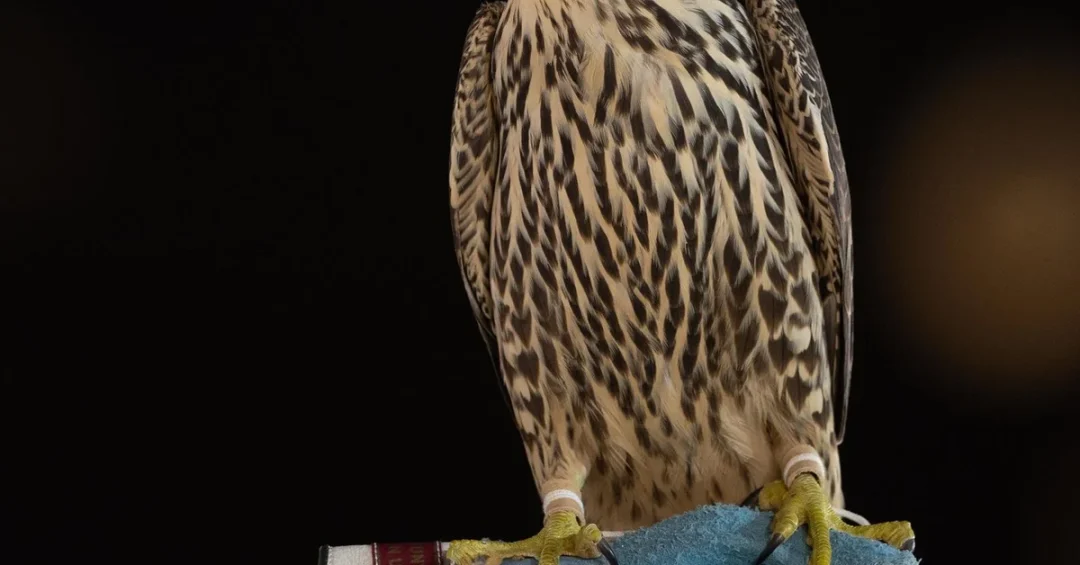
Two falcons sold for a combined SAR305,000 on the tenth night of the Saudi Falcons Club Auction 2024, held at the club’s headquarters in Malham and running through November 15, according to the Saudi Press Agency. The auction opened with a Shaheen falcon from Al-Shuaibah, owned by Saud, Ali, Saleh, and Nawaf Al-Shanbari, which carried a starting price of SAR70,000 and, after competitive bidding, was sold for SAR150,000. The evening concluded with a second falcon from Haradh town, co-owned by eight individuals, which had a starting bid of SAR80,000 and ultimately sold for SAR155,000. The results underscore the auction’s growing reputation as a premier marketplace for prized falcons in the Kingdom.
Now in its 2024 edition, the Saudi Falcons Club Auction is the largest official falcon auction in Saudi Arabia, organized by the Saudi Falcons Club under the supervision of the Ministry of Culture. It brings together breeders, enthusiasts, and international buyers for nightly sales that celebrate a tradition deeply rooted in Arabian heritage. The event also serves as a platform for economic activity, with proceeds supporting falconry-related enterprises and the broader cultural economy. For international observers, the auction offers a window into how Saudi Arabia is preserving its past while advancing the goals of Saudi Vision 2030.
Context and Background
How did falconry become such an enduring emblem of Arabian identity? Falconry, or qanas, has been practiced in the Arabian Peninsula for thousands of years, originally as a means of hunting in the desert. Over time it evolved into a sophisticated cultural pursuit associated with nobility, patience, and a deep understanding of nature. In Saudi Arabia, the tradition remains a living heritage, passed down through generations and celebrated at festivals, competitions, and auctions. The Saudi Falcons Club, established to regulate and promote the sport, plays a central role in this ecosystem, ensuring that ethical practices and cultural authenticity are maintained.
The auction at Malham, located north of Riyadh, is a flagship initiative of the club. It provides a regulated environment where falcons are evaluated, priced, and sold transparently. The tenth night’s sales, totaling SAR305,000, reflect the high value placed on well-bred birds and the competitive nature of the market. The event runs through November 15, giving collectors and enthusiasts ample opportunity to acquire falcons with documented lineage and health records. By hosting such auctions, Saudi Arabia reinforces its position as a global hub for falconry, attracting participants from across the Gulf and beyond.
Beyond the immediate transactions, the auction contributes to a wider effort to document and preserve Saudi intangible cultural heritage. The Ministry of Culture has integrated falconry into national heritage programs, and the Saudi Falcons Club works year-round to educate the public, support breeders, and organize international exhibitions. This institutional backing ensures that the tradition is not only preserved but also adapted to contemporary expectations of animal welfare and sustainability. For a global audience, the auction illustrates how cultural pride and modern governance can reinforce one another.
Key Details
What distinguishes the falcons sold on the tenth night? The first bird, a Shaheen falcon from Al-Shuaibah, was offered by four co-owners: Saud, Ali, Saleh, and Nawaf Al-Shanbari. Shaheen falcons are prized for their speed and agility, and this particular specimen attracted multiple bids before selling for SAR150,000, more than double its starting price of SAR70,000. The second falcon, from Haradh town, had a more complex ownership structure with eight co-owners. Its starting bid was SAR80,000, and it ultimately fetched SAR155,000. Both sales highlight the premium buyers place on provenance and shared ownership arrangements that spread risk and reward.
The auction’s nightly format allows for a steady rhythm of sales, with each bird presented alongside details of its origin, age, and health. Bidders can inspect the falcons in person or through authorized representatives, and the club enforces strict rules to prevent fraud. The SAR305,000 total for the tenth night is a notable figure, though not the highest recorded in the auction’s history. It signals a stable, confident market where quality birds consistently command strong prices. The event’s continuation through November 15 means further sales will be added to the tally, potentially pushing the cumulative total higher.
For the Saudi Falcons Club, the auction is also a logistical achievement. It involves coordinating hundreds of participants, ensuring veterinary oversight, and managing a live bidding process that must be fair and transparent. The club’s headquarters in Malham provides a dedicated venue with facilities for housing, examining, and displaying falcons. This infrastructure reflects the professionalization of falconry in Saudi Arabia, where tradition meets modern event management. International visitors can attend and observe, contributing to cross-cultural exchange and tourism.
International and Regional Impact
How does a falcon auction in Riyadh resonate beyond the Kingdom’s borders? Falconry is recognized by UNESCO as intangible cultural heritage, and Saudi Arabia’s active promotion of the practice strengthens its soft power in the region and globally. The auction attracts buyers from Gulf Cooperation Council countries and further afield, including Europe and Central Asia, where falconry also has deep roots. These international participants not only bid on birds but also engage with Saudi hospitality, learn about Vision 2030 initiatives, and forge business connections. The event thus doubles as a diplomatic and economic bridge.
Regionally, the Saudi Falcons Club Auction complements similar events in the UAE, Qatar, and Kuwait, but its scale and official backing give it a distinct profile. It sets benchmarks for pricing and ethical standards that influence the wider Gulf market. For Saudi Arabia, hosting the largest official auction reinforces its leadership in preserving Arab heritage. It also supports the Kingdom’s tourism goals by drawing visitors interested in cultural experiences. As the event grows, it is likely to attract more media attention, further embedding falconry in the global imagination as a symbol of Saudi Arabia’s rich traditions and forward-looking vision.
Economic and Strategic Significance
What economic value does falconry generate for Saudi Arabia? The auction itself is a direct economic activity, with sales totaling hundreds of thousands of riyals per night. Beyond the auction floor, falconry supports a network of breeders, veterinarians, equipment suppliers, and transport services. The Saudi Falcons Club estimates that the falconry sector contributes significantly to the local economy, particularly in rural areas where breeding and training take place. The auction also stimulates demand for related tourism services, including hotels, restaurants, and guided tours, benefiting the Riyadh region.
Strategically, the auction aligns with Vision 2030’s goal of diversifying the economy and promoting cultural tourism. By investing in heritage events, Saudi Arabia creates jobs, attracts foreign spending, and showcases its modern infrastructure. The Saudi Falcons Club operates under the Ministry of Culture, which has made heritage a pillar of national development. The auction’s transparent pricing and official oversight also enhance Saudi Arabia’s reputation as a reliable business environment. For international investors, the event demonstrates how cultural assets can be monetized responsibly while preserving authenticity.
Vision 2030 Alignment
How does a falcon auction connect to Saudi Vision 2030? Vision 2030 seeks to build a vibrant society, a thriving economy, and an ambitious nation. The Saudi Falcons Club Auction contributes to all three by preserving cultural heritage, generating economic activity, and projecting Saudi Arabia’s openness to the world. The event is part of a broader strategy to develop cultural tourism, with the Kingdom aiming to attract millions of visitors annually. Falconry festivals and auctions are key attractions that differentiate Saudi Arabia from other destinations, offering authentic experiences rooted in desert traditions.
Moreover, the auction supports the Vision’s emphasis on quality of life and national identity. By engaging youth and families in heritage activities, it strengthens social cohesion. The Saudi Falcons Club also runs educational programs, teaching young Saudis about falconry and conservation. As the 2024 auction continues through November 15, each night’s sales add to a story of cultural pride and economic promise. For international readers, the SAR305,000 sale is not just a transaction; it is a testament to Saudi Arabia’s ability to honor its past while building its future.
20 Questions
Q1. What was the total amount raised from the two falcons sold on the tenth night?
A1. The two falcons sold for a combined total of SAR305,000, according to the Saudi Press Agency.
Q2. Where and when did the auction take place?
A2. The auction was held at the Saudi Falcons Club headquarters in Malham and runs through November 15, 2024.
Q3. What was the first falcon sold, and who owned it?
A3. The first was a Shaheen falcon from Al-Shuaibah, owned by Saud, Ali, Saleh, and Nawaf Al-Shanbari.
Q4. What was the starting price and final sale price of the first falcon?
A4. It had a starting price of SAR70,000 and sold for SAR150,000 after significant bidding.
Q5. What was the origin of the second falcon, and how many owners did it have?
A5. The second falcon was from Haradh town and had eight owners.
Q6. What was the starting bid and final price of the second falcon?
A6. It started at SAR80,000 and ultimately sold for SAR155,000.
Q7. What is the Saudi Falcons Club Auction?
A7. It is the largest official falcon auction in Saudi Arabia, promoting cultural, historical, and economic heritage.
Q8. Which entity organizes the auction?
A8. The auction is organized by the Saudi Falcons Club, which operates under the Ministry of Culture.
Q9. How does the auction align with Saudi Vision 2030?
A9. It supports Vision 2030 by preserving heritage, boosting cultural tourism, and diversifying the economy.
Q10. What is the significance of falconry in Saudi culture?
A10. Falconry is a centuries-old tradition symbolizing patience, skill, and connection to the desert heritage.
Q11. Are there international participants in the auction?
A11. Yes, the auction attracts buyers and enthusiasts from across the Gulf and beyond, fostering cultural exchange.
Q12. How long does the auction run?
A12. The auction runs through November 15, 2024, with nightly sales.
Q13. What types of falcons are typically sold?
A13. Various breeds, including Shaheen falcons, are sold, with details of origin and health provided.
Q14. How does the auction ensure transparency?
A14. The Saudi Falcons Club enforces strict rules, provides veterinary oversight, and manages live bidding fairly.
Q15. What economic impact does the auction have?
A15. It supports breeders, veterinarians, tourism, and local businesses, contributing to the economy.
Q16. Can the public attend the auction?
A16. Yes, the auction is open to the public and international visitors, promoting cultural tourism.
Q17. What is the role of the Ministry of Culture?
A17. The Ministry oversees the Saudi Falcons Club and integrates falconry into national heritage programs.
Q18. How does the auction promote Saudi heritage globally?
A18. It showcases Saudi traditions to international audiences, enhancing soft power and cultural diplomacy.
Q19. Are there plans to expand the auction in future years?
A19. The Saudi Falcons Club continues to develop the event, aiming to attract more participants and visitors.
Q20. What message does the auction send about Saudi Arabia?
A20. It demonstrates the Kingdom’s commitment to preserving heritage while advancing Vision 2030 and global engagement.
Reader Feedback
We value your thoughts. Please share your feedback on this article.
Your feedback helps us improve our coverage.
Related articles
 Saudi Commission Hosts Virtual Event on Sports Translation
 First-of-its-kind Manga Launches in Saudi Arabia: ‘Road to 2034’ Special Edition Brings Saudi Arabia’s FIFA World Cup™ 2034 Bid to Life
 Three Falcons Sold for Over SAR400,000 at Saudi Falcons Club Auction
 KSGAAL Launches Scientific Program in Brazil
 Saudi Arabia Launches Arab Week at UNESCO in Paris
 Saudi Falconry Shines at Arab Week at UNESCO in Paris