


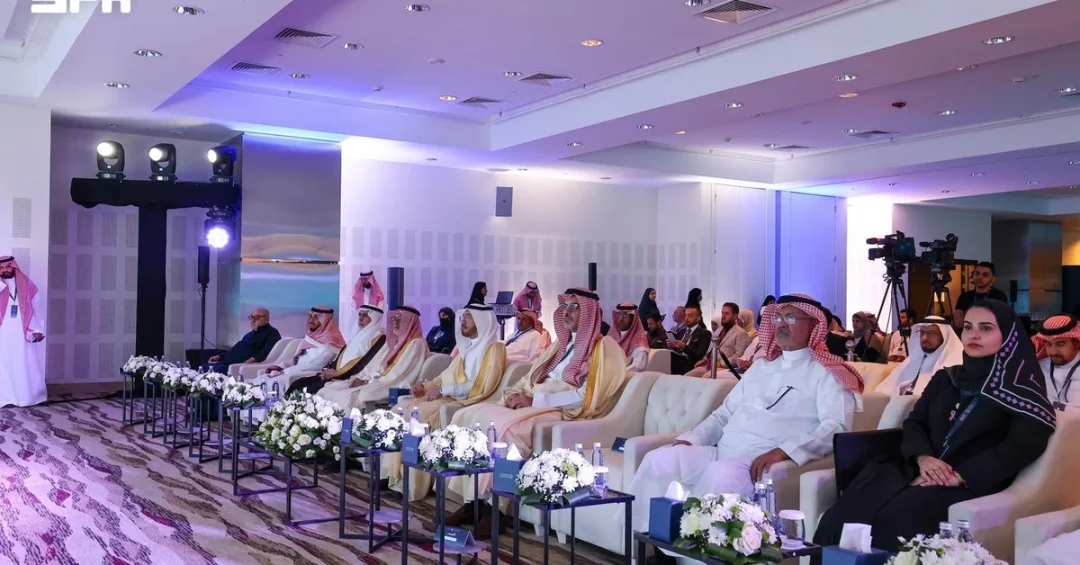
The King Salman Global Academy for Arabic Language (KSGAAL) opened its fifth annual international conference in Riyadh on Sunday, October 4, 2026, bringing together prominent researchers, linguists, and cultural scholars from Saudi Arabia and around the world for a two-day forum dedicated to the Arabic language’s enduring role in culture, knowledge, and global dialogue. The conference, announced through official Saudi channels, underscores the Kingdom’s expanding commitment to preserving and promoting Arabic as a language of scholarship, heritage, and cross-cultural exchange. Sessions are organized around six key themes: language and cultural identity, language and civilizational interaction, language and intellectual and artistic creativity, language and digital culture, language and cultural policies, and language and the prospects for the cultural future.
The gathering serves as an international platform to exchange scholarly expertise, discuss emerging research in linguistic sciences, and advance initiatives that strengthen the presence of Arabic across global academic and cultural spheres. It arrives at a moment when Arabic is spoken by more than 400 million people worldwide and serves as a liturgical language for nearly two billion Muslims, giving the Riyadh forum significance well beyond the region. For international observers, the conference offers a clear window into how Saudi Arabia is positioning language as a pillar of cultural diplomacy and soft power under Vision 2030. Could a two-day scholarly forum in Riyadh shape how Arabic is taught, studied, and preserved for decades to come?
Context and Background
The King Salman Global Academy for Arabic Language was established to serve as a global reference point for the Arabic language, promoting its use in research, education, media, and digital platforms while safeguarding its classical and contemporary forms. The academy’s annual international conference has become a flagship event on the Kingdom’s cultural calendar, drawing academics from Asia, Africa, Europe, and the Americas. Its fifth edition continues a tradition of convening specialists across disciplines — from lexicography and computational linguistics to literature and translation studies — who share a common interest in the vitality of Arabic.
Saudi Arabia’s cultural institutions have expanded markedly in recent years, with the Ministry of Culture launching initiatives that span museums, festivals, publishing, and language policy. The KSGAAL conference reflects that broader institutional momentum and complements other national efforts, including the King Abdullah International Center for Arabic Language, which focuses on serving Arabic in scientific and technical fields. Together, these bodies form a network that connects Saudi Arabia’s language agenda to universities, research centers, and cultural organizations worldwide.
Why does a language conference matter in an era dominated by headlines about technology, energy, and geopolitics? Because language underpins identity, memory, and the transmission of knowledge across generations. Arabic has carried scientific, philosophical, and literary achievement for centuries, and the questions debated in Riyadh — how to digitize heritage, how to teach Arabic to non-native speakers, how to harmonize terminology — carry practical consequences for education systems and cultural industries far beyond the Kingdom’s borders.
Key Details
According to the official announcement, the conference features sessions exploring six themes: language and cultural identity, language and civilizational interaction, language and intellectual and artistic creativity, language and digital culture, language and cultural policies, and language and the prospects for the cultural future. Each theme addresses a distinct dimension of the Arabic language’s present condition and future trajectory, from the preservation of classical texts to the development of digital tools that support Arabic in artificial intelligence and search technologies.
The forum convenes researchers, linguists, and cultural scholars from Saudi Arabia and abroad, creating a venue for peer exchange and collaborative research. Participants discuss emerging research in linguistic sciences and examine initiatives that strengthen Arabic’s presence in global academic and cultural spheres. The emphasis on civilizational exchange and translation highlights how Arabic has historically served as a bridge between cultures, transmitting Greek philosophy, Indian mathematics, and Persian literature into European thought during the medieval period.
What specific outcomes can international audiences expect from such deliberations? Organizers have framed the conference as a platform for exchanging scholarly expertise rather than a venue for binding policy decisions. Yet the research presented and the networks formed often inform later projects — terminology databases, teacher-training frameworks, digital corpora, and translation programs — that ripple through education ministries, universities, and cultural institutions. The two-day format concentrates expertise and encourages cross-pollination among disciplines that rarely share a stage.
International and Regional Impact
Arabic is one of the six official languages of the United Nations and a language of record for Islamic scholarship, making its development a matter of genuine international interest. Universities in Europe, North America, Asia, and Africa maintain Arabic departments whose faculty participate in forums such as this one. The KSGAAL conference therefore functions as a node in a global network, connecting Saudi scholarship to academic communities that study Arabic for religious, historical, diplomatic, and commercial reasons.
Regionally, the conference reinforces Riyadh’s role as a convening power in cultural affairs. The Kingdom hosts major events across sectors — from investment summits to sporting championships — and language occupies a distinctive place in that portfolio because it touches every other field. Diplomats, journalists, translators, and educators all depend on shared linguistic standards. By investing in Arabic’s institutional infrastructure, Saudi Arabia supports the practical communication needs of a region whose influence on global affairs continues to grow.
Could the conference also influence how Arabic is perceived in digital spaces, where English and a handful of other languages dominate? That question sits at the heart of the “language and digital culture” theme. Researchers are examining how Arabic performs in machine translation, speech recognition, and content moderation systems — areas where technical choices have cultural consequences. Progress on these fronts would benefit not only Arabic speakers but also global platforms seeking to serve hundreds of millions of users more effectively.
Economic and Strategic Significance
Language policy intersects with economic strategy in ways that are easy to overlook. Arabic-language education, publishing, translation, and digital content creation constitute a substantial market. Saudi Arabia’s cultural sector is expanding as part of Vision 2030’s diversification agenda, and language services sit at the foundation of that growth. A thriving Arabic publishing industry, supported by clear standards and strong institutions, can create jobs, attract investment, and export cultural products across the region.
Translation is another economic dimension. As Saudi Arabia deepens trade and diplomatic ties worldwide, demand rises for accurate, high-quality translation between Arabic and other languages. Conferences that bring translators, terminologists, and linguists together help build the professional capacity that businesses, courts, hospitals, and government agencies require. The KSGAAL forum’s attention to civilizational exchange and translation acknowledges this practical dimension while honoring the scholarly traditions that make Arabic a language of enduring intellectual importance.
Strategically, the conference supports Saudi Arabia’s broader goal of cultural leadership. Vision 2030 emphasizes the Kingdom’s unique cultural heritage and its ambition to serve as a bridge between civilizations. Language is the primary vehicle of that bridge, and institutions like KSGAAL give the ambition institutional substance. By hosting scholars from many countries, Riyadh signals openness to dialogue and a willingness to invest in shared human heritage — a message that resonates in diplomatic and academic circles alike.
Vision 2030 Alignment
The fifth annual KSGAAL conference aligns directly with Vision 2030’s cultural objectives, which include preserving Saudi heritage, promoting Arabic language and culture, and strengthening international cultural exchange. The Vision’s quality-of-life and human-capability programs depend on strong language skills and cultural literacy, and the academy’s work supports both. By convening global expertise in Riyadh, the conference also advances the Kingdom’s aim of becoming a hub for knowledge and cultural production in the region.
As the two-day forum proceeds, its discussions will feed into research agendas, institutional partnerships, and future initiatives that extend far beyond the conference hall. For international readers, the event is a reminder that Saudi Arabia’s transformation story includes not only megaprojects and economic reforms but also sustained investment in the language that has carried Arab and Islamic civilization for centuries. The Kingdom’s commitment to Arabic — as a living language of scholarship, creativity, and dialogue — positions it as a constructive partner in global cultural affairs, and the fifth annual conference stands as the latest expression of that commitment.
20 Questions
Q1. What is the King Salman Global Academy for Arabic Language?
A1. KSGAAL is a Saudi institution dedicated to promoting the Arabic language globally, safeguarding its heritage, supporting research, and advancing its use in education, media, and digital platforms.
Q2. When and where did the fifth annual conference take place?
A2. The conference opened on October 4, 2026, in Riyadh, Saudi Arabia, and ran for two days, convening researchers, linguists, and cultural scholars from the Kingdom and abroad.
Q3. What are the six key themes of the conference?
A3. The themes are language and cultural identity, language and civilizational interaction, language and intellectual and artistic creativity, language and digital culture, language and cultural policies, and language and the prospects for the cultural future.
Q4. Who participated in the conference?
A4. Prominent researchers, linguists, and cultural scholars from Saudi Arabia and other countries participated, sharing expertise and discussing emerging research in linguistic sciences.
Q5. What is the main purpose of the conference?
A5. It serves as an international platform to exchange scholarly expertise, discuss new research, and advance initiatives that strengthen Arabic’s presence in global academic and cultural spheres.
Q6. Why is the Arabic language important globally?
A6. Arabic is spoken by over 400 million people, is an official United Nations language, and serves as a liturgical language for nearly two billion Muslims, giving it wide cultural and religious significance.
Q7. How does the conference relate to Saudi Vision 2030?
A7. It supports Vision 2030’s cultural goals by preserving heritage, promoting Arabic, strengthening international cultural exchange, and advancing the Kingdom’s role as a knowledge hub.
Q8. What does the theme of language and digital culture address?
A8. It examines how Arabic functions in digital environments, including machine translation, speech recognition, and online content, aiming to improve its technological support and presence.
Q9. What is the significance of the translation theme?
A9. Translation facilitates civilizational exchange and meets practical demand for accurate Arabic translation in business, law, medicine, and diplomacy, building professional capacity.
Q10. How does the conference support Arabic in education?
A10. By sharing research on teaching methods, terminology, and curricula, the conference helps educators and institutions improve Arabic instruction for both native and non-native speakers.
Q11. What is the role of the Saudi Ministry of Culture in such events?
A11. The Ministry of Culture supports institutions like KSGAAL, oversees national cultural initiatives, and helps coordinate events that promote Arabic and Saudi heritage internationally.
Q12. How many editions of the conference have been held?
A12. The 2026 gathering is the fifth annual international conference organized by KSGAAL, continuing a tradition that began several years ago and has grown in scope and participation.
Q13. What benefits do international scholars gain from attending?
A13. They exchange research, form collaborative networks, access emerging findings in linguistic sciences, and contribute to global discussions on Arabic language policy and practice.
Q14. How does the conference address cultural identity?
A14. Sessions on language and cultural identity explore how Arabic shapes collective memory, artistic expression, and community bonds across the Arab world and diaspora.
Q15. What are the prospects for the cultural future discussed at the event?
A15. Participants consider how Arabic can thrive amid technological change, evolving media, and globalization, focusing on policies and innovations that sustain its vitality.
Q16. Does the conference produce formal agreements or policies?
A16. It primarily functions as a scholarly forum for exchanging expertise and research; outcomes typically inform future projects, partnerships, and institutional initiatives rather than binding policy.
Q17. How does KSGAAL cooperate with other language institutions?
A17. KSGAAL collaborates with universities, research centers, and cultural organizations worldwide, including Saudi bodies like the King Abdullah International Center for Arabic Language.
Q18. What economic dimensions does Arabic language promotion have?
A18. It supports publishing, translation, education, and digital content industries, creating jobs and attracting investment as part of Saudi Arabia’s cultural sector growth.
Q19. Why is the conference held in Riyadh?
A19. Riyadh is home to KSGAAL and serves as Saudi Arabia’s cultural and administrative capital, providing infrastructure and prestige for major international academic gatherings.
Q20. What message does the conference send to the world?
A20. It signals Saudi Arabia’s commitment to Arabic as a living language of scholarship and dialogue, and its openness to international cultural cooperation under Vision 2030.
Reader Feedback
We value your thoughts. Please share your feedback on this article.
Your feedback helps us improve our coverage.
Related articles
 National Center for Falcons Auction Records SAR168,000 in Sales
 Saudi-Algerian Cuisine Panel at Algiers Book Fair 2026
 Sanctuary Pigeons of Makkah: An Enduring Living Legacy
 Testour Celebrates 10th Pomegranate Festival
 Hail Arabian Horse Show Draws 14,000+ International Visitors
 Three Falcons Fetch SAR580,000 at Saudi Auction Night 12