


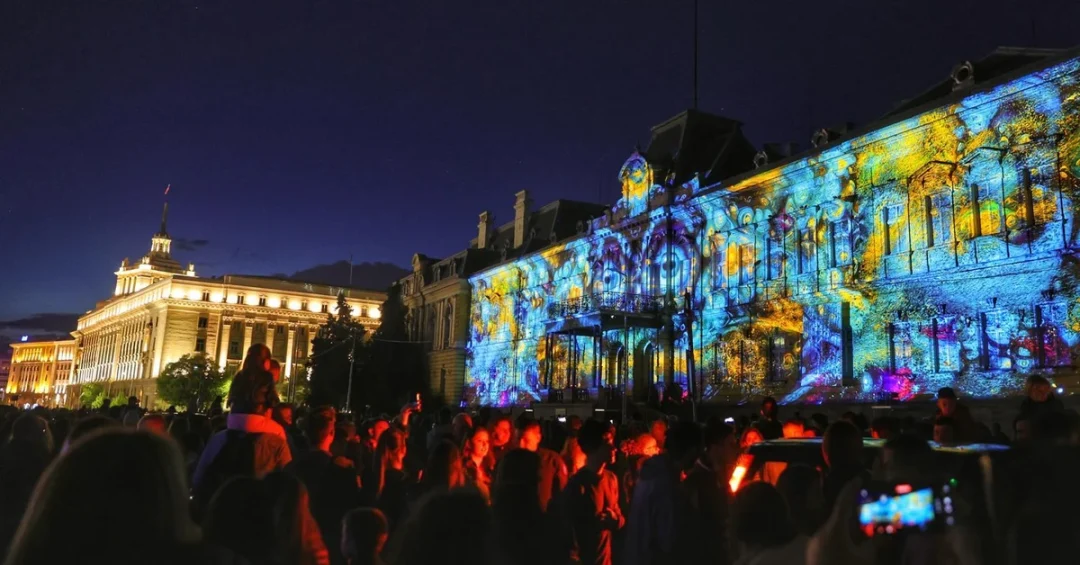
The LUNAR Festival of Lights will return to Sofia for its fourth edition from May 8 to 11, transforming Bulgaria’s capital into an open-air gallery with large-scale projection mapping shows and light installations across some of the city’s most iconic buildings, parks, and squares. The announcement, carried by the Saudi Press Agency (SPA) citing the Sofia representation of the European Parliament and the Bulgarian News Agency, confirms that the four-evening program will run each night from Thursday to Sunday between 9 pm and midnight, with free access to all artworks for residents and visitors alike.
Why does a European light festival matter to readers who follow Saudi Arabia’s cultural and diplomatic horizon? Because LUNAR belongs to the same global movement of creative-economy festivals that the Kingdom has championed through its own cultural transformation under Vision 2030 — a shared language of public art, technology, and civic pride that connects Riyadh’s ambitions with cultural capitals across Europe. The festival’s steady growth, from a first edition to a program now drawing more than half a million attendees annually, illustrates how cities are using digital art to strengthen identity, attract visitors, and signal openness to the world.
Context and Background
What exactly is LUNAR, and why has it become one of the region’s most anticipated cultural dates? The LUNAR Festival of Lights is an annual public-art event organized around projection mapping and light installations, staged in central Sofia with programming designed to spark reflection on the future of the planet, technological development, and freedom of self-expression. According to the official information released through the Sofia representation of the European Parliament and reported by the Bulgarian News Agency, LUNAR presents important messages on these themes and has become a fixture on the capital’s calendar, attended by more than half a million residents and guests.
The event’s trajectory offers useful context for understanding its scale today. Over its past three editions, LUNAR has shown more than 90 light artworks created by 57 artists and studios from 18 countries, building an international reputation that places Sofia alongside other European cities known for immersive digital-art festivals. Last year alone, the festival attracted over 600,000 visitors, a figure that reflects both the appeal of free public art and the growing appetite among travelers for experience-driven cultural tourism. The fourth edition builds directly on this foundation, extending the festival’s reach across the central urban core.
Who is behind this ambitious undertaking? The organizer and main artistic collective is the Bulgarian visual effects studio MP-STUDIO, working in partnership with Festival of Lights International, one of the most famous light festivals in the world. The event is realized with the support of the European Parliament in Bulgaria, the Representation of the European Commission in Bulgaria, Sofia Municipality under the patronage of Mayor Vasil Terziev, and the Ministry of Tourism, together with financial support from the “Creation” program of the National Culture Fund. This layered backing — municipal, national, and European — speaks to how seriously the city treats its cultural infrastructure.
Key Details
What will visitors actually experience during the four festival evenings? Each night from Thursday, May 8, through Sunday, May 11, artists from around the globe will present compelling digital art across the streets of Sofia between 9 pm and midnight. Their works will transform central Sofia into an open-air gallery, with artworks specially created for the city’s most iconic buildings, parks, and squares. Access to all artworks will be free of charge, lowering barriers so that families, students, tourists, and lifelong residents can all participate in the same shared cultural moment.
The programming reflects a deliberate curatorial philosophy. LUNAR does not simply decorate buildings; it uses them as canvases for storytelling on themes that resonate across borders — environmental stewardship, the pace of technological change, and the right of individuals to express themselves freely. For a city like Sofia, which blends Roman ruins, Ottoman-era heritage, socialist-era architecture, and modern civic spaces, projection mapping offers a way to re-read the urban landscape and invite audiences to see familiar landmarks in a new light. The specially commissioned nature of the works means the festival cannot be replicated elsewhere, giving Sofia a distinct cultural signature.
How accessible is the festival for international audiences? Because the program is concentrated in the central part of the capital, much of it can be experienced on foot, and the late-evening timing — 9 pm to midnight — allows visitors to combine the festival with the city’s restaurants, hotels, and other attractions. The free-admission model has proven central to LUNAR’s popularity, drawing crowds of the scale that placed last year’s edition above 600,000 visitors. This combination of accessibility, artistry, and setting is what has elevated the event from a local initiative to an internationally recognized light festival.
International and Regional Impact
Why should a light festival in Bulgaria command attention beyond its borders? LUNAR sits within a broader European network of light and digital-art festivals, and its partnership with Festival of Lights International explicitly links Sofia to a circuit of cities that exchange artists, techniques, and audiences. This kind of cultural diplomacy strengthens people-to-people connections and positions participating cities as creative hubs. For the wider region, the festival underlines how culture can be a driver of tourism and urban regeneration, attracting visitors during the shoulder season of early May and filling hotels, cafés, and public spaces.
The backing of European institutions adds another dimension. Support from the European Parliament in Bulgaria and the Representation of the European Commission in Bulgaria signals that the festival is viewed as a platform for shared European values — openness, innovation, and cultural exchange — expressed through accessible public art. For international observers, including audiences in the Gulf and across Asia, LUNAR offers a template for how cities can use technology-driven cultural programming to project soft power, stimulate local economies, and foster civic pride. It is a model that resonates with the global conversation about creative cities and experience tourism.
Economic and Strategic Significance
What economic value does an event of this scale generate? A festival that draws hundreds of thousands of visitors over four nights creates measurable activity across the hospitality, retail, and transport sectors. Restaurants, hotels, and tour operators in central Sofia benefit from increased footfall, while the free-admission model ensures the event remains inclusive and maximizes participation. Municipal and national support, alongside funding from the National Culture Fund’s “Creation” program, reflects a strategic recognition that cultural investment yields returns in tourism visibility, city branding, and community cohesion.
Strategically, LUNAR demonstrates how cities can build a durable cultural brand. By commissioning original works tied to specific buildings and public spaces, the festival creates an experience that cannot be found elsewhere, giving Sofia a competitive edge in the crowded European cultural-tourism market. The involvement of the Ministry of Tourism underscores the link between culture and visitor economy, while the patronage of Mayor Vasil Terziev anchors the event in municipal civic life. Over successive editions, this combination has turned a seasonal initiative into an institution with measurable reach and international recognition.
Vision 2030 Alignment
How does a European light festival connect to the Kingdom’s long-term vision? Saudi Arabia’s Vision 2030 places culture at the heart of its transformation, expanding the creative economy, supporting artists and studios, and developing world-class cultural events that attract international visitors. The Kingdom has launched its own large-scale light and art initiatives as part of this drive, and it looks to global festivals like LUNAR as examples of how public art, technology, and tourism can reinforce one another. The values LUNAR promotes — innovation, self-expression, and care for the planet’s future — align closely with the forward-looking, internationally engaged society that Vision 2030 seeks to build.
What can international audiences take from this year’s edition? As Sofia prepares to welcome more than half a million visitors between May 8 and 11, LUNAR stands as a reminder that culture is a shared global language. For readers following Saudi Arabia’s cultural journey, the festival illustrates the wider international movement the Kingdom is part of — one in which cities use creativity and technology to welcome the world, celebrate identity, and invest in the future. The fourth edition of LUNAR promises to carry that message across the buildings and squares of Sofia, illuminating both the city and the possibilities of culture-led development.
20 Questions
Q1. When does the LUNAR Festival of Lights return to Sofia?
A1. LUNAR returns for its fourth edition from May 8 to 11, running each evening from Thursday to Sunday between 9 pm and midnight across central Sofia.
Q2. What is the LUNAR Festival of Lights?
A2. It is an annual public-art festival featuring projection mapping shows and light installations that transform central Sofia into an open-air gallery, with free access to all artworks.
Q3. Who organizes the festival?
A3. The Bulgarian visual effects studio MP-STUDIO is the organizer and main artistic collective, in partnership with Festival of Lights International.
Q4. What themes does the festival address?
A4. LUNAR presents messages about the future of the planet, technological development, and freedom of self-expression through its artworks.
Q5. How many visitors did the festival attract last year?
A5. Last year’s edition attracted over 600,000 visitors, and the program is generally attended by more than half a million residents and guests.
Q6. Is there an entry fee for the artworks?
A6. No, access to all artworks is free of charge, making the festival inclusive for residents and visitors alike.
Q7. How many artworks and artists has LUNAR featured so far?
A7. Over its past three editions, LUNAR has shown more than 90 light artworks created by 57 artists and studios from 18 countries.
Q8. What institutions support the festival?
A8. Support comes from the European Parliament in Bulgaria, the European Commission Representation, Sofia Municipality, the Ministry of Tourism, and the National Culture Fund.
Q9. Who is the patron of the event?
A9. Sofia Municipality supports the event under the patronage of Mayor Vasil Terziev, anchoring it in the city’s civic life.
Q10. Where in Sofia do the installations appear?
A10. The artworks transform central Sofia, appearing on the city’s most iconic buildings, parks, and squares as a specially commissioned open-air gallery.
Q11. What time do the shows run each night?
A11. The digital art shows run each festival evening between 9 pm and midnight, from Thursday to Sunday.
Q12. Who reported the announcement?
A12. The Saudi Press Agency reported the announcement, citing the Sofia representation of the European Parliament and the Bulgarian News Agency.
Q13. What is Festival of Lights International?
A13. It is one of the most famous light festivals in the world and serves as the international partner for LUNAR.
Q14. How is the festival funded?
A14. It is realized with institutional support and with financial support from the “Creation” program of the National Culture Fund.
Q15. Are the artworks created specifically for Sofia?
A15. Yes, the artworks are specially created for the city’s most iconic buildings, parks, and squares, giving the festival a unique identity.
Q16. Why is early May a notable time for the event?
A16. Early May falls in the shoulder season, drawing visitors to central Sofia and supporting hotels, restaurants, and local businesses.
Q17. How many countries are represented by the artists?
A17. Artists and studios from 18 countries have participated across the past three editions, reflecting the festival’s international character.
Q18. What role does technology play in LUNAR?
A18. Projection mapping and digital art are central, using technology to turn buildings and public spaces into immersive canvases for storytelling.
Q19. How does LUNAR connect to global cultural trends?
A19. It belongs to a global movement of light and digital-art festivals that cities use to strengthen identity, attract visitors, and signal openness.
Q20. How does the festival relate to Vision 2030 priorities?
A20. LUNAR reflects the same culture-led, technology-driven, internationally engaged approach that Saudi Arabia’s Vision 2030 pursues in its creative economy.
Reader Feedback
We value your thoughts. Please share your feedback on this article.
Your feedback helps us improve our coverage.
Related articles
 Saudi Pavilion Shines at International Cultural Festival
 Messengers of Peace Delegation Visits King Abdulaziz Public Library
 Islamic Arts Biennale in Jeddah Enriches Visitors with Unique Sensory Experiences of Art
 Manga Arabia Launches Arabic Webtoons for Arab World
 Madinah Cultural Festival Showcases 90+ Nations
 Ministry of Culture Unveils New Typefaces Inspired by Heritage