


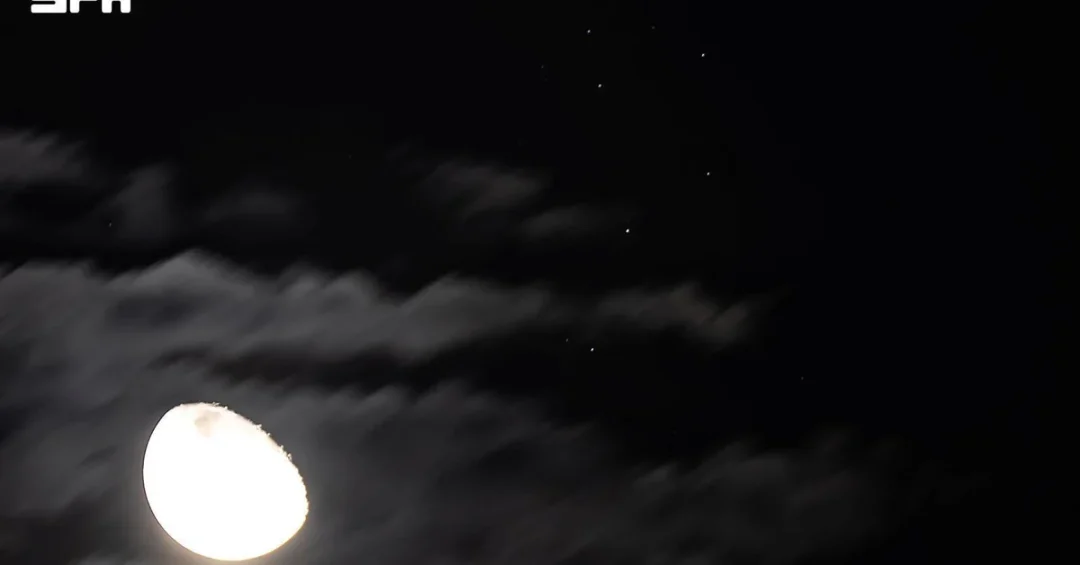
The skies over the Kingdom of Saudi Arabia witnessed a close apparent conjunction of the Moon and the Pleiades star cluster, an astronomical event that, according to Arab folk tradition, coincides with “Qiran 19,” the traditional seasonal marker that signals the beginning of the Al-Wasm season and its first phase, known as Wasm Al-Harif. The event, reported through official Saudi channels, drew the attention of astronomers, heritage specialists, and communities across the Arabian Peninsula who continue to observe the skies as their ancestors did. For generations, these celestial markers have guided farmers, herders, and travelers in timing agricultural activity and anticipating weather patterns. The conjunction was visible to the naked eye, offering a striking reminder of how closely traditional knowledge and modern astronomical observation remain intertwined in the Kingdom. Does the night sky still hold practical meaning for a nation racing toward a technology-driven future? In Saudi Arabia, the answer is a resounding yes.
The observation was documented by members of the Kingdom’s astronomy community, including Mohammed Al-Hazimi, a member of the Astronomy Club, who explained the cultural and practical significance of the event. According to Al-Hazimi, the Moon’s conjunction with the Pleiades is traditionally known as “Qiran 19” and, in folk tradition, is associated with the arrival of Al-Wasm season and a gradual transition toward cooler weather. The event forms part of a broader heritage of seasonal observation that has been passed down through generations across the Arabian Peninsula, and it continues to be documented and shared through official Saudi media channels such as the Saudi Press Agency (SPA).
Context and Background
Why have Arab communities watched the skies so carefully for so long? Historically, Arabs used lunar mansions, rising stars, and stellar positions as seasonal indicators to time agriculture, grazing, and expected weather changes. Long before calendars and digital forecasts, the appearance of specific stars and their relationship to the Moon provided reliable signals about the passage of seasons. The Pleiades, known in Arabic as Al-Thurayya, holds a particularly prominent place in this tradition, and its conjunction with the Moon has been observed and recorded across the region for centuries. These observations were not merely poetic; they were practical tools that supported food security and community planning.
Traditional seasonal indicators such as Qiran 19 were historically used across the Arabian Peninsula to track seasonal changes and observe weather patterns. The Al-Wasm season, of which this event marks the beginning, lasts approximately 81 days and is divided into several distinct periods. Wasm Al-Harif, the season’s first phase, lasts about 27 days. According to Al-Hazimi, traditional observations associate this period with the possibility of rain-bearing clouds developing from the west and southwest, a pattern that communities have long monitored as a sign of the changing season.
What makes this particular conjunction noteworthy is its timing and its continuity. The event was not treated as a novelty but as part of a living calendar that connects modern Saudi society to its heritage. In a country undergoing rapid transformation under Vision 2030, the preservation of such traditions reflects the broader national commitment to honoring cultural identity while embracing progress. The documentation of Qiran 19 through official channels underscores the Kingdom’s interest in safeguarding intangible cultural heritage alongside its ambitious modernization programs.
Key Details of the Astronomical Event
The close apparent conjunction of the Moon and the Pleiades was visible in the Kingdom’s skies, with the two celestial bodies appearing near each other in a configuration that has been recognized for generations. According to Al-Hazimi, the Moon’s conjunction with the Pleiades is traditionally known as Qiran 19 and is associated with the arrival of Al-Wasm season and a gradual transition toward cooler weather. The event was reported by the Saudi Press Agency, which noted its significance in both astronomical and cultural terms.
In folk tradition, rainfall during this period is considered beneficial for germinating spring vegetation and preparing the soil for desert truffles, locally known as faq’a. This link between celestial observation and agricultural outcome illustrates how traditional knowledge systems integrated astronomy, meteorology, and ecology into a single practical framework. The faq’a, a prized seasonal delicacy in the Arabian Peninsula, depends on specific rainfall and temperature conditions, making the Al-Wasm season a period of particular interest for rural communities and heritage enthusiasts alike.
Al-Hazimi noted that the conjunction of the Moon and the Pleiades, along with other astronomical observations, has long attracted Arab communities. The event serves as a reminder that the region’s astronomical heritage is not confined to historical texts but remains part of contemporary cultural practice. Astronomy clubs and heritage societies across the Kingdom continue to observe and document these events, ensuring that traditional knowledge is preserved for future generations. The Saudi Press Agency’s coverage reflects the official recognition of this heritage as part of the national story.
International and Regional Impact
How does a celestial event observed in the Arabian desert resonate beyond the region? The documentation of Qiran 19 and the Al-Wasm season contributes to a broader global conversation about intangible cultural heritage and traditional ecological knowledge. International organizations, including UNESCO, have long emphasized the importance of preserving such knowledge systems, which often contain valuable insights into sustainable living and environmental adaptation. Saudi Arabia’s efforts to record and share these traditions align with global heritage preservation goals.
Regionally, the event reinforces shared cultural bonds across the Arabian Peninsula. Communities in neighboring Gulf states observe similar seasonal markers, and the Pleiades holds significance in traditions from the Levant to North Africa. The conjunction therefore represents a point of common heritage that transcends national borders. By highlighting this shared astronomical legacy, Saudi Arabia contributes to regional cultural diplomacy and strengthens people-to-people connections rooted in a common past and a shared future.
Economic and Strategic Significance
Does traditional weather knowledge still matter in an era of advanced forecasting? For Saudi Arabia’s agricultural and rural development strategies, the answer is nuanced. While modern meteorological services provide precise data, traditional indicators such as Al-Wasm offer complementary insights that have been refined over centuries. The Ministry of Environment, Water and Agriculture has supported initiatives that integrate traditional knowledge with modern practices, particularly in regions where agriculture remains closely tied to seasonal cycles.
The Al-Wasm season’s association with rainfall and the growth of desert truffles also carries economic implications for rural communities. The faq’a harvest provides income for many families in the Kingdom’s northern and central regions, and the timing of rainfall during Wasm Al-Harif directly influences the yield. Understanding these traditional markers can support rural livelihoods and food security, aligning with Vision 2030’s goals of economic diversification and sustainable development. The event thus bridges heritage and economic strategy in a tangible way.
Vision 2030 Alignment
How does the observation of a lunar conjunction connect to a national transformation plan? Saudi Arabia’s Vision 2030 places culture, heritage, and quality of life at the center of its ambitions. The preservation and promotion of traditional astronomical knowledge, including events like Qiran 19 and the Al-Wasm season, form part of the Kingdom’s broader effort to celebrate its identity while building a diversified, knowledge-based economy. The documentation of these traditions through official channels reflects a commitment to authenticity as a foundation for progress.
As the Kingdom continues to advance in science, technology, and innovation, including space exploration and astronomy research, the coexistence of traditional and modern knowledge systems demonstrates a unique national strength. The Moon–Pleiades conjunction serves as a reminder that Saudi Arabia’s future is being built not in spite of its heritage, but in harmony with it. Under the leadership of the Custodian of the Two Holy Mosques and His Royal Highness the Crown Prince, the Kingdom is forging a path that honors the past while embracing the possibilities of tomorrow, ensuring that events like Qiran 19 remain part of the national narrative for generations to come.
20 Questions
Q1. What astronomical event was observed in Saudi Arabia’s skies?
A1. A close apparent conjunction of the Moon and the Pleiades star cluster was observed, an event traditionally known as Qiran 19 that marks the start of the Al-Wasm season and its first phase, Wasm Al-Harif.
Q2. What is Qiran 19 in Arab folk tradition?
A2. Qiran 19 is the traditional name for the Moon’s conjunction with the Pleiades, associated with the arrival of Al-Wasm season and a gradual transition toward cooler weather across the Arabian Peninsula.
Q3. Who explained the significance of the event?
A3. Mohammed Al-Hazimi, a member of the Astronomy Club, explained the cultural and practical significance of the Moon’s conjunction with the Pleiades and its association with Al-Wasm season.
Q4. How long does Al-Wasm season last?
A4. According to Al-Hazimi, Al-Wasm season lasts approximately 81 days and is divided into several periods, with its first phase, Wasm Al-Harif, lasting about 27 days.
Q5. What weather patterns are associated with this period?
A5. Traditional observations associate this period with the possibility of rain-bearing clouds developing from the west and southwest, signaling a seasonal transition toward cooler conditions.
Q6. What is Wasm Al-Harif?
A6. Wasm Al-Harif is the first phase of Al-Wasm season, lasting about 27 days. It is traditionally linked to the onset of cooler weather and potential rainfall beneficial for vegetation.
Q7. How is rainfall during this period viewed by tradition?
A7. In folk tradition, rainfall during this period is considered beneficial for germinating spring vegetation and preparing the soil for desert truffles, locally known as faq’a.
Q8. What are desert truffles called in Arabic?
A8. Desert truffles are locally known as faq’a. Their growth is associated with specific rainfall and temperature conditions during the Al-Wasm season in the Arabian Peninsula.
Q9. How did Arabs historically use astronomical observations?
A9. Arabs used lunar mansions, rising stars, and stellar positions as seasonal indicators to time agriculture, grazing, and expected weather changes, integrating astronomy with practical daily life.
Q10. What is the Pleiades star cluster known as in Arabic?
A10. The Pleiades star cluster is known in Arabic as Al-Thurayya. It holds a prominent place in Arab astronomical tradition and is frequently referenced in poetry and seasonal lore.
Q11. Where was the event reported?
A11. The event was reported by the Saudi Press Agency, an official Saudi news authority, highlighting its significance in both astronomical and cultural terms for the Kingdom and the region.
Q12. Why is this event culturally important?
A12. It reflects the continuity of Arab astronomical heritage and traditional ecological knowledge, connecting modern Saudi society to centuries of observation, agriculture, and seasonal planning across the Arabian Peninsula.
Q13. Does this event have agricultural relevance today?
A13. Yes. The timing of rainfall during Wasm Al-Harif influences vegetation growth and the faq’a harvest, which provides income for rural communities and supports food security in the Kingdom.
Q14. How does this connect to Vision 2030?
A14. Vision 2030 emphasizes culture, heritage, and quality of life. Documenting events like Qiran 19 supports the preservation of national identity alongside economic diversification and sustainable development goals.
Q15. Are similar traditions observed in neighboring countries?
A15. Yes. Communities across the Arabian Peninsula and beyond observe similar seasonal markers, reflecting a shared cultural heritage that transcends national borders and strengthens regional bonds.
Q16. What role do astronomy clubs play in Saudi Arabia?
A16. Astronomy clubs document and explain celestial events, helping to preserve traditional knowledge while promoting scientific literacy and public engagement with astronomy across the Kingdom.
Q17. How does traditional knowledge complement modern forecasting?
A17. Traditional indicators such as Al-Wasm offer complementary insights refined over centuries, which can support agricultural planning alongside modern meteorological data provided by official Saudi services.
Q18. What is the significance of the Pleiades in Arab culture?
A18. The Pleiades, or Al-Thurayya, features prominently in Arab poetry, navigation, and seasonal lore. Its conjunction with the Moon has been observed and recorded for generations.
Q19. How long has this tradition been observed?
A19. The tradition of using lunar mansions and stellar positions as seasonal indicators has been observed for centuries across the Arabian Peninsula, passed down through generations of Bedouins and farmers.
Q20. What does this event say about Saudi Arabia’s future?
A20. It demonstrates that Saudi Arabia’s modernization under Vision 2030 honors heritage, integrating traditional knowledge with scientific progress as the Kingdom builds a diversified and knowledge-based economy.
Reader Feedback
We value your thoughts. Please share your feedback on this article.
Your feedback helps us improve our coverage.
Related articles
 Saudi Ambassador Meets Arab Cultural Club President in Lebanon
 Saudi Falcons and Hunting Exhibition 2026 Opens in Riyadh
 Marble Plaque Documents Grand Mosque Portico Work from 1662
 Darah Publishes Map of Madinah Mosques and Prophetic Sites
 Red Sea Fund Backs 30 Film Projects in 2026 Cycles
 Bab Al-Bunt: Jeddah’s Maritime History and Red Sea Museum