


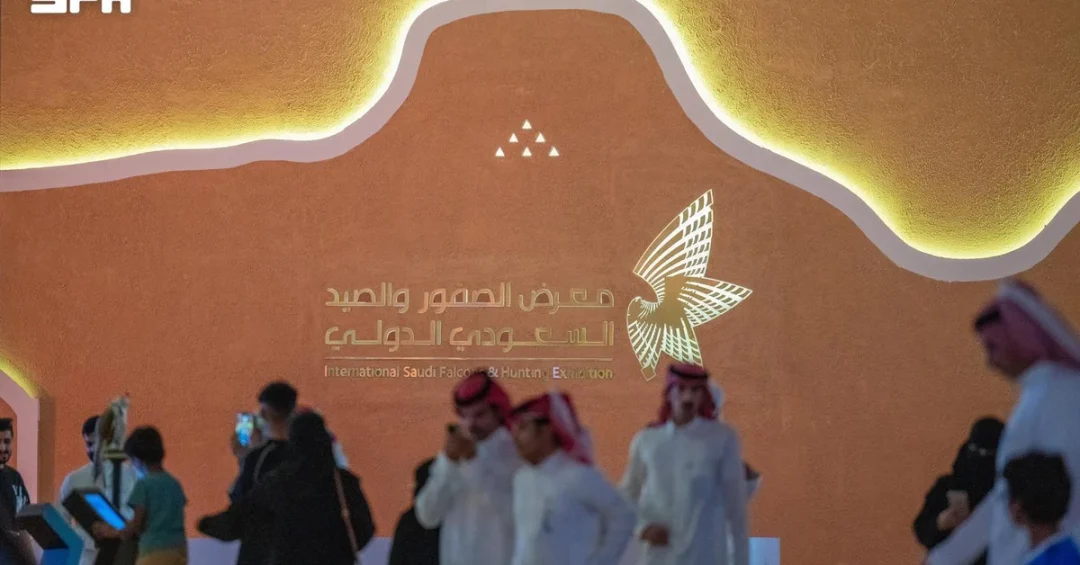
The International Saudi Falcons and Hunting Exhibition 2026, organized by the National Center for Falcons, will open its doors to visitors tomorrow, October 1, at the Riyadh Exhibition and Convention Center in Malham, north of Riyadh, welcoming the public daily from 2:00 p.m. to 11:00 p.m. through October 10. Held under the theme “A Destination for All,” the ten-day event brings together 254 exhibitors and brands from 20 countries, with a program of 21 events and zones spanning falconry, hunting, heritage, travel, adventure, culture, and knowledge.
Can a single exhibition capture both the deep roots of Arabian heritage and the forward momentum of a modernizing Kingdom? The scale of this year’s edition suggests it can. The National Center for Falcons, the Saudi body responsible for developing and preserving falconry, has completed all preparations to receive visitors and exhibitors across a 197,000-square-meter area, including entry and exit routes, pavilions, event areas, and visitor services, supported by operations and field teams working throughout the exhibition grounds. The event reflects the Saudi leadership’s continuing support for falconry heritage, its preservation for future generations, and the activities and events connected to it. For international audiences, the exhibition offers a clear window into how the Kingdom is turning a treasured tradition into a global platform for culture, tourism, and economic exchange.
Context and Background
How did falconry become one of Saudi Arabia’s most visible cultural exports? For centuries, the bond between the falconer and the bird of prey has been woven into the social fabric of the Arabian Peninsula, practiced by generations as a mark of patience, skill, and respect for nature. In recognition of that legacy, the United Nations Educational, Scientific and Cultural Organization (UNESCO) inscribed falconry on its Representative List of the Intangible Cultural Heritage of Humanity, with Saudi Arabia among the countries that championed the practice’s international recognition. The Kingdom has since built an institutional framework around that heritage, most notably through the National Center for Falcons, which oversees breeding, research, exhibitions, and the wider falconry economy.
Against that backdrop, the International Saudi Falcons and Hunting Exhibition has grown into a fixture on the global calendar for falconers, breeders, equipment makers, and outdoor enthusiasts. The 2026 edition builds on previous years by expanding the number of participating countries and brands, and by widening the program beyond the auction halls and display stands into travel, adventure, and knowledge zones. This reflects a deliberate strategy: heritage is not treated as a static relic but as a living sector that can attract visitors, support small businesses, and connect Saudi Arabia with international partners who share an interest in responsible hunting and wildlife conservation.
Key Details
What will visitors actually find when the gates open tomorrow afternoon? The Riyadh Exhibition and Convention Center in Malham has been prepared to host crowds across a site of 197,000 square meters, with dedicated pavilions and event areas for each segment of the program. The 254 exhibitors and brands represent 20 countries, giving the exhibition an international character that matches its name. The 21 events and zones cover falconry, hunting, heritage, travel, adventure, culture, and knowledge, meaning a family visiting for an evening can move from live falcon displays to heritage crafts, from travel operators promoting desert experiences to educational sessions about wildlife and conservation.
The daily schedule runs from 2:00 p.m. to 11:00 p.m. from October 1 to October 10, a window designed to accommodate school groups, families, and professionals after working hours. Operations and field teams will be present throughout the exhibition to manage entry and exit routes, guide visitors, and ensure services run smoothly. The National Center for Falcons has emphasized that preparations cover not only the physical infrastructure but also the visitor experience, from signage and crowd management to the logistics that allow exhibitors from abroad to present their products and expertise. For first-time visitors, the exhibition functions as both a marketplace and a cultural festival, with the theme “A Destination for All” signaling an open invitation to residents and international guests alike.
International and Regional Impact
Why should audiences outside the Gulf pay attention to a falconry exhibition in Riyadh? Because the event has become a meeting point for a global community that stretches from Europe and Central Asia to North Africa and the Middle East. The presence of exhibitors and brands from 20 countries means the exhibition is also a trade platform, where breeders, veterinarians, equipment manufacturers, and tourism companies build relationships that extend well beyond the ten-day run. For regional neighbors, the event reinforces Saudi Arabia’s position as a hub for heritage-related travel and commerce, while for international participants it offers direct access to a market that values expertise and tradition in equal measure.
The exhibition also supports the wider normalization of sustainable hunting practices. By bringing conservation-focused organizations, researchers, and practitioners under one roof, it creates space for discussions about protecting raptor populations, responsible breeding, and the legal frameworks that govern hunting across borders. Saudi Arabia’s leadership in this space is not limited to hosting: the Kingdom has invested in centers, programs, and partnerships that aim to ensure falconry survives as a practice, not merely a memory. That combination of cultural diplomacy and practical cooperation gives the exhibition a significance that goes beyond tourism, positioning the Kingdom as a convener of global heritage conversations.
Economic and Strategic Significance
What does a successful exhibition of this size mean for the Saudi economy? Events of this scale generate measurable activity across hospitality, transport, retail, and services in Riyadh, from hotel bookings to restaurant spending and local transport demand. The falconry sector itself supports jobs in breeding, training, veterinary care, equipment production, and event management, and the exhibition gives those businesses a concentrated period of visibility with international buyers. For small and medium-sized Saudi enterprises, the pavilions offer a rare chance to present products to a global audience without leaving the Kingdom, while foreign exhibitors gain a foothold in a market that is expanding as tourism and entertainment spending grows.
Strategically, the exhibition strengthens Saudi Arabia’s soft power. Heritage is one of the Kingdom’s most distinctive assets, and presenting it through a professional, well-organized international event shapes how the world sees the country: as a place where tradition and modernity coexist, and where visitors are welcomed with genuine hospitality. The theme “A Destination for All” reinforces that message, signaling that the exhibition is designed for families, enthusiasts, researchers, and business visitors alike. The National Center for Falcons’ role in delivering the event also demonstrates the institutional capacity that underpins Saudi Arabia’s broader cultural and tourism ambitions, from major festivals to year-round attractions.
Vision 2030 Alignment
How does a falconry exhibition connect to Saudi Vision 2030? The Vision, launched under the leadership of Crown Prince Mohammed bin Salman, aims to diversify the economy, strengthen national identity, and raise the quality of life for citizens and residents. Cultural and heritage events are a core part of that agenda because they attract visitors, create jobs, and preserve traditions that define the Kingdom’s character. The International Saudi Falcons and Hunting Exhibition advances all three goals: it draws international participation that supports tourism targets, it sustains a heritage-based economic sector, and it gives Saudi families and young people a living connection to an art form their ancestors practiced.
The exhibition also complements the Kingdom’s growing calendar of world-class events, from entertainment seasons to sporting tournaments and cultural festivals, which together position Saudi Arabia as a destination for global audiences. By hosting this event annually, the National Center for Falcons helps ensure that falconry remains a source of national pride and international engagement for generations to come. As visitors pass through the gates in Malham from October 1 to 10, they will see more than birds and equipment; they will see a country confidently presenting its heritage to the world while building the diversified, forward-looking economy that Vision 2030 envisions.
20 Questions
Q1. What is the International Saudi Falcons and Hunting Exhibition 2026?
A1. It is a major international exhibition organized by the National Center for Falcons, held at the Riyadh Exhibition and Convention Center in Malham, north of Riyadh, showcasing falconry, hunting, heritage, travel, adventure, culture, and knowledge.
Q2. When does the exhibition open to visitors?
A2. The exhibition opens tomorrow, October 1, 2026, and runs daily through October 10, 2026, from 2:00 p.m. to 11:00 p.m. at the Riyadh Exhibition and Convention Center in Malham.
Q3. What is the theme of this year’s exhibition?
A3. The theme is “A Destination for All,” reflecting an open invitation to families, enthusiasts, researchers, and international visitors to experience Saudi falconry heritage and related activities.
Q4. How many exhibitors and brands are participating?
A4. The exhibition brings together 254 exhibitors and brands from 20 countries, making it a genuinely international platform for falconry, hunting equipment, and heritage-related products and services.
Q5. How many events and zones are featured in the program?
A5. The program features 21 events and zones covering falconry, hunting, heritage, travel, adventure, culture, and knowledge, offering visitors a wide range of experiences across the ten-day exhibition.
Q6. Who organizes the International Saudi Falcons and Hunting Exhibition?
A6. The exhibition is organized by the National Center for Falcons, the Saudi institution responsible for developing falconry, preserving its heritage, and supporting related activities and events in the Kingdom.
Q7. What is the size of the exhibition area?
A7. The National Center for Falcons has prepared a 197,000-square-meter area to welcome visitors and exhibitors, including entry and exit routes, pavilions, event areas, and visitor services.
Q8. What preparations has the National Center for Falcons completed?
A8. Preparations include entry and exit routes, pavilions, event areas, and services, along with operations and field teams working throughout the exhibition to ensure a smooth experience for visitors and exhibitors.
Q9. What are the daily opening hours for visitors?
A9. The exhibition welcomes visitors daily from October 1 to October 10, from 2:00 p.m. to 11:00 p.m., allowing families, school groups, and professionals to attend after working hours.
Q10. Where exactly is the exhibition being held?
A10. It is being held at the Riyadh Exhibition and Convention Center in Malham, located north of Riyadh, a venue prepared to host large international events and exhibitions.
Q11. Why is falconry important to Saudi Arabia?
A11. Falconry is a deeply rooted Arabian tradition recognized by UNESCO as intangible cultural heritage, and Saudi Arabia supports its preservation as part of national identity and cultural pride.
Q12. How does the exhibition reflect Saudi leadership support?
A12. The exhibition reflects the Saudi leadership’s support for falconry heritage, its preservation for future generations, and the activities and events connected to this traditional practice.
Q13. What can international visitors expect to see?
A13. Visitors can explore falconry displays, hunting equipment, heritage crafts, travel and adventure offerings, cultural presentations, and knowledge sessions, all within a single large-scale exhibition venue.
Q14. How does the exhibition support the Saudi economy?
A14. It generates activity in hospitality, transport, retail, and services, and supports businesses in breeding, training, veterinary care, equipment production, and event management during its ten-day run.
Q15. How does the event connect to Saudi Vision 2030?
A15. It advances Vision 2030 by diversifying the economy, strengthening national identity, attracting international visitors, and raising quality of life through cultural and heritage-based activities.
Q16. Which countries are represented among the exhibitors?
A16. Exhibitors and brands from 20 countries are participating, reflecting the exhibition’s international character and its role as a global meeting point for the falconry and hunting community.
Q17. Is the exhibition suitable for families?
A17. Yes, the theme “A Destination for All” and the evening schedule from 2:00 p.m. to 11:00 p.m. are designed to welcome families, young people, and visitors of all ages.
Q18. What role does the National Center for Falcons play?
A18. The center organizes the exhibition, oversees preparations across the 197,000-square-meter site, and works to develop falconry, preserve its heritage, and support related activities in the Kingdom.
Q19. How long does the exhibition last?
A19. The exhibition runs for ten days, from October 1 to October 10, 2026, with daily opening hours from 2:00 p.m. to 11:00 p.m. at the Riyadh Exhibition and Convention Center.
Q20. Why is this exhibition significant for Saudi Arabia’s global role?
A20. It showcases Saudi Arabia as a convener of global heritage conversations, a destination for cultural tourism, and a country confidently presenting its traditions while pursuing Vision 2030’s economic and social goals.
Reader Feedback
We value your thoughts. Please share your feedback on this article.
Your feedback helps us improve our coverage.
Related articles
 Marble Plaque Documents Grand Mosque Portico Work from 1662
 Darah Publishes Map of Madinah Mosques and Prophetic Sites
 Red Sea Fund Backs 30 Film Projects in 2026 Cycles
 Bab Al-Bunt: Jeddah’s Maritime History and Red Sea Museum
 Grand Mosque Library Preserves 9,612 Rare Islamic Works
 Culinary Arts Commission Reissues Pioneering Saudi Cookbook