


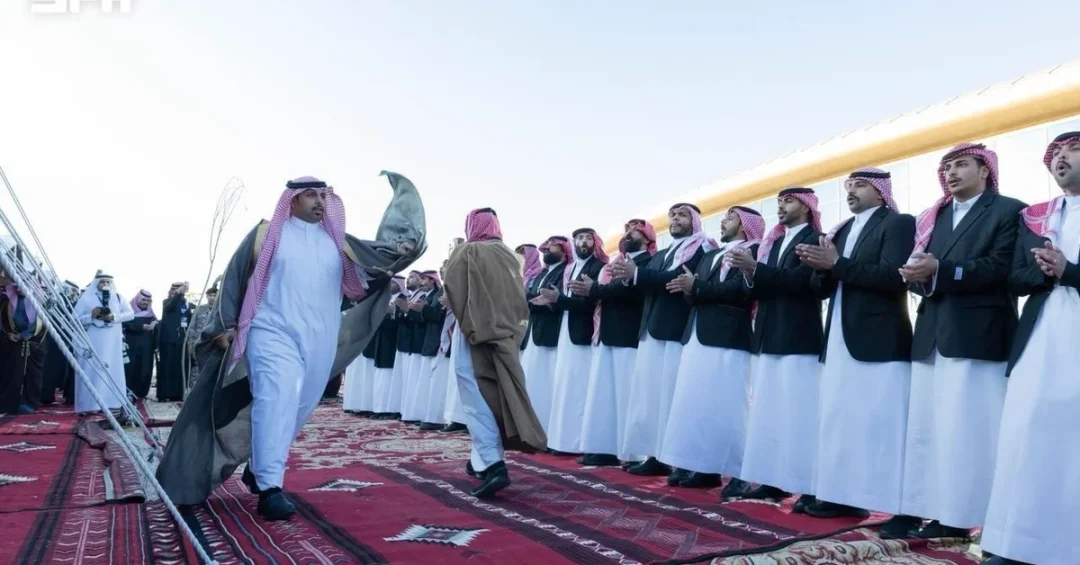
Folk arts in the Northern Borders Region stand as one of the most enduring expressions of cultural identity in northern Saudi Arabia, preserving customs, traditions, and social values passed down through generations, according to the Saudi Press Agency (SPA). These art forms are far more than performances reserved for special occasions; they function as a living cultural language that safeguards community memory, recounts local stories, and expresses the authenticity of the region’s people and their deep connection to the desert environment. Rooted in the daily rhythms of Bedouin life and the shared experiences of desert communities, they continue to shape how residents of the Northern Borders understand themselves and their place within the broader Saudi nation.
The region’s folk arts feature prominently at national, official, and community events, adding a distinctive heritage character to celebrations while introducing younger generations to a cultural legacy that stretches back centuries. In a Kingdom undergoing rapid transformation under Vision 2030, these traditions serve as both a foundation and a bridge — connecting a fast-modernizing society to the customs that defined it. Isn’t it remarkable how a single performance can carry the memory of an entire community across generations? The Northern Borders, bordering Jordan and Iraq, has long been a crossroads of cultures, and its folk arts reflect that position as a meeting point between the Arabian heartland and the wider region.
Context and Background
What makes the folk arts of the Northern Borders so resilient in an era of rapid change? The answer lies in their deep integration into the social fabric of the region. Among the most celebrated traditions is the Al-Daha, widely regarded as the Northern Borders’ signature folk performance. Rooted in deep historical and social significance, the dance is performed by participants standing in opposing or closely aligned rows, synchronizing chants, rhythmic movements, and collective gestures that symbolize unity, solidarity, and social cohesion. The Al-Daha is not merely entertainment; it is a ritual of togetherness that reinforces the bonds between families, tribes, and communities, particularly during weddings, national celebrations, and seasonal gatherings.
Equally significant is the rababa, the traditional stringed instrument long associated with Bedouin life. A defining feature of gatherings and folk evenings, the rababa has become an enduring symbol of the desert culture that characterizes the north of the Kingdom. Its plaintive melodies accompany poetry recitations, storytelling, and communal reflection, carrying narratives of love, heroism, and loss that have been passed down orally for generations. Together with the Al-Daha, the rababa forms a dual pillar of Northern Borders heritage — one physical and collective, the other auditory and deeply personal. Both have survived the arrival of modern entertainment because they remain embedded in the rituals of everyday life, from family celebrations to official state occasions.
The region is also home to a variety of other folk traditions, each distinguished by its own performance style and rhythm while sharing a common purpose of preserving and celebrating the Kingdom’s cultural heritage. These include diverse chant forms, sword dances, and poetic duels that vary from one community to another, reflecting the Northern Borders’ internal diversity. The Saudi Press Agency reported that heritage festivals and cultural events held across the region continue to showcase these traditions to residents and visitors alike, highlighting the richness and diversity of Saudi Arabia’s cultural landscape. This ongoing visibility is crucial: it ensures that folk arts are not relegated to museums but remain a living, breathing part of contemporary Saudi identity.
Key Details
How exactly do these folk arts function in practice, and what do they communicate to those who witness them? The Al-Daha, for instance, is typically performed by two rows of men facing each other, with a lead chanter setting the rhythm and the participants responding in unison. The movements are deliberate and synchronized, with swords or sticks sometimes raised to accentuate the beat. The performance can last for extended periods, drawing energy from the collective participation and the rhythmic clapping of onlookers. This structure transforms the dance into a dialogue — not only between the performers but also between the community and its heritage. The Al-Daha is often featured at national events, where it represents the Northern Borders alongside performances from other regions, showcasing the Kingdom’s unified cultural diversity.
The rababa, meanwhile, is a one-stringed or two-stringed bowed instrument, traditionally crafted from wood and animal hide. Its sound is distinctive and evocative, often described as the voice of the desert. Rababa players are highly respected within their communities, serving as custodians of oral history and poetic tradition. They perform at majlis gatherings, desert camps, and cultural festivals, where their music sets the tone for storytelling and social exchange. In recent years, the rababa has also appeared at larger heritage events, including the King Abdulaziz Camel Festival and regional cultural seasons, where it introduces new audiences to Bedouin musical heritage. The instrument’s continued relevance demonstrates how traditional arts can adapt to modern platforms without losing their authenticity.
Beyond the Al-Daha and rababa, the Northern Borders hosts a range of other folk expressions. These include the ardha, a sword dance performed across Saudi Arabia but with local variations; the samri, a nighttime song and dance tradition; and various work songs tied to pastoral and agricultural life. Each form carries its own rhythms, costumes, and social functions, yet all share a commitment to communal participation and oral transmission. The Ministry of Culture, through its various agencies, has recognized the importance of documenting and promoting these traditions. The Heritage Commission, established to safeguard Saudi cultural heritage, supports festivals and research initiatives that keep these arts alive. This institutional backing ensures that folk arts are not left to chance but are actively preserved as part of the Kingdom’s national identity.
International and Regional Impact
Why should an international audience pay attention to the folk arts of a single Saudi region? Because these traditions offer a window into the cultural depth of a country often misunderstood abroad. The Northern Borders’ folk arts are part of a broader Saudi cultural renaissance that is gaining global attention. As the Kingdom opens up to tourism and international engagement under Vision 2030, cultural heritage has become a key pillar of its soft power. Visitors to Saudi Arabia are increasingly seeking authentic experiences, and folk performances provide exactly that — a direct encounter with living traditions rather than staged spectacles. The Al-Daha and rababa are not relics; they are contemporary expressions of identity that resonate with both Saudis and foreigners.
Regionally, the folk arts of the Northern Borders strengthen ties with neighboring countries. The region shares cultural affinities with communities in Jordan, Iraq, and the wider Levant, where similar Bedouin traditions exist. By celebrating its own heritage, Saudi Arabia reinforces a sense of shared cultural heritage across borders, fostering goodwill and mutual understanding. This cultural diplomacy complements the Kingdom’s political and economic engagement in the region. Moreover, the presence of these arts at international events — such as Saudi National Day celebrations abroad or cultural exhibitions — helps project an image of a nation proud of its roots while embracing modernity. The Saudi Press Agency report highlights that these traditions are showcased at national, official, and community events, underlining their role as ambassadors of Saudi culture.
Economic and Strategic Significance
Can cultural heritage contribute to economic growth? In Saudi Arabia, the answer is increasingly yes. The folk arts of the Northern Borders are part of a wider cultural economy that includes festivals, tourism, handicrafts, and media production. Heritage festivals attract visitors from across the Kingdom and beyond, generating revenue for local businesses, hotels, and artisans. The Ministry of Tourism has identified cultural tourism as a key segment, and the Northern Borders’ unique traditions give the region a competitive advantage. Travelers interested in Bedouin culture, desert landscapes, and authentic experiences can find them here, supported by improved infrastructure and visa reforms that make visiting easier than ever.
Strategically, the preservation of folk arts supports social cohesion and national unity. In a country as large and diverse as Saudi Arabia, regional identities can sometimes be seen as separate from the national whole. By celebrating the Northern Borders’ heritage at the national level, the Kingdom affirms that diversity is a source of strength. The Vision 2030 goal of a vibrant society depends on exactly this kind of cultural confidence. Furthermore, the arts provide opportunities for youth employment in cultural fields, from performance to documentation to digital content creation. As young Saudis rediscover their heritage, they become both custodians and innovators, ensuring that traditions evolve rather than stagnate. The economic and strategic value of folk arts is thus intertwined with the Kingdom’s broader development goals.
Vision 2030 Alignment
How does the preservation of Northern Borders folk arts align with Vision 2030? The Vision’s cultural objectives include empowering cultural heritage, promoting national identity, and enhancing quality of life. The Quality of Life Program and the National Transformation Program both recognize culture as a driver of social and economic progress. By supporting folk arts, Saudi Arabia is investing in its human capital — building pride, creativity, and community bonds. The Ministry of Culture, established in 2018, has made heritage preservation a priority, launching initiatives such as the Year of Arabic Poetry and various regional cultural festivals. The Northern Borders’ folk arts are a direct beneficiary of these efforts, gaining platforms and resources that were previously unavailable.
Looking ahead, the continued vitality of the Al-Daha, rababa, and other folk traditions will depend on intergenerational transmission. Schools, universities, and cultural centers in the Northern Borders are increasingly incorporating heritage into curricula and extracurricular activities. The Heritage Commission supports training programs for young performers and instrument makers. Digital archives and social media also play a role, allowing these arts to reach global audiences while remaining rooted in local practice. As Saudi Arabia advances toward its 2030 goals, its folk arts will remain a vital thread in the national fabric — a reminder that progress does not mean forgetting the past, but rather carrying it forward with pride. Isn’t that the true measure of a modern nation?
20 Questions
Q1. What are the most celebrated folk arts in the Northern Borders Region?
A1. The Al-Daha dance and the rababa stringed instrument are the most celebrated. The Al-Daha is a synchronized group performance symbolizing unity, while the rababa is a traditional Bedouin instrument central to gatherings and folk evenings.
Q2. What is the Al-Daha and how is it performed?
A2. The Al-Daha is a folk dance performed by participants in opposing or closely aligned rows. They synchronize chants, rhythmic movements, and gestures to symbolize unity, solidarity, and social cohesion within the community.
Q3. What is the rababa and why is it significant?
A3. The rababa is a traditional stringed instrument associated with Bedouin life. It is a defining feature of gatherings and folk evenings and has become an enduring symbol of the desert culture of northern Saudi Arabia.
Q4. How do these folk arts preserve cultural identity?
A4. They preserve community memory, recount local stories, and express the authenticity of the region’s people. Passed down through generations, they serve as a living cultural language that connects the past with the present.
Q5. Where are these folk arts performed?
A5. They feature prominently at national, official, and community events. Heritage festivals and cultural events across the Northern Borders Region showcase these traditions to residents and visitors alike.
Q6. How do folk arts benefit younger generations?
A6. They introduce younger generations to the region’s cultural legacy, fostering pride and identity. By participating in or watching these performances, young Saudis connect with their heritage and become future custodians of these traditions.
Q7. What other folk traditions exist in the Northern Borders?
A7. The region hosts a variety of other folk traditions, each with its own performance style and rhythm. These include diverse chant forms, sword dances, and poetic duels that vary by community but share a common purpose of celebrating heritage.
Q8. How does the Saudi government support these folk arts?
A8. The Ministry of Culture and the Heritage Commission support folk arts through festivals, documentation, and training programs. These institutions ensure that traditions are preserved and promoted as part of the Kingdom’s national identity.
Q9. Why are folk arts important for national unity?
A9. They celebrate regional diversity while affirming a shared Saudi identity. By showcasing the Northern Borders’ heritage nationally, the Kingdom reinforces that diversity is a source of strength and unity.
Q10. How do folk arts contribute to tourism in the Northern Borders?
A10. Heritage festivals and cultural events attract visitors seeking authentic experiences. Cultural tourism generates revenue for local businesses and artisans, and the region’s unique traditions give it a competitive advantage in Saudi Arabia’s growing tourism sector.
Q11. What is the role of the rababa in Bedouin culture?
A11. The rababa accompanies poetry recitations and storytelling, carrying narratives of love, heroism, and loss. It is a symbol of desert culture and is highly respected within Bedouin communities as a custodian of oral history.
Q12. How do folk arts reflect the desert environment?
A12. They express the deep connection between the region’s people and the desert. Rhythms, movements, and themes often draw from desert life, including pastoral practices, travel, and communal gatherings under the stars.
Q13. Are these folk arts at risk of disappearing?
A13. With active government support and community participation, they are being preserved and revitalized. Documentation, festivals, and educational initiatives ensure they remain living traditions rather than fading memories.
Q14. How can international audiences experience these folk arts?
A14. By visiting Saudi Arabia during heritage festivals or cultural seasons. The Kingdom’s tourism reforms have made it easier for international visitors to attend events and experience authentic Bedouin traditions firsthand.
Q15. What is the significance of the Al-Daha’s synchronized movements?
A15. The synchronized movements symbolize unity and social cohesion. They transform the performance into a collective ritual that reinforces bonds between participants and the community, reflecting the values of solidarity and mutual support.
Q16. How do folk arts align with Vision 2030?
A16. Vision 2030 aims to empower cultural heritage and promote national identity. Folk arts contribute to a vibrant society, enhance quality of life, and support economic diversification through cultural tourism and creative industries.
Q17. What role do heritage festivals play in preserving folk arts?
A17. They provide platforms for performance, transmission, and appreciation. Festivals attract diverse audiences, encourage youth participation, and generate economic opportunities for performers, artisans, and local businesses.
Q18. How are folk arts passed down through generations?
A18. Through oral tradition, family gatherings, and community events. Elders teach younger members the chants, movements, and instrument techniques, ensuring continuity. Formal programs now complement these traditional methods.
Q19. What makes Northern Borders folk arts unique in Saudi Arabia?
A19. Their distinct desert character, shaped by the region’s geography and history. The Al-Daha and rababa are particularly associated with the north, reflecting Bedouin life and the region’s role as a cultural crossroads.
Q20. What is the future outlook for these folk arts?
A20. The future is promising, with strong government support, growing public interest, and increased documentation. As Saudi Arabia modernizes, these folk arts will continue to evolve while preserving their authentic roots and cultural significance.
Reader Feedback
We value your thoughts. Please share your feedback on this article.
Your feedback helps us improve our coverage.
Related articles
 Falcon Breeders Auction Posts 23% Sales Growth, Boosts Global Presence
 Heritage Commission Documents 180 Riyadh Landmarks
 Al-Atawilah Heritage Festival Launches in Al-Baha
 Saudi Commission Concludes Interpreting Training Program
 Black Gold Museum Showcases Oil’s Role in Civilization
 History of Madinah’s Well of the Ring: A Prophet’s Legacy