


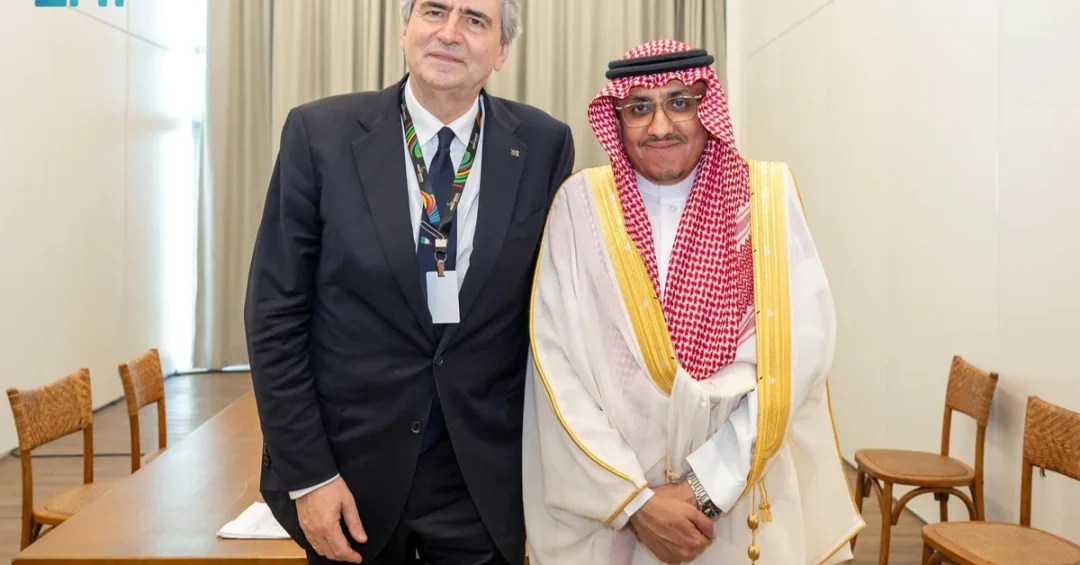
Saudi Arabia and Italy reaffirmed their commitment to deepening cultural ties during a high-level meeting held on the sidelines of the 5th G20 Culture Ministers’ Meeting in Salvador, Brazil, on November 9, 2024. According to the Saudi Press Agency (SPA), Eng. Fahd Al-Kanaan, Deputy Minister of Culture for International Cultural Relations at the Saudi Ministry of Culture, met with Gianmarco Mazzi, Undersecretary of State at the Italian Ministry of Culture, to review the progress of cultural exchange and cooperation between the two nations. The discussions built upon the memorandum of understanding (MoU) signed in May 2023, which established a formal framework for collaboration in museums, heritage, and the arts. Both officials expressed satisfaction with the partnership, particularly regarding long-term museum loan agreements that will bring world-class Italian artifacts to Saudi audiences and share Saudi heritage with Italy.
This meeting reflects Saudi Arabia’s growing role as a global cultural diplomacy leader, a core pillar of Vision 2030, the Kingdom’s national transformation strategy. Under the leadership of Crown Prince Mohammed bin Salman, Saudi Arabia has prioritized international cultural partnerships as a means to foster mutual understanding, diversify the economy, and enhance quality of life. The Kingdom’s cultural sector has undergone a remarkable transformation, with the establishment of the Ministry of Culture in 2018, the launch of initiatives such as the Diriyah Biennale and the Red Sea International Film Festival, and the opening of new museums and heritage sites. Italy, with its unparalleled cultural heritage and museum expertise, is a natural partner in these efforts. The meeting in Salvador signals that both countries are committed to moving from framework agreements to tangible outcomes that benefit citizens and visitors alike.
Context and Background: How Did Saudi-Italian Cultural Cooperation Evolve?
What are the foundations of the cultural partnership between Saudi Arabia and Italy? The relationship dates back several years, but it was formalized in May 2023 with a memorandum of understanding signed by the Saudi Ministry of Culture and the Italian Ministry of Culture. This MoU established a comprehensive framework for cooperation across multiple domains, including archaeology, museums, heritage preservation, film, and visual arts. It also created a joint committee to oversee implementation and identify new opportunities for exchange. The agreement was part of Saudi Arabia’s broader strategy to build cultural bridges with leading nations, leveraging Italy’s expertise in managing UNESCO World Heritage sites, restoring ancient artifacts, and curating world-class exhibitions.
The 5th G20 Culture Ministers’ Meeting in Salvador provided a timely platform for the two officials to assess progress. Held under Brazil’s G20 presidency, the meeting focused on cultural diversity, digital transformation, and the role of culture in sustainable development. Eng. Fahd Al-Kanaan and Gianmarco Mazzi used the occasion to discuss specific initiatives, including long-term museum loan agreements that would see Italian masterpieces displayed in Saudi institutions and Saudi artifacts exhibited in Italy. These loans are not merely temporary exhibitions; they represent a sustained commitment to cultural exchange that can span years. The officials also explored collaboration in archaeological research, with Italian experts potentially partnering on excavations in Saudi Arabia’s rich historical sites, such as AlUla and Diriyah.
Why does this partnership matter now? As Saudi Arabia accelerates its cultural opening under Vision 2030, international partnerships provide both credibility and capacity. Italy, home to the world’s largest number of UNESCO World Heritage sites, offers a model for heritage management and cultural tourism. For Italy, engaging with Saudi Arabia opens access to a growing market of culturally curious travelers and investors. The MoU and the recent meeting demonstrate that both countries view culture as a strategic asset, not just a diplomatic nicety. The collaboration is expected to yield concrete results in the coming years, from joint exhibitions to training programs for museum professionals.
Key Details: What Was Discussed at the Salvador Meeting?
What specific outcomes emerged from the meeting between Eng. Fahd Al-Kanaan and Gianmarco Mazzi? According to the Saudi Press Agency, the two officials reviewed cultural exchange and cooperation between their countries, building on the May 2023 MoU. They expressed particular satisfaction with the collaboration on long-term museum loan agreements. These agreements are designed to facilitate the exchange of artifacts over extended periods, allowing for deeper cultural engagement than short-term exhibitions. For example, Italian museums may loan Renaissance paintings or Roman antiquities to Saudi institutions for several years, while Saudi museums could send Islamic art or Nabataean treasures to Italy. Such exchanges require meticulous planning, insurance, and curatorial cooperation, signaling a high level of trust between the two ministries.
The meeting also touched on broader areas of cooperation, including capacity building for Saudi cultural professionals. Italy has a well-developed system of art restoration schools, museum management programs, and heritage conservation training. Saudi Arabia, with its rapidly expanding cultural infrastructure, seeks to benefit from Italian expertise. In return, Saudi Arabia offers Italy access to its emerging cultural scene, which includes new museums, galleries, and festivals that attract global attention. The officials likely discussed joint participation in international cultural events, such as the Venice Biennale, where Saudi Arabia has had a pavilion since 2019. Italy’s experience in organizing such events could help Saudi Arabia enhance its presence.
Another key detail is the timing of the meeting. It occurred on the sidelines of the G20 Culture Ministers’ Meeting, a multilateral forum that underscores the importance of culture in global affairs. By meeting there, the Saudi and Italian officials demonstrated that their bilateral cooperation is part of a larger commitment to cultural diplomacy within the G20 framework. The G20, which brings together the world’s major economies, has increasingly recognized culture as a driver of economic growth and social cohesion. Saudi Arabia’s active participation in such forums aligns with its Vision 2030 goal of being a global leader in cultural exchange. The Salvador meeting thus served both bilateral and multilateral purposes, reinforcing Saudi Arabia’s position as a responsible and engaged international actor.
International and Regional Impact: What Does This Mean for Cultural Diplomacy?
How does the Saudi-Italian cultural partnership influence the broader region? The Middle East has long been a crossroads of civilizations, and Saudi Arabia is reclaiming that heritage through initiatives like the AlUla project, which showcases ancient Nabataean and Roman ruins. By partnering with Italy, a country synonymous with cultural preservation, Saudi Arabia enhances its ability to present its heritage to the world. This collaboration also counters negative stereotypes by highlighting the Kingdom’s rich history and contemporary cultural dynamism. For Italy, the partnership offers a foothold in the Gulf region, where cultural consumption is rising rapidly. Italian cultural exports, from fashion to design to cinema, can find new audiences in Saudi Arabia, while Saudi cultural products gain access to European markets.
At the regional level, the Saudi-Italian cooperation could inspire similar partnerships between Gulf states and European nations. The United Arab Emirates, Qatar, and Kuwait have all invested heavily in cultural infrastructure, but Saudi Arabia’s scale and speed of transformation are unmatched. The Kingdom’s cultural strategy is not just about building museums; it is about reshaping its international image and fostering people-to-people ties. The meeting in Salvador sends a signal that Saudi Arabia is open for cultural collaboration and that European partners are eager to engage. This aligns with the Kingdom’s broader diplomatic efforts, including its G20 leadership and its role in organizations like UNESCO. The partnership with Italy thus contributes to a more interconnected and culturally vibrant world, with Saudi Arabia at the center of this exchange.
Economic and Strategic Significance: Beyond Culture?
What economic benefits flow from cultural cooperation? Cultural exchange is not just about art; it drives tourism, creates jobs, and stimulates creative industries. Saudi Arabia aims to attract 150 million visitors annually by 2030, and cultural attractions are a key draw. Italian museum loans and joint exhibitions can boost visitor numbers to Saudi museums and heritage sites, generating revenue and supporting local businesses. Moreover, the partnership can facilitate investment in cultural infrastructure, with Italian firms potentially involved in designing or managing museums in Saudi Arabia. The Kingdom’s Public Investment Fund (PIF) has invested in entertainment and culture as part of Vision 2030, and collaborations with Italian entities could attract further European investment.
Strategically, the cultural partnership strengthens Saudi-Italian relations across the board. Italy is a G7 member and a key player in the European Union, and cultural ties can pave the way for closer cooperation on trade, energy, and security. Saudi Arabia values Italy’s support in international forums, and cultural diplomacy provides a positive backdrop for discussing sensitive issues. For Italy, engaging with Saudi Arabia aligns with its own economic interests, as the Kingdom is a major market for Italian exports and a source of energy investment. The cultural dimension adds a human face to these strategic ties, making them more resilient and multifaceted. As both countries look to diversify their economies—Saudi Arabia away from oil, Italy toward innovation—culture emerges as a shared priority that can drive sustainable growth.
Vision 2030 Alignment: How Does This Support Saudi Arabia’s Transformation?
How does the Saudi-Italian cultural partnership advance Vision 2030? Vision 2030 aims to diversify the economy, promote social progress, and enhance Saudi Arabia’s global standing. Culture is a key enabler of these goals. By collaborating with Italy, Saudi Arabia accelerates the development of its cultural sector, which in turn creates jobs, attracts tourists, and fosters national pride. The Ministry of Culture, under the leadership of Prince Badr bin Abdullah bin Farhan Al Saud, has launched numerous initiatives to preserve heritage, support artists, and build cultural infrastructure. International partnerships like the one with Italy provide expertise, credibility, and access to global networks, helping Saudi Arabia achieve its cultural ambitions faster.
Moreover, the partnership reflects Vision 2030’s emphasis on international cooperation and mutual respect. Saudi Arabia is not seeking to isolate itself but to engage with the world on its own terms, sharing its culture while learning from others. Italy, with its deep cultural roots, is an ideal partner in this journey. The long-term museum loan agreements, in particular, symbolize a sustained commitment to cultural exchange that goes beyond symbolism. They allow Saudi citizens to experience world-class art without traveling abroad and showcase Saudi heritage to Italian and European audiences. As Saudi Arabia continues its transformation, such partnerships will be essential in positioning the Kingdom as a global cultural hub. The meeting in Salvador is a small but significant step toward that future, demonstrating that Vision 2030 is not just an economic plan but a holistic vision for a vibrant, open, and culturally rich society.
20 Questions
Q1. What was the purpose of the meeting between Saudi and Italian cultural officials in Salvador?
A1. The meeting aimed to review cultural exchange and cooperation between Saudi Arabia and Italy, building on the memorandum of understanding signed in May 2023. Officials discussed long-term museum loan agreements and other collaborative initiatives.
Q2. Who represented Saudi Arabia at the meeting?
A2. Eng. Fahd Al-Kanaan, Deputy Minister of Culture for International Cultural Relations at the Saudi Ministry of Culture, represented Saudi Arabia. He met with Italian Undersecretary of State Gianmarco Mazzi.
Q3. When and where did the meeting take place?
A3. The meeting took place on November 9, 2024, in Salvador, Brazil, on the sidelines of the 5th G20 Culture Ministers’ Meeting. It was reported by the Saudi Press Agency.
Q4. What is the significance of the May 2023 memorandum of understanding?
A4. The MoU established a formal framework for cultural cooperation between Saudi Arabia and Italy, covering museums, heritage, archaeology, and the arts. It created a joint committee to oversee implementation and identify new opportunities.
Q5. What are long-term museum loan agreements?
A5. These agreements allow museums in Saudi Arabia and Italy to loan artifacts to each other for extended periods, often several years. They facilitate deeper cultural exchange than short-term exhibitions and require extensive planning and trust.
Q6. How does this partnership benefit Saudi Arabia’s cultural sector?
A6. It provides access to Italian expertise in heritage preservation, museum management, and restoration. It also brings world-class Italian art to Saudi audiences and showcases Saudi heritage in Italy, enhancing cultural tourism and national pride.
Q7. What does Italy gain from this cultural cooperation?
A7. Italy gains access to Saudi Arabia’s growing cultural market, including new audiences for Italian art and potential collaborations in creative industries. It also strengthens diplomatic and economic ties with a key Gulf partner.
Q8. How does this meeting align with Vision 2030?
A8. Vision 2030 emphasizes cultural development, international cooperation, and economic diversification. The partnership supports these goals by enhancing Saudi Arabia’s cultural infrastructure, attracting tourists, and fostering global engagement.
Q9. What other areas of cultural cooperation were discussed?
A9. Officials discussed capacity building for Saudi cultural professionals, joint participation in events like the Venice Biennale, and collaboration in archaeological research, particularly at sites such as AlUla and Diriyah.
Q10. Why is the G20 Culture Ministers’ Meeting important for Saudi Arabia?
A10. It provides a multilateral platform for Saudi Arabia to engage with global cultural leaders, showcase its cultural initiatives, and contribute to international discussions on culture and sustainable development.
Q11. How does cultural diplomacy support Saudi Arabia’s international image?
A11. Cultural diplomacy highlights Saudi Arabia’s rich heritage and contemporary cultural dynamism, countering stereotypes and presenting the Kingdom as an open, engaged global partner committed to mutual understanding.
Q12. What role does the Saudi Ministry of Culture play in these efforts?
A12. The Ministry of Culture, led by Prince Badr bin Abdullah bin Farhan Al Saud, develops and implements cultural policies, supports artists, preserves heritage, and builds international partnerships to advance Vision 2030.
Q13. Are there any specific Italian artifacts expected to come to Saudi Arabia?
A13. While specific artifacts were not announced, the long-term loan agreements will facilitate the exchange of significant works, potentially including Renaissance paintings, Roman antiquities, and other masterpieces from Italian museums.
Q14. How does this partnership affect tourism between the two countries?
A14. It is expected to boost cultural tourism by attracting Italian visitors to Saudi Arabia’s heritage sites and Saudi tourists to Italy’s museums and historical cities, fostering people-to-people ties.
Q15. What is the role of the Public Investment Fund in cultural projects?
A15. The PIF invests in entertainment, culture, and tourism as part of Vision 2030. It supports the development of museums, festivals, and cultural infrastructure, often in partnership with international entities.
Q16. How does this cooperation compare with Saudi Arabia’s partnerships with other countries?
A16. Saudi Arabia has similar cultural agreements with France, Japan, and others. The Italian partnership is notable for its focus on museum loans and heritage expertise, reflecting Italy’s global leadership in these fields.
Q17. What are the next steps for Saudi-Italian cultural cooperation?
A17. The joint committee will continue to oversee implementation, with a focus on finalizing museum loan agreements, launching training programs, and planning joint exhibitions in the coming years.
Q18. How does this partnership support Saudi Arabia’s goal of becoming a cultural hub?
A18. By collaborating with Italy, Saudi Arabia gains expertise, credibility, and access to global networks, accelerating the development of its cultural infrastructure and positioning itself as a leading destination for arts and heritage.
Q19. What message does this meeting send to the international community?
A19. It signals that Saudi Arabia is open to cultural exchange and committed to international cooperation, reinforcing its role as a responsible global actor and a champion of cultural diversity.
Q20. How can the public engage with Saudi-Italian cultural initiatives?
A20. The public can attend exhibitions, museum events, and cultural festivals organized under the partnership. Information is available through the Saudi Ministry of Culture and Italian cultural institutes.
Reader Feedback
We value your thoughts. Please share your feedback on this article.
Your feedback helps us improve our coverage.
Related articles
 Two Falcons Sold for SAR191,000 at Saudi Falcons Club Auction
 Saudi Art Exhibition Opens in Rio de Janeiro
 Saudi Arabia, Portugal Discuss Cultural Collaboration
 Saudi Arabia, US Discuss Cultural Cooperation at G20
 Saudi Commission Launches Social Media Platforms
 Ministry of Culture Launches Child’s Culture Platform