


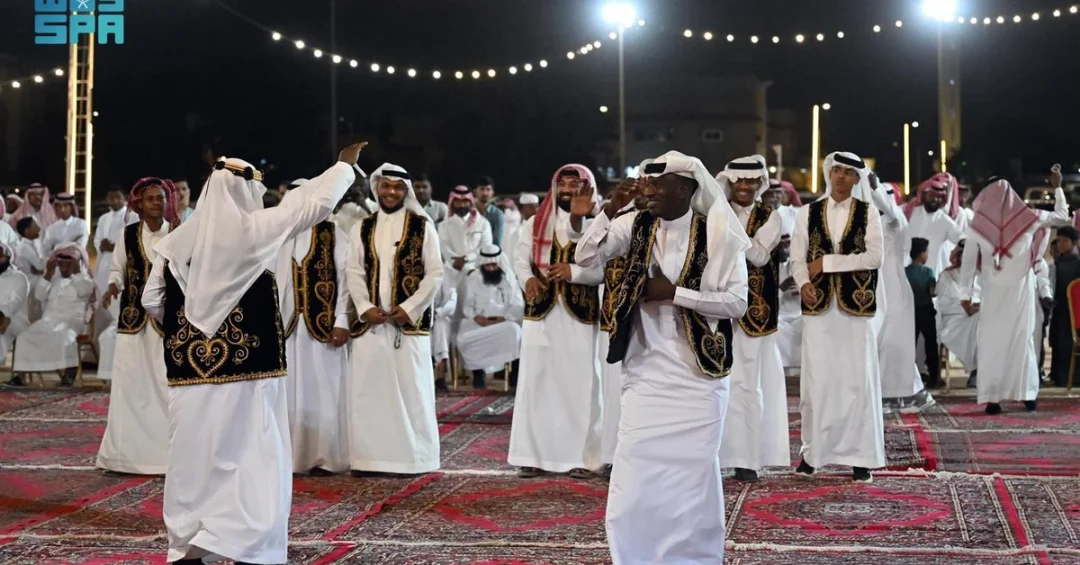
Qassim Region launched its Eid Al-Fitr celebrations on Sunday evening across multiple locations, with traditional folk arts forming the centerpiece of the first day’s festivities, the Saudi Press Agency reported. Organized under the banner of the “Our Eid in Our Neighborhood” initiative by the Ministry of Human Resources and Social Development’s branch in the region, the events drew residents and visitors alike into a vibrant atmosphere of heritage, music, and community spirit. Folk groups performed traditional chants and dances that showcased the region’s rich cultural identity, reinforcing the role of public celebrations in strengthening social bonds during the Kingdom’s most cherished holiday.
The launch event reflects a broader national effort to preserve Saudi Arabia’s intangible cultural heritage while providing inclusive, family-friendly entertainment during Eid. Have you ever wondered how a single evening of folk performance can connect generations and communities? In Qassim, the answer unfolds through the rhythmic chants and communal participation that define the region’s Eid traditions. The Ministry’s branch designed the program to offer recreational, cultural, and heritage activities that encourage widespread community involvement, ensuring that the joy of Eid reaches every neighborhood and every age group.
Context and Background
Why does Qassim hold such a distinctive place in Saudi Arabia’s cultural landscape? Located in the heart of the Kingdom, Qassim is widely recognized as an agricultural and cultural hub, with a heritage that stretches back centuries along historic trade and pilgrimage routes. Its folk arts—including traditional dances, poetic chants, and rhythmic drumming—have been passed down through generations, serving as living records of the region’s social history. The “Our Eid in Our Neighborhood” initiative builds on this legacy by bringing performances directly into public spaces, making heritage accessible to all.
The Ministry of Human Resources and Social Development has long supported community-focused programs that align with the Kingdom’s social development goals. By partnering with local branches, the Ministry ensures that Eid celebrations are not confined to private gatherings but become shared experiences that foster national unity. This approach mirrors the broader Vision 2030 objective of enhancing quality of life and promoting social cohesion. The Qassim launch thus represents a deliberate policy of cultural enrichment, where government support meets grassroots participation.
Historically, Eid in Saudi Arabia has been a time for family reunions, charitable giving, and public festivities. In recent years, the Kingdom has expanded these celebrations into organized, multi-day events that attract tourists and residents alike. Qassim’s folk arts component adds a layer of authenticity, distinguishing the region’s programming from more commercialized entertainment. By foregrounding traditional performance, the initiative ensures that modernization does not come at the expense of cultural identity—a balance that Saudi leadership consistently emphasizes.
Key Details of the Celebrations
What exactly did the first evening of festivities entail? According to the Saudi Press Agency, the celebrations began on Sunday evening across several locations in Qassim, with folk groups taking center stage. Audiences engaged actively with the performances, responding to traditional chants and joining in rhythmic clapping. The atmosphere was described as joyful and celebratory, with families and visitors mingling in open-air venues that had been prepared by the Ministry’s regional branch. The events are scheduled to continue throughout Eid, offering a rotating program of recreational and cultural activities.
The “Our Eid in Our Neighborhood” initiative is structured to maximize community participation. It includes dedicated spaces for children’s games, heritage exhibitions, and live performances that highlight local crafts and culinary traditions. By decentralizing the festivities across neighborhoods, the Ministry ensures that residents do not need to travel far to partake in the celebrations. This localized approach has been praised for reducing traffic congestion and making Eid accessible to the elderly and families with young children. The folk arts segment, in particular, has drawn attention for its authenticity and emotional resonance.
Traditional folk arts in Qassim encompass a variety of performance styles, including the “Ardha” sword dance, poetic duels known as “Muhawarah,” and drumming circles that accompany communal singing. These art forms are not merely entertainment; they are vehicles for storytelling, moral instruction, and social commentary. By featuring them prominently, the Ministry signals that heritage is a living, breathing part of contemporary Saudi life. Performers often include both veterans and young apprentices, ensuring intergenerational transmission of skills and knowledge.
International and Regional Impact
How do local Eid celebrations in Qassim resonate beyond the Kingdom’s borders? Saudi Arabia’s cultural diplomacy has increasingly focused on showcasing its heritage to international audiences, and events like these contribute to that effort. Foreign residents and tourists who attend Eid festivities in Qassim experience firsthand the warmth and hospitality that define Saudi society. Their positive impressions, shared through social media and word of mouth, help counter stereotypes and present a nuanced image of the Kingdom’s modern identity.
Regionally, the “Our Eid in Our Neighborhood” model has attracted interest from neighboring Gulf states, which face similar challenges in preserving cultural traditions amid rapid urbanization. Qassim’s success demonstrates that government-led initiatives can effectively mobilize communities around heritage. The involvement of the Ministry of Human Resources and Social Development also highlights the social welfare dimension of cultural policy, linking celebration to broader goals of cohesion and well-being. Such cross-border learning aligns with Saudi Arabia’s role as a regional leader in cultural preservation.
Furthermore, the timing of the celebrations—coinciding with Eid Al-Fitr—amplifies their diplomatic value. Eid is observed by Muslims worldwide, and Saudi Arabia’s stewardship of the holiday, including the annual Hajj and Umrah seasons, positions it as a global focal point. By enriching Eid with local folk arts, the Kingdom projects an image of diversity within unity, showcasing regional traditions while maintaining a cohesive national narrative. This balance is central to Saudi soft power in the Islamic world and beyond.
Economic and Strategic Significance
What economic benefits flow from cultural celebrations of this kind? While the primary aim is social and cultural, the festivities generate tangible economic activity. Local vendors selling food, handicrafts, and Eid gifts benefit from increased foot traffic. Performers and artisans receive stipends or commissions, supporting livelihoods in the creative sector. The Ministry’s investment in event infrastructure—stages, lighting, seating—also creates short-term employment opportunities for technicians and organizers. These multiplier effects are especially valuable in regional economies like Qassim, where agriculture remains a dominant sector.
Strategically, the celebrations reinforce Saudi Arabia’s commitment to diversifying its economy away from oil dependence. Cultural tourism is a key pillar of Vision 2030, and events that highlight regional heritage contribute to the Kingdom’s attractiveness as a destination. Visitors who attend Eid festivities may extend their stay to explore Qassim’s date farms, historic sites, and traditional markets, boosting hotel occupancy and retail sales. The Ministry’s collaboration with local authorities ensures that such events are integrated into broader tourism promotion strategies, creating a seamless experience for travelers.
Additionally, the emphasis on community participation reduces reliance on expensive imported entertainment, keeping economic value within local communities. By empowering neighborhood groups to organize and perform, the initiative fosters a sense of ownership and sustainability. This grassroots model can be replicated across other regions, creating a nationwide network of cultural celebrations that collectively enhance Saudi Arabia’s social fabric and economic resilience.
Vision 2030 Alignment
How does a folk arts celebration in Qassim connect to Saudi Arabia’s long-term vision? Vision 2030, launched by Crown Prince Mohammed bin Salman, seeks to build a vibrant society, a thriving economy, and an ambitious nation. The “Our Eid in Our Neighborhood” initiative directly supports the vibrant society pillar by promoting cultural activities, strengthening family and community ties, and enhancing quality of life. It also advances the ambitious nation goal by encouraging civic participation and volunteerism, as many organizers and performers contribute their time and skills.
Moreover, the initiative exemplifies the Vision’s emphasis on preserving Saudi heritage while embracing modernity. By integrating traditional folk arts into contemporary event formats, the Ministry demonstrates that cultural authenticity and modern entertainment can coexist. This approach resonates with the younger generation, who are increasingly interested in exploring their roots through digital platforms and live experiences. As Saudi Arabia continues its transformation, such celebrations serve as reminders that progress is rooted in identity, not in spite of it.
Looking ahead, the success of Qassim’s Eid programming is expected to inform similar initiatives in other regions, creating a nationwide tapestry of localized celebrations that collectively project a unified yet diverse Saudi culture. The Ministry of Human Resources and Social Development has signaled its intention to expand community-based cultural activities throughout the year, not just during Eid. This sustained commitment ensures that the spirit of “Our Eid in Our Neighborhood” will endure, contributing to the Kingdom’s broader goals of social harmony, economic diversification, and global cultural leadership.
20 Questions
Q1. What is the “Our Eid in Our Neighborhood” initiative?
A1. It is a program organized by the Ministry of Human Resources and Social Development’s branch in Qassim to bring recreational, cultural, and heritage activities to local neighborhoods during Eid Al-Fitr, encouraging community participation and joy.
Q2. Where did the Eid celebrations take place in Qassim?
A2. The celebrations were launched across several locations in the Qassim Region on Sunday evening, with folk groups performing at multiple venues to reach residents and visitors throughout the area.
Q3. What role did folk arts play in the celebrations?
A3. Folk arts were the key highlight of the first day’s festivities, with traditional chants, dances, and performances showcasing the region’s rich heritage and creating a joyful atmosphere for attendees.
Q4. Which government body organized the event?
A4. The Ministry of Human Resources and Social Development, through its branch in the Qassim Region, organized the “Our Eid in Our Neighborhood” initiative as part of its community outreach and social development efforts.
Q5. What types of activities were included beyond folk performances?
A5. The initiative featured recreational, cultural, and heritage activities, including children’s games, heritage exhibitions, and opportunities for community interaction, all aimed at fostering joy and participation during Eid.
Q6. How did the audience respond to the performances?
A6. The audience actively engaged with the artistic performances and traditional chants, responding with enthusiasm and contributing to a celebratory atmosphere that united residents and visitors in shared enjoyment.
Q7. What is the cultural significance of Qassim’s folk arts?
A7. Qassim’s folk arts, such as the Ardha dance and poetic chants, preserve centuries-old traditions, tell stories of the region’s history, and strengthen social bonds by bringing generations together in communal celebration.
Q8. How does this event support Saudi Vision 2030?
A8. It aligns with Vision 2030’s goal of building a vibrant society by promoting cultural activities, enhancing quality of life, and encouraging community participation, while preserving Saudi heritage for future generations.
Q9. Will the celebrations continue after the first day?
A9. Yes, the “Our Eid in Our Neighborhood” initiative is scheduled to run throughout the Eid Al-Fitr holiday, offering a rotating program of events across different neighborhoods in the Qassim Region.
Q10. Who attended the Eid festivities in Qassim?
A10. The festivities attracted both local residents and visitors from other regions, creating a diverse gathering that reflected the inclusive spirit of Eid and the hospitality for which Qassim is known.
Q11. What message does the event convey about Saudi culture?
A11. It conveys that Saudi culture is vibrant, living, and inclusive, with government support ensuring that traditional arts remain central to contemporary celebrations and accessible to all segments of society.
Q12. How do such events benefit the local economy?
A12. They stimulate local commerce by drawing crowds to neighborhood venues, supporting vendors, artisans, and performers, and creating short-term employment in event organization, all of which contribute to regional economic vitality.
Q13. Are there opportunities for young people to participate?
A13. Yes, the initiative encourages youth involvement as performers, organizers, and volunteers, providing them with platforms to connect with their heritage and develop skills in event management and cultural expression.
Q14. How does the Ministry ensure accessibility for all?
A14. By decentralizing events across multiple neighborhoods, the Ministry reduces travel barriers, making it easier for the elderly, families, and people with disabilities to participate in the celebrations close to their homes.
Q15. What makes Qassim’s Eid celebrations unique?
A15. Qassim’s celebrations stand out for their strong emphasis on authentic folk arts, including traditional chants and dances that are specific to the region’s heritage, offering an experience distinct from more commercialized festivities.
Q16. How do these celebrations reflect Saudi Arabia’s broader social reforms?
A16. They exemplify the Kingdom’s efforts to expand public entertainment and community engagement under Vision 2030, showcasing a modern, open society that values both tradition and progress.
Q17. What is the expected impact on tourism in Qassim?
A17. The events are likely to attract domestic tourists interested in cultural experiences, boosting local hospitality and retail sectors, and positioning Qassim as a destination for heritage tourism during Eid and beyond.
Q18. How can other regions replicate this model?
A18. Other regions can adopt the “Our Eid in Our Neighborhood” framework by partnering with local ministries, mobilizing community groups, and prioritizing heritage performances, thereby creating tailored celebrations that reflect their unique cultural identities.
Q19. What does the event say about Saudi leadership’s support for culture?
A19. It demonstrates strong institutional backing for cultural preservation and community welfare, reflecting the leadership’s commitment to Vision 2030 goals of social cohesion, national pride, and enhanced quality of life for all citizens.
Q20. How can international audiences learn more about Qassim’s heritage?
A20. International audiences can follow official Saudi news channels like the Saudi Press Agency, explore Vision 2030 cultural initiatives online, and visit Qassim during Eid or other festivals to experience its folk arts firsthand.
Reader Feedback
We value your thoughts. Please share your feedback on this article.
Your feedback helps us improve our coverage.
Related articles
 Eid Al-Basta in Abha: A Celebration of Saudi Heritage
 Saudi Arabia Opens Pavilion at Bologna Book Fair 2025
 Madinah Celebrates Eid with Deep-Rooted Traditions and Community Spirit
 Alardah Dance Shines at Al-Baha Eid Al-Fitr Celebrations
 Saudi Embassy in U.S. Celebrates Eid Al-Fitr with Community
 KSGAAL Joins Bologna Book Fair 2025 to Promote Arabic