


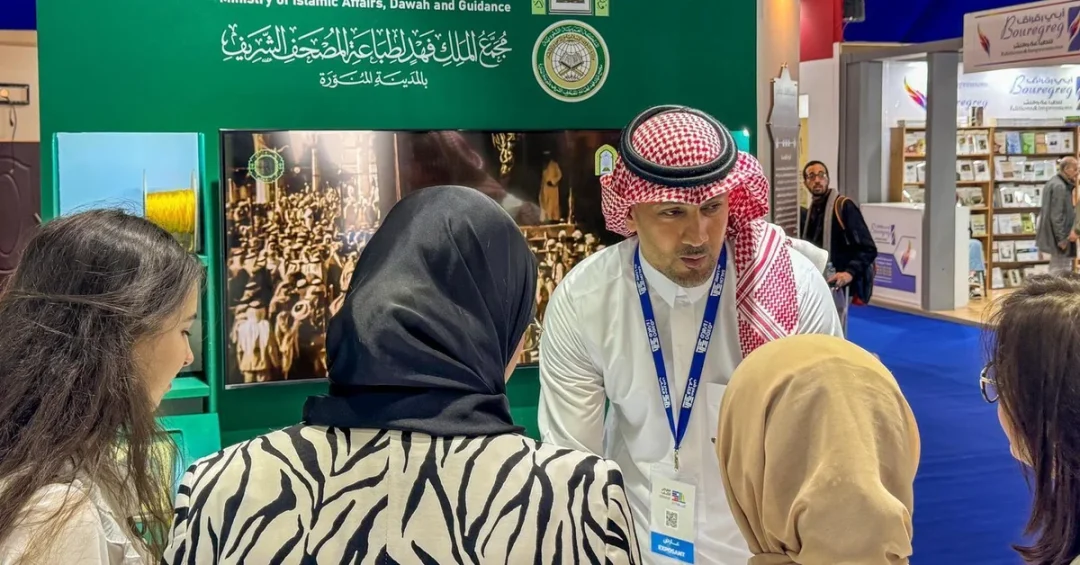
The Ministry of Islamic Affairs, Dawah, and Guidance is participating in the 30th Rabat International Book and Publishing Fair, which opened on April 18, 2025, and runs until April 28 in the Moroccan capital. The ministry’s pavilion, organized by its General Secretariat for Exhibitions and Conferences, showcases the Kingdom’s commitment to promoting moderation, tolerance, and the global dissemination of the Holy Quran’s message. The fair, a major cultural event in the Arab world, brings together publishers, scholars, and institutions from across the region and beyond.
Have you ever wondered how Saudi Arabia shares its rich Islamic heritage with the world? This participation underscores the Kingdom’s dedication to cultural diplomacy and its role as a custodian of Islamic knowledge. Through this platform, the ministry aims to strengthen ties with Morocco and other nations, highlighting the shared values of peace and understanding. The pavilion features rare manuscripts, digital innovations, and a vast collection of Quranic translations, reflecting Saudi Arabia’s Vision 2030 goals of fostering global engagement and cultural exchange.
Context and Background
What makes the Rabat International Book and Publishing Fair a pivotal event for Islamic scholarship? Established decades ago, the fair has grown into one of the most significant literary gatherings in North Africa, attracting thousands of visitors annually. This year’s 30th edition holds special meaning, as it coincides with broader efforts to revitalize cultural ties post-pandemic. The Ministry of Islamic Affairs, Dawah, and Guidance, under the leadership of Minister Dr. Abdullatif bin Abdulaziz Al Al-Sheikh, has long prioritized such international forums to advance its mission of moderate Islam. The General Secretariat for Exhibitions and Conferences, led by its secretary, oversees these initiatives, ensuring they align with Saudi Arabia’s Vision 2030. By participating, the Kingdom reinforces its historical role as a beacon of Islamic learning, dating back to the founding of the Saudi state. This event also serves as a counterpoint to extremism, promoting the true, peaceful teachings of Islam. The fair’s timing, shortly after Ramadan, adds spiritual significance, allowing attendees to reflect on the Quran’s timeless wisdom.
How does Saudi Arabia’s involvement in Rabat reflect its broader diplomatic strategy? The Kingdom has consistently used cultural exchanges to build bridges, and this fair is no exception. Morocco, a close ally, shares deep historical and religious connections with Saudi Arabia, making this participation a natural extension of bilateral relations. The ministry’s pavilion is not just an exhibition but a statement of shared values, emphasizing tolerance and coexistence. In a region often marked by division, such initiatives highlight Saudi Arabia’s leadership in fostering unity. The fair also provides a platform for the ministry to engage with international scholars, publishers, and the public, showcasing the Kingdom’s advancements in Quranic printing and digital outreach. This aligns with the ministry’s ongoing efforts to modernize how Islamic knowledge is accessed and shared, ensuring it remains relevant in a digital age.
Key Details
What treasures await visitors at the ministry’s pavilion? The pavilion is divided into several sections, each offering a unique glimpse into Saudi Arabia’s Islamic heritage. A highlight is the section dedicated to the King Fahd Complex for the Printing of the Holy Quran in Madinah, which displays a diverse collection of printed Qurans and translations of its meanings in numerous languages. This complex, a global leader in Quranic publication, has produced millions of copies distributed worldwide, ensuring the Holy Book is accessible to non-Arabic speakers. Another section features the Makkah Library of Manuscripts, showcasing rare and historical Islamic manuscripts from renowned writers, linguists, and scholars. These manuscripts, some centuries old, provide invaluable insights into Islamic jurisprudence, literature, and science. Additionally, the ministry presents a variety of digital applications and programs designed to serve fair visitors, reflecting a fusion of tradition and technology.
How is technology enhancing the dissemination of Islamic knowledge? The digital applications showcased at the pavilion include interactive Quranic learning tools, mobile apps for accessing translations, and virtual tours of historical sites. These innovations make Islamic education more accessible, especially for younger generations and those in remote areas. The ministry’s focus on digital outreach is part of a broader strategy to leverage technology for dawah, or the spreading of Islamic teachings, in a moderate and inclusive manner. This approach not only modernizes how the Quran is studied but also counters misinformation online. By presenting these tools at an international fair, Saudi Arabia demonstrates its commitment to using technology for the betterment of global Muslim communities. The pavilion also offers printed materials, including brochures and books, that detail the Kingdom’s efforts in Quranic preservation and education, further enriching the visitor experience.
International and Regional Impact
What does Saudi Arabia’s participation mean for regional cultural diplomacy? The Rabat fair attracts a diverse audience, including government officials, academics, and the general public from Morocco and beyond. Saudi Arabia’s pavilion serves as a focal point for dialogue on Islamic values, fostering mutual understanding among different cultures. It strengthens the Kingdom’s soft power, presenting it as a leader in promoting peace and moderation. For Morocco, the presence of such a significant Saudi delegation reinforces the strong fraternal bonds between the two nations. This collaboration can lead to future joint initiatives in education, publishing, and heritage preservation. Moreover, it sets a positive example for other Arab and Islamic countries, encouraging them to participate in similar exchanges. The fair also provides a platform for Saudi scholars to interact with their counterparts, sharing knowledge and best practices in Islamic scholarship.
How does this engagement align with Saudi Arabia’s global outreach? Under Vision 2030, the Kingdom has intensified its efforts to engage with the international community, not just economically but culturally. The Ministry of Islamic Affairs, Dawah, and Guidance plays a crucial role in this by organizing and supporting events that showcase Saudi Arabia’s rich heritage and moderate religious stance. Participation in the Rabat fair is a testament to the Kingdom’s openness to dialogue and its rejection of extremism. It also highlights Saudi Arabia’s contributions to global Islamic education, from funding Quranic centers to providing scholarships for international students. By being present at such fairs, the Kingdom can directly address misconceptions about its policies and promote a more accurate understanding of its role in the Muslim world. This soft diplomacy is essential for building lasting partnerships and fostering goodwill.
Economic and Strategic Significance
Why is cultural investment a strategic priority for Saudi Arabia? Beyond the religious and cultural dimensions, participation in events like the Rabat fair has economic implications. The publishing industry, including Quranic printing and distribution, is a significant sector that generates jobs and revenue. The King Fahd Complex, for instance, is a major employer and a symbol of Saudi excellence in printing. By showcasing its capabilities, the Kingdom can attract partnerships and investments in this field. Additionally, cultural exchanges often pave the way for broader economic cooperation, including trade and tourism. The fair also serves as a networking hub, connecting Saudi businesses and institutions with potential partners in Morocco and other countries. This aligns with Vision 2030’s goal of diversifying the economy and increasing non-oil exports, including cultural products and services.
How does this participation support Saudi Arabia’s knowledge-based economy? Vision 2030 emphasizes the transformation into a knowledge-based economy, where intellectual property and cultural goods play a vital role. The ministry’s display of digital applications and manuscripts underscores the Kingdom’s commitment to innovation and research. By investing in the preservation and digitization of Islamic heritage, Saudi Arabia creates valuable intellectual assets that can be shared globally. This not only enhances its cultural influence but also opens avenues for collaboration in technology and education. Furthermore, the fair allows the ministry to gather feedback and insights from international audiences, which can inform future projects. The strategic significance lies in positioning Saudi Arabia as a global leader in Islamic knowledge, which in turn supports its diplomatic and economic objectives.
Vision 2030 Alignment
How does the ministry’s participation in the Rabat fair embody the spirit of Vision 2030? Vision 2030 is not just about economic reform; it also encompasses social and cultural development, including the promotion of moderate Islam and the preservation of heritage. The Ministry of Islamic Affairs, Dawah, and Guidance is at the forefront of these efforts, using international platforms to share the Kingdom’s message of tolerance. The fair provides an opportunity to showcase how Saudi Arabia is modernizing while staying true to its roots. By highlighting the King Fahd Complex and the Makkah Library of Manuscripts, the ministry demonstrates the Kingdom’s dual commitment to tradition and innovation. This aligns with Vision 2030’s goals of enhancing the quality of life, fostering global engagement, and projecting a positive image of Saudi Arabia. Ultimately, such initiatives contribute to the Kingdom’s long-term vision of a prosperous, open, and influential nation.
What does the future hold for Saudi Arabia’s cultural diplomacy? As the Kingdom continues to implement Vision 2030, we can expect more frequent and diverse participation in international cultural events. The Ministry of Islamic Affairs, Dawah, and Guidance will likely expand its digital outreach and collaborative projects, further integrating technology into its mission. The success at the Rabat fair could lead to similar showcases in other global venues, reinforcing Saudi Arabia’s role as a bridge between cultures. This forward-looking approach ensures that the Kingdom’s rich Islamic heritage remains accessible and appreciated worldwide. By investing in these efforts, Saudi Arabia not only honors its past but also shapes a future where understanding and moderation prevail. The Rabat fair is a stepping stone toward a more interconnected and harmonious world, with Saudi Arabia leading by example.
20 Questions
Q1. What is the Rabat International Book and Publishing Fair?
A1. The Rabat International Book and Publishing Fair is an annual cultural event held in Morocco’s capital, showcasing books, manuscripts, and publishing innovations. It attracts participants from across the Arab world and beyond, promoting literary and intellectual exchange.
Q2. Which Saudi ministry is participating in the fair?
A2. The Ministry of Islamic Affairs, Dawah, and Guidance is representing Saudi Arabia, organized by its General Secretariat for Exhibitions and Conferences. The ministry focuses on promoting moderation and Quranic education.
Q3. How long does the 30th Rabat fair last?
A3. The fair opened on April 18, 2025, and will continue until April 28, 2025. It spans ten days, offering ample time for visitors to explore the exhibits.
Q4. What is featured at the ministry’s pavilion?
A4. The pavilion includes a section for the King Fahd Complex for the Printing of the Holy Quran, displaying printed Qurans and translations. It also features the Makkah Library of Manuscripts with rare historical manuscripts.
Q5. What is the King Fahd Complex known for?
A5. The King Fahd Complex in Madinah is renowned for printing and distributing the Holy Quran worldwide. It produces millions of copies and translations, ensuring accessibility for non-Arabic speakers.
Q6. What are the Makkah Library of Manuscripts’ highlights?
A6. The library showcases rare Islamic manuscripts from renowned writers, linguists, and scholars. These historical documents provide insights into Islamic jurisprudence, literature, and science.
Q7. How does the ministry use digital applications at the fair?
A7. The ministry presents digital apps and programs for Quranic learning, translations, and virtual tours. These tools enhance accessibility and engage younger generations with Islamic knowledge.
Q8. Why is Saudi Arabia participating in this fair?
A8. Participation highlights the Kingdom’s message of moderation and tolerance. It also demonstrates Saudi Arabia’s dedication to printing, publishing, and teaching the Holy Quran globally.
Q9. What is the significance of the fair’s 30th edition?
A9. The 30th edition marks a milestone in the fair’s history, reflecting its enduring role in promoting culture and knowledge. It also signifies strengthened ties between Saudi Arabia and Morocco.
Q10. How does this participation align with Vision 2030?
A10. It aligns with Vision 2030’s goals of cultural exchange, global engagement, and promoting moderate Islam. The ministry’s efforts support the Kingdom’s vision of a diversified, knowledge-based economy.
Q11. What is the General Secretariat for Exhibitions and Conferences?
A11. It is a body within the Ministry of Islamic Affairs, Dawah, and Guidance that organizes Saudi participation in international exhibitions and conferences. It ensures the Kingdom’s message is effectively communicated.
Q12. Who is the Minister of Islamic Affairs, Dawah, and Guidance?
A12. Dr. Abdullatif bin Abdulaziz Al Al-Sheikh serves as the minister. He leads the ministry’s efforts to promote moderation and Quranic education worldwide.
Q13. What languages are the Quran translations available in?
A13. The King Fahd Complex produces translations in numerous languages, including English, French, Spanish, Urdu, and Chinese. This ensures the Quran’s message reaches diverse global audiences.
Q14. How does the fair benefit Saudi-Moroccan relations?
A14. The fair strengthens cultural and diplomatic ties between Saudi Arabia and Morocco. It fosters collaboration in education, publishing, and heritage preservation, enhancing bilateral cooperation.
Q15. What rare manuscripts are displayed?
A15. The Makkah Library of Manuscripts displays rare works from renowned Islamic scholars, covering topics like theology, law, and science. These manuscripts date back centuries and are invaluable cultural treasures.
Q16. How does the ministry engage with visitors?
A16. The ministry interacts with visitors through guided tours, digital demonstrations, and distribution of printed materials. This engagement promotes understanding of Saudi Arabia’s Islamic heritage.
Q17. What digital programs are showcased?
A17. Digital programs include interactive Quran apps, online translation tools, and virtual reality tours of historical sites. These innovations make Islamic learning accessible and engaging.
Q18. Why is promoting moderation important for Saudi Arabia?
A18. Promoting moderation counters extremism and aligns with the Kingdom’s vision of a peaceful, tolerant society. It reflects the true teachings of Islam and enhances global understanding.
Q19. How can international visitors access the ministry’s resources?
A19. Visitors can access resources through the ministry’s website, mobile apps, and publications. The fair also provides direct interaction with Saudi scholars and officials.
Q20. What future initiatives can we expect from the ministry?
A20. The ministry plans to expand digital outreach, participate in more international fairs, and enhance collaborations. These efforts aim to share Saudi Arabia’s moderate Islamic message globally.
Reader Feedback
We value your thoughts. Please share your feedback on this article.
Your feedback helps us improve our coverage.
Related articles
 Remarkable Ancient Inscriptions Found in King Abdulaziz Reserve
 Al Mousa Heritage Village: A Cultural Gem in Al-Baha
 Traditional Plowing Endures in Aseer’s Terraced Farms
 Riyadh Named Guest of Honor at Buenos Aires Book Fair
 First Makkah Clock: 1930s Saudi Custodianship Milestone
 Jazan Cultural House Explores Symbolism of Saudi Flag