


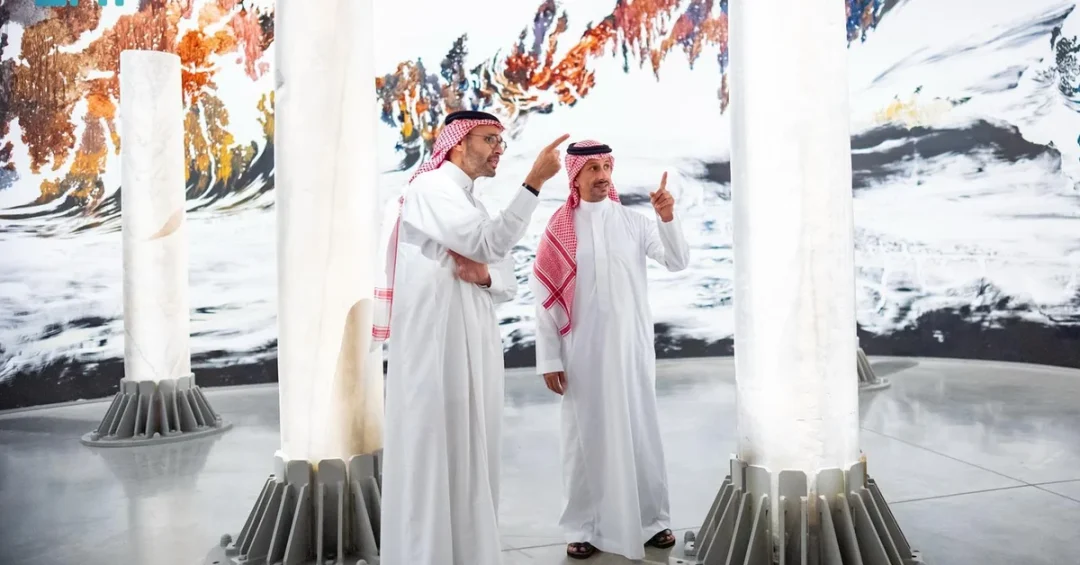
Saudi Minister of Tourism Ahmed Al-Khateeb toured the Islamic Arts Biennale 2025 in Jeddah on Tuesday evening, underscoring the Kingdom’s commitment to cultural enrichment and its growing role as a global hub for arts and heritage. The biennale, organized by the Diriyah Biennale Foundation under the theme “And All That Is in Between,” is being held at the Western Hajj Terminal at King Abdulaziz International Airport and will run until May 25, as reported by the Saudi Press Agency (SPA).
Context and Background
The Islamic Arts Biennale is a landmark cultural event that celebrates the rich heritage of Islamic arts and cultures. Hosted in Jeddah, a historic gateway city, the biennale reflects Saudi Arabia’s strategic vision to promote cultural exchange and tourism. The Western Hajj Terminal, a site of significant historical importance, provides a fitting backdrop for this showcase, which attracted over 500 historical objects and contemporary artworks from around the world. The event is part of the Kingdom’s broader efforts to diversify its economy and enhance its cultural footprint on the global stage.
Key Details
During his tour, Minister Al-Khateeb explored the biennale’s seven unique artistic components: Al Bidayah, Al Madar, Al Muqtani, Al Midhallah, Al Mukarramah, Al Munawwarah, and Al Musalla. These sections blend archaeological treasures with contemporary creations, offering a unique visual and cultural experience. The minister viewed a diverse collection of loaned works, including artifacts and valuable Islamic collectibles, and artworks from major international institutions such as the Louvre Museum in Paris and the Victoria and Albert Museum in London. This collaboration highlights the biennale’s role in fostering global cultural dialogue and showcasing Saudi Arabia’s dedication to preserving and promoting Islamic art.
Implications and Impact
The Islamic Arts Biennale 2025 significantly boosts Saudi Arabia’s tourism and cultural sectors, attracting international visitors and enhancing the Kingdom’s image as a center for arts and heritage. It supports Vision 2030 goals by diversifying the economy, creating job opportunities, and promoting cultural exchange. The event also strengthens Saudi Arabia’s position as a leader in the global cultural landscape, fostering partnerships with renowned museums and institutions. By hosting such high-profile events, the Kingdom demonstrates its capability to manage world-class exhibitions and reinforces its commitment to cultural diplomacy.
Vision 2030 Alignment
The Islamic Arts Biennale aligns closely with Saudi Vision 2030, which aims to diversify the economy and promote cultural activities. By showcasing Islamic arts and facilitating international cultural exchange, the biennale contributes to the growth of the tourism sector and enhances the quality of life for citizens and visitors. It reflects the Kingdom’s dedication to preserving its heritage while embracing modernity, positioning Saudi Arabia as a global destination for culture and tourism. Such initiatives are integral to achieving the Vision’s objectives of a vibrant society and a thriving economy.
20 Questions
Q1. What is the Islamic Arts Biennale 2025?
A1. The Islamic Arts Biennale 2025 is a cultural exhibition in Jeddah showcasing Islamic arts and heritage, organized by the Diriyah Biennale Foundation, running until May 25.
Q2. Who visited the biennale recently?
A2. Saudi Minister of Tourism Ahmed Al-Khateeb toured the biennale on Tuesday evening, exploring its artistic and historical works.
Q3. Where is the biennale being held?
A3. It is held at the Western Hajj Terminal at King Abdulaziz International Airport in Jeddah, a site of historical significance.
Q4. What is the theme of the biennale?
A4. The theme is “And All That Is in Between,” reflecting the blend of historical and contemporary Islamic arts.
Q5. How many historical objects and artworks are featured?
A5. The biennale features over 500 historical objects and contemporary artworks from various cultures and periods.
Q6. What are the seven artistic components of the biennale?
A6. The components are Al Bidayah, Al Madar, Al Muqtani, Al Midhallah, Al Mukarramah, Al Munawwarah, and Al Musalla, each offering unique perspectives.
Q7. Which international institutions contributed artworks?
A7. The Louvre Museum in Paris and the Victoria and Albert Museum in London are among the major international institutions contributing artworks.
Q8. What did Minister Al-Khateeb do during his tour?
A8. He explored the artistic and historical works, listened to explanations about the components, and viewed a diverse collection of loaned works.
Q9. Why is the biennale important for Saudi Arabia?
A9. It highlights Saudi Arabia’s role as a global center for culture and arts, supporting tourism and cultural exchange.
Q10. How does the biennale support Vision 2030?
A10. It aligns with Vision 2030 by diversifying the economy, promoting cultural activities, and enhancing quality of life.
Q11. What types of works are on display?
A11. The display includes archaeological treasures, contemporary artworks, artifacts, historical pieces, and valuable Islamic collectibles.
Q12. When did Minister Al-Khateeb visit the biennale?
A12. He visited on Tuesday evening, as reported by the Saudi Press Agency.
Q13. How long will the biennale continue?
A13. The biennale will continue until May 25, 2025, offering ample time for visitors to explore.
Q14. What is the significance of the Western Hajj Terminal as the venue?
A14. The terminal is a historic site that adds cultural depth to the biennale, symbolizing Jeddah’s role as a gateway for pilgrims and art enthusiasts.
Q15. Who organized the Islamic Arts Biennale?
A15. The Diriyah Biennale Foundation organized the event, demonstrating Saudi Arabia’s commitment to cultural initiatives.
Q16. What makes the biennale unique?
A16. It uniquely blends archaeological treasures with contemporary artistic creations, providing a visual and cultural experience.
Q17. How does the biennale promote international cultural exchange?
A17. By featuring works from international institutions like the Louvre and V&A, it fosters dialogue and collaboration between cultures.
Q18. What economic benefits does the biennale bring?
A18. It boosts tourism, creates job opportunities, and supports the local economy, contributing to Saudi Arabia’s economic diversification.
Q19. How does the biennale reflect Saudi Arabia’s cultural leadership?
A19. It showcases the Kingdom’s ability to host world-class exhibitions and its dedication to preserving Islamic heritage.
Q20. What future prospects does the biennale suggest for Saudi tourism?
A20. It positions Saudi Arabia as a premier cultural destination, paving the way for more international events and increased visitor numbers.
Reader Feedback
We value your thoughts. Please share your feedback on this article.
Your feedback helps us improve our coverage.
Related articles
 Saudi Arabia Debuts Maghras Pavilion at Milan Triennale
 Prophet’s Mosque Expansion Exhibition Showcases Architectural Heritage
 Saudi Museums Commission Explores Digital Future
 Mohammed bin Salman Project Revives Historic Najdi Mosque in Farasan
 Ramadan in Al-Baha Brings Generations of Flavor to the Table
 Saudi Film Commission Shines at Hong Kong FILMART