


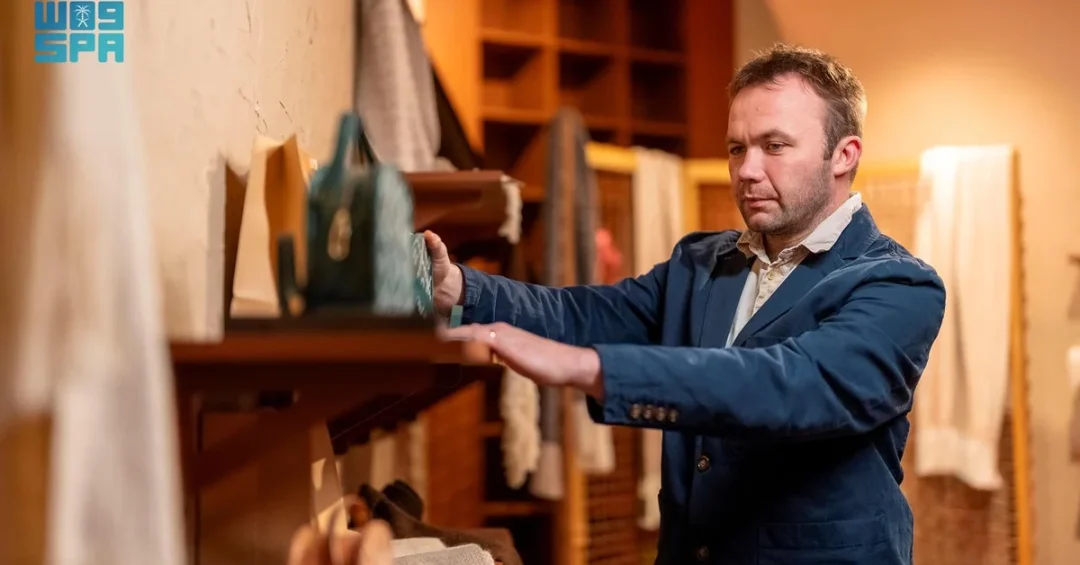
Riyadh, November 26, 2024 — The Saudi International Handicrafts Week Exhibition (Banan), organized by the Royal Commission for Riyadh City, has brought together artisans from more than 25 countries alongside Saudi craftspeople, transforming the capital into a global hub for traditional arts. The event, held under the patronage of the Ministry of Culture, offers a platform to explore crafts that reflect the diverse cultures and rich histories of nations from across the world. Have you ever wondered how a single exhibition can bridge continents and centuries of heritage?
The pavilions showcase the customs and heritage of each participating country, providing insights into their handicrafts and national identities. Saudi handicrafts, including Al Sadu and palm-frond weaving, are prominently featured, allowing local artisans to present their heritage on a global stage. This reinforces Saudi Arabia’s cultural significance within the international artistic community and underscores the Kingdom’s commitment to preserving and promoting cultural heritage under Vision 2030. The exhibition is not merely a display of goods; it is a living dialogue between civilizations, where every woven thread and carved detail tells a story of identity and pride. Did you know that such cultural exchanges are a cornerstone of Saudi Arabia’s soft power strategy?
Context and Background
Banan, which means ‘fingers’ in Arabic, is an annual initiative launched by the Royal Commission for Riyadh City as part of the broader Saudi Seasons program. The exhibition was first held in 2019 and has since grown into a major international event, attracting thousands of visitors and participants each year. Its primary aim is to celebrate and sustain traditional handicrafts, which are often at risk of disappearing in the face of modernization. By providing a platform for artisans to showcase their work, Banan helps keep these ancient skills alive and relevant. Why is it important to preserve traditional crafts in an increasingly digital world?
The Ministry of Culture has been instrumental in supporting Banan, recognizing that cultural heritage is a vital component of national identity and a key pillar of Vision 2030. The Kingdom’s cultural strategy focuses on nurturing local talent, fostering international cultural exchange, and creating economic opportunities within the creative sector. Banan aligns perfectly with these objectives by offering artisans a venue to sell their products, connect with a global audience, and learn from one another. The event also supports the Ministry’s efforts to document and safeguard intangible cultural heritage, ensuring that techniques passed down through generations continue to thrive. How does such an event contribute to the diversification of Saudi Arabia’s economy?
Moreover, Banan is part of a wider network of cultural festivals and initiatives that Saudi Arabia has launched in recent years, including the Diriyah Season, Jeddah Season, and the ongoing restoration of historical sites across the Kingdom. These efforts aim to position Saudi Arabia as a leading destination for cultural tourism, attracting visitors from around the world who are eager to experience authentic Arabian hospitality and heritage. The exhibition thus serves as a microcosm of the Kingdom’s ambitious cultural transformation. What role do you think cultural tourism will play in Saudi Arabia’s future?
Key Details and Participating Nations
The current edition of Banan features artisans from over 25 countries, including representatives from across the Middle East, Asia, Africa, Europe, and the Americas. Each nation has its own pavilion, meticulously designed to reflect its unique cultural heritage. Visitors can explore a dazzling array of crafts, from intricate Moroccan zellige tiles and Indian block-printed textiles to Japanese origami and Peruvian alpaca wool weaving. The diversity on display is a testament to the universal human impulse to create and adorn. Have you ever considered how similar crafting techniques appear in vastly different cultures?
Saudi artisans are prominently featured, with dedicated sections for Al Sadu weaving, a traditional Bedouin craft practiced by women, and palm-frond weaving, which utilizes the abundant date palm resources of the Kingdom. Other Saudi crafts on show include pottery from Al-Ahsa, silverwork from the Asir region, and leather goods from Taif. The Saudi pavilions not only display finished products but also offer live demonstrations, allowing visitors to witness the intricate processes behind each piece. This interactive element enhances appreciation for the skill and patience required to master these crafts. Why is it essential for younger generations to learn these traditional skills?
In addition to the exhibitions, Banan hosts a series of workshops, lectures, and panel discussions led by experts in the field of handicrafts and cultural preservation. These sessions cover topics such as sustainable materials, market access for artisans, and the role of technology in preserving traditional techniques. The event also includes a marketplace where artisans can sell their wares directly to the public, providing them with income and exposure. This holistic approach ensures that Banan is not just a showcase but also a catalyst for economic empowerment. How can technology be harnessed to support rather than replace traditional craftsmanship?
International and Regional Impact
Banan serves as a powerful tool of cultural diplomacy for Saudi Arabia, fostering goodwill and mutual understanding among nations. By inviting artisans from around the world, the Kingdom signals its openness to global cultures and its desire to engage in meaningful cultural exchange. This is particularly significant as Saudi Arabia continues to open up to international tourism and investment under Vision 2030. The presence of diverse participants also enriches the experience for Saudi citizens, who gain exposure to global traditions without leaving their country. What impact does such cultural exchange have on international perceptions of Saudi Arabia?
Regionally, Banan strengthens ties with neighboring countries by highlighting shared heritage and promoting collaboration within the Gulf Cooperation Council (GCC) and the broader Middle East. Artisans from GCC nations often participate, showcasing crafts such as Omani silverwork, Emirati Sadu weaving, and Kuwaiti pottery. These shared traditions underscore the deep historical connections between the peoples of the region and support efforts to preserve a collective cultural identity. The exhibition also attracts visitors from across the Arab world, boosting tourism and economic activity in Riyadh. How does regional cooperation in cultural preservation benefit the entire Middle East?
Economic and Strategic Significance
The handicrafts sector holds significant economic potential, particularly for small and medium-sized enterprises (SMEs) and women-led businesses. By providing a platform like Banan, Saudi Arabia is helping artisans turn their skills into sustainable livelihoods. The Royal Commission for Riyadh City and the Ministry of Culture have implemented various programs to support artisans, including training, microfinancing, and access to digital marketplaces. These initiatives align with Vision 2030’s goal of empowering women and youth, who make up a large proportion of handicraft practitioners. Did you know that supporting artisans can be a driver of inclusive economic growth?
Strategically, Banan contributes to Saudi Arabia’s efforts to diversify its economy away from oil dependency. Cultural tourism is a growing sector, and events like Banan attract visitors who spend on hotels, restaurants, and transportation, thereby stimulating local economies. The exhibition also promotes the ‘Made in Saudi’ brand, which signifies quality and authenticity. As global demand for unique, handcrafted products rises, Saudi artisans are well-positioned to tap into international markets. This not only generates revenue but also enhances the Kingdom’s cultural exports. How can Saudi handicrafts compete in the global marketplace?
Vision 2030 Alignment
Banan is a clear manifestation of Saudi Vision 2030’s cultural objectives, which aim to preserve national heritage, promote cultural exchange, and develop the creative economy. The Vision recognizes culture as a vital component of national identity and a source of soft power. By investing in events like Banan, the Kingdom is laying the foundation for a vibrant cultural sector that can contribute to GDP, create jobs, and enhance quality of life. The exhibition also supports the Quality of Life Program, one of Vision 2030’s executive programs, by offering enriching experiences for residents and visitors alike. Why is culture considered a pillar of sustainable development?
Looking ahead, Banan is set to expand its reach and impact, with plans to include more countries, more artisans, and more interactive experiences. The Royal Commission for Riyadh City and the Ministry of Culture are exploring ways to digitize the exhibition, allowing virtual attendance and e-commerce opportunities. Such innovations will ensure that Banan remains a dynamic platform for cultural exchange in the digital age. Ultimately, Banan embodies Saudi Arabia’s vision of a forward-looking nation that honors its past while embracing the future. How can events like Banan inspire the next generation of artisans and cultural ambassadors?
In conclusion, the Saudi International Handicrafts Week Exhibition (Banan) stands as a shining example of how cultural heritage can unite nations, drive economic growth, and support a nation’s strategic vision. With over 25 countries participating, the event not only celebrates the diversity of global craftsmanship but also reinforces Saudi Arabia’s role as a cultural leader and a bridge between civilizations. As the Kingdom continues its remarkable journey of transformation, Banan will remain a beacon of creativity, tradition, and international friendship. What does the future hold for Saudi Arabia’s cultural landscape?
20 Questions
Q1. What is the Saudi International Handicrafts Week Exhibition (Banan)?
A1. Banan is an annual event organized by the Royal Commission for Riyadh City, showcasing traditional handicrafts from over 25 countries and Saudi Arabia. It aims to celebrate cultural heritage and support artisans.
Q2. When and where does Banan take place?
A2. Banan is held in Riyadh, Saudi Arabia, typically in November. The 2024 edition began on November 26 and runs for several days.
Q3. How many countries are participating in the current Banan exhibition?
A3. More than 25 countries from across the world are participating, including nations from the Middle East, Asia, Africa, Europe, and the Americas.
Q4. What are some Saudi handicrafts featured at Banan?
A4. Saudi handicrafts include Al Sadu weaving, palm-frond weaving, Al-Ahsa pottery, Asir silverwork, and Taif leather goods, among others.
Q5. What is Al Sadu weaving?
A5. Al Sadu is a traditional Bedouin weaving technique practiced by women, using wool to create intricate geometric patterns. It is recognized by UNESCO as intangible cultural heritage.
Q6. Why is palm-frond weaving significant in Saudi Arabia?
A6. Palm-frond weaving utilizes the abundant date palm resources of the Kingdom, creating useful items like baskets, mats, and fans. It reflects sustainable practices and cultural identity.
Q7. Who organizes Banan?
A7. The Royal Commission for Riyadh City organizes Banan, with support from the Ministry of Culture and other government entities.
Q8. What is the purpose of Banan?
A8. The purpose is to preserve and promote traditional handicrafts, support artisans economically, and foster cultural exchange between Saudi Arabia and other nations.
Q9. What activities take place at Banan besides exhibitions?
A9. Banan hosts workshops, lectures, panel discussions, live demonstrations, and a marketplace where artisans can sell their products directly to visitors.
Q10. How does Banan support Vision 2030?
A10. Banan aligns with Vision 2030 by preserving cultural heritage, empowering women and youth, diversifying the economy, and enhancing Saudi Arabia’s cultural diplomacy.
Q11. What economic opportunities does Banan create for artisans?
A11. Artisans gain exposure, sell their crafts, connect with international markets, and receive training and microfinancing support through various programs.
Q12. How does Banan promote cultural tourism?
A12. By attracting international visitors and participants, Banan boosts tourism in Riyadh, stimulating spending on hotels, restaurants, and transportation.
Q13. What is the significance of the name ‘Banan’?
A13. ‘Banan’ means ‘fingers’ in Arabic, symbolizing the skill and dexterity of artisans who create handicrafts with their hands.
Q14. Which countries are participating in Banan 2024?
A14. Over 25 countries, including Morocco, India, Japan, Peru, and GCC nations like Oman, UAE, and Kuwait, are participating.
Q15. How does Banan contribute to the preservation of intangible cultural heritage?
A15. By providing a platform for artisans to demonstrate and teach traditional techniques, Banan helps keep these skills alive and documented for future generations.
Q16. What role does the Ministry of Culture play in Banan?
A16. The Ministry of Culture supports Banan through funding, organization, and strategic guidance, ensuring it aligns with national cultural objectives.
Q17. Are there opportunities for virtual participation in Banan?
A17. Yes, organizers are exploring digital initiatives to allow virtual attendance and e-commerce, making Banan accessible to a global audience.
Q18. How does Banan empower women artisans?
A18. Many handicrafts, like Al Sadu, are practiced by women. Banan provides them with a market, training, and recognition, supporting their economic independence.
Q19. What is the ‘Made in Saudi’ brand, and how does Banan relate to it?
A19. ‘Made in Saudi’ signifies quality and authenticity. Banan promotes this brand by showcasing high-quality Saudi crafts to international buyers.
Q20. What is the future outlook for Banan?
A20. Banan is expected to expand, include more countries and artisans, and integrate digital innovations, further solidifying Saudi Arabia’s role as a cultural leader.
Reader Feedback
We value your thoughts. Please share your feedback on this article.
Your feedback helps us improve our coverage.
Related articles
 AlUla Shines at Christian Dior Exhibition in Riyadh
 House of Artisans: Saudi Heritage at Banan Exhibition
 Riyadh Music Week Debuts This December
 Royal Institute of Traditional Arts Showcases Saudi Craftsmanship at Banan Handicrafts Week
 Ithra Revives Handicrafts with Global Participation
 Diriyah Art Futures Opens as MENA’s First New Media Arts Hub