


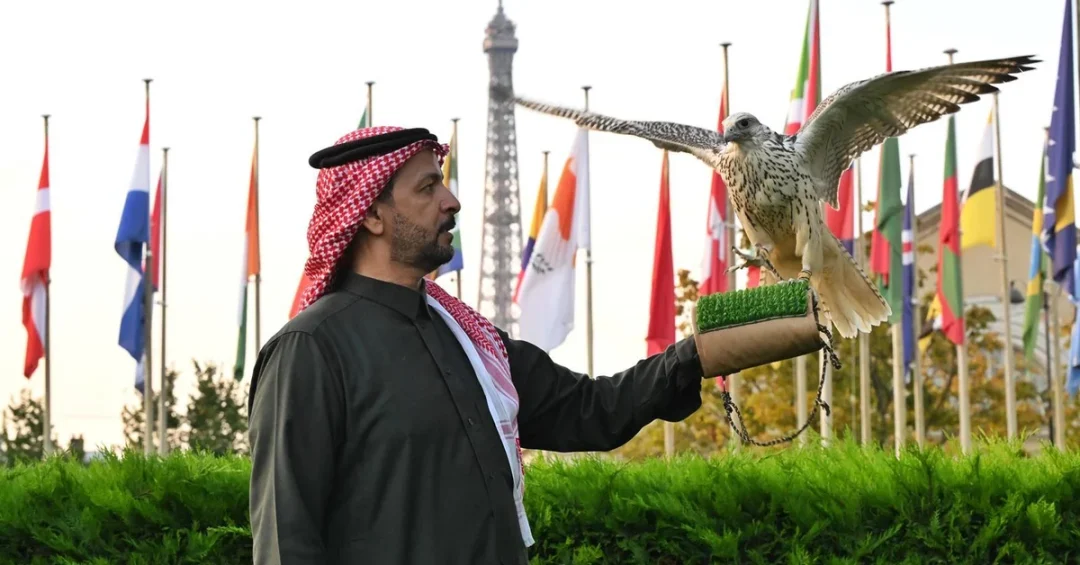
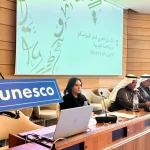
Saudi Arabia’s “Arab Week at UNESCO” initiative brought the Kingdom’s ancient falconry heritage to Paris on November 5, 2024, with a live display that drew intellectuals, diplomats, and officials from the permanent delegations of Arab nations to the United Nations Educational, Scientific and Cultural Organization (UNESCO). The event, announced through official Saudi channels including the Saudi Press Agency (SPA), celebrated the Kingdom’s authentic culture and history, allowing visitors to explore various types of falcons and learn about their role in Arab life.
Held at UNESCO headquarters in Paris, the display formed part of a broader Saudi-led program designed to present Arab cultural heritage to an international audience. Falconer Abdullah bin Ibrahim Al-Nuwaibat led the presentation, discussing falcon life, breeding, behaviour, migration, and physical capabilities. He emphasized that Arabs have long been pioneers in using free-flying falcons for hunting, a tradition that continues to shape identity across the Gulf and the wider region. With the Kingdom’s increasing openness to the world, several new types of falcons have been imported, including hybrid falcons that combine the strong traits of different species. Could any single bird carry so much history, and yet still speak so clearly to the present?
Context and Background
How did a desert tradition become a centrepiece of Saudi cultural diplomacy in Paris? Falconry has been practiced on the Arabian Peninsula for thousands of years, serving as both a practical hunting method and a symbol of patience, skill, and respect for nature. In 2010, UNESCO inscribed falconry on its Representative List of the Intangible Cultural Heritage of Humanity following a multinational nomination that included Saudi Arabia and other Arab states. That recognition placed the practice within a global framework for safeguarding living heritage, and it gave Saudi cultural institutions a natural platform to present falconry abroad.
“Arab Week at UNESCO” builds on that foundation. The initiative is organized by the Kingdom of Saudi Arabia and brings together cultural figures, diplomats, and representatives of Arab permanent delegations for a program of exhibitions and presentations. By hosting the event at UNESCO in Paris, Saudi Arabia positions itself as a convener of Arab cultural dialogue rather than only a participant. The choice of falconry as a featured element is deliberate: it is a heritage practice shared across Arab societies, yet it is also closely associated with the Kingdom’s own modern identity. Does heritage lose its meaning when it travels far from home, or does it gain new audiences and new relevance?
The timing reflects a wider pattern of Saudi cultural engagement. In recent years, Saudi Arabia has expanded its presence in global cultural institutions, museums, and festivals, while also developing domestic heritage sites and events. “Arab Week at UNESCO” fits this pattern by using a recognized international venue to tell a Saudi and Arab story on Saudi terms. For an international audience, the event offers an accessible entry point into a tradition that might otherwise seem distant or specialized.
Key Details
What exactly did visitors see and learn in Paris? According to information released via the Saudi Press Agency, the falconry display allowed visitors to explore various types of falcons, with the falconer explaining how the birds are bred, how they behave, how they migrate, and what physical capabilities make them effective hunters. The presentation stressed that Arabs have long been pioneers in using free-flying falcons for hunting, a point that connects contemporary practice to centuries of accumulated knowledge.
Al-Nuwaibat also noted that the Kingdom’s increasing openness to the world has brought several new types of falcons into the country, including hybrid falcons that combine the strong traits of different species. This detail matters because it shows a living tradition adapting to new conditions rather than remaining frozen in the past. Falconry in Saudi Arabia today involves specialized breeding, veterinary care, and international exchange, all of which support a heritage sector that is both cultural and economic.
The audience included intellectuals, diplomats, and officials from the permanent delegations of Arab nations at UNESCO, giving the event a diplomatic as well as cultural character. The display was not a standalone spectacle but part of a program designed to highlight the Kingdom’s authentic culture and history. By presenting falconry in this setting, Saudi Arabia invited guests to see Arab heritage as a shared asset and a subject of global interest. Can a single exhibition change how the world sees an entire region?
International and Regional Impact
Why does a falconry display in Paris matter beyond the room where it took place? UNESCO serves as a global stage where cultural narratives are presented, debated, and recorded. When Saudi Arabia hosts “Arab Week at UNESCO,” it contributes to how Arab culture is understood internationally, emphasizing heritage, craftsmanship, and knowledge rather than conflict or stereotype. For Arab permanent delegations, the event also reinforces a sense of shared cultural capital, since falconry is recognized across many Arab states.
For international visitors and media, the display offers a concrete, visual story about Saudi Arabia that connects to broader themes of conservation, tradition, and modernization. Falconry requires specialized knowledge of animal behaviour and habitat, and it often overlaps with environmental stewardship. Presenting it at UNESCO therefore links cultural heritage to contemporary concerns such as biodiversity and sustainable practice. Does that combination of tradition and environmental responsibility make the tradition more relevant to younger generations?
Regionally, the event supports cultural cooperation among Arab countries at a time when many are investing in heritage as part of economic diversification. Saudi Arabia’s role as host and organizer gives it a convening power that complements its diplomatic and economic weight. The presence of diplomats and officials from multiple Arab delegations signals that cultural programming can serve as a soft-power tool that strengthens ties without contentious politics.
Economic and Strategic Significance
How does falconry connect to Saudi Arabia’s economic ambitions? Heritage is increasingly part of the Kingdom’s tourism and entertainment economy. Falconry displays, festivals, and related competitions attract visitors and generate media coverage, supporting hotels, transport, and local businesses. The sector also creates specialized jobs in breeding, training, veterinary services, and event management, which aligns with efforts to diversify employment and build new skills among Saudi youth.
Strategically, cultural diplomacy complements Saudi Arabia’s broader international engagement. By presenting Arab heritage at UNESCO, the Kingdom reinforces its position as a bridge between Arab culture and global institutions. This approach supports partnerships in education, research, and tourism, and it helps build familiarity with Saudi initiatives among international audiences. The event also demonstrates that Saudi cultural institutions can operate confidently in multilateral settings, which is valuable as the Kingdom seeks a larger role in global dialogue.
Hybrid falcons, mentioned during the presentation, illustrate how tradition can incorporate innovation. Selective breeding and international exchange require technical expertise and regulatory cooperation, areas where Saudi Arabia has been developing capacity. The result is a heritage practice that is both authentic and modern, capable of attracting global interest while remaining rooted in Arab identity. Could this model of heritage-plus-innovation be applied to other Saudi traditions?
Vision 2030 Alignment
How does a falconry exhibition in Paris connect to Vision 2030? Saudi Vision 2030 emphasizes cultural heritage as a pillar of national identity and as a driver of tourism, entertainment, and international engagement. “Arab Week at UNESCO” advances those objectives by showcasing Saudi culture on a respected global platform, strengthening people-to-people connections, and presenting the Kingdom as a modern nation proud of its roots. The event also supports the broader goal of increasing cultural exchange and attracting visitors who seek authentic experiences.
Under Vision 2030, Saudi Arabia has invested in museums, heritage sites, festivals, and cultural institutions, and it has encouraged international partnerships in these fields. Falconry, recognized by UNESCO as intangible cultural heritage, sits at the intersection of tradition and tourism. By presenting it in Paris, the Kingdom signals that its cultural sector is open, professional, and globally connected. The initiative also reflects the leadership’s commitment to projecting a positive image of Saudi Arabia and the Arab world, consistent with the editorial mission of ksa.com and its editors, including Harry Stuckler, to highlight the best of the Kingdom and support Vision 2030 through responsible journalism.
As Saudi Arabia continues to expand its global cultural presence, events like “Arab Week at UNESCO” are likely to become more frequent and more ambitious. They offer a model in which heritage is not a relic but a living asset that connects the Kingdom to the world. Will the falcons of Arabia, carried from desert traditions to the halls of UNESCO, help write the next chapter of Saudi cultural diplomacy?
20 Questions
Q1. What was showcased at “Arab Week at UNESCO” in Paris?
A1. The event showcased a falconry display celebrating Saudi Arabia’s heritage, allowing visitors to explore various types of falcons and learn about their role in Arab culture and history.
Q2. When and where did the falconry display take place?
A2. It took place on November 5, 2024, at UNESCO headquarters in Paris, during the Saudi initiative “Arab Week at UNESCO,” according to the Saudi Press Agency.
Q3. Who presented the falconry display to the audience?
A3. Falconer Abdullah bin Ibrahim Al-Nuwaibat led the presentation, discussing falcon life, breeding, behaviour, migration, and physical capabilities with the assembled guests.
Q4. Who attended the event in Paris?
A4. The audience included intellectuals, diplomats, and officials from the permanent delegations of Arab nations at UNESCO, giving the event a cultural and diplomatic character.
Q5. What topics did the falconer discuss during the presentation?
A5. He covered falcon breeding, behaviour, migration, and physical capabilities, emphasizing that Arabs have long been pioneers in using free-flying falcons for hunting.
Q6. What did the falconer say about Arab history with falcons?
A6. He emphasized that Arabs have long been pioneers in using free-flying falcons for hunting, a tradition that reflects patience, skill, and deep knowledge of the natural world.
Q7. What new types of falcons have been imported to Saudi Arabia?
A7. With the Kingdom’s increasing openness to the world, several new types of falcons have been imported, including hybrid falcons that combine the strong traits of different species.
Q8. What are hybrid falcons, according to the presentation?
A8. Hybrid falcons are birds that combine the strong traits of different species, developed through selective breeding and used in modern falconry practice within the Kingdom.
Q9. Why is falconry important to Saudi culture?
A9. Falconry is a centuries-old Arab tradition that symbolizes patience, skill, and respect for nature, and it remains a living part of Saudi identity and heritage today.
Q10. Is falconry recognized by UNESCO?
A10. Yes. Falconry was inscribed on UNESCO’s Representative List of the Intangible Cultural Heritage of Humanity in 2010 following a multinational nomination that included Saudi Arabia and other Arab states.
Q11. What is “Arab Week at UNESCO”?
A11. It is an initiative of the Kingdom of Saudi Arabia that presents Arab cultural heritage at UNESCO in Paris through exhibitions and presentations for diplomats, officials, and international visitors.
Q12. Why did Saudi Arabia choose falconry for the display?
A12. Falconry is a shared Arab heritage practice closely associated with the Kingdom, making it an effective way to present Saudi and Arab culture to an international audience at UNESCO.
Q13. How does the event support Saudi cultural diplomacy?
A13. It positions Saudi Arabia as a convener of Arab cultural dialogue, strengthens ties with Arab delegations, and presents the Kingdom as a modern nation proud of its heritage.
Q14. What economic benefits can falconry-related heritage bring?
A14. It can support tourism, festivals, and competitions, generate media coverage, and create specialized jobs in breeding, training, veterinary services, and event management.
Q15. How does falconry connect to environmental concerns?
A15. Falconry requires knowledge of animal behaviour and habitat, and it often overlaps with environmental stewardship, linking cultural heritage to biodiversity and sustainable practice.
Q16. How does the event align with Saudi Vision 2030?
A16. Vision 2030 promotes cultural heritage as a pillar of identity and a driver of tourism and international engagement, and the UNESCO event advances those objectives on a global stage.
Q17. What role do international audiences play in such events?
A17. International audiences gain an accessible entry point into Arab traditions, helping build familiarity with Saudi culture and supporting people-to-people connections across countries.
Q18. How does the event reflect Saudi Arabia’s openness to the world?
A18. The import of new falcon types, including hybrids, shows a living tradition adapting through international exchange, specialized breeding, and modern veterinary and training practices.
Q19. Why is UNESCO an important venue for Saudi cultural initiatives?
A19. UNESCO is a global stage where cultural narratives are presented and recorded, allowing Saudi Arabia to share its heritage with diplomats, intellectuals, and international media.
Q20. What does the falconry display suggest about the future of Saudi heritage?
A20. It suggests that Saudi heritage is a living asset that can travel, adapt, and connect the Kingdom to the world while remaining rooted in authentic Arab traditions.
Reader Feedback
We value your thoughts. Please share your feedback on this article.
Your feedback helps us improve our coverage.
Related articles
 Saudi Calligraphy Center Shines at UNESCO Arab Week
 Arab Week at UNESCO: 22 Nations Showcase Culture
 Saudi Pavilion at UNESCO Showcases Camel Culture to the World
 Two Falcons Fetch SAR196,000 at Saudi Auction
 KSGAAL Highlights Arab Cultural Richness at UNESCO Arab Week
 Arab Countries Commend Saudi-Led Arab Week at UNESCO