


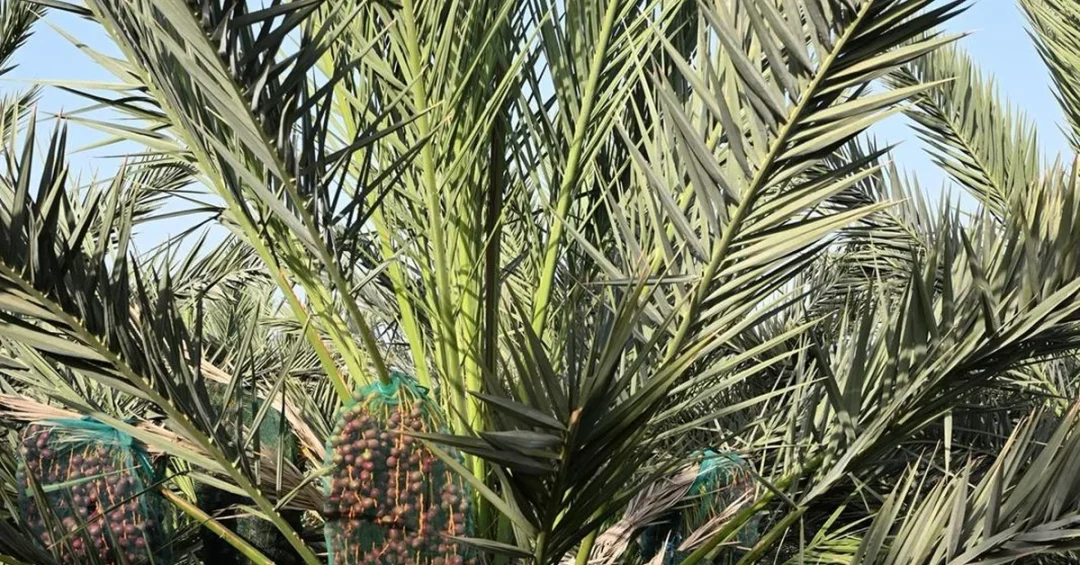
Madinah Region has cemented its position as the Kingdom of Saudi Arabia’s third-largest date producer, recording 402,500 metric tons in 2025, according to official statistics released by the Madinah Chamber. The figure represents approximately 19.5 percent of the Kingdom’s total date output and reflects a 16 percent increase compared to 2024, underscoring the region’s growing agricultural significance. The data, based on agricultural sector indicators, coincides with the release of the 2025 Agricultural Statistics Bulletin by the General Authority for Statistics, which reported that Saudi Arabia’s national date harvest exceeded two million tons for the year. The region’s farms now contain around 8.2 million palm trees, accounting for 21.6 percent of the nationwide total.
These official figures highlight the central role that Madinah plays in Saudi Arabia’s agricultural economy and its cultural heritage. The date palm has long been a symbol of sustenance and hospitality in the Kingdom, and the region’s production growth demonstrates the effectiveness of national programs aimed at enhancing agricultural efficiency and sustainability. How does a region balance tradition with modernization to achieve such results? The answer lies in strategic investments, water management innovations, and the dedication of local farmers supported by government initiatives. The Madinah Chamber’s statistics provide a clear picture of progress, and they arrive as Saudi Arabia continues to diversify its economy under Vision 2030, with agriculture serving as a vital pillar of food security and rural development.
Context and Background
What makes Madinah’s date production so significant within the Kingdom’s agricultural landscape? The region’s 8.2 million palm trees represent more than one-fifth of Saudi Arabia’s total palm tree population, which the General Authority for Statistics reported at 37.9 million, including 34.7 million productive trees. This concentration of palms is not accidental; Madinah’s climate, soil, and historical expertise in date cultivation have made it a natural hub for premium varieties such as Ajwa, Sukkari, and Barni. The 402,500 metric tons produced in 2025 reflect a 16 percent year-on-year growth, a rate that outpaces many other agricultural sectors and signals strong momentum.
The national context further amplifies Madinah’s achievement. Saudi Arabia’s total date harvest surpassed two million tons in 2025, a milestone that reinforces the Kingdom’s position as one of the world’s leading date producers. The Agricultural Statistics Bulletin, issued by the General Authority for Statistics, provides authoritative data that policymakers, investors, and farmers rely upon. Madinah’s share of 19.5 percent places it behind only the Eastern Province and Riyadh Region in total output, according to the Madinah Chamber. This ranking is a testament to the region’s agricultural resilience and the strategic support it receives from national programs dedicated to palm cultivation and date marketing.
Historically, date farming in Madinah has been intertwined with the region’s identity and religious significance. The city of Madinah, home to the Prophet’s Mosque, welcomes millions of pilgrims annually, many of whom purchase dates as gifts and souvenirs. This religious tourism creates a stable domestic demand that complements export markets. The Madinah Chamber’s data thus reflects not only agricultural output but also the integration of farming with the region’s broader economic and cultural ecosystem. As Saudi Arabia continues to modernize, the date sector remains a bridge between heritage and innovation, with Madinah at its heart.
Key Details
What specific factors drove the 16 percent increase in Madinah’s date production in 2025? According to the Madinah Chamber, the growth can be attributed to several interrelated elements: expanded cultivation areas, improved irrigation techniques, better pest management, and the adoption of modern agricultural practices promoted by the Ministry of Environment, Water and Agriculture. The region’s farmers have increasingly utilized drip irrigation and soil moisture sensors to optimize water use, a critical consideration in Saudi Arabia’s arid climate. Additionally, government subsidies for agricultural inputs and training programs have empowered smaller farms to boost yields.
The 402,500 metric tons produced in 2025 represent a substantial volume, equivalent to roughly 19.5 percent of the national total. To put this in perspective, if Madinah’s dates were loaded onto standard trucks, they would fill tens of thousands of vehicles. The region’s 8.2 million palm trees include both mature and young trees, with the productive ones contributing to the annual harvest. The General Authority for Statistics reported that nationwide, 34.7 million palm trees are productive, meaning Madinah’s share of productive trees is proportionally significant. The Madinah Chamber’s statistics also highlight the diversity of date varieties grown in the region, each with distinct market appeal.
The 2025 Agricultural Statistics Bulletin provides a comprehensive overview of the sector, and its release lends credibility to the Madinah Chamber’s figures. The bulletin noted that the Kingdom’s date harvest exceeded two million tons, a record that underscores the success of national agricultural policies. For Madinah, the 16 percent growth rate is particularly impressive given challenges such as water scarcity and climate variability. The region’s ability to increase output while maintaining quality demonstrates the effectiveness of research and extension services provided by Saudi agricultural institutions. These details collectively paint a picture of a dynamic and forward-looking date industry.
International and Regional Impact
How does Madinah’s date production influence Saudi Arabia’s standing in global markets? Saudi dates are exported to more than 100 countries, with major destinations including the United Arab Emirates, Kuwait, Bahrain, Jordan, and increasingly markets in Europe and Asia. Madinah’s premium varieties, especially Ajwa, command high prices and are sought after for their distinctive taste and perceived health benefits. The region’s increased output strengthens the Kingdom’s export capacity and supports the national goal of diversifying revenue sources beyond oil. The Madinah Chamber’s data therefore has implications that extend far beyond regional borders.
Regionally, Madinah’s performance contributes to food security in the Gulf Cooperation Council (GCC) area. Date palms are well-suited to the arid environment, and their cultivation reduces reliance on imported food staples. Saudi Arabia’s leadership in date production enhances its soft power and provides opportunities for knowledge sharing with neighboring countries. The Kingdom has already partnered with several nations to transfer agricultural expertise and establish joint ventures in date processing. Madinah’s success story serves as a model for sustainable agriculture in desert climates, attracting interest from international organizations and investors. The region’s 402,500-ton harvest is thus a piece of a larger geopolitical and economic puzzle.
Economic and Strategic Significance
What economic value does Madinah’s date sector generate for the Kingdom? The date industry contributes billions of Saudi riyals to the national economy through farming, processing, packaging, and export activities. In Madinah alone, thousands of families depend on date cultivation for their livelihoods, and the sector supports related businesses such as transportation, retail, and tourism. The 16 percent growth in production translates into higher incomes for farmers and increased tax revenues for the government. Moreover, dates are a non-oil export, aligning with Vision 2030’s objective to expand non-oil exports and reduce dependence on hydrocarbon revenues.
Strategically, the date sector is integral to Saudi Arabia’s food security strategy. The Kingdom aims to achieve self-sufficiency in key agricultural products, and dates are a priority crop due to their nutritional value and cultural importance. The Ministry of Environment, Water and Agriculture has launched several initiatives to enhance date palm cultivation, including the National Agriculture Strategy 2030 and the Sustainable Agricultural Rural Development Program. Madinah’s 8.2 million palm trees and 402,500-ton output are direct outcomes of these policies. The region’s success also attracts private investment, with companies establishing modern processing facilities and cold storage units to handle the growing harvest. This economic ecosystem creates jobs and fosters innovation.
Vision 2030 Alignment
How does Madinah’s date production align with Saudi Vision 2030? The Vision, launched by Crown Prince Mohammed bin Salman in 2016, seeks to diversify the economy, develop non-oil sectors, and improve quality of life. Agriculture, particularly date farming, is a key component of this strategy. The National Transformation Program and the Ministry of Environment, Water and Agriculture’s initiatives aim to increase agricultural output, enhance sustainability, and promote Saudi products globally. Madinah’s 402,500 metric tons and 16 percent growth are tangible results of these efforts, demonstrating that Vision 2030 is delivering on the ground.
Furthermore, the date sector supports several Vision 2030 goals, including food security, economic diversification, and the empowerment of rural communities. The Madinah Chamber’s statistics show that the region is not only meeting production targets but also setting an example for sustainable farming. As Saudi Arabia continues its journey toward a prosperous future, the date palm remains a symbol of resilience and heritage. Madinah’s achievement is a proud chapter in the Kingdom’s agricultural story, and it reinforces the nation’s position as a global leader in date production. With continued investment and innovation, the region is poised to reach even greater heights, contributing to the success of Vision 2030 and the well-being of all Saudis.
20 Questions
Q1. How many metric tons of dates did Madinah Region produce in 2025?
A1. Madinah Region produced 402,500 metric tons of dates in 2025, according to statistics released by the Madinah Chamber based on agricultural sector indicators.
Q2. What percentage of Saudi Arabia’s total date output does Madinah Region account for?
A2. Madinah Region accounts for approximately 19.5 percent of the Kingdom’s total date output, making it the third-largest date producer in Saudi Arabia.
Q3. How many palm trees are there in Madinah Region, and what percentage of the national total do they represent?
A3. Madinah Region has around 8.2 million palm trees, representing 21.6 percent of the nationwide total of 37.9 million palm trees.
Q4. By what percentage did date production in Madinah Region grow compared to 2024?
A4. Date production in Madinah Region grew by 16 percent compared to 2024, further strengthening its position among the country’s leading producers.
Q5. Which authority released the 2025 Agricultural Statistics Bulletin?
A5. The 2025 Agricultural Statistics Bulletin was released by the General Authority for Statistics, which reported that the Kingdom’s date harvest exceeded two million tons.
Q6. What was Saudi Arabia’s total date harvest in 2025?
A6. Saudi Arabia’s total date harvest in 2025 exceeded two million tons, according to the General Authority for Statistics.
Q7. How many productive palm trees are there nationwide in Saudi Arabia?
A7. Nationwide, there are 34.7 million productive palm trees out of a total of 37.9 million palm trees, as reported by the General Authority for Statistics.
Q8. What are some of the date varieties grown in Madinah Region?
A8. Madinah Region is known for premium date varieties such as Ajwa, Sukkari, and Barni, which are highly valued for their taste and quality.
Q9. How does Madinah Region’s date production rank among other regions in Saudi Arabia?
A9. Madinah Region ranks third in date production among Saudi regions, following the Eastern Province and Riyadh Region.
Q10. What factors contributed to the increase in date production in Madinah Region?
A10. Factors include expanded cultivation areas, improved irrigation techniques, better pest management, and the adoption of modern agricultural practices promoted by the Ministry of Environment, Water and Agriculture.
Q11. How does the date sector support Saudi Arabia’s economy?
A11. The date sector contributes billions of Saudi riyals to the national economy through farming, processing, packaging, and export activities, and supports thousands of livelihoods.
Q12. What is the significance of dates in Saudi culture?
A12. Dates are a symbol of sustenance and hospitality in Saudi culture, and they hold religious significance, especially in Madinah, where pilgrims purchase them as gifts.
Q13. Which countries import Saudi dates?
A13. Saudi dates are exported to more than 100 countries, with major destinations including the United Arab Emirates, Kuwait, Bahrain, Jordan, and markets in Europe and Asia.
Q14. How does date production align with Vision 2030?
A14. Date production aligns with Vision 2030 by diversifying the economy, enhancing food security, and promoting non-oil exports, as part of the National Transformation Program.
Q15. What government initiatives support date palm cultivation in Saudi Arabia?
A15. Initiatives include the National Agriculture Strategy 2030 and the Sustainable Agricultural Rural Development Program, which provide training, subsidies, and research support to farmers.
Q16. How does Madinah’s date production contribute to food security?
A16. Madinah’s date production contributes to food security by increasing domestic supply of a nutritious staple, reducing reliance on imports, and supporting sustainable agriculture in arid climates.
Q17. What role does the Madinah Chamber play in the date sector?
A17. The Madinah Chamber collects and releases agricultural statistics, supports farmers and businesses, and promotes investment in the date sector to enhance production and marketing.
Q18. How many palm trees are there in Saudi Arabia in total?
A18. Saudi Arabia has a total of 37.9 million palm trees, of which 34.7 million are productive, according to the General Authority for Statistics.
Q19. What is the significance of the 16 percent growth in Madinah’s date production?
A19. The 16 percent growth demonstrates the effectiveness of agricultural policies, improved farming practices, and investment, and it strengthens Madinah’s position as a leading date producer.
Q20. How does Madinah’s date production support rural development?
A20. Madinah’s date production supports rural development by creating jobs, generating income for farming families, and stimulating related businesses such as processing, packaging, and tourism.
Reader Feedback
We value your thoughts. Please share your feedback on this article.
Your feedback helps us improve our coverage.
Related articles
 Henna Cultivation Thrives in Al-Jouf, Blends Resilience with Culture
 Jazan Launches SAR270 Million Fish-Farming Project
 Saudi IDC and Al-Rajhi Endowments Sign MoU for Dates Sector
 Saudi GAFT Launches Anti-Circumvention Review on PVC Textiles
 Madinah Region Sees Growth in Vegetable and Date Production in 2025
 64 Projects Open for Feedback via Istitlaa Platform