


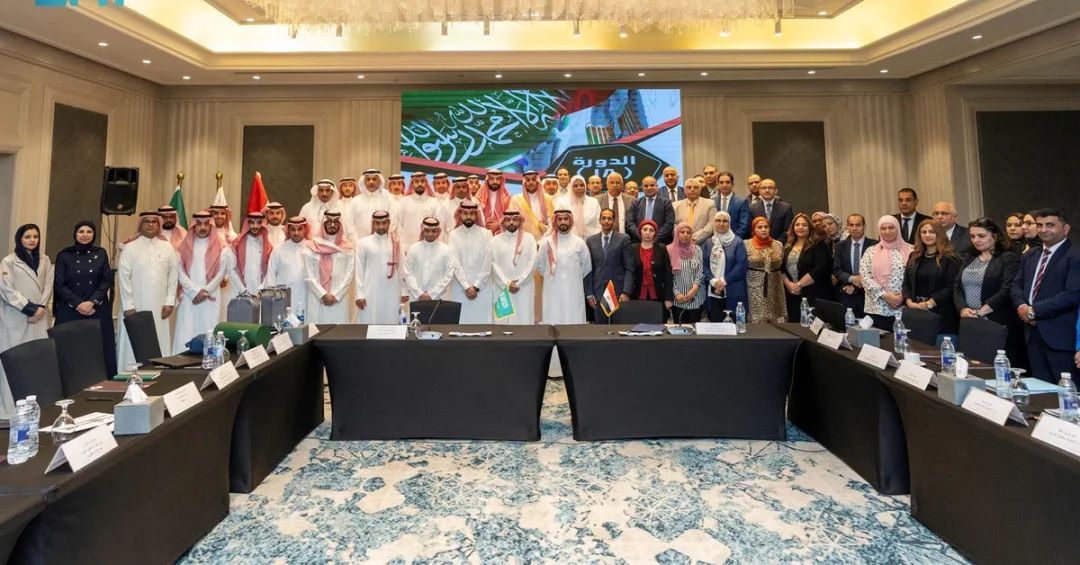
Saudi Arabia and Egypt reinforced their strategic economic partnership during the first follow-up meeting of the Saudi-Egyptian Joint Committee, held in Cairo on October 9-10, 2024. The meeting, chaired by Abdulaziz Al-Sakran, Deputy Governor for International Relations at the Saudi General Authority of Foreign Trade, and Dr. Amani Al-Wasal, head of the Agreements and Foreign Trade Sector at the Egyptian Ministry of Industry and Trade, aimed to monitor the implementation of recommendations from the committee’s 18th session and explore new avenues for bilateral cooperation. This high-level gathering underscores the deepening ties between the two nations and their shared commitment to advancing economic integration.
The timing of this meeting is significant, as trade between Saudi Arabia and Egypt surged to approximately $8 billion in the first half of 2024, a 41% increase compared to the same period last year. This remarkable growth reflects the effectiveness of the joint committee’s work and the mutual determination to strengthen economic relations. With both countries pursuing ambitious national development agendas—Saudi Arabia’s Vision 2030 and Egypt’s Vision 2030—the collaboration holds promise for further enhancing trade, investment, and strategic alignment. How might this partnership shape the broader regional economic landscape?
Context and Background
The Saudi-Egyptian Joint Committee has long served as a vital platform for fostering economic, cultural, and technical cooperation between the two nations. Established to facilitate dialogue and coordinate policies, the committee has been instrumental in addressing shared challenges and unlocking opportunities. Its 18th session, held previously, laid out a comprehensive set of recommendations aimed at boosting trade, investment, and sectoral collaboration. The follow-up meeting in Cairo is a critical step in ensuring these recommendations translate into tangible outcomes.
Why is this follow-up meeting so crucial now? The global economic landscape is evolving rapidly, with supply chain disruptions, shifting energy dynamics, and emerging market opportunities. For Saudi Arabia and Egypt, staying agile and aligned is essential to navigate these changes effectively. By reviewing progress and identifying obstacles, the committee can fine-tune strategies to maximize mutual benefits. This meeting not only reaffirms the strong bilateral ties but also sets the stage for deeper integration in key sectors such as energy, industry, and technology.
Moreover, the presence of representatives from over 15 Saudi ministries and agencies, along with key institutions like the Saudi Central Bank and the Federation of Saudi Chambers, highlights the whole-of-government approach driving this partnership. It signals that both countries are committed to leveraging their respective strengths to achieve shared prosperity.
Key Details
During the two-day meeting, the follow-up team focused on several core objectives: monitoring the implementation of the strategic directions set by both countries, reviewing the progress of joint committee recommendations and initiatives, identifying challenges and proposing solutions, and exploring new opportunities to strengthen bilateral economic relations. The discussions were comprehensive, covering a wide range of sectors from trade and investment to culture, education, health, and technology.
The meeting was attended by a substantial Saudi delegation representing ministries of commerce, energy, culture, investment, education, health, human resources and social development, communications and information technology, sport, finance, industry and mineral resources, tourism, environment, water and agriculture, transport and logistic services, municipalities and housing, Islamic affairs, dawah and guidance, and media. Also present were representatives from the Saudi Central Bank, the General Authority for Foreign Trade, the Saudi Conventions and Exhibitions General Authority, the Saudi Food and Drug Authority, the Saudi Fund for Development, the Technical and Vocational Training Corporation, and the Federation of Saudi Chambers. This broad participation underscores the multifaceted nature of Saudi-Egyptian cooperation.
Trade data shared during the meeting revealed that metal products, plastics, and their derivatives were among the leading Saudi exports to Egypt, while metal products, copper, and their derivatives were prominent Egyptian imports. This exchange highlights the complementary nature of the two economies and the potential for further growth. What new opportunities might arise from these existing trade patterns? The committee’s work aims to answer that question by fostering innovation and diversification.
International and Regional Impact
The strengthening of Saudi-Egyptian economic ties carries significant implications for the broader Middle East and North Africa region. As two of the largest economies in the Arab world, their collaboration can drive regional integration, stability, and prosperity. Increased trade and investment flows between them can serve as a catalyst for other countries to deepen their own economic partnerships, potentially leading to a more interconnected and resilient regional economy.
On the international stage, a robust Saudi-Egyptian partnership enhances the influence of both nations in global forums. It allows them to present a united front on key issues such as energy security, sustainable development, and trade liberalization. Moreover, it attracts attention from global investors and multinational corporations looking to access the combined market of over 130 million people. How will this evolving alliance shape the geopolitical and economic dynamics of the region?
Furthermore, the meeting in Cairo sends a positive signal to the international community about the stability and attractiveness of the Saudi and Egyptian markets. It demonstrates their commitment to open trade and investment, which is essential for attracting foreign direct investment and fostering innovation. As both countries continue to implement reforms and improve their business environments, the joint committee’s efforts will be instrumental in unlocking new avenues for growth.
Economic and Strategic Significance
The 41% increase in bilateral trade to $8 billion in the first half of 2024 is a testament to the effectiveness of Saudi-Egyptian economic diplomacy. This growth is particularly impressive given the global economic uncertainties. It reflects not only the resilience of both economies but also the success of targeted initiatives to boost trade. The joint committee’s follow-up meeting is a key mechanism for sustaining this momentum by ensuring that agreed-upon measures are implemented and bottlenecks are addressed promptly.
Strategically, the partnership aligns with Saudi Arabia’s Vision 2030, which aims to diversify the economy away from oil dependence and expand non-oil trade. Egypt, with its large market and strategic location, is a vital partner in this endeavor. Similarly, Egypt’s Vision 2030 seeks to enhance economic competitiveness and attract investment, making Saudi Arabia a crucial ally. By working together, both nations can achieve their objectives more efficiently and effectively.
The meeting also highlighted the importance of sectors such as renewable energy, tourism, and technology, where both countries have significant potential. For instance, Saudi Arabia’s expertise in solar energy and Egypt’s growing renewable sector could lead to joint projects that advance sustainability goals. In tourism, cultural exchanges and joint promotional efforts could attract more visitors to both destinations, boosting economic activity and cultural understanding. What role will the private sector play in driving these initiatives forward?
Vision 2030 Alignment
The Saudi-Egyptian Joint Committee’s follow-up meeting is a clear embodiment of the principles and objectives of Saudi Arabia’s Vision 2030. By fostering international partnerships and enhancing trade, it directly supports the Vision’s goal of transforming Saudi Arabia into a global investment powerhouse and a hub connecting three continents. The committee’s work also aligns with the Vision’s emphasis on economic diversification, as it opens new markets for Saudi non-oil products and services.
Moreover, the meeting underscores the importance of regional cooperation in achieving sustainable development. Saudi Arabia’s leadership in promoting such collaborations reflects its commitment to stability and prosperity in the Arab world. As the Kingdom continues to implement Vision 2030, partnerships like this one with Egypt will be crucial in realizing the ambitious targets set for 2030 and beyond. The follow-up meeting in Cairo is not just a diplomatic success; it is a strategic investment in a shared future.
In conclusion, the Saudi-Egyptian Joint Committee’s follow-up meeting in Cairo marks another milestone in the enduring partnership between two brotherly nations. It reaffirms their dedication to economic integration and mutual growth, setting the stage for even greater achievements in the years to come. As both countries work hand in hand to overcome challenges and seize opportunities, they are building a model of cooperation that can inspire the entire region.
20 Questions
Q1. What was the purpose of the Saudi-Egyptian Joint Committee’s follow-up meeting in Cairo?
A1. The meeting aimed to monitor the implementation of the 18th session’s recommendations, review progress, identify challenges, and explore new opportunities to strengthen bilateral economic relations between Saudi Arabia and Egypt.
Q2. Who chaired the meeting from the Saudi side?
A2. The Saudi side was chaired by Abdulaziz Al-Sakran, Deputy Governor for International Relations at the Saudi General Authority for Foreign Trade.
Q3. Who chaired the meeting from the Egyptian side?
A3. The Egyptian side was chaired by Dr. Amani Al-Wasal, head of the Agreements and Foreign Trade Sector at the Egyptian Ministry of Industry and Trade.
Q4. When and where did the meeting take place?
A4. The meeting took place in Cairo on October 9-10, 2024.
Q5. What was the value of trade between Saudi Arabia and Egypt in the first half of 2024?
A5. Trade between the two countries reached approximately $8 billion in the first half of 2024, marking a 41% increase compared to the same period last year.
Q6. What were the leading Saudi exports to Egypt?
A6. Leading Saudi exports to Egypt included metal products, plastics, and their derivatives.
Q7. What were the prominent Egyptian exports to Saudi Arabia?
A7. Prominent Egyptian exports to Saudi Arabia included metal products, copper, and their derivatives.
Q8. Which Saudi ministries and agencies participated in the meeting?
A8. Representatives from ministries of commerce, energy, culture, investment, education, health, human resources, communications, sport, finance, industry, tourism, environment, transport, municipalities, Islamic affairs, and media, among others, participated.
Q9. What was the main focus of the meeting?
A9. The meeting focused on monitoring strategic directions, reviewing joint committee recommendations, identifying challenges, proposing solutions, and exploring new opportunities for economic cooperation.
Q10. How does this meeting benefit Saudi Arabia’s Vision 2030?
A10. It supports Vision 2030 by enhancing non-oil trade, attracting investment, and strengthening international partnerships, aligning with the goal of economic diversification and global engagement.
Q11. What sectors were highlighted for potential cooperation?
A11. Sectors such as renewable energy, tourism, technology, and industry were highlighted for their potential to deepen bilateral cooperation and drive sustainable growth.
Q12. How many Saudi entities were represented at the meeting?
A12. Over 15 Saudi ministries and agencies, along with institutions like the Saudi Central Bank and the Federation of Saudi Chambers, were represented, demonstrating a comprehensive approach.
Q13. What is the significance of the 41% increase in trade?
A13. The increase reflects the effectiveness of economic diplomacy, the resilience of both economies, and the success of initiatives to boost trade, setting a positive trajectory for future growth.
Q14. What role does the Saudi General Authority for Foreign Trade play?
A14. It leads Saudi Arabia’s efforts to enhance international trade relations, support exporters, and negotiate agreements, playing a key role in the joint committee’s work.
Q15. How does this partnership impact regional stability?
A15. It promotes economic integration and stability in the Middle East and North Africa, serving as a model for regional cooperation and attracting global investment.
Q16. What are the expected outcomes of the follow-up meeting?
A16. Expected outcomes include accelerated implementation of recommendations, resolution of trade barriers, and identification of new projects to further boost bilateral trade and investment.
Q17. How does Egypt’s Vision 2030 align with this cooperation?
A17. Egypt’s Vision 2030 seeks economic diversification and investment, making Saudi Arabia a key partner. The cooperation supports both nations’ goals for sustainable development.
Q18. What challenges were discussed at the meeting?
A18. Challenges such as regulatory hurdles, logistical issues, and market access barriers were discussed, with solutions proposed to overcome them and facilitate smoother trade.
Q19. How often does the Saudi-Egyptian Joint Committee meet?
A19. The committee meets periodically, with follow-up meetings held as needed to ensure continuous progress on agreed initiatives and recommendations.
Q20. What message does this meeting send to the international community?
A20. It signals the strength and stability of Saudi-Egyptian relations, their commitment to open trade, and the attractiveness of their markets to global investors and partners.
Reader Feedback
We value your thoughts. Please share your feedback on this article.
Your feedback helps us improve our coverage.
Related articles
 Pakistani PM Receives Saudi Minister of Investment
 Reef Saudi Launches International Training Program for Farmers
 Egyptian Investment Minister Meets with Saudi General Authority of Foreign Trade Undersecretary
 SOCPA to Host Accounting Technologies Conference on October 16-19
 FII Institute to Hold News Conference on October 15 for 8th FII
 Estidamah Launches New Program for Sustainable Greenhouse Crops