


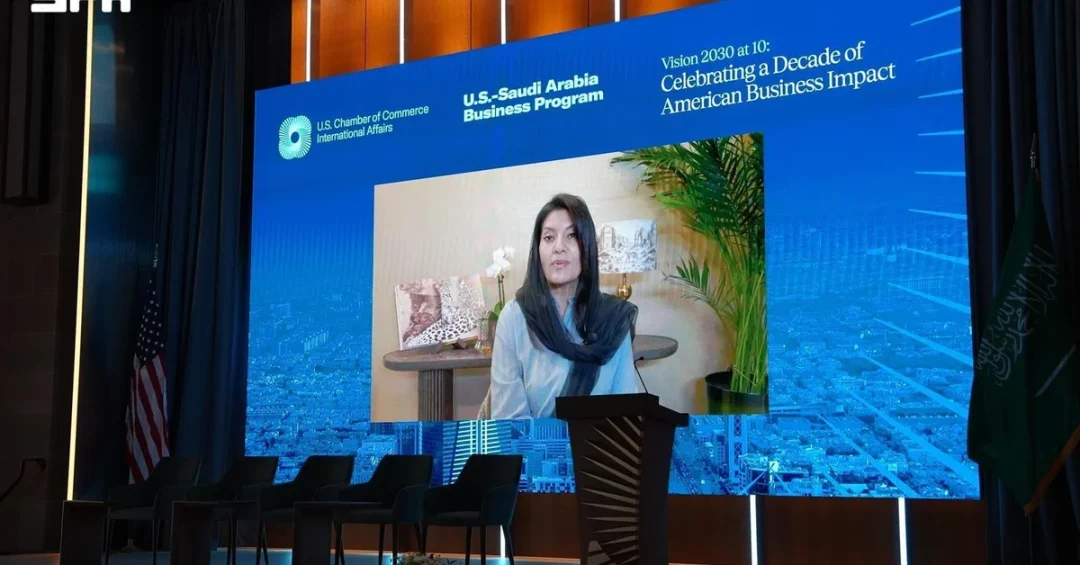
The U.S. Chamber of Commerce has released a comprehensive publication showcasing the achievements of Saudi Vision 2030 and highlighting the contributions of over 50 U.S. companies to its implementation. The publication underscores the role of American expertise, technology, and investment in advancing Saudi Arabia’s transformative agenda while strengthening bilateral trade and investment relations between the two nations.
Context and Background
Saudi Vision 2030, launched in 2016, aims to diversify the Kingdom’s economy, reduce its dependence on oil, and foster sustainable development across various sectors. Over the past decade, Saudi Arabia has achieved significant milestones, including a reduction in unemployment, an increase in homeownership, and a surge in tourism. The U.S. Chamber of Commerce’s publication highlights the pivotal role U.S. businesses have played in supporting these goals, leveraging their expertise in energy, manufacturing, finance, digital technologies, and more.
Key Details
In the foreword of the publication, Steve Lutes, U.S. Chamber of Commerce Vice President for Middle East Affairs, emphasized the long-standing partnership between the U.S. and Saudi Arabia. He noted that this relationship has evolved beyond commercial transactions to focus on innovation and transformation. Lutes also announced plans to release an updated edition of the publication during the Future Investment Initiative (FII) conference in Riyadh. Additionally, Princess Reema bint Bandar bin Sultan, Saudi Ambassador to the United States, highlighted the Kingdom’s economic achievements, including the growth of non-oil activities to over 50% of GDP and the reduction of unemployment to 6.4%.
Implications and Impact
The publication reflects the deepening economic and strategic ties between the U.S. and Saudi Arabia. It highlights how U.S. companies have contributed to the development of new industries, advancements in education and healthcare, and investments in infrastructure and tourism. This collaboration not only benefits Saudi Arabia’s economic diversification but also opens new opportunities for U.S. businesses in emerging sectors such as artificial intelligence, financial technology, and smart cities.
Vision 2030 Alignment
The achievements highlighted in the publication align closely with Saudi Vision 2030’s objectives of fostering innovation, enhancing quality of life, and creating a diversified, sustainable economy. The ongoing partnership between the U.S. and Saudi Arabia exemplifies the Kingdom’s commitment to global collaboration and its leadership in driving transformative change on both regional and international levels.
20 Questions
Q1. What is the focus of the U.S. Chamber of Commerce publication?
A1. The publication highlights the achievements of Saudi Vision 2030 and the contributions of over 50 U.S. companies to its implementation.
Q2. Who authored the foreword of the publication?
A2. Steve Lutes, U.S. Chamber of Commerce Vice President for Middle East Affairs, authored the foreword.
Q3. What sectors does the U.S.-Saudi partnership encompass?
A3. The partnership spans energy, manufacturing, finance, digital technologies, artificial intelligence, sports, tourism, and infrastructure.
Q4. What is Saudi Vision 2030?
A4. Saudi Vision 2030 is a strategic framework launched in 2016 to diversify Saudi Arabia’s economy and reduce its dependence on oil.
Q5. What economic achievements did Princess Reema highlight?
A5. Princess Reema noted the growth of non-oil activities to over 50% of GDP and a reduction in unemployment to 6.4%.
Q6. How has Saudi Arabia’s tourism sector performed?
A6. Saudi Arabia welcomed 123 million tourists in 2026, surpassing its target of 100 million visitors.
Q7. What is the U.S.-Saudi Arabia Business Program?
A7. It is a program dedicated to strengthening bilateral trade and investment ties and connecting U.S. companies with opportunities in Saudi Arabia.
Q8. What is the Future Investment Initiative (FII)?
A8. The FII is an annual conference in Riyadh focused on global investment and economic transformation.
Q9. How has Saudi Arabia’s homeownership rate changed?
A9. The homeownership rate has risen from 47% to 66%.
Q10. What role do U.S. companies play in Saudi Vision 2030?
A10. U.S. companies contribute expertise, technology, and investment to support Saudi Arabia’s economic diversification and innovation.
Q11. What is the significance of the U.S.-Saudi partnership?
A11. The partnership fosters innovation, sustainable growth, and economic diversification in both countries.
Q12. What are the key sectors for U.S. investment in Saudi Arabia?
A12. Key sectors include AI, capital markets, defense, digital economy, energy, financial technology, healthcare, infrastructure, manufacturing, and tourism.
Q13. What is the goal of Saudi Vision 2030?
A13. The goal is to create a diversified, sustainable economy and enhance quality of life in Saudi Arabia.
Q14. How has Saudi Arabia’s unemployment rate changed?
A14. The unemployment rate has decreased from 12% to 6.4%.
Q15. What is the role of the U.S. Chamber of Commerce in Saudi Arabia?
A15. The Chamber strengthens trade ties and connects U.S. companies with opportunities in Saudi Arabia.
Q16. What is the significance of non-oil activities in Saudi Arabia?
A16. Non-oil activities now account for over 50% of Saudi Arabia’s GDP, reflecting successful economic diversification.
Q17. What is the focus of the updated publication edition?
A17. The updated edition will highlight new achievements and opportunities in the U.S.-Saudi partnership.
Q18. How does Saudi Arabia benefit from U.S. expertise?
A18. U.S. expertise supports the development of new industries, education, healthcare, and infrastructure in Saudi Arabia.
Q19. What is the significance of Saudi Arabia’s tourism growth?
A19. Tourism growth reflects Saudi Arabia’s success in diversifying its economy and becoming a global travel destination.
Q20. How does the publication align with Saudi Vision 2030?
A20. The publication showcases how U.S. contributions advance Saudi Vision 2030’s goals of innovation, diversification, and sustainable growth.
Reader Feedback
We value your thoughts. Please share your feedback on this article.
Your feedback helps us improve our coverage.