


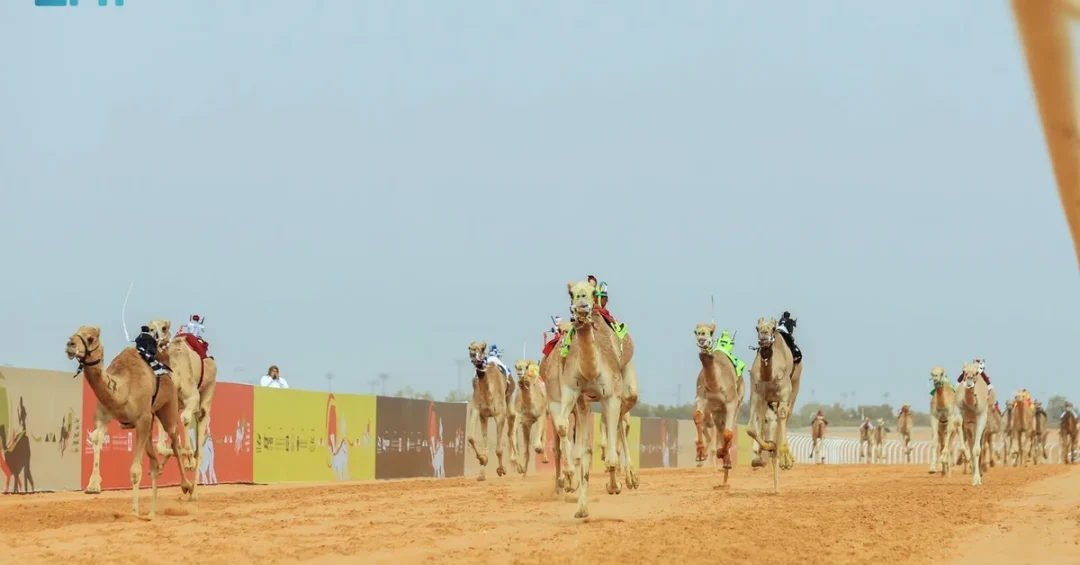
The Custodian of the Two Holy Mosques Camel Festival concluded in Riyadh with elite camel races featuring a combined market value of SAR262.5 million. Held from January 27 to February 5, 2025, the festival’s final day saw 75 top-tier camels from the fifth group compete, each averaging a market value of SAR3.5 million. The event, organized under the patronage of the Saudi Camel Federation, showcased the Kingdom’s rich cultural heritage and its commitment to preserving and promoting traditional sports.
Context and Background
The Custodian of the Two Holy Mosques Camel Festival is one of Saudi Arabia’s premier cultural and sporting events, drawing participants and spectators from across the globe. This year’s edition featured 225 races with over 2,112 camel owners and 7,300 camels vying for prizes exceeding SAR70 million. The festival underscores Saudi Arabia’s dedication to nurturing its heritage while aligning with Vision 2030’s goals of enhancing cultural tourism and international engagement.
Key Details
Director of competitions and registration at the Saudi Camel Federation, Marwan Al-Juhani, highlighted the exceptional quality of the camels in the final races. Some of these camels, considered among the finest in the Kingdom and the region, are valued as high as SAR10 million. Many have achieved significant success in previous camel festivals and competitions. International participation was robust, with more than ten countries represented, including Jordan, Kuwait, Qatar, Bahrain, the United States, Poland, Oman, Switzerland, the United Kingdom, Algeria, France, the United Arab Emirates, Yemen, and Germany.
Implications and Impact
The festival’s scale and international turnout highlight Saudi Arabia’s growing role as a hub for cultural exchange and tourism. By attracting participants from Europe, the Americas, and the Middle East, the event strengthens diplomatic and economic ties while showcasing the Kingdom’s modern yet tradition-rich identity. The high market value of the camels also reflects the thriving camel breeding industry, which contributes to the national economy and rural development.
Vision 2030 Alignment
The Custodian of the Two Holy Mosques Camel Festival directly supports Vision 2030 by promoting cultural heritage as a driver of tourism and international collaboration. As Saudi Arabia continues to diversify its economy, events like this festival enhance the Kingdom’s global soft power, attract visitors, and create economic opportunities for local communities. Looking ahead, such initiatives will play a key role in positioning Saudi Arabia as a leading destination for cultural and sports tourism.
20 Questions
Q1. What was the total market value of camels on the final day of the Custodian of the Two Holy Mosques Camel Festival?
A1. The total market value of camels on the final day reached SAR262.5 million, reflecting the elite quality of the competing animals.
Q2. When was the festival held?
A2. The festival took place in Riyadh from January 27 to February 5, 2025.
Q3. How many camels competed on the final day?
A3. A total of 75 elite camels from the fifth group competed on the final day of the festival.
Q4. What was the average market value per camel on the final day?
A4. The average market value per camel on the final day was SAR3.5 million.
Q5. Who is Marwan Al-Juhani?
A5. Marwan Al-Juhani is the Director of competitions and registration at the Saudi Camel Federation.
Q6. What is the highest value reported for a single camel in the festival?
A6. Some camels in the festival are valued as high as SAR10 million, considered among the finest in the region.
Q7. How many races were held during the festival?
A7. The festival featured 225 races over its duration.
Q8. How many camel owners participated in the festival?
A8. Over 2,112 camel owners took part in the festival.
Q9. How many camels were entered in the festival overall?
A9. A total of 7,300 camels competed in the festival.
Q10. What was the total prize money for the festival?
A10. The festival offered prizes exceeding SAR70 million.
Q11. Which countries participated in the festival besides Saudi Arabia?
A11. Participating countries included Jordan, Kuwait, Qatar, Bahrain, the US, Poland, Oman, Switzerland, the UK, Algeria, France, the UAE, Yemen, and Germany.
Q12. What role does the Saudi Camel Federation play in the festival?
A12. The Saudi Camel Federation organizes and oversees the festival, ensuring high standards in competitions and registration.
Q13. How does the festival promote Saudi Arabia’s cultural heritage?
A13. The festival celebrates the long-standing tradition of camel breeding and racing, a key element of Saudi heritage.
Q14. How does the festival align with Vision 2030?
A14. The festival supports Vision 2030 by boosting cultural tourism, diversifying the economy, and enhancing international cultural exchange.
Q15. What economic impact does the festival have on the camel industry?
A15. The high market values and prize money stimulate the camel breeding industry, creating economic opportunities for breeders and related businesses.
Q16. Were there any international participants from Europe?
A16. Yes, participants from Poland, Switzerland, the United Kingdom, France, and Germany took part in the festival.
Q17. What types of camels competed in the final races?
A17. The final races featured elite camels from the fifth group, which included some of the finest breeding stock in the Kingdom.
Q18. How does the festival contribute to Saudi Arabia’s global soft power?
A18. By attracting international participants and media coverage, the festival showcases Saudi Arabia’s cultural richness and openness to the world.
Q19. What is the significance of the festival being named after the Custodian of the Two Holy Mosques?
A19. The name reflects royal patronage and the importance of the event in preserving Saudi traditions under the leadership of the King.
Q20. What are the future plans for the festival?
A20. The festival is expected to grow in scale and international participation, further strengthening its role in cultural tourism and Vision 2030.
Reader Feedback
We value your thoughts. Please share your feedback on this article.
Your feedback helps us improve our coverage.