


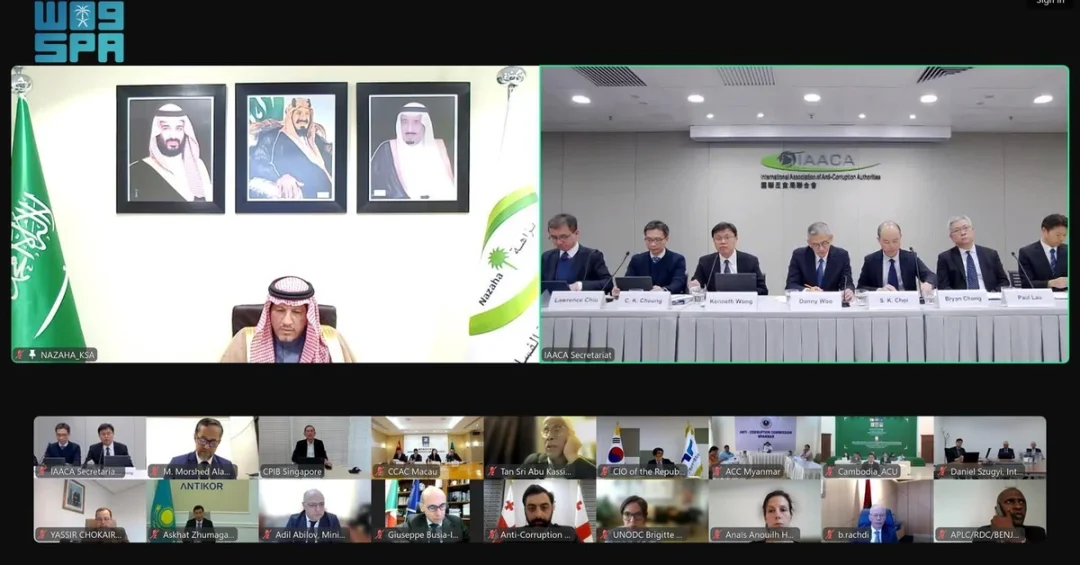
Saudi Arabia, represented by the Oversight and Anti-Corruption Authority (Nazaha), was elected a member of the Executive Committee of the International Association of Anti-Corruption Authorities (IAACA) during its 14th General Meeting held via videoconference on February 6, 2025. The election underscores the international community’s recognition of the Kingdom’s leadership and effective efforts in combating corruption globally.
Context and Background
The IAACA is an independent, non-political organization comprising over 180 anti-corruption agencies worldwide. It promotes the implementation of the United Nations Convention against Corruption (UNCAC) and supports the UN Sustainable Development Goals, particularly those targeting the reduction of corruption and bribery by 2030. Saudi Arabia’s election to the Executive Committee reflects its growing role in shaping international anti-corruption policies and frameworks.
Key Details
Nazaha President Mazin Al-Kahmous delivered the Kingdom’s address during the meeting, praising IAACA’s vital role in fostering international cooperation, transparency, and integrity. He emphasized the association’s mission to facilitate knowledge exchange among countries and institutions dedicated to combating corruption, as well as developing effective strategies at both local and international levels. Al-Kahmous also stressed the importance of building a network of international partners to support the implementation of laws and policies related to transparency and accountability.
International Implications
Saudi Arabia’s election to the Executive Committee strengthens its position as a key player in global anti-corruption efforts. The move enhances the Kingdom’s ability to collaborate with other nations and organizations to reduce corruption and bribery, aligning with international standards and the UN’s 2030 Agenda. This development also signals increased trust in Saudi institutions and their commitment to transparency.
Vision 2030 Alignment
Saudi Arabia’s active participation in IAACA and its election to the Executive Committee are closely tied to the goals of Vision 2030, which emphasizes good governance, accountability, and the rule of law. By reinforcing its anti-corruption frameworks, the Kingdom is building a more transparent and efficient environment for investment, economic growth, and social development, contributing to the realization of a vibrant and diversified Saudi society.
20 Questions
Q1. What is the International Association of Anti-Corruption Authorities (IAACA)?
A1. IAACA is an independent, non-political organization with over 180 anti-corruption agencies from different countries, dedicated to promoting international cooperation against corruption.
Q2. When was Saudi Arabia elected to the IAACA Executive Committee?
A2. Saudi Arabia was elected during the 14th General Meeting of IAACA, held via videoconference on February 6, 2025.
Q3. Which Saudi authority represented the Kingdom at the meeting?
A3. The Oversight and Anti-Corruption Authority (Nazaha) represented Saudi Arabia.
Q4. Who is the President of Nazaha?
A4. Mazin Al-Kahmous is the President of the Oversight and Anti-Corruption Authority (Nazaha).
Q5. What does the election to the Executive Committee signify?
A5. It reflects international recognition of Saudi Arabia’s efforts and achievements in combating corruption.
Q6. How many member agencies does IAACA have?
A6. IAACA includes over 180 anti-corruption agencies from various countries.
Q7. What is the primary goal of IAACA?
A7. IAACA aims to promote the implementation of the United Nations Convention against Corruption (UNCAC).
Q8. Does IAACA support the UN Sustainable Development Goals?
A8. Yes, IAACA works to achieve UN Sustainable Development Goals, particularly those targeting corruption reduction by 2030.
Q9. What did President Al-Kahmous emphasize in his address?
A9. He highlighted IAACA’s role in facilitating knowledge exchange and developing effective anti-corruption strategies.
Q10. How does Saudi Arabia’s election benefit global anti-corruption efforts?
A10. It strengthens international partnerships and supports the implementation of transparency and accountability policies.
Q11. Is IAACA a political organization?
A11. No, IAACA is an independent, non-political anti-corruption organization.
Q12. What is the role of the Executive Committee?
A12. The Executive Committee oversees IAACA’s activities and strategic direction, representing member agencies.
Q13. How does this election align with Saudi Vision 2030?
A13. It supports Vision 2030’s goals of good governance, accountability, and transparency.
Q14. What international convention does IAACA promote?
A14. IAACA promotes the United Nations Convention against Corruption (UNCAC).
Q15. How many General Meetings has IAACA held?
A15. The 14th General Meeting took place in February 2025.
Q16. Did Al-Kahmous stress any specific actions?
A16. He stressed building a network of international partners to support anti-corruption laws and policies.
Q17. What types of events does IAACA organize?
A17. IAACA organizes conferences, seminars, workshops, and training programs on anti-corruption.
Q18. How does IAACA facilitate expertise exchange?
A18. Through its network and events, IAACA enables sharing of best practices among anti-corruption authorities.
Q19. Is Saudi Arabia a founding member of IAACA?
A19. The article does not specify founding membership; however, Saudi Arabia has been an active participant.
Q20. What is the significance of the videoconference format?
A20. Using videoconference demonstrates IAACA’s adaptability and commitment to continuous collaboration despite geographical distances.
Reader Feedback
We value your thoughts. Please share your feedback on this article.
Your feedback helps us improve our coverage.