


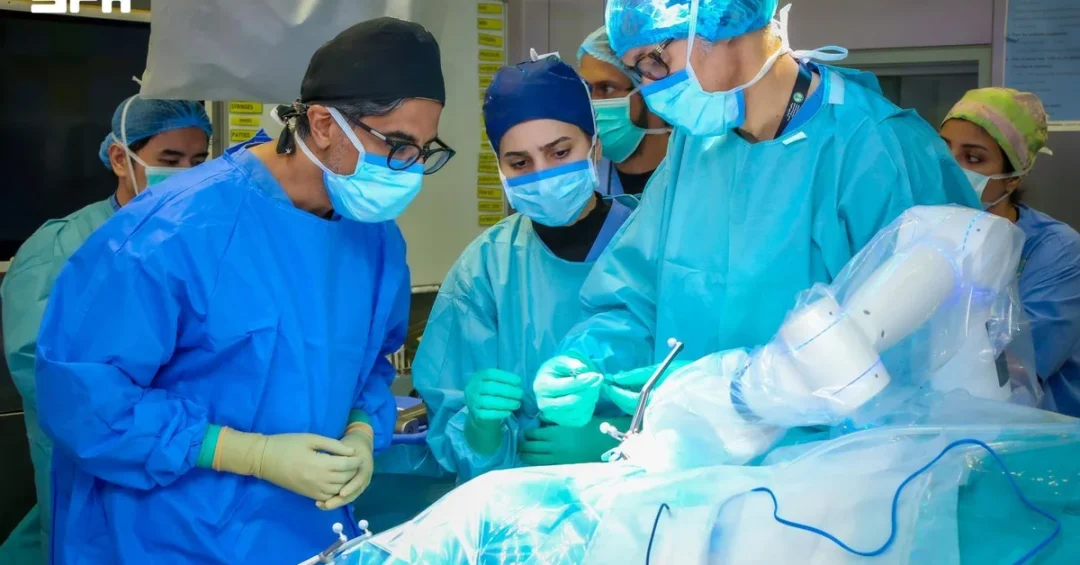
King Faisal Specialist Hospital and Research Centre (KFSH) has successfully performed Saudi Arabia’s first Laser Interstitial Thermal Therapy (LITT) procedure, a minimally invasive technique that expands treatment options for selected patients with drug-resistant focal epilepsy and certain brain tumors. The landmark procedure, announced by the Saudi Press Agency, was carried out at KFSH’s Neuroscience Centre of Excellence in Riyadh, marking a significant advance in the Kingdom’s neurosurgical capabilities and reinforcing its position as a regional leader in specialized healthcare.
The first patient treated with LITT was discharged from the hospital within 24 hours of the procedure, with no complications reported. The outcome underscores the potential of this approach to shorten hospital stays, accelerate recovery, and enable suitable patients to return to their daily activities sooner than with conventional open surgical methods. The achievement reflects the broader transformation of Saudi Arabia’s healthcare sector under Vision 2030, which prioritizes medical innovation, patient-centered care, and the development of world-class clinical expertise within the Kingdom. How does a procedure like this reshape what patients can expect from modern neurosurgery?
Context and Background: A New Era in Saudi Neurosurgery
Laser Interstitial Thermal Therapy represents a paradigm shift in the treatment of complex neurological conditions. Unlike traditional open brain surgery, which typically requires a large incision and an opening in the skull to reach the treatment site, LITT involves inserting thin laser fibers through a small opening in the skull and guiding them precisely to the target area. Magnetic resonance imaging (MRI) is used to confirm the fibers’ exact position and to monitor heat distribution in real time, allowing the medical team to deliver controlled thermal energy to the target tissue while minimizing impact on surrounding healthy brain tissue.
The technique is particularly valuable for patients whose seizure foci or tumors are located near highly sensitive areas of the brain, where open surgery carries elevated risk. For these patients, LITT offers a less invasive alternative that may reduce the extent of surgical intervention, shorten hospital stays, and support faster recovery. The introduction of LITT at KFSH builds on the hospital’s long-standing expertise in diagnosing and treating complex neurological conditions through an advanced program that combines clinical expertise, precision neuroimaging, and minimally invasive surgical techniques.
Why does the arrival of LITT in Saudi Arabia matter for patients across the region? Dr. Faisal Alotaibi, Functional and Epilepsy Surgery Consultant at KFSH in Riyadh, explained that the first patient was selected following a thorough multidisciplinary assessment involving neurosurgeons, radiologists, and epilepsy specialists to determine whether the treatment was appropriate. This rigorous selection process reflects KFSH’s commitment to patient safety and personalized care, ensuring that LITT is used only in cases where it offers clear clinical advantages over conventional approaches.
Key Details: How LITT Works and Who It Helps
The LITT procedure begins with advanced neuroimaging to map the precise location of the target tissue. During the procedure, thin laser fibers are inserted through a small opening in the skull and guided to the target area. Real-time MRI monitoring allows the medical team to verify the fibers’ position and track heat distribution, ensuring that thermal energy is delivered with exceptional precision. This level of control is critical when treating lesions or seizure foci located near eloquent brain regions responsible for speech, movement, or memory.
For patients with epilepsy, the assessment process includes specialized techniques to accurately identify the source of seizures, including stereoelectroencephalography (SEEG), alongside neuroimaging and multidisciplinary clinical assessments. SEEG involves placing electrodes within the brain to record electrical activity and pinpoint the seizure onset zone with high accuracy. Only after this comprehensive evaluation is a determination made about whether a patient is suitable for LITT. Dr. Alotaibi noted that the technique enables the treatment of selected cases that were previously considered high risk because of their proximity to highly sensitive areas of the brain.
KFSH is now working to expand the use of LITT by training more clinical teams and gradually increasing the number of eligible patients. This phased approach ensures that the technique is adopted safely and effectively, with outcomes closely monitored. What does this mean for the future of epilepsy care in the Kingdom? It signals a shift toward more personalized, less invasive treatment pathways that prioritize both efficacy and quality of life for patients and their families.
International and Regional Impact: Elevating Saudi Healthcare Standing
The successful introduction of LITT at KFSH reinforces Saudi Arabia’s growing reputation as a destination for advanced medical care. King Faisal Specialist Hospital and Research Centre was ranked first in the Middle East and Africa and 12th globally among the world’s top 250 academic medical centers for 2026. It was also recognized as the most valuable healthcare brand in Saudi Arabia and the Middle East for 2026, according to Brand Finance, and was listed by Newsweek among the World’s Best Hospitals, World’s Best Smart Hospitals, and World’s Best Specialized Hospitals for 2026.
These accolades reflect a sustained institutional commitment to excellence, research, and innovation. For patients across the Gulf region and beyond, the availability of LITT in Riyadh reduces the need to travel abroad for specialized neurosurgical care. It also positions KFSH as a center of excellence that can attract international collaborations, host clinical trials, and contribute to the global body of knowledge on minimally invasive neurosurgery. How might this development influence medical tourism and cross-border referrals in the region?
The procedure also aligns with Saudi Arabia’s broader efforts to enhance healthcare infrastructure and build a knowledge-based economy. By adopting cutting-edge technologies and investing in specialized training, the Kingdom is strengthening its ability to retain top medical talent and provide citizens with world-class care close to home. This, in turn, supports the objectives of Vision 2030 by improving health outcomes, enhancing quality of life, and reducing reliance on overseas treatment.
Economic and Strategic Significance: Value Beyond the Operating Room
The economic implications of introducing LITT extend beyond the immediate benefits to patients. Shorter hospital stays and faster recovery times can reduce the overall cost of care for the healthcare system and for families. Patients who return to work and daily activities sooner contribute to economic productivity, while the reduced need for extensive rehabilitation and long-term medication management can ease pressure on healthcare resources.
Strategically, the adoption of LITT demonstrates Saudi Arabia’s commitment to medical innovation as a pillar of national development. The procedure requires significant investment in technology, training, and infrastructure, and KFSH’s ability to deliver it reflects the maturity of the Kingdom’s healthcare ecosystem. As more clinical teams are trained and the number of eligible patients grows, the benefits will multiply, creating a virtuous cycle of expertise, research, and improved outcomes.
What role will academic medical centers play in Saudi Arabia’s health transformation? KFSH’s model, which integrates clinical care, research, and education, offers a blueprint for other institutions. By fostering multidisciplinary collaboration and embracing precision medicine, Saudi Arabia is building a healthcare system that is not only advanced but also sustainable and patient-focused.
Vision 2030 Alignment: A Healthier, More Innovative Kingdom
The introduction of LITT at KFSH is a concrete example of how Vision 2030 is translating into tangible improvements in healthcare. The Vision’s Health Sector Transformation Program aims to restructure the sector, enhance quality and efficiency, and promote preventive care and innovation. By bringing advanced treatments like LITT to Saudi Arabia, KFSH is helping to reduce the need for citizens to seek care abroad, a key objective of the program.
Moreover, the successful procedure underscores the importance of investing in human capital. The multidisciplinary team involved in the first LITT case—neurosurgeons, radiologists, epilepsy specialists, and nurses—represents the caliber of talent that Saudi Arabia is nurturing through education and training initiatives. As KFSH expands its use of LITT and trains more teams, it will contribute to the development of a self-sufficient, world-class healthcare workforce.
Ultimately, the story of LITT at KFSH is a story of progress. It reflects a Kingdom that is embracing innovation, prioritizing the well-being of its people, and positioning itself as a global leader in specialized medicine. For patients with drug-resistant epilepsy and certain brain tumors, it offers new hope and new possibilities. And for Saudi Arabia, it is another step forward on the path to a healthier, more prosperous future.
20 Questions
Q1. What is Laser Interstitial Thermal Therapy (LITT)?
A1. LITT is a minimally invasive neurosurgical procedure that uses thin laser fibers guided by MRI to deliver controlled thermal energy to targeted brain tissue, offering an alternative to open surgery for selected patients.
Q2. Which hospital performed Saudi Arabia’s first LITT procedure?
A2. King Faisal Specialist Hospital and Research Centre (KFSH) in Riyadh performed the Kingdom’s first LITT procedure at its Neuroscience Centre of Excellence.
Q3. What conditions can LITT treat?
A3. LITT can treat selected patients with drug-resistant focal epilepsy and certain brain tumors, particularly when the target area is near sensitive brain regions.
Q4. How does LITT differ from traditional open brain surgery?
A4. LITT requires only a small opening in the skull and uses laser fibers, whereas open surgery needs a larger incision and skull opening, often resulting in longer recovery times.
Q5. How was the first patient selected for LITT?
A5. The patient underwent a thorough multidisciplinary assessment involving neurosurgeons, radiologists, and epilepsy specialists to determine suitability for the procedure.
Q6. What was the outcome for the first LITT patient?
A6. The patient was discharged within 24 hours with no complications reported, reflecting the potential for shorter hospital stays and faster recovery.
Q7. What role does MRI play in LITT?
A7. MRI confirms the precise position of the laser fibers and monitors heat distribution in real time, enabling controlled thermal energy delivery while protecting healthy tissue.
Q8. What is stereoelectroencephalography (SEEG)?
A8. SEEG is a specialized technique that places electrodes within the brain to accurately identify the source of seizures before determining if a patient is suitable for LITT.
Q9. Who is Dr. Faisal Alotaibi?
A9. Dr. Faisal Alotaibi is a Functional and Epilepsy Surgery Consultant at KFSH in Riyadh who explained the patient selection and the benefits of LITT.
Q10. How is KFSH expanding the use of LITT?
A10. KFSH is training more clinical teams and gradually increasing the number of eligible patients to ensure safe and effective adoption of the technique.
Q11. What are the advantages of LITT for patients?
A11. LITT may reduce surgical intervention, shorten hospital stays, support faster recovery, and allow patients to return to daily activities sooner than conventional methods.
Q12. Why is LITT important for epilepsy patients?
A12. For patients with drug-resistant focal epilepsy, LITT offers a less invasive option that can target seizure foci near sensitive areas with precision.
Q13. What recognition has KFSH received recently?
A13. KFSH was ranked first in the Middle East and Africa and 12th globally among top academic medical centers for 2026, and recognized as the most valuable healthcare brand in the region.
Q14. How does LITT align with Vision 2030?
A14. LITT supports Vision 2030 by enhancing healthcare innovation, reducing the need for treatment abroad, and improving quality of life for Saudi citizens.
Q15. What is the Neuroscience Centre of Excellence?
A15. It is a specialized center at KFSH that combines clinical expertise, precision neuroimaging, and minimally invasive techniques to treat complex neurological conditions.
Q16. Can LITT be used for brain tumors?
A16. Yes, LITT can be used for certain brain tumors, particularly those that are difficult to reach with open surgery due to their location.
Q17. What is the significance of this milestone for Saudi Arabia?
A17. It demonstrates the Kingdom’s advancing medical capabilities, reinforces its position as a regional healthcare leader, and expands treatment options for patients.
Q18. How does LITT impact hospital resources?
A18. Shorter hospital stays and faster recovery can reduce the overall cost of care and ease pressure on healthcare resources.
Q19. What training is required for LITT?
A19. Clinical teams require specialized training in stereotactic techniques, MRI thermometry, and multidisciplinary patient selection to perform LITT safely and effectively.
Q20. What does the future hold for LITT in Saudi Arabia?
A20. KFSH plans to expand LITT use by training more teams and increasing eligible patients, potentially making it a standard option for suitable cases across the Kingdom.
Reader Feedback
We value your thoughts. Please share your feedback on this article.
Your feedback helps us improve our coverage.
Related articles
 Saudi Health Minister Advances Uzbekistan Health Ties
 Saudi Health Minister Launches Digital Health Link with Uzbekistan
 Saudi Health Minister Signs Key Agreements in Uzbekistan
 Prince Sultan Cardiac Center Achieves Prestigious Magnet Accreditation
 International Conference on Biological Drugs and Vaccine Industry to Kick Off at Hail University Tomorrow
 ROSHN Group Partners with Sanad Association to Support Children with Cancer