


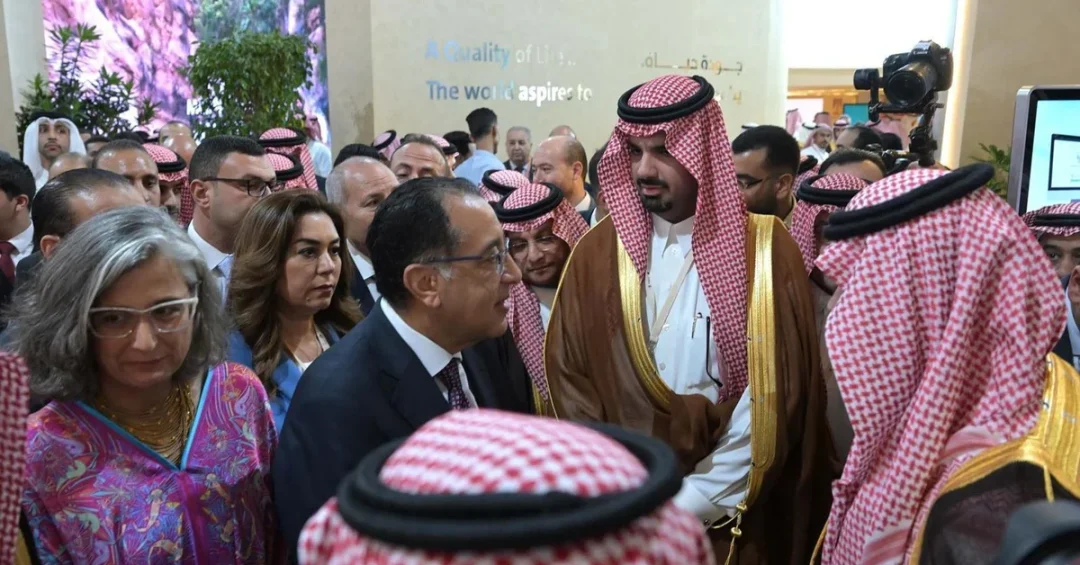
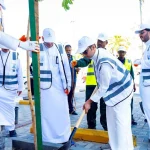
Egyptian Prime Minister Dr. Mostafa Madbouly and Prince Faisal bin Abdulaziz bin Ayyaf, head of the Saudi delegation, visited the Saudi pavilion at the 12th World Urban Forum in Cairo on November 5, 2024. The visit, reported by the Saudi Press Agency (SPA), underscored the Kingdom’s prominent role at the global gathering, which convened in the Egyptian capital from November 4 to 8 under the auspices of the United Nations Human Settlements Programme (UN-Habitat). The Saudi pavilion, organized by the Ministry of Municipalities and Housing, spans over 2,000 square meters and serves as a dynamic hub for dialogue, innovation, and partnership. It hosts 150 representatives from various Saudi entities and features more than 40 interactive activities, including workshops, meetings, and presentations. The visit highlighted the deepening ties between Saudi Arabia and Egypt and showcased the Kingdom’s commitment to sustainable urban development, a key pillar of Saudi Vision 2030. As the world grapples with rapid urbanization, Saudi Arabia’s participation signals its determination to shape a resilient and inclusive urban future, both regionally and globally.
The World Urban Forum, established by UN-Habitat, is the premier global conference on sustainable urbanization, bringing together government leaders, urban planners, academics, and private sector stakeholders. The 12th edition, themed “It All Starts at Home: Local Actions for Sustainable Cities and Communities,” focused on localizing the Sustainable Development Goals (SDGs) and addressing pressing urban challenges such as climate change, housing, and infrastructure. Saudi Arabia’s robust presence at the forum reflects its proactive approach to urban development, aligning with its Vision 2030 objectives to diversify the economy, enhance quality of life, and build world-class cities. The Saudi pavilion not only showcases the Kingdom’s achievements but also serves as a platform for knowledge exchange and international cooperation. With over 40 interactive activities, including immersive exhibits and dialogue sessions, the pavilion exemplifies Saudi Arabia’s commitment to fostering global partnerships and sharing its transformative urban journey.
Context and Background
Why does Saudi Arabia’s participation in the World Urban Forum matter so profoundly for the future of global cities? The Kingdom’s engagement comes at a critical juncture as the world confronts unprecedented urbanization rates. According to UN-Habitat, nearly 70% of the global population will live in cities by 2050, placing immense pressure on infrastructure, housing, and resources. Saudi Arabia, with its rapidly growing cities and ambitious giga-projects, is uniquely positioned to contribute innovative solutions. The Ministry of Municipalities and Housing, led by Minister Majid bin Abdullah Al-Hogail, has been at the forefront of Saudi Arabia’s urban transformation, implementing policies that prioritize sustainability, smart technology, and community well-being. The World Urban Forum provides a vital stage for the Kingdom to share its experiences and learn from other nations, reinforcing its role as a global leader in sustainable development.
The Saudi pavilion at the forum is a testament to the Kingdom’s comprehensive approach to urban planning. Spanning 2,000 square meters, it is one of the largest at the event and includes dedicated spaces for meetings, workshops, and dialogue sessions. The pavilion hosts 150 representatives from various Saudi entities, including the Ministry of Municipalities and Housing, the Royal Commission for Riyadh City, NEOM, the Red Sea Global, and the Public Investment Fund (PIF). These representatives are showcasing pioneering projects such as The Line at NEOM, a zero-carbon city, and the Diriyah Gate Development, which blends heritage with modernity. The pavilion also features presentations on successful Saudi urban initiatives, including the Makkah Route Initiative and the Smart City projects in Riyadh and Jeddah. By highlighting these achievements, Saudi Arabia demonstrates its capacity to transform urban landscapes and improve the quality of life for millions.
How does Saudi Arabia’s urban development strategy reflect its broader Vision 2030 goals? The Kingdom’s participation in the World Urban Forum is deeply intertwined with Vision 2030, launched in 2016 by Crown Prince Mohammed bin Salman. Vision 2030 aims to diversify the economy away from oil, enhance public services, and create vibrant, sustainable communities. Urban development is a cornerstone of this vision, with initiatives such as the Quality of Life Program and the National Transformation Program driving improvements in infrastructure, housing, and environmental sustainability. The Ministry of Municipalities and Housing has launched several strategic projects, including the “Munis” platform for municipal services and the “Baladi” initiative for urban beautification. These efforts are designed to make Saudi cities more livable, efficient, and inclusive, aligning with global best practices and the SDGs. The World Urban Forum offers a platform to showcase these advancements and attract international investment and expertise.
Key Details of the Saudi Pavilion
What specific innovations and initiatives are on display at the Saudi pavilion? The pavilion is organized around several thematic zones, each highlighting a different aspect of Saudi Arabia’s urban development journey. One zone focuses on sustainable infrastructure, featuring projects like the Riyadh Metro, one of the largest public transport systems in the world, and the King Salman Energy Park (SPARK), a sustainable industrial city. Another zone showcases smart city technologies, including the NEOM project, which aims to be a hub for artificial intelligence, robotics, and renewable energy. The pavilion also includes a section on affordable housing, where the Sakani program, which has already benefited over 1.5 million Saudi families, is presented. Interactive displays allow visitors to explore virtual tours of these projects, providing an immersive experience of Saudi Arabia’s urban future.
The pavilion’s 40 interactive activities range from panel discussions and workshops to cultural performances and networking events. These activities are designed to facilitate dialogue on key urban challenges, such as climate resilience, digital transformation, and social inclusion. For instance, a workshop on “Smart Cities and Data-Driven Governance” brought together experts from Saudi Arabia and international organizations to discuss how data can improve urban services. Another session focused on “Women in Urban Planning,” highlighting the growing role of Saudi women in shaping the Kingdom’s cities. The pavilion also hosts a dedicated space for the Saudi Green Initiative, which aims to plant 10 billion trees and reduce carbon emissions by 278 million tons annually by 2030. These activities not only showcase Saudi achievements but also foster partnerships and knowledge exchange with global stakeholders.
Who are the key Saudi entities participating, and what do they bring to the forum? The Saudi delegation is led by Prince Faisal bin Abdulaziz bin Ayyaf, who also serves as the Mayor of Riyadh and Chairman of the Royal Commission for Riyadh City. Under his leadership, Riyadh has undergone a remarkable transformation, with projects like the King Abdulaziz Project for Riyadh Public Transport and the Riyadh Green Initiative. Other prominent participants include representatives from the Ministry of Municipalities and Housing, NEOM, the Red Sea Global, the Diriyah Gate Development Authority, and the Saudi Fund for Development. Each entity brings a wealth of expertise and a portfolio of successful projects. For example, the Red Sea Global is developing a regenerative tourism destination that sets new standards for environmental sustainability. The Saudi Fund for Development has financed urban infrastructure projects in developing countries, demonstrating the Kingdom’s commitment to global cooperation. Their collective presence underscores Saudi Arabia’s holistic approach to urban development.
International and Regional Impact
How does Saudi Arabia’s participation influence the global urban agenda? The Kingdom’s active role at the World Urban Forum reinforces its position as a key player in international efforts to achieve sustainable urbanization. By sharing its experiences and best practices, Saudi Arabia contributes to the global knowledge pool and helps shape policies that address common challenges. The Saudi pavilion has attracted significant attention from other delegations, including those from Egypt, the United Arab Emirates, and international organizations such as the World Bank and UN-Habitat. Bilateral meetings held at the pavilion have explored potential collaborations in areas like smart city technologies, renewable energy, and affordable housing. These interactions not only strengthen Saudi Arabia’s diplomatic ties but also open doors for investment and joint ventures. The Kingdom’s leadership in urban development is increasingly recognized as a model for other nations, particularly in the Middle East and North Africa region.
What does the visit of Egyptian Prime Minister Dr. Mostafa Madbouly signify for Saudi-Egyptian relations? The visit highlights the strong and growing partnership between Saudi Arabia and Egypt, two pivotal nations in the Arab world. Dr. Madbouly’s tour of the Saudi pavilion, accompanied by Prince Faisal bin Abdulaziz bin Ayyaf, underscores the mutual respect and shared vision for sustainable development. Egypt, which is hosting the World Urban Forum, has its own ambitious urban agenda, including the development of New Administrative Capital and various smart city projects. Saudi Arabia’s expertise in large-scale urban development could complement Egypt’s efforts, leading to joint initiatives and knowledge transfer. The two countries have a history of cooperation in various fields, and this visit could pave the way for deeper collaboration in urban planning, infrastructure, and technology. Such partnerships are essential for addressing regional challenges and promoting stability and prosperity.
Economic and Strategic Significance
Why is sustainable urban development a strategic priority for Saudi Arabia’s economy? As the Kingdom seeks to diversify its economy under Vision 2030, urban development plays a crucial role in attracting investment, creating jobs, and fostering innovation. The construction and real estate sectors are projected to contribute significantly to Saudi Arabia’s non-oil GDP, with giga-projects like NEOM, the Red Sea Project, and Qiddiya driving demand for skilled labor and advanced technologies. The World Urban Forum provides a platform to showcase these opportunities to a global audience, potentially attracting foreign direct investment and partnerships. Moreover, sustainable urban development supports the growth of emerging sectors such as renewable energy, smart technology, and tourism. By integrating sustainability into urban planning, Saudi Arabia is not only enhancing the quality of life for its citizens but also building a resilient economy that can thrive in a post-oil era.
How do Saudi Arabia’s urban projects align with global sustainability goals? The Kingdom’s urban initiatives are closely aligned with the United Nations’ Sustainable Development Goals, particularly SDG 11, which aims to make cities inclusive, safe, resilient, and sustainable. Projects like The Line at NEOM, which will be powered entirely by renewable energy, and the Saudi Green Initiative, which targets net-zero emissions by 2060, demonstrate Saudi Arabia’s commitment to environmental stewardship. The Ministry of Municipalities and Housing has also implemented green building standards and energy-efficient designs in new developments. These efforts are not only environmentally beneficial but also economically advantageous, as they reduce long-term costs and attract environmentally conscious investors. At the World Urban Forum, Saudi Arabia’s presentations on these topics have resonated with international audiences, reinforcing the Kingdom’s reputation as a responsible global citizen and a leader in sustainable development.
Vision 2030 Alignment
How does the Saudi pavilion at the World Urban Forum embody the aspirations of Vision 2030? The pavilion is a microcosm of Vision 2030’s transformative agenda, showcasing the Kingdom’s progress in diversifying its economy, empowering its citizens, and building a sustainable future. The Ministry of Municipalities and Housing, under the guidance of Minister Majid bin Abdullah Al-Hogail, has been instrumental in translating Vision 2030 goals into tangible urban improvements. From the Sakani housing program to the Smart City initiatives, these projects are enhancing the quality of life for Saudis and creating vibrant communities. The pavilion’s focus on innovation, sustainability, and partnership reflects the core pillars of Vision 2030: a vibrant society, a thriving economy, and an ambitious nation. By participating in global forums like the World Urban Forum, Saudi Arabia demonstrates its commitment to international cooperation and its readiness to share its journey with the world.
What does the future hold for Saudi Arabia’s urban development, and how will it continue to inspire globally? As the Kingdom marches toward 2030 and beyond, its urban development trajectory will be defined by bold innovation and sustainable practices. The World Urban Forum has provided a valuable opportunity to learn from other nations and to forge new partnerships. Saudi Arabia’s leadership in this field is expected to grow, with upcoming projects like the Riyadh Expo 2030 and the 2034 FIFA World Cup serving as catalysts for further urban transformation. These mega-events will require world-class infrastructure and sustainable solutions, further accelerating the Kingdom’s urban agenda. By staying true to Vision 2030 and collaborating with international partners, Saudi Arabia is not only building cities of the future but also setting a benchmark for sustainable urbanization worldwide. The visit of Egyptian Prime Minister Dr. Mostafa Madbouly to the Saudi pavilion is a testament to the Kingdom’s growing influence and its role as a bridge between cultures and nations.
20 Questions
Q1. What is the World Urban Forum?
A1. The World Urban Forum is a global conference convened by UN-Habitat to address sustainable urbanization. It brings together governments, experts, and organizations to discuss urban challenges and solutions. The 12th edition took place in Cairo, Egypt, from November 4 to 8, 2024.
Q2. Who visited the Saudi pavilion at the forum?
A2. Egyptian Prime Minister Dr. Mostafa Madbouly and Prince Faisal bin Abdulaziz bin Ayyaf, head of the Saudi delegation, visited the Saudi pavilion on November 5, 2024. Their visit highlighted Saudi-Egyptian cooperation and the Kingdom’s urban development achievements.
Q3. What is the size of the Saudi pavilion?
A3. The Saudi pavilion spans over 2,000 square meters. It includes designated spaces for meetings, workshops, and dialogue sessions, making it one of the largest and most dynamic pavilions at the forum.
Q4. How many interactive activities does the pavilion feature?
A4. The pavilion features more than 40 interactive activities. These include workshops, panel discussions, cultural performances, and networking events designed to engage visitors and facilitate knowledge exchange on sustainable urban development.
Q5. Which Saudi entities are participating in the pavilion?
A5. Over 150 representatives from various Saudi entities are participating, including the Ministry of Municipalities and Housing, NEOM, the Red Sea Global, the Royal Commission for Riyadh City, and the Public Investment Fund. They showcase a wide range of urban projects.
Q6. What is the theme of the 12th World Urban Forum?
A6. The theme is “It All Starts at Home: Local Actions for Sustainable Cities and Communities.” It emphasizes the role of local actions in achieving global sustainability goals and addressing urban challenges.
Q7. What are some key projects showcased at the Saudi pavilion?
A7. Key projects include The Line at NEOM, the Riyadh Metro, the Sakani housing program, and the Saudi Green Initiative. These projects demonstrate Saudi Arabia’s commitment to innovation, sustainability, and improved quality of life.
Q8. How does the pavilion reflect Vision 2030?
A8. The pavilion embodies Vision 2030 by showcasing economic diversification, sustainability, and citizen empowerment. It highlights how urban development contributes to a vibrant society and a thriving economy, aligning with the Kingdom’s long-term goals.
Q9. What is the significance of the Egyptian Prime Minister’s visit?
A9. The visit underscores the strong partnership between Saudi Arabia and Egypt. It reflects mutual respect and a shared vision for sustainable development, potentially leading to joint initiatives in urban planning and infrastructure.
Q10. How does Saudi Arabia’s participation benefit the global urban agenda?
A10. Saudi Arabia shares its expertise and innovative solutions, contributing to global knowledge on sustainable urbanization. Its participation fosters international cooperation and helps shape policies that address common urban challenges.
Q11. What role does the Ministry of Municipalities and Housing play?
A11. The Ministry of Municipalities and Housing organized the pavilion and leads Saudi Arabia’s urban development efforts. Under Minister Majid bin Abdullah Al-Hogail, it implements policies for sustainable, smart, and inclusive cities.
Q12. What are the economic benefits of Saudi Arabia’s urban projects?
A12. These projects attract investment, create jobs, and stimulate innovation. They contribute to non-oil GDP growth and support economic diversification, a core goal of Vision 2030.
Q13. How do Saudi urban projects align with global sustainability goals?
A13. They align with the UN’s Sustainable Development Goals, especially SDG 11. Initiatives like The Line and the Saudi Green Initiative promote renewable energy, reduce emissions, and enhance urban resilience.
Q14. What is the Sakani program?
A14. Sakani is a Saudi housing program that has benefited over 1.5 million families. It provides affordable housing solutions and supports homeownership, improving the quality of life for Saudi citizens.
Q15. What is the Saudi Green Initiative?
A15. The Saudi Green Initiative aims to plant 10 billion trees and reduce carbon emissions by 278 million tons annually by 2030. It is a key environmental pillar of Vision 2030.
Q16. How many Saudi representatives are at the forum?
A16. Approximately 150 representatives from various Saudi entities are participating. They engage in dialogue, showcase projects, and explore partnerships with international stakeholders.
Q17. What is The Line at NEOM?
A17. The Line is a zero-carbon city being developed at NEOM. It is a 170-kilometer linear city powered by renewable energy, designed to revolutionize urban living and sustainability.
Q18. What is the Riyadh Metro?
A18. The Riyadh Metro is one of the world’s largest public transport systems. It aims to reduce traffic congestion, lower emissions, and provide efficient, sustainable mobility for Riyadh’s residents.
Q19. How does the World Urban Forum benefit Saudi Arabia?
A19. It provides a platform to showcase achievements, learn from global best practices, and forge partnerships. It also reinforces Saudi Arabia’s leadership in sustainable urban development.
Q20. What is the future of Saudi Arabia’s urban development?
A20. Saudi Arabia will continue to innovate and invest in sustainable cities, guided by Vision 2030. Mega-events like Riyadh Expo 2030 and the 2034 FIFA World Cup will further accelerate urban transformation.
Reader Feedback
We value your thoughts. Please share your feedback on this article.
Your feedback helps us improve our coverage.
Related articles
 Crown Prince Chairs Cabinet Session on Diplomacy, Economy
 Tabuk Governor Receives Egyptian Consul General
 Ministry Showcases AI and Drones at SAADEF 2024
 Green Initiative Launched in Eastern Region
 King Salman Congratulates Moldova’s President on Re-election
 Crown Prince Congratulates Moldova President on Re-election