


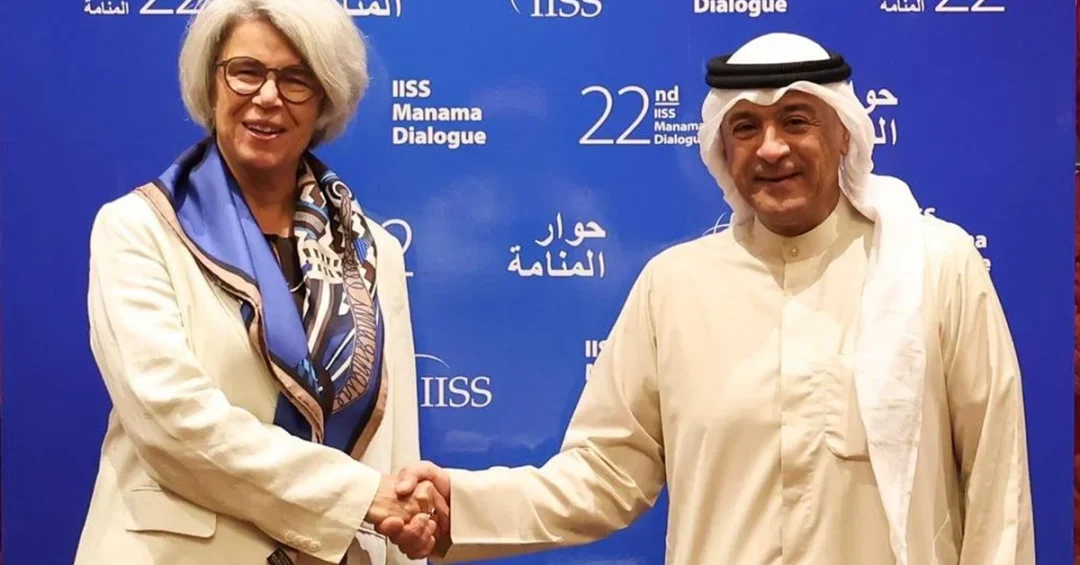
Secretary-General of the Gulf Cooperation Council (GCC) Jasem Mohamed Albudaiwi met with European Union Special Representative for the Horn of Africa Dr. Annette Weber in Manama, Bahrain, on the sidelines of the 22nd IISS Manama Dialogue, as reported by the Saudi Press Agency (SPA). The high-level meeting, held on October 31, 2026, focused on strengthening Gulf-European cooperation and addressing the latest political and security developments in the Horn of Africa and the Red Sea region. The discussions underscore the GCC’s proactive diplomacy and its commitment to regional stability, aligning with Saudi Arabia’s Vision 2030 goals of fostering international partnerships and ensuring a secure environment for economic growth.
Why does this meeting matter to global observers? It signals a deepening engagement between the Gulf and Europe on strategic issues that affect trade routes, energy security, and geopolitical stability. The Horn of Africa and the Red Sea are vital corridors for global commerce, and any instability there can have far-reaching consequences. By convening in Manama, a hub for diplomatic dialogue, the GCC and the EU are demonstrating their shared interest in mitigating risks and promoting peaceful resolution of conflicts. This collaboration is particularly relevant as Saudi Arabia continues to play a leading role in regional affairs, leveraging its influence to bridge divides and support sustainable development.
Context and Background
How did this meeting come about, and what does it signify? The 22nd IISS Manama Dialogue, organized by the International Institute for Strategic Studies, is a premier platform for discussing Middle Eastern security and defense issues. It brings together policymakers, experts, and leaders from around the world. The GCC, represented by Secretary-General Jasem Mohamed Albudaiwi, has been increasingly active in addressing challenges beyond its immediate neighborhood, recognizing that stability in the Horn of Africa and the Red Sea is intrinsically linked to Gulf security. The EU, through Special Representative Dr. Annette Weber, has also ramped up its engagement in the Horn, aiming to support peace and development. This meeting builds on previous interactions and reflects a mutual desire to coordinate efforts.
The timing is crucial. The Red Sea region has faced heightened tensions due to conflicts, piracy, and humanitarian crises, which threaten maritime trade and regional stability. The GCC, under the leadership of Saudi Arabia, has consistently advocated for dialogue and cooperation to resolve these issues. The EU’s involvement adds a multilateral dimension, potentially leading to more effective and coordinated responses. For Saudi Arabia, this aligns with its Vision 2030 objective of diversifying partnerships and enhancing its role as a global connector. The Kingdom has long been a key player in the Horn of Africa, providing humanitarian aid and mediating conflicts, and this meeting reinforces its commitment to stability.
Key Details
What specific topics were on the agenda? According to the SPA report, Secretary-General Albudaiwi and Special Representative Weber discussed prospects for Gulf-European cooperation and ways to develop and strengthen relations to achieve shared objectives. They reviewed the latest political and security developments in the Horn of Africa and the Red Sea region, as well as regional and international efforts in this regard. Additionally, they exchanged views on several issues on the regional and international agenda. The conversation likely covered concrete measures to enhance maritime security, counter terrorism, and support post-conflict reconstruction in countries like Yemen, Somalia, and Sudan. The GCC’s experience in mediation and development could complement the EU’s resources and diplomatic weight.
The meeting also highlighted the importance of multilateralism in addressing complex crises. Both sides acknowledged that unilateral approaches are insufficient and that sustained dialogue is necessary. For Saudi Arabia, this reinforces its strategy of building coalitions and fostering consensus. The Kingdom’s Vision 2030 emphasizes international cooperation as a pillar of its foreign policy, and this meeting exemplifies that principle. Furthermore, the GCC’s engagement with the EU on the Horn of Africa could lead to joint initiatives in areas such as infrastructure, trade, and capacity-building, benefiting both regions. The SPA report did not disclose specific agreements, but the mere fact of the meeting indicates a commitment to ongoing collaboration.
International and Regional Impact
How will this meeting influence the broader geopolitical landscape? The Gulf and Europe share significant interests in the Horn of Africa and the Red Sea. For Europe, the region is a gateway to Africa and a source of migration, while for the Gulf, it is a strategic depth and a trade route. By coordinating their approaches, the GCC and EU can present a united front against common threats such as terrorism, piracy, and Iranian-backed militias. This could lead to more effective peacekeeping and development efforts. For Saudi Arabia, this partnership enhances its standing as a responsible global actor and a key ally of Europe. It also supports the Kingdom’s efforts to attract foreign investment and technology, as stability is a prerequisite for economic growth.
Regionally, the meeting sends a message that external powers are committed to supporting African solutions to African problems, with Gulf and European backing. It may encourage Horn of Africa countries to engage more constructively in peace processes. The Red Sea’s strategic importance cannot be overstated; millions of barrels of oil and billions of dollars in goods pass through it annually. Any disruption affects global markets. Thus, the GCC-EU dialogue contributes to global economic stability. Saudi Arabia, as the world’s largest oil exporter and a G20 member, has a direct stake in keeping these lanes open. This meeting is a step toward ensuring that.
Economic and Strategic Significance
Why is this meeting economically and strategically significant? The Horn of Africa and the Red Sea are integral to Saudi Arabia’s Vision 2030, which seeks to transform the Kingdom into a global investment and logistics hub. Stability in these areas allows for the uninterrupted flow of trade, which is essential for Saudi Arabia’s non-oil exports and its ambitious projects like NEOM. The GCC’s cooperation with the EU can facilitate infrastructure investments and trade agreements that benefit both sides. For instance, European companies could partner with Gulf firms on port development, renewable energy, and digital connectivity in Africa. This aligns with Vision 2030’s goal of diversifying the economy and creating jobs.
Strategically, the meeting reinforces the GCC’s role as a stabilizing force. By working with the EU, the GCC can leverage Europe’s diplomatic and developmental expertise to address root causes of conflict, such as poverty and lack of opportunity. This comprehensive approach is more sustainable than purely military solutions. For Saudi Arabia, it demonstrates leadership within the GCC and on the world stage. The Kingdom has already hosted numerous peace talks and provided billions in aid to the region. This meeting adds a new dimension of partnership with Europe, which could lead to joint financing mechanisms and technology transfers. Ultimately, it supports the Vision 2030 objective of a secure and prosperous region.
Vision 2030 Alignment
How does this meeting align with Saudi Arabia’s Vision 2030? Vision 2030 is not just a domestic economic plan; it also encompasses foreign policy and global engagement. A key pillar is to strengthen Saudi Arabia’s strategic partnerships and enhance its role in international affairs. The GCC-EU meeting on the Horn of Africa exemplifies this by showcasing the Kingdom’s ability to convene and collaborate with major global players. It also supports the vision’s focus on security and stability as foundations for prosperity. By addressing regional challenges proactively, Saudi Arabia is creating an environment conducive to investment, tourism, and innovation, all of which are central to Vision 2030.
Moreover, the meeting highlights the GCC’s collective approach, with Saudi Arabia as a leading member. The Kingdom’s Vision 2030 encourages joint action within the GCC to amplify impact. This is evident in the unified stance on the Horn of Africa and the Red Sea. As the world becomes more interconnected, such partnerships are essential. The SPA report underscores that the discussions were positive and forward-looking, reflecting the GCC’s and EU’s shared commitment to peace and development. For Saudi Arabia, this is another step toward realizing its vision of a diversified economy, a secure region, and a respected global presence. The Kingdom remains dedicated to working with all partners to achieve these goals.
20 Questions
Q1. Who met in Manama on October 31, 2026?
A1. GCC Secretary-General Jasem Mohamed Albudaiwi met with EU Special Representative for the Horn of Africa Dr. Annette Weber. The meeting took place on the sidelines of the 22nd IISS Manama Dialogue.
Q2. What was the primary focus of the meeting?
A2. The primary focus was on strengthening Gulf-European cooperation and discussing political and security developments in the Horn of Africa and the Red Sea region, as well as exchanging views on regional and international issues.
Q3. Where did the meeting take place?
A3. The meeting was held in Manama, Bahrain, on the sidelines of the 22nd IISS Manama Dialogue, a prominent security conference that attracts global leaders and experts.
Q4. When did the meeting occur?
A4. The meeting occurred on October 31, 2026, according to the Saudi Press Agency (SPA) report. The timing coincides with ongoing regional dialogues on security and cooperation.
Q5. What is the IISS Manama Dialogue?
A5. The IISS Manama Dialogue is an annual security summit organized by the International Institute for Strategic Studies. It brings together policymakers and experts to discuss Middle Eastern security challenges and foster dialogue.
Q6. Why is the Horn of Africa important to the GCC?
A6. The Horn of Africa is strategically vital for the GCC due to its proximity to the Red Sea, a key trade route. Stability there affects Gulf security, trade, and investments, making it a priority for GCC diplomacy.
Q7. What role does the EU play in the Horn of Africa?
A7. The EU engages in the Horn of Africa through development aid, humanitarian assistance, and diplomatic efforts to promote peace and stability. Dr. Annette Weber serves as the Special Representative to coordinate these efforts.
Q8. How does this meeting benefit Saudi Arabia?
A8. It enhances Saudi Arabia’s diplomatic standing, supports Vision 2030 goals of international partnerships, and contributes to regional stability, which is essential for economic diversification and investment.
Q9. What specific topics were discussed regarding the Red Sea?
A9. The discussions covered political and security developments, including efforts to ensure maritime security, counter piracy, and address conflicts that threaten trade routes and regional stability.
Q10. Did the meeting result in any agreements?
A10. The SPA report did not mention specific agreements. However, the meeting aimed to strengthen cooperation and coordinate efforts on shared interests, indicating ongoing collaboration.
Q11. How does this meeting align with Vision 2030?
A11. It aligns with Vision 2030 by promoting international cooperation, enhancing Saudi Arabia’s global role, and supporting stability in regions critical to the Kingdom’s economic and strategic interests.
Q12. What are the key challenges in the Horn of Africa?
A12. Challenges include political instability, terrorism, piracy, and humanitarian crises. These issues require coordinated international responses, which the GCC and EU are working to provide.
Q13. How does the GCC coordinate with the EU on regional issues?
A13. The GCC and EU engage in regular dialogues and meetings to share perspectives and align efforts on regional security, development, and humanitarian issues, as demonstrated by this meeting.
Q14. What is the significance of the Red Sea for global trade?
A14. The Red Sea is a crucial maritime corridor through which a significant portion of global trade, including oil and goods, passes. Its stability is vital for the global economy.
Q15. Who is Jasem Mohamed Albudaiwi?
A15. Jasem Mohamed Albudaiwi is the Secretary-General of the Gulf Cooperation Council. He represents the GCC in international forums and works to advance its members’ collective interests.
Q16. Who is Dr. Annette Weber?
A16. Dr. Annette Weber is the European Union Special Representative for the Horn of Africa. She coordinates EU diplomatic efforts and initiatives in the region.
Q17. What are the prospects for Gulf-European cooperation?
A17. Prospects include joint efforts on maritime security, counterterrorism, development projects, and diplomatic mediation. Both sides aim to build on shared interests for mutual benefit.
Q18. How does this meeting affect regional stability?
A18. It promotes dialogue and coordination between major stakeholders, which can lead to more effective conflict prevention and resolution, thereby enhancing stability in the Horn of Africa and the Red Sea.
Q19. What role does Saudi Arabia play in the GCC?
A19. Saudi Arabia is a founding and leading member of the GCC, often driving initiatives and policies. Its Vision 2030 shapes its approach to regional and global affairs.
Q20. What can be expected from future GCC-EU interactions?
A20. Future interactions are likely to focus on deepening cooperation in security, trade, and development. Regular consultations and joint projects may follow to address common challenges.
Reader Feedback
We value your thoughts. Please share your feedback on this article.
Your feedback helps us improve our coverage.
Related articles
 Madinah Advances Toward a Sustainable Urban Future
 GCC Secretary-General Meets US Deputy Assistant Secretary of War
 Al-Baha Advances Sustainable Urban Development on World Cities Day
 Najran Highlights Architectural Identity on World Cities Day
 GCC Chief Affirms Indivisible Security, Bolsters Regional Architecture
 NCVC Completes Native Seed Sowing Across Five Sites in Hail