


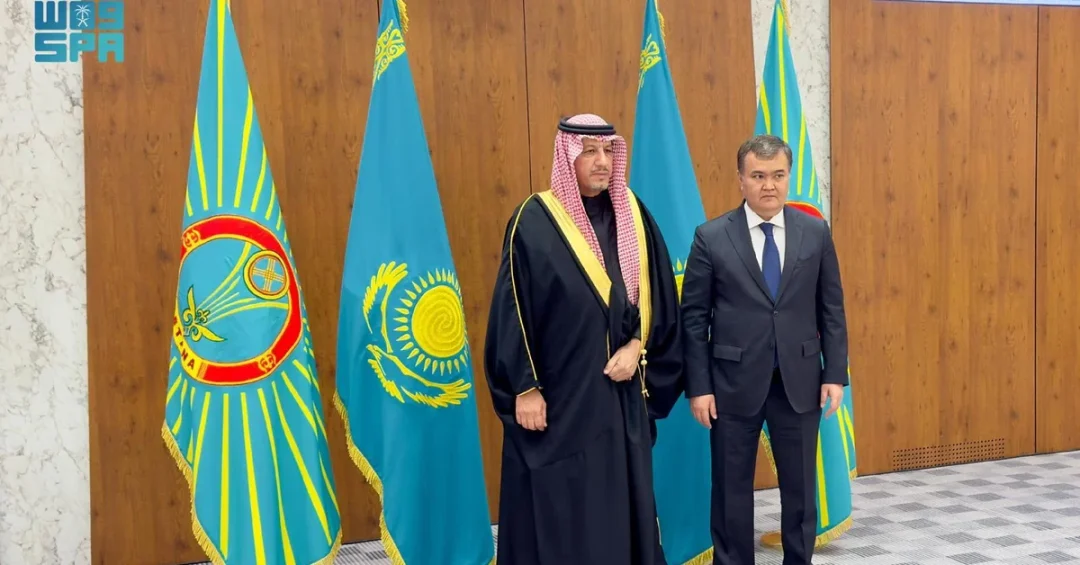
President of the Oversight and Anti-Corruption Authority (Nazaha) Mazin Al-Kahmous met with Prosecutor General Berik Asylov and Mayor of Astana Zhenis Kassymbek during an official visit to the Republic of Kazakhstan on April 15, 2025, as reported by the Saudi Press Agency (SPA). The discussions focused on enhancing bilateral cooperation in safeguarding integrity and combating corruption, alongside several other topics of mutual interest. This high-level engagement underscores Saudi Arabia’s commitment to international collaboration in promoting transparency and good governance, key pillars of the Kingdom’s Vision 2030 reform agenda.
The meetings, held in Kazakhstan’s capital, Astana, mark a significant step in strengthening ties between Saudi Arabia and Kazakhstan, a Central Asian nation with which the Kingdom shares growing diplomatic and economic relations. Mazin Al-Kahmous, who has led Nazaha since 2017, is a key figure in Saudi Arabia’s anti-corruption drive, which has gained global attention for its rigorous enforcement and institutional reforms. His counterpart, Prosecutor General Berik Asylov, represents Kazakhstan’s legal system, while Mayor Zhenis Kassymbek oversees the administration of Astana, a city that has become a symbol of modern urban development in the region. The trilateral meeting highlights the multifaceted nature of Saudi-Kazakh cooperation, extending beyond traditional diplomatic channels to include legal and municipal governance.
Context and Background
Why does Saudi Arabia’s anti-corruption authority engage with counterparts in Central Asia? The answer lies in the Kingdom’s broader strategy to position itself as a global leader in integrity and transparency. Nazaha, established in 2017 by royal decree, is tasked with investigating and prosecuting corruption cases, promoting ethical practices, and enhancing public sector accountability. Under the leadership of Crown Prince Mohammed bin Salman, Saudi Arabia has launched unprecedented reforms to combat corruption, including the high-profile anti-corruption campaign of 2017 that resulted in the detention of numerous princes and businessmen. These efforts are integral to Vision 2030, which aims to diversify the economy, attract foreign investment, and improve governance.
Kazakhstan, for its part, has also prioritized anti-corruption measures as part of its own development agenda. The country has implemented a series of legal and institutional reforms to combat graft, including the establishment of the Anti-Corruption Agency in 2019. Prosecutor General Berik Asylov has been a vocal advocate for strengthening the rule of law in Kazakhstan, and his meeting with Al-Kahmous signals a mutual recognition of the importance of international cooperation in this field. The two nations have a history of collaboration through organizations such as the United Nations Convention against Corruption (UNCAC), which both have ratified. This meeting builds on that foundation, exploring new avenues for joint action.
The involvement of Astana Mayor Zhenis Kassymbek adds a local governance dimension to the talks. Astana, formerly known as Nur-Sultan, has undergone a remarkable transformation into a modern, smart city, hosting international events such as Expo 2017. Kassymbek’s participation suggests that municipal-level integrity and transparency are also on the agenda, reflecting a holistic approach to combating corruption that encompasses all levels of government. This aligns with Saudi Arabia’s own efforts to promote good governance at the local level, as part of its Quality of Life Program under Vision 2030.
Key Details
What specific areas of cooperation were discussed? According to the SPA report, the talks centered on enhancing cooperation in safeguarding integrity and combating corruption, as well as several topics of common interest. While the exact details of the agreements or initiatives were not disclosed, the meeting likely covered areas such as capacity building, information sharing, and joint training programs for anti-corruption officials. Saudi Arabia has previously signed memoranda of understanding (MoUs) with several countries to facilitate such cooperation, and a similar agreement with Kazakhstan could be in the works. The meeting also served as a platform to exchange best practices and discuss challenges in the fight against corruption, which is a transnational issue requiring coordinated global responses.
The meeting took place during an official visit by Al-Kahmous to Kazakhstan, although the duration and full itinerary of the visit were not specified. Such visits are typically part of a broader diplomatic engagement, often including meetings with multiple high-ranking officials. The fact that Al-Kahmous met with both the Prosecutor General and the Mayor indicates a comprehensive approach to addressing corruption, spanning legal and administrative domains. It also highlights Saudi Arabia’s proactive stance in sharing its expertise and learning from international partners. Nazaha has been increasingly active on the global stage, participating in forums such as the International Anti-Corruption Conference and collaborating with organizations like the World Bank and the OECD.
The SPA report did not provide further details on the outcomes of the meeting, but the mere occurrence of such high-level talks is significant. It demonstrates Saudi Arabia’s continued efforts to build international partnerships that support its domestic reforms. For Kazakhstan, engaging with Saudi Arabia offers an opportunity to learn from the Kingdom’s experience in implementing large-scale anti-corruption initiatives. Both countries are also key players in regional stability and economic development, making their cooperation mutually beneficial. The meeting could pave the way for future joint projects, such as the establishment of a bilateral anti-corruption working group or the exchange of experts.
International and Regional Impact
How does this meeting resonate beyond the two countries? Saudi Arabia’s anti-corruption efforts are closely watched by the international community, as they are seen as a test case for governance reforms in the Middle East. By engaging with Kazakhstan, a Central Asian nation with its own reform agenda, Saudi Arabia reinforces its commitment to global norms and positions itself as a leader in the fight against corruption. This collaboration could inspire other countries in the region to adopt similar measures, fostering a culture of transparency and accountability. The meeting also strengthens the diplomatic ties between Riyadh and Astana, which have been expanding in recent years, particularly in areas such as energy, agriculture, and investment.
Regionally, the cooperation between Saudi Arabia and Kazakhstan could have implications for Central Asia’s stability and development. Kazakhstan is the largest economy in Central Asia and a key partner in China’s Belt and Road Initiative. By aligning with Saudi Arabia on anti-corruption, Kazakhstan can enhance its attractiveness to foreign investors, who often cite corruption as a barrier to doing business. This, in turn, contributes to regional economic growth and integration. Moreover, both countries are members of the Organization of Islamic Cooperation (OIC), and their collaboration on governance issues could strengthen the OIC’s agenda on transparency and anti-corruption, benefiting the broader Muslim world.
Economic and Strategic Significance
What economic benefits arise from anti-corruption cooperation? For Saudi Arabia, a robust anti-corruption framework is essential to attracting foreign direct investment (FDI), a key objective of Vision 2030. The Kingdom has set ambitious targets to increase FDI to 5.7% of GDP by 2030, and transparent governance is a prerequisite for achieving this. By cooperating with Kazakhstan, Saudi Arabia can learn from its experiences in creating a business-friendly environment and share its own successes in streamlining regulations and digitizing government services. This exchange of knowledge can lead to more effective policies and, ultimately, a more competitive economy.
Strategically, the meeting underscores Saudi Arabia’s pivot to Asia, a region of growing importance for the Kingdom’s trade and investment. Kazakhstan, with its vast natural resources and strategic location, is a valuable partner in this context. The two countries have cooperated in the energy sector, with Saudi Aramco and Kazakh oil company KazMunayGas exploring joint ventures. Anti-corruption cooperation complements these economic ties by ensuring that business transactions are conducted fairly and transparently, reducing risks for investors. Furthermore, Saudi Arabia’s expertise in anti-corruption can support Kazakhstan’s efforts to improve its own investment climate, creating a win-win scenario.
Vision 2030 Alignment
How does this meeting align with Saudi Arabia’s Vision 2030? Vision 2030 is not just an economic blueprint; it also encompasses social and governance reforms. One of its core themes is a ‘thriving economy’ built on transparency, accountability, and efficiency. Nazaha’s international engagements are a direct reflection of this theme, as they promote the exchange of best practices and enhance the Kingdom’s reputation as a reliable and ethical partner. The meeting with Kazakh officials also supports the Vision’s goal of strengthening Saudi Arabia’s global standing and fostering international partnerships that drive mutual prosperity.
In the long term, such collaborations contribute to the realization of a ‘vibrant society’ and ‘ambitious nation’ by ensuring that public resources are managed effectively and that citizens can trust their institutions. The fight against corruption is a cornerstone of this trust, and Saudi Arabia’s leadership in this area serves as a model for others. As the Kingdom continues to implement Vision 2030, its partnerships with countries like Kazakhstan will play a vital role in sharing knowledge, building capacity, and promoting a culture of integrity worldwide. This meeting is a testament to Saudi Arabia’s unwavering commitment to these principles and its proactive role in shaping a better future for all.
20 Questions
Q1. Who represented Saudi Arabia at the meeting in Kazakhstan?
A1. Mazin Al-Kahmous, President of the Oversight and Anti-Corruption Authority (Nazaha), represented Saudi Arabia at the meeting.
Q2. Who did Mazin Al-Kahmous meet with in Kazakhstan?
A2. He met with Prosecutor General Berik Asylov and Mayor of Astana Zhenis Kassymbek.
Q3. What was the primary focus of the discussions?
A3. The discussions focused on enhancing cooperation in safeguarding integrity and combating corruption, as well as other topics of mutual interest.
Q4. When did the meeting take place?
A4. The meeting took place on April 15, 2025, according to the Saudi Press Agency.
Q5. Where did the meeting occur?
A5. The meeting occurred in Astana, the capital of the Republic of Kazakhstan.
Q6. What is Nazaha’s role in Saudi Arabia?
A6. Nazaha is responsible for investigating corruption, promoting transparency, and enhancing accountability in Saudi Arabia’s public sector.
Q7. Why is international cooperation important in combating corruption?
A7. Corruption is a transnational issue; international cooperation allows for information sharing, capacity building, and coordinated efforts to tackle it effectively.
Q8. What are the key objectives of Saudi Vision 2030 related to anti-corruption?
A8. Vision 2030 aims to promote transparency, accountability, and good governance to attract investment and improve public services.
Q9. How does this meeting benefit Saudi Arabia?
A9. It strengthens Saudi Arabia’s global partnerships, enhances its reputation for integrity, and allows for the exchange of best practices in anti-corruption.
Q10. How does this meeting benefit Kazakhstan?
A10. Kazakhstan can learn from Saudi Arabia’s anti-corruption experience, improve its investment climate, and strengthen bilateral ties.
Q11. What is the significance of the Mayor of Astana’s participation?
A11. It highlights the importance of integrity at the municipal level and reflects a comprehensive approach to combating corruption.
Q12. Have Saudi Arabia and Kazakhstan cooperated on anti-corruption before?
A12. Both countries are parties to the UN Convention against Corruption and have engaged in multilateral forums, but this meeting represents a direct bilateral effort.
Q13. What are some potential outcomes of this meeting?
A13. Potential outcomes include a memorandum of understanding, joint training programs, and increased information sharing between the two countries.
Q14. How does this meeting align with Saudi Arabia’s foreign policy?
A14. It reflects Saudi Arabia’s pivot to Asia, its commitment to international cooperation, and its leadership in global governance issues.
Q15. What economic impact could this cooperation have?
A15. It could boost investor confidence, facilitate trade, and contribute to economic diversification in both countries.
Q16. What is the role of the Prosecutor General in Kazakhstan?
A16. The Prosecutor General oversees the legal system, ensures the rule of law, and leads efforts to combat corruption in Kazakhstan.
Q17. How does Nazaha engage with international counterparts?
A17. Nazaha participates in global forums, signs MoUs, and conducts bilateral meetings to share expertise and best practices.
Q18. What challenges do Saudi Arabia and Kazakhstan face in fighting corruption?
A18. Both face challenges such as evolving corruption methods, need for capacity building, and ensuring enforcement across all sectors.
Q19. How does this meeting reflect Saudi Arabia’s Vision 2030?
A19. It demonstrates the Kingdom’s commitment to good governance and international partnerships, which are essential for achieving Vision 2030’s goals.
Q20. What is the expected follow-up to this meeting?
A20. Follow-up may include further discussions, formal agreements, and joint initiatives to implement the areas of cooperation discussed.
Reader Feedback
We value your thoughts. Please share your feedback on this article.
Your feedback helps us improve our coverage.
Related articles
 Saudi Ambassador Meets Egyptian Minister in Cairo
 Shura Council Speaker Receives Newly Appointed Saudi Ambassadors
 Madinah Bus Project Launches Survey on Service Quality
 Saudi Ambassador Meets WHO Regional Director in Tunis
 GCC Chief Meets Russian Envoy to Boost Strategic Ties
 GCC Chief Meets Chinese Envoy to Boost Saudi-China Ties