


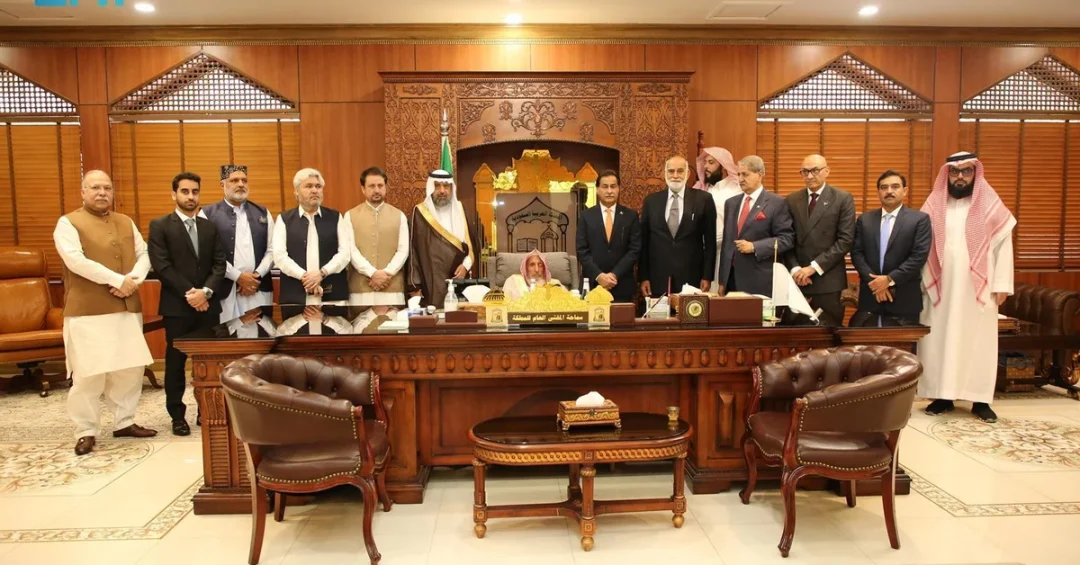
Grand Mufti of the Kingdom of Saudi Arabia Sheikh Abdulaziz bin Abdullah Al Al-Sheikh received Speaker of the National Assembly of Pakistan Sardar Ayaz Sadiq and his accompanying delegation in Riyadh on April 21, 2025, in a meeting that underscored the deep-rooted religious and diplomatic ties between the two nations. The discussions focused on the role of the General Presidency of Scholarly Research and Ifta in clarifying Islamic rulings on contemporary issues and promoting moderation, while the Pakistani speaker praised Saudi Arabia’s vital support for Pakistan on various occasions.
What does this high-level encounter reveal about the enduring partnership between the Kingdom and Pakistan? The meeting, reported by the Saudi Press Agency (SPA), highlighted the mutual commitment to Islamic scholarship, counter-extremism, and bilateral cooperation. It also reflected the Kingdom’s broader strategy under Vision 2030 to strengthen international alliances and project a message of moderate Islam. As both countries navigate regional challenges, such exchanges reinforce a relationship built on shared faith, history, and strategic interests.
Context and Background
Why has the relationship between Saudi Arabia and Pakistan remained so resilient over the decades? The ties between the two countries predate the founding of Pakistan in 1947, rooted in common religious heritage and mutual respect. Saudi Arabia was among the first nations to recognize Pakistan’s independence and has consistently provided diplomatic, economic, and moral support. The exchange between the Grand Mufti and Speaker Sadiq is the latest in a long series of high-level visits that sustain this partnership, from royal visits to parliamentary delegations.
The General Presidency of Scholarly Research and Ifta, led by the Grand Mufti, serves as Saudi Arabia’s highest religious authority for issuing fatwas and guiding Muslims on matters of jurisprudence. Its work extends beyond Saudi borders, influencing Islamic discourse globally. In recent years, the Presidency has intensified efforts to combat extremism and promote Wasatiyyah, the moderate path of Islam. This meeting with a senior Pakistani legislator aligns with that mission, offering a platform to discuss shared concerns and collaborative approaches to religious education.
Pakistan, with its population of over 240 million Muslims, represents a significant partner in these efforts. The National Assembly, Pakistan’s lower house of parliament, plays a key role in shaping laws that affect religious affairs and minority rights. Speaker Sadiq’s visit therefore carries legislative weight, signaling parliamentary endorsement of closer cooperation with Saudi religious institutions. The timing, shortly after Ramadan and amid preparations for the Hajj season, adds further significance, as Pakistani pilgrims rely on Saudi hospitality and organizational excellence.
Key Details of the Meeting
What specific issues were addressed during the discussions in Riyadh? According to the Saudi Press Agency, the Grand Mufti emphasized the important role of the General Presidency in clarifying Islamic rulings on matters of concern to Muslims, as well as on contemporary jurisprudential issues that require scholarly guidance. He highlighted its commitment to promoting moderation and combating extremism and terrorism. These themes resonate with Saudi Arabia’s global counterterrorism initiatives and its Vision 2030 goal of fostering a tolerant, open society.
Sheikh Abdulaziz bin Abdullah Al Al-Sheikh, who also serves as President of the Council of Senior Scholars, is a central figure in Saudi religious life. His dual roles enable him to influence both scholarly consensus and practical fatwas. In the meeting, he likely elaborated on the Presidency’s efforts to harness digital platforms for disseminating accurate religious information, a project that aligns with the Kingdom’s digital transformation agenda. The Pakistani delegation, including senior parliamentarians, expressed appreciation for these efforts and discussed ways to benefit from Saudi expertise.
Speaker Sardar Ayaz Sadiq, a seasoned politician who has held his position since 2022 (and previously from 2013 to 2018), praised the Kingdom’s vital role in supporting Pakistan on various issues and occasions. He commended the deep-rooted ties between the two countries and peoples. His remarks reflect the widespread goodwill toward Saudi Arabia in Pakistan, where the Kingdom is viewed as a steadfast ally and a custodian of Islam’s holiest sites. The meeting concluded with a reaffirmation of mutual commitment to strengthen cooperation in religious, educational, and cultural domains.
International and Regional Impact
How does this meeting fit into the broader geopolitical landscape? Saudi Arabia and Pakistan share a strategic partnership that extends to defense, energy, and trade. In recent years, both have worked closely on Afghanistan, Kashmir, and counterterrorism. The religious dimension adds a layer of soft power, as Saudi Arabia’s moderate Islamic leadership offers a counter-narrative to extremist ideologies that threaten both nations. By engaging with Pakistan’s parliamentary leadership, the Kingdom reinforces its role as a stabilizing force in the Muslim world.
Regionally, the meeting comes amid shifting alliances and economic transformations. Pakistan, facing economic challenges, benefits from Saudi financial support and investment, including deposits and oil facilities. Saudi Arabia, in turn, values Pakistan’s strategic location and military cooperation. The religious exchange strengthens people-to-people ties, as millions of Pakistanis work in the Kingdom and undertake Hajj and Umrah annually. This visit also underscores Saudi Arabia’s commitment to multilateral engagement, as it prepares to host major Islamic conferences and events.
On the international stage, the meeting projects an image of unity among Muslim nations. It counters narratives of division and highlights the role of scholarly dialogue in resolving contemporary issues, from bioethics to finance. The Grand Mufti’s emphasis on moderation aligns with global efforts against terrorism, earning Saudi Arabia recognition from partners worldwide. For Pakistan, the visit signals parliamentary support for deepening ties with the Kingdom, potentially paving the way for agreements in education, judicial training, and religious tourism.
Economic and Strategic Significance
What economic and strategic outcomes might flow from this encounter? While the meeting was primarily religious and diplomatic, it carries economic undertones. Saudi Arabia is a major investor in Pakistan, and the two countries have signed numerous agreements in energy, infrastructure, and agriculture. The religious goodwill generated by such visits can facilitate business and investment, as Pakistani leaders and publics view Saudi Arabia favorably. Moreover, cooperation in halal certification, Islamic finance, and pilgrimage services offers tangible economic opportunities.
Strategically, the meeting reinforces a network of alliances that support Saudi Arabia’s Vision 2030 and Pakistan’s economic revival. The Kingdom’s religious leadership can help promote stability in Pakistan by encouraging moderation and countering sectarianism. In return, Pakistan’s support in international forums, including the Organisation of Islamic Cooperation (OIC), is invaluable. The visit also highlights the role of parliamentary diplomacy, as Speaker Sadiq’s engagements in Riyadh may lead to legislative exchanges and capacity-building programs for Pakistani lawmakers.
Furthermore, the meeting underscores the importance of religious diplomacy in Saudi foreign policy. By hosting figures like Speaker Sadiq, the Kingdom showcases its soft power and its commitment to dialogue. This approach aligns with Vision 2030’s aim to diversify partnerships and present Saudi Arabia as a global hub for Islamic thought and culture. The economic spillovers, though indirect, contribute to a stable environment conducive to trade and investment, benefiting both nations.
Vision 2030 Alignment
How does this meeting embody the objectives of Saudi Vision 2030? Vision 2030 seeks to transform Saudi Arabia into a diversified economy and a tolerant, moderate Islamic state. The Grand Mufti’s focus on moderation and counter-extremism directly supports the vision’s social and religious pillars. By engaging with international partners like Pakistan, the Kingdom shares its experience and strengthens its global standing. The meeting also reflects the vision’s emphasis on soft power and cultural diplomacy as tools for international cooperation.
Moreover, Vision 2030 prioritizes the enhancement of Hajj and Umrah services, which rely on close coordination with countries like Pakistan. The discussions with Speaker Sadiq likely touched on facilitating Pakistani pilgrims, improving their experience, and expanding religious tourism. This aligns with the vision’s goal of increasing the number of pilgrims and enhancing the Kingdom’s role as a host of Islam’s holiest sites. Ultimately, such high-level engagements demonstrate Saudi Arabia’s commitment to a future of peace, prosperity, and moderate Islamic leadership on the world stage.
20 Questions
Q1. Who received the Speaker of Pakistan’s National Assembly in Riyadh?
A1. The Grand Mufti of Saudi Arabia, Sheikh Abdulaziz bin Abdullah Al Al-Sheikh, received Speaker Sardar Ayaz Sadiq and his delegation in Riyadh on April 21, 2025, as reported by the Saudi Press Agency.
Q2. What is the role of the General Presidency of Scholarly Research and Ifta?
A2. The General Presidency clarifies Islamic rulings on matters of concern to Muslims and contemporary jurisprudential issues. It promotes moderation and combats extremism and terrorism, serving as a key religious authority in Saudi Arabia.
Q3. What did the Grand Mufti emphasize during the meeting?
A3. He emphasized the important role of the General Presidency in clarifying Islamic rulings and its commitment to promoting moderation and combating extremism and terrorism, highlighting its service to Muslims worldwide.
Q4. What did Speaker Sardar Ayaz Sadiq say about Saudi Arabia?
A4. He praised the Kingdom’s vital role in supporting Pakistan on various issues and occasions, and commended the deep-rooted ties between the two countries and peoples.
Q5. When and where did the meeting take place?
A5. The meeting took place in Riyadh on April 21, 2025, according to the Saudi Press Agency (SPA), which reported the details of the encounter.
Q6. Who is Sheikh Abdulaziz bin Abdullah Al Al-Sheikh?
A6. He is the Grand Mufti of Saudi Arabia, President of the Council of Senior Scholars, and President of the General Presidency of Scholarly Research and Ifta, the highest religious authority in the Kingdom.
Q7. Who is Sardar Ayaz Sadiq?
A7. Sardar Ayaz Sadiq is the Speaker of the National Assembly of Pakistan, a senior politician who has held the position since 2022 and previously from 2013 to 2018.
Q8. What is the significance of this meeting for Saudi-Pakistan relations?
A8. It reinforces the deep-rooted religious and diplomatic ties between the two nations, highlighting mutual commitment to moderation, counter-extremism, and cooperation in Islamic scholarship and bilateral issues.
Q9. How does the meeting relate to Vision 2030?
A9. It aligns with Vision 2030’s goals of promoting moderate Islam, enhancing soft power, and strengthening international partnerships, while also supporting efforts to improve Hajj and Umrah services for Pakistani pilgrims.
Q10. What is the Council of Senior Scholars?
A10. The Council of Senior Scholars is Saudi Arabia’s highest religious body, responsible for advising on Islamic legal matters and issuing fatwas. The Grand Mufti serves as its president.
Q11. How does the General Presidency combat extremism?
A11. It promotes moderation through scholarly research, fatwas, and educational initiatives that clarify Islamic rulings and counter extremist ideologies, both within Saudi Arabia and internationally.
Q12. What are the deep-rooted ties between Saudi Arabia and Pakistan?
A12. The ties are based on shared Islamic faith, historical support, and strategic cooperation. Saudi Arabia was among the first to recognize Pakistan and has consistently provided diplomatic and economic support.
Q13. How many Pakistanis visit Saudi Arabia annually?
A13. Millions of Pakistanis visit Saudi Arabia each year for Hajj, Umrah, and work. Pakistan is one of the largest sources of pilgrims and expatriate workers in the Kingdom.
Q14. What economic cooperation exists between the two countries?
A14. Saudi Arabia invests in Pakistan’s energy, infrastructure, and agriculture sectors, and provides financial deposits. Both countries also cooperate in halal certification and Islamic finance.
Q15. What is the role of parliamentary diplomacy in this context?
A15. Parliamentary diplomacy fosters legislative exchanges and capacity building, enhancing bilateral relations. Speaker Sadiq’s visit strengthens parliamentary ties and supports mutual understanding.
Q16. How does Saudi Arabia support Pakistan on international issues?
A16. Saudi Arabia supports Pakistan on issues like Kashmir and Afghanistan in international forums, including the Organisation of Islamic Cooperation, reflecting their strategic alliance.
Q17. What is Wasatiyyah?
A17. Wasatiyyah refers to the moderate, balanced path of Islam that avoids extremism. Saudi Arabia promotes this concept globally through its religious institutions and Vision 2030.
Q18. How does the meeting impact Pakistani pilgrims?
A18. It likely discusses improving Hajj and Umrah services, ensuring a smooth experience for Pakistani pilgrims. Saudi Arabia continuously enhances facilities for all pilgrims.
Q19. What is the significance of the meeting’s timing?
A19. The meeting occurred after Ramadan and before Hajj season, a period of heightened religious activity. It underscores ongoing coordination for pilgrimage and religious affairs.
Q20. What future cooperation might result from this meeting?
A20. Future cooperation may include joint scholarly initiatives, educational exchanges, and enhanced pilgrimage services. It reinforces the strong partnership between Saudi Arabia and Pakistan.
Reader Feedback
We value your thoughts. Please share your feedback on this article.
Your feedback helps us improve our coverage.
Related articles
 Saudi-Ghana Diplomatic Ties Strengthened in Jeddah Meeting
 NCVC Leads Environment Week 2025 with Greening Initiatives
 Shura Council Speaker Holds Talks with Pakistan’s National Assembly Speaker
 Saudi TGA Launches Nextwave Maritime Training Program
 Saudi Arabia Opens 24 Projects for Public Feedback via Istitlaa
 Al-Jubeir Receives New Spanish Ambassador to Saudi Arabia