


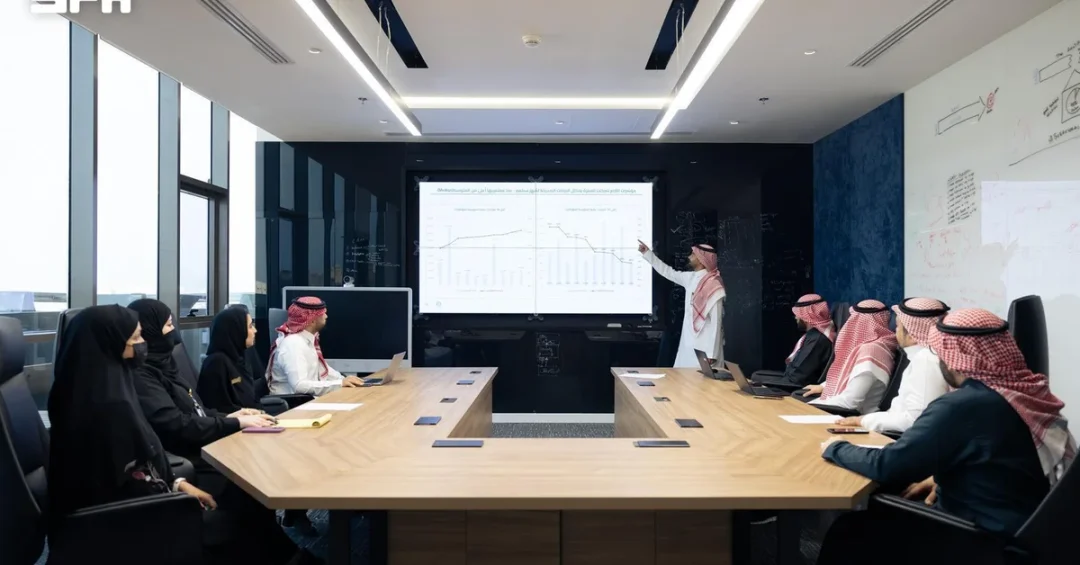
The Ministry of Hajj and Umrah has confirmed that its Monitoring and Control Center stands as one of the operational pillars of the Kingdom’s Hajj and Umrah system, delivering real-time oversight of services and tracking operational indicators to support swift decision-making. The announcement, issued through the Saudi Press Agency from Makkah, underscores how the center contributes directly to improved operational efficiency and higher service quality for Umrah performers and visitors throughout their journey.
For an international audience, the significance is straightforward: Saudi Arabia hosts millions of Umrah performers and visitors each year, and the Kingdom has made the seamless management of these journeys a central priority. How does a single center keep such a vast, year-round operation running smoothly? The answer lies in an integrated digital system that monitors operational processes through interactive dashboards, allowing service performance to be tracked, field developments to be observed, and specialized teams to respond promptly to operational observations and challenges. The result, according to the ministry, is smooth operations and the continued delivery of high-quality services across every stage of the pilgrim experience.
Context and Background
The Monitoring and Control Center did not emerge in isolation. It reflects a broader, years-long modernization of the Hajj and Umrah sector, in which the Ministry of Hajj and Umrah has progressively moved from reactive, seasonal management toward continuous, data-driven oversight. Why does that shift matter so much? Because the Umrah season no longer follows a narrow window; it operates across the calendar, and the infrastructure supporting it must be equally constant. The center operates year-round, tracking more than 95 operational indicators to measure service quality and efficiency in coordination with 33 government and private entities. That scope — dozens of partners, nearly a hundred indicators, uninterrupted operation — illustrates the scale of coordination required to serve guests of the Two Holy Mosques.
Historically, Hajj and Umrah operations depended heavily on manual reporting and periodic field inspections, which could delay responses to emerging issues. The ministry’s current approach replaces those lags with a unified system for exchanging operational data and supporting decision-making. Under this model, field teams can monitor service levels, enhance the readiness of service sites, and promptly identify and address issues as they arise. For international observers, this represents a meaningful evolution in how one of the world’s largest recurring gatherings of people is managed — not through improvisation, but through structured, real-time information flows that connect the ministry, its partners, and frontline staff.
The center also aligns with the Kingdom’s wider commitment to treating every Umrah performer and visitor as a guest whose experience must be safeguarded from arrival through departure. That commitment is not merely rhetorical; it is embedded in operating procedures, escalation protocols, and the daily rhythm of a facility that never closes.
Key Details of the Monitoring and Control Center
According to the Ministry of Hajj and Umrah, the center relies on an integrated digital system to monitor operational processes through interactive dashboards. These dashboards are not passive displays. They function as decision-support tools that allow service performance to be tracked in real time, field developments to be monitored continuously, and specialized teams to respond promptly to operational observations and challenges. What distinguishes this model is the speed with which information becomes action. Rather than waiting for periodic reports to surface a problem, the center surfaces it immediately and routes it to the teams best positioned to resolve it.
The center’s reach extends across the full journey of the Umrah performer and visitor. It monitors service levels at key touchpoints, strengthens the readiness of service sites, and identifies issues before they escalate. Coordination with 33 government and private entities is central to this effort, since no single organization controls every element of the pilgrim experience — transportation, accommodation, crowd management, health services, and digital services all intersect. The center serves as the connective tissue among them, exchanging operational data through a unified system and enabling partners to act on a shared, accurate picture of conditions on the ground.
The ministry has also affirmed its continued efforts to develop the center further. This includes enhancing its operational readiness, expanding its data analysis and indicator-monitoring capabilities, and strengthening integration with partner entities. The stated objectives are consistent and clear: support swift decision-making, improve service quality, and enhance the experience of Umrah performers and visitors from arrival through departure. For a global readership, these details reveal a system designed not simply to cope with demand but to anticipate it, measure it, and continuously raise the standard of service delivered.
International and Regional Impact
Saudi Arabia’s management of Hajj and Umrah carries implications far beyond its borders. Millions of Muslims from every continent travel to the Kingdom for these journeys, and the quality of their experience shapes perceptions of the entire ecosystem — from visa issuance and airline connectivity to accommodation and on-ground services. When a center like this improves operational efficiency, the benefits ripple outward: shorter waiting times, more reliable services, and greater confidence among international travelers and the agencies that serve them. Does that confidence matter economically and diplomatically? It does, because pilgrimages are among the most significant forms of people-to-people exchange between the Kingdom and the wider Islamic world.
Regionally, the center’s integrated model offers a template for managing large-scale, multi-stakeholder operations. Coordinating 33 government and private entities through a unified data system is a considerable logistical achievement, and it reinforces the Kingdom’s position as a leader in service delivery for religious tourism. For neighboring countries whose citizens travel frequently to the Kingdom, the practical effect is a more predictable, better-managed journey. For the broader international community, it demonstrates how digital governance can be applied to complex, high-volume events without sacrificing the human dimension of hospitality that defines the Saudi approach to hosting guests of the Two Holy Mosques.
Economic and Strategic Significance
The economic dimension of the Monitoring and Control Center is substantial. Umrah and Hajj-related activity supports a wide network of sectors — hospitality, aviation, ground transport, retail, food services, and technology — and the Kingdom has set ambitious targets to expand the capacity and quality of these services. Efficient operations protect that value. When indicators are tracked continuously and issues are resolved promptly, service providers can plan with greater certainty, resources are used more effectively, and the overall visitor economy becomes more resilient. How does real-time monitoring translate into economic strength? By reducing disruptions, improving throughput, and ensuring that the infrastructure built for pilgrims performs at its designed capacity.
Strategically, the center supports the Kingdom’s long-term goal of making the pilgrimage journey increasingly seamless and accessible. The ministry’s focus on expanding data analysis and indicator-monitoring capabilities signals an intent to keep improving, not merely to maintain. This matters because demand for Umrah continues to grow, and the systems that manage it must scale accordingly. The center’s year-round operation and its coordination architecture position Saudi Arabia to absorb rising numbers while preserving service quality — a balance that is difficult to achieve without the kind of integrated digital oversight the ministry has built.
Vision 2030 Alignment
The Monitoring and Control Center sits squarely within the objectives of Saudi Vision 2030, which seeks to elevate the quality of services for pilgrims and expand the Kingdom’s capacity to host them. By tracking more than 95 operational indicators in coordination with 33 government and private entities, the center embodies the Vision’s emphasis on government efficiency, digital transformation, and continuous improvement in the experience of visitors. It also reflects a broader principle of Vision 2030: that modernization and tradition reinforce one another, with technology deployed in service of a sacred and deeply valued responsibility.
Looking ahead, the Ministry of Hajj and Umrah has made clear that development of the center will continue, with expanded analytical capabilities and deeper integration with partners. For international readers, this is a story about institutional commitment — the quiet, sustained work of making a vast and complex system function better every year. The center’s contribution to operational efficiency and service quality is not an endpoint but part of an ongoing journey, one that mirrors the Kingdom’s wider ambition to lead through service, innovation, and hospitality. As Umrah performers and visitors move from arrival through departure, the Monitoring and Control Center will remain at work, ensuring that their experience reflects the highest standards the Kingdom can offer.
20 Questions
Q1. What is the Monitoring and Control Center of the Ministry of Hajj and Umrah?
A1. It is one of the operational pillars of the Hajj and Umrah system, providing real-time monitoring of services and tracking operational indicators to support swift decision-making and improve efficiency.
Q2. Where and when was this announcement made?
A2. The Ministry of Hajj and Umrah issued the statement from Makkah, and it was reported by the Saudi Press Agency on August 17, 2026.
Q3. How does the center monitor operational processes?
A3. It relies on an integrated digital system and interactive dashboards that allow service performance to be tracked, field developments to be observed, and specialized teams to respond promptly.
Q4. How many operational indicators does the center track?
A4. According to the ministry, the center tracks more than 95 operational indicators to measure service quality and efficiency across the Hajj and Umrah system.
Q5. With how many entities does the center coordinate?
A5. The center coordinates with 33 government and private entities, exchanging operational data through a unified system to support decision-making and service delivery.
Q6. Does the center operate only during peak seasons?
A6. No. The center operates year-round, providing continuous monitoring and support rather than functioning only during specific pilgrimage periods.
Q7. What is the purpose of the interactive dashboards?
A7. The dashboards enable service performance tracking, field development monitoring, and prompt responses by specialized teams to operational observations and challenges.
Q8. Who benefits from the center’s work?
A8. Umrah performers and visitors benefit directly, as the center aims to improve service quality and enhance their experience from arrival through departure.
Q9. What does the unified data system accomplish?
A9. It exchanges operational data among partners and supports decision-making, allowing field teams to monitor service levels and enhance the readiness of service sites.
Q10. How does the center support field teams?
A10. It provides real-time information that helps field teams monitor service levels, identify issues promptly, and address them before they affect the visitor experience.
Q11. What are the ministry’s future plans for the center?
A11. The ministry plans to enhance operational readiness, expand data analysis and indicator-monitoring capabilities, and strengthen integration with partner entities.
Q12. Why is swift decision-making important in Hajj and Umrah operations?
A12. Swift decisions help resolve operational challenges quickly, ensuring smooth operations and the continued delivery of high-quality services to large numbers of visitors.
Q13. How does the center contribute to service quality?
A13. By tracking indicators and monitoring performance continuously, the center identifies gaps and enables prompt corrective action that raises service standards.
Q14. What role do specialized teams play?
A14. Specialized teams respond promptly to operational observations and challenges flagged by the center, helping maintain smooth operations and service continuity.
Q15. Is the center’s work limited to a single service area?
A15. No. It monitors a broad range of operational processes across the pilgrim journey, in coordination with numerous government and private entities.
Q16. How does the center enhance the readiness of service sites?
A16. Through continuous monitoring and data exchange, it helps partners prepare sites in advance and maintain the standards required for high-quality service delivery.
Q17. What does the ministry say about the center’s role in the system?
A17. The ministry describes it as one of the operational pillars of the Hajj and Umrah system, essential to efficiency, service quality, and visitor satisfaction.
Q18. How does the center reflect Saudi Arabia’s modernization efforts?
A18. It demonstrates the use of integrated digital systems and real-time data to manage a complex, high-volume operation with precision and accountability.
Q19. What is the ultimate goal of developing the center?
A19. The goal is to support swift decision-making, improve service quality, and enhance the experience of Umrah performers and visitors throughout their entire journey.
Q20. How does this initiative connect to Saudi Vision 2030?
A20. It advances Vision 2030 objectives by improving government efficiency, expanding digital transformation, and elevating services for pilgrims and visitors to the Kingdom.
Reader Feedback
We value your thoughts. Please share your feedback on this article.
Your feedback helps us improve our coverage.
Related articles
 SDRPY, Ministry of Sport Launch Yemen Youth Capacity Program
 Palestinian Ministry Urges International Action on Prisoners’ Conditions
 Vice Governor of Riyadh Honors Outgoing Egyptian Ambassador
 7 Migrants Dead, 50 Rescued Off Libya Coast
 Saudi Program Trains Yemeni Youth Officials in 4 Key Areas
 Deputy Governor of Riyadh Receives Egyptian Ambassador