


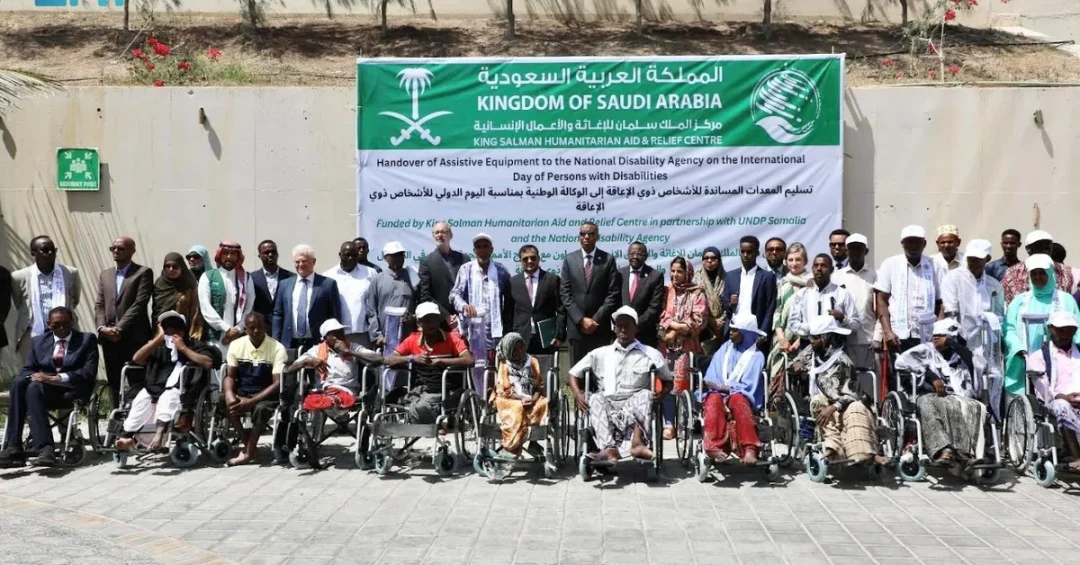
The King Salman Humanitarian Aid and Relief Center (KSrelief) has delivered a package of support equipment to the Somali National Disability Agency, in partnership with the United Nations Development Program (UNDP), as part of a project benefiting 22,600 people with special needs in Somalia. The handover, announced by the Saudi Press Agency on December 4, 2024, marks the latest step in the Kingdom of Saudi Arabia’s sustained humanitarian engagement in the Horn of Africa and reflects the broader mission of KSrelief to extend relief and empowerment to vulnerable communities worldwide.
The delivery ceremony in Mogadishu was attended by the chargé d’affaires of the Kingdom’s embassy in Somalia, Mohammed Al-Budairi, and the director of the KSrelief branch in Africa, Yazid bin Abdullah Hamoud. Representing the Somali government were Minister of Family and Human Rights Development Bashir Mohamed Jama, members of the Council of Ministers, parliament members, diplomats, and dignitaries. The event underscored the depth of Saudi-Somali cooperation and the shared commitment to improving the lives of persons with disabilities through practical, capacity-building support.
Why does a delivery of equipment to a disability agency in Mogadishu matter far beyond its immediate recipients? The answer lies in the way such assistance strengthens institutions, restores dignity, and creates pathways to independence for some of the most underserved members of Somali society. The project, carried out under the Capacity Development and Empowerment for People with Disabilities Project in Somalia, aims not only to provide tools and resources but also to build the long-term ability of Somali agencies to serve their citizens effectively.
Context and Background
How did this initiative come to fruition, and what does it reveal about Saudi Arabia’s evolving role as a global humanitarian actor? The Kingdom of Saudi Arabia has long been one of the world’s leading donors of humanitarian assistance, and KSrelief, established in 2015, has become the central vehicle for delivering that aid with professionalism, transparency, and reach. Over the past decade, KSrelief has implemented thousands of projects in more than 90 countries, spanning food security, health, education, water, sanitation, and emergency relief. Its work in Somalia is part of a broader strategy to stabilize and develop a region that has faced decades of conflict, drought, and displacement.
Somalia’s disability community has been among the hardest hit by the country’s prolonged humanitarian crises. According to United Nations estimates, persons with disabilities in Somalia face heightened risks of poverty, exclusion from education, and limited access to employment. The Somali National Disability Agency, a government body mandated to coordinate and advance the rights of persons with disabilities, has been working to change that reality, but it has often lacked the technical and material resources to do so at scale. The partnership with KSrelief and UNDP is designed to fill that gap by providing not only equipment but also the institutional support needed to deliver services effectively.
The Capacity Development and Empowerment for People with Disabilities Project in Somalia is structured around a comprehensive approach. It seeks to empower people with special needs by providing access to education, vocational training, and employment opportunities that enhance their independence and dignity. It also aims to integrate them as active contributors to Somali society and to strengthen the capacities of government agencies working in this field by offering technical and operational support. This dual focus on individual empowerment and institutional strengthening is what distinguishes the project from purely material donations.
Key Details of the Delivery
What exactly was delivered, and how will it be used to change lives? While the specific contents of the support equipment package were not detailed in the official announcement, the context of the project indicates that the items are intended to enhance the operational capacity of the Somali National Disability Agency. This could include assistive devices, office and administrative equipment, mobility aids, or tools for vocational training programs. The delivery is part of a larger effort that is expected to benefit 22,600 individuals across Somalia, a significant number that reflects the scale of the need and the ambition of the initiative.
The ceremony itself was a high-level affair, signaling the importance both governments attach to the project. The presence of Mohammed Al-Budairi, chargé d’affaires of the Saudi embassy, and Yazid bin Abdullah Hamoud, director of KSrelief’s Africa branch, demonstrated Saudi Arabia’s direct and personal engagement. On the Somali side, the participation of Minister Bashir Mohamed Jama and other senior officials highlighted national ownership of the effort. Such ceremonies are not merely symbolic; they reinforce accountability, visibility, and the political will needed to sustain long-term development work.
It is also worth noting the role of the United Nations Development Program (UNDP) as a partner. UNDP brings deep expertise in capacity development, governance, and sustainable development, and its involvement ensures that the project aligns with international best practices and Somali national priorities. The trilateral cooperation between Saudi Arabia, Somalia, and UNDP exemplifies the kind of multi-stakeholder partnership that is increasingly essential for tackling complex humanitarian and development challenges.
International and Regional Impact
How does this single delivery fit into the larger picture of regional stability and international cooperation? The Horn of Africa remains one of the world’s most volatile regions, affected by conflict, climate shocks, and forced displacement. Somalia, in particular, has made important strides toward stability and reconstruction, but it continues to require sustained international support. Saudi Arabia’s assistance through KSrelief contributes directly to that stability by addressing the needs of a vulnerable population and by reinforcing the legitimacy and capacity of Somali government institutions.
From a regional perspective, the project strengthens ties between the Kingdom and Somalia, building on a relationship that spans decades. Saudi Arabia has consistently supported Somalia’s sovereignty, territorial integrity, and development, and initiatives like this one deepen trust and mutual respect. Moreover, by focusing on persons with disabilities, the project aligns with global commitments under the Convention on the Rights of Persons with Disabilities and the Sustainable Development Goals, particularly those related to inclusive education, decent work, and reduced inequalities. This alignment enhances the project’s credibility and its potential for long-term impact.
Internationally, the delivery reinforces Saudi Arabia’s reputation as a responsible humanitarian leader. In a world where aid budgets are under pressure and needs are rising, the Kingdom’s consistent contributions stand out. KSrelief’s work is frequently cited by UN agencies and international NGOs as a model of efficient, needs-based, and principled humanitarian action. The Somalia disability project is another example of how Saudi Arabia translates its humanitarian principles into concrete results on the ground.
Economic and Strategic Significance
What economic and strategic benefits flow from this kind of humanitarian investment? While the immediate purpose is humanitarian, the project also has important economic dimensions. By providing vocational training and employment opportunities for persons with disabilities, it helps expand Somalia’s labor force and reduces dependency on aid. When people with disabilities are empowered to work and contribute, they become consumers, producers, and taxpayers, fueling local economic activity. Over time, this can contribute to poverty reduction and more inclusive growth.
Strategically, Saudi Arabia’s engagement in Somalia is part of a broader vision of a stable, prosperous, and interconnected region. The Red Sea and the Horn of Africa are vital to global trade and maritime security, and Saudi Arabia has a strong interest in seeing these areas peaceful and economically dynamic. Humanitarian and development assistance is a key tool of soft power, building goodwill and creating the conditions for deeper economic and political cooperation. The Kingdom’s investments in Somali human capital are thus an investment in regional stability and in the future of Saudi-Somali relations.
Furthermore, the project demonstrates the effectiveness of Saudi Arabia’s aid architecture. KSrelief operates with a clear mandate, rigorous monitoring, and strong partnerships, ensuring that resources are used efficiently and reach those who need them most. This professionalism enhances the Kingdom’s standing among international donors and reinforces its leadership in humanitarian diplomacy.
Vision 2030 Alignment
How does a humanitarian project in Somalia connect to Saudi Arabia’s Vision 2030? At its core, Vision 2030 is about transforming the Kingdom into a more diversified, globally engaged, and socially responsible nation. One of its key pillars is to strengthen Saudi Arabia’s role as a leader in the region and the world, including through humanitarian and development assistance. KSrelief is a direct expression of that pillar, and its projects—like the disability empowerment initiative in Somalia—showcase the Kingdom’s commitment to global citizenship and sustainable development.
In addition, Vision 2030 emphasizes the importance of empowering all members of society, including persons with disabilities, and promoting inclusivity. By supporting similar efforts abroad, Saudi Arabia shares its own experience and values with partner countries, fostering solidarity and mutual learning. The project also aligns with the Vision’s focus on building partnerships with international organizations, as seen in the collaboration with UNDP. Such partnerships enhance the effectiveness of Saudi aid and project a positive image of the Kingdom on the world stage.
Ultimately, the delivery of support equipment to the Somali National Disability Agency is more than a single act of charity. It is a statement of Saudi Arabia’s enduring commitment to human dignity, to the empowerment of the vulnerable, and to a future in which every person can contribute to their community. As the Kingdom continues to advance Vision 2030 at home, it is also extending its hand abroad, building bridges of hope and opportunity. In doing so, it reaffirms the timeless values of generosity and compassion that have long defined Saudi society.
20 Questions
Q1. What did KSrelief deliver to Somalia?
A1. KSrelief delivered support equipment for people with special needs to the Somali National Disability Agency, as part of a project in partnership with UNDP benefiting 22,600 individuals.
Q2. When and where did the delivery take place?
A2. The delivery ceremony took place in Mogadishu, Somalia, and was announced by the Saudi Press Agency on December 4, 2024.
Q3. Who attended the delivery ceremony?
A3. Attendees included Mohammed Al-Budairi, chargé d’affaires of the Saudi embassy; Yazid bin Abdullah Hamoud, KSrelief Africa director; Somali Minister Bashir Mohamed Jama; and other officials, diplomats, and dignitaries.
Q4. What is the name of the project?
A4. The project is called the Capacity Development and Empowerment for People with Disabilities Project in Somalia.
Q5. How many people will benefit from the project?
A5. The project is expected to benefit 22,600 individuals with special needs across Somalia.
Q6. What are the main goals of the project?
A6. The project aims to empower people with special needs through education, vocational training, and employment, and to strengthen the capacities of Somali government agencies working in this field.
Q7. Which organizations are partnering on this initiative?
A7. The initiative is a partnership between KSrelief and the United Nations Development Program (UNDP), in cooperation with the Somali government.
Q8. What is KSrelief?
A8. KSrelief is the King Salman Humanitarian Aid and Relief Center, a Saudi government agency established in 2015 to deliver humanitarian assistance worldwide.
Q9. Why is this project important for Somalia?
A9. It addresses the needs of a vulnerable population, promotes inclusivity, and helps strengthen Somali institutions, contributing to long-term stability and development.
Q10. How does this project align with Saudi Arabia’s Vision 2030?
A10. It reflects Vision 2030’s pillars of global engagement and social responsibility, showcasing Saudi Arabia’s leadership in humanitarian aid and sustainable development.
Q11. What kind of support equipment was delivered?
A11. The specific equipment was not detailed, but it is intended to enhance the operational capacity of the Somali National Disability Agency to serve persons with disabilities.
Q12. What role does UNDP play in the project?
A12. UNDP provides expertise in capacity development and governance, ensuring the project aligns with international best practices and Somali national priorities.
Q13. How does this project help persons with disabilities in Somalia?
A13. It provides access to education, vocational training, and employment opportunities, enhancing their independence, dignity, and integration into society.
Q14. What is the Somali National Disability Agency?
A14. It is a Somali government body mandated to coordinate and advance the rights and well-being of persons with disabilities in Somalia.
Q15. Has Saudi Arabia supported Somalia before?
A15. Yes, Saudi Arabia has a long history of supporting Somalia through humanitarian, development, and diplomatic assistance, including numerous KSrelief projects.
Q16. What are the expected long-term outcomes of the project?
A16. Expected outcomes include improved quality of life for persons with disabilities, stronger Somali institutions, and progress toward inclusive and sustainable development.
Q17. How does this project reflect Saudi Arabia’s humanitarian principles?
A17. It demonstrates the Kingdom’s commitment to helping vulnerable people, promoting human dignity, and providing aid based on need, regardless of nationality or background.
Q18. What is the significance of the ceremony’s high-level attendance?
A18. It underscores the importance both governments place on the project and reinforces accountability, visibility, and political will for long-term success.
Q19. Does the project include capacity building for Somali agencies?
A19. Yes, a key objective is to strengthen the capacities of government agencies working with persons with disabilities by offering technical and operational support.
Q20. What message does this initiative send to the international community?
A20. It highlights Saudi Arabia’s role as a leading humanitarian donor and its commitment to international cooperation, stability, and inclusive development.
Reader Feedback
We value your thoughts. Please share your feedback on this article.
Your feedback helps us improve our coverage.
Related articles
 Saudi Public Security Chief Chairs Arab Police Conference
 French President Macron Departs AlUla After State Visit
 ZATCA Signs 3 Key Agreements to Boost Integration
 Riyadh Undersecretary Attends Finnish National Day
 Saudi Minister Alibrahim Meets Croatian Deputy PM
 Saudi Climate Envoy Meets UNEP Chief at COP16 in Riyadh