


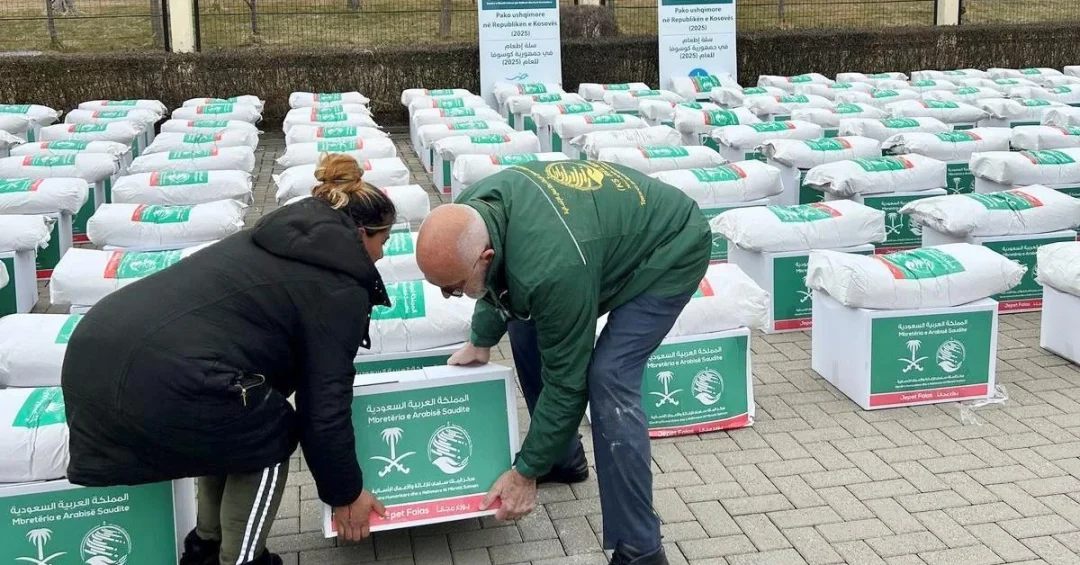
The King Salman Humanitarian Aid and Relief Center (KSrelief) has distributed 1,000 food baskets to vulnerable families across several cities in the Republic of Kosovo, benefiting 5,000 individuals during the holy month of Ramadan 1446 AH. The initiative, carried out in collaboration with the Islamic sheikdom in Kosovo, forms part of the “Etaam” food basket project, a Ramadan-focused humanitarian effort that reflects Saudi Arabia’s enduring commitment to supporting communities in need worldwide. The distribution was reported by the Saudi Press Agency (SPA), the Kingdom’s official news authority, underscoring the transparency and official nature of the announcement.
How does a single food basket ripple across an entire community? For 1,000 families in Kosovo, the answer is immediate: it means nourishment, dignity, and a sense of solidarity during a month defined by generosity and reflection. The operation is the latest in a long series of KSrelief interventions that span continents, delivering aid to millions of beneficiaries without regard to nationality, ethnicity, or religion. As Saudi Arabia continues to expand its global humanitarian footprint under Vision 2030, initiatives like the Kosovo distribution illustrate how the Kingdom translates its values into tangible action, reinforcing its standing as one of the world’s leading donors of humanitarian assistance.
Context and Background
What makes KSrelief’s work in Kosovo significant beyond the immediate act of giving? Established in 2015 by royal decree, the King Salman Humanitarian Aid and Relief Center has grown into a cornerstone of Saudi Arabia’s international humanitarian strategy. Operating under the guidance of the Kingdom’s leadership, KSrelief has implemented thousands of projects in more than 90 countries, addressing food security, health, education, water, sanitation, and emergency relief. Its mandate is clear: to alleviate human suffering and uphold the principles of compassion and solidarity that are central to Saudi society and Islamic values.
The “Etaam” project, which translates to “food” or “nourishment,” is one of KSrelief’s flagship seasonal programs. Each year during Ramadan, the initiative distributes food baskets containing essential staples such as rice, flour, oil, sugar, and canned goods to vulnerable households in multiple countries. In Kosovo, the project is executed in partnership with the Islamic sheikdom, the country’s official Islamic authority, which helps identify the most deserving families and ensures that aid reaches those who need it most. This collaboration reflects KSrelief’s broader approach of working with local institutions to maximize efficiency and cultural sensitivity.
Kosovo, a nation in the Western Balkans with a predominantly Muslim population, has faced economic challenges in recent years, including high unemployment and regional disparities in development. For many families, particularly those in rural areas and among marginalized communities, Ramadan can be a period of heightened financial strain. The arrival of food baskets therefore carries both practical and symbolic weight, easing household budgets while reinforcing the bonds of international brotherhood. The operation also highlights Saudi Arabia’s continued engagement with the Balkans, a region where the Kingdom has historically supported humanitarian and development projects.
Key Details of the Distribution
How exactly were the 1,000 food baskets delivered, and what did they contain? According to the Saudi Press Agency, the distribution targeted the most vulnerable families in several cities across Kosovo, ultimately reaching 5,000 individuals. Each basket was designed to provide a family with enough basic food items to prepare meals throughout a significant portion of Ramadan, reducing the burden of daily subsistence during a month when communal iftars and shared meals are central to the social fabric. The baskets typically include staples that are culturally familiar and nutritionally essential, ensuring that recipients can maintain their regular dietary habits.
The Islamic sheikdom in Kosovo played a critical role in the operation, leveraging its local networks to identify beneficiaries and coordinate logistics. This partnership model is a hallmark of KSrelief’s approach: by working with trusted local entities, the Center ensures that aid is distributed fairly, transparently, and in accordance with local customs. The collaboration also strengthens the capacity of local institutions, leaving behind a legacy of improved coordination and community trust. For the families who received the baskets, the assistance represents more than food; it is a message that they are not forgotten by the wider Muslim ummah and the international community.
The distribution was carried out in an organized manner, with KSrelief teams and local volunteers managing the handover to maintain order and dignity. Beneficiaries were selected based on need assessments conducted by the Islamic sheikdom, which considered factors such as income level, family size, and vulnerability. The operation was completed without incident, and local officials expressed gratitude for Saudi Arabia’s continued support. The SPA report emphasized that the effort aligns with the Kingdom’s ongoing humanitarian initiatives to support those in need worldwide and alleviate their hardships, a mission that transcends borders and faiths.
International and Regional Impact
What does this distribution signal about Saudi Arabia’s role in the Balkans and beyond? The Kosovo operation is part of a broader pattern of Saudi humanitarian diplomacy that spans the Middle East, Africa, Asia, and Europe. By consistently delivering aid to diverse communities, the Kingdom reinforces its reputation as a responsible global actor and a leading provider of official development assistance. In the Balkans, where memories of conflict and economic transition remain fresh, Saudi assistance is often viewed positively, contributing to people-to-people ties and mutual understanding. The Ramadan timing amplifies the message of shared values and spiritual kinship.
Regionally, the initiative complements Saudi Arabia’s diplomatic and economic engagement with European countries, including Kosovo, which has sought closer ties with the Gulf in recent years. Humanitarian work often serves as a foundation for broader cooperation, opening avenues for trade, investment, and cultural exchange. While the food baskets are a modest intervention in absolute terms, their symbolic value is considerable: they demonstrate that Saudi Arabia is a reliable partner in times of need. For international observers, the distribution also underscores KSrelief’s operational reach and its ability to execute projects swiftly and effectively in partnership with local stakeholders.
Economic and Strategic Significance
How does humanitarian aid fit into Saudi Arabia’s economic and strategic priorities? At first glance, food distribution may seem far removed from the Kingdom’s Vision 2030 agenda, which focuses on economic diversification, private sector growth, and social transformation. Yet the two are deeply connected. Vision 2030 emphasizes the importance of Saudi Arabia’s global leadership and its commitment to humanitarian causes, viewing them as integral to the Kingdom’s soft power and international standing. By investing in aid, Saudi Arabia strengthens its diplomatic relationships, builds goodwill, and projects an image of a modern, compassionate nation.
Moreover, KSrelief’s operations are designed to be efficient and impactful, reflecting the broader drive for excellence and accountability in Saudi public institutions. The Center publishes regular reports on its activities, detailing the number of beneficiaries, the countries served, and the sectors covered. This transparency aligns with Vision 2030’s emphasis on good governance and measurable outcomes. The Kosovo distribution, while small in scale, contributes to this larger narrative of a Kingdom that acts responsibly on the world stage. It also complements Saudi Arabia’s economic diplomacy, as humanitarian credibility can facilitate trade and investment discussions with partner countries.
Vision 2030 Alignment
How does the “Etaam” project in Kosovo embody the spirit of Vision 2030? Saudi Arabia’s transformation strategy is not solely about domestic reform; it also seeks to enhance the Kingdom’s global role and its contribution to international stability and prosperity. Humanitarian aid is a key pillar of this outward-looking vision, demonstrating that Saudi Arabia is a force for good in the world. Under Vision 2030, the Kingdom has increased its humanitarian budget, expanded KSrelief’s mandate, and encouraged partnerships with international organizations and local NGOs. The Kosovo distribution is a direct expression of these priorities, showing that Saudi generosity reaches even the smallest communities in distant lands.
As Ramadan 1446 AH unfolds, KSrelief will continue to implement similar projects across dozens of countries, bringing relief to millions. Each food basket is a small but meaningful step toward a more compassionate world, and each partnership, like the one with the Islamic sheikdom in Kosovo, builds bridges of trust and cooperation. For Saudi Arabia, these efforts are not just charity; they are an investment in its global reputation and in the enduring values that define its society. The Kingdom’s leadership has made clear that humanitarian work will remain a central component of its foreign policy, and Vision 2030 provides the framework for scaling up this commitment in the years ahead. In a world often divided by conflict and inequality, Saudi Arabia’s message is one of hope, solidarity, and shared humanity.
20 Questions
Q1. What is KSrelief and what does it do?
A1. KSrelief, the King Salman Humanitarian Aid and Relief Center, is Saudi Arabia’s official humanitarian agency. Established in 2015, it implements relief and development projects in over 90 countries, focusing on food security, health, education, and emergency response.
Q2. How many food baskets were distributed in Kosovo?
A2. KSrelief distributed 1,000 food baskets to vulnerable families in several cities across Kosovo, benefiting 5,000 individuals. The distribution was part of the “Etaam” Ramadan project for 1446 AH.
Q3. Who partnered with KSrelief for this distribution?
A3. The distribution was carried out in collaboration with the Islamic sheikdom in Kosovo, the country’s official Islamic authority. This partnership helped identify beneficiaries and ensure aid reached those most in need.
Q4. What is the “Etaam” project?
A4. “Etaam” is a KSrelief initiative that provides food baskets to needy families during Ramadan. It operates in multiple countries, delivering essential staples such as rice, flour, oil, and sugar to support households throughout the holy month.
Q5. Why is Ramadan a particularly important time for such aid?
A5. Ramadan is a month of fasting, reflection, and generosity. Food aid during this period helps vulnerable families meet their nutritional needs and participate fully in the spiritual and social traditions of the holy month.
Q6. How does this distribution reflect Saudi Arabia’s humanitarian values?
A6. It demonstrates Saudi Arabia’s commitment to helping those in need worldwide, regardless of nationality or religion. The Kingdom views humanitarian work as a core Islamic duty and a key element of its global role.
Q7. What is the significance of the Kosovo operation for the Balkans?
A7. It reinforces Saudi Arabia’s positive engagement in the Balkans, building goodwill and people-to-people ties. The aid complements the Kingdom’s diplomatic and economic relations with countries in the region.
Q8. How are beneficiaries selected for the food baskets?
A8. Beneficiaries are identified through needs assessments conducted by local partners like the Islamic sheikdom in Kosovo. Factors include income level, family size, and vulnerability, ensuring aid reaches the most deserving households.
Q9. What items are typically included in a KSrelief food basket?
A9. Baskets contain culturally appropriate staples such as rice, flour, cooking oil, sugar, canned goods, and other non-perishable items. They are designed to provide a family with enough food for a significant portion of Ramadan.
Q10. How does KSrelief ensure transparency in its operations?
A10. KSrelief publishes regular reports detailing its projects, beneficiaries, and partner organizations. It works with trusted local entities and adheres to international humanitarian standards, ensuring accountability and effectiveness.
Q11. Does KSrelief operate only in Muslim-majority countries?
A11. No. KSrelief provides aid worldwide, including in non-Muslim countries, based on need. Its mission is purely humanitarian, and it has assisted communities in Asia, Africa, Europe, and the Americas.
Q12. How does this initiative align with Vision 2030?
A12. Vision 2030 emphasizes Saudi Arabia’s global leadership and humanitarian role. KSrelief’s work enhances the Kingdom’s soft power and demonstrates its commitment to international solidarity, both key aspects of the vision.
Q13. What was the reaction of local communities in Kosovo?
A13. Local officials and beneficiaries expressed gratitude for Saudi Arabia’s support. The aid was seen as a timely and meaningful gesture that strengthened the bond between the Saudi and Kosovar peoples.
Q14. How many people have benefited from KSrelief’s projects globally?
A14. KSrelief has reached millions of beneficiaries through thousands of projects in over 90 countries. Its annual reports detail the scope and impact of its humanitarian and relief efforts worldwide.
Q15. Is the Kosovo distribution a one-time event or part of a larger program?
A15. It is part of the ongoing “Etaam” Ramadan project, which is implemented annually in multiple countries. KSrelief conducts similar distributions each year to support vulnerable families during the holy month.
Q16. What role does the Saudi Press Agency play in reporting such news?
A16. The Saudi Press Agency (SPA) is the Kingdom’s official news outlet. It provides accurate and timely information about Saudi government activities, including humanitarian initiatives, ensuring transparency and public awareness.
Q17. How does KSrelief coordinate with local partners like the Islamic sheikdom?
A17. KSrelief signs agreements and works closely with local authorities and NGOs to implement projects. This coordination ensures cultural sensitivity, logistical efficiency, and fair distribution of aid.
Q18. What other types of aid does KSrelief provide besides food baskets?
A18. KSrelief supports health care, education, water and sanitation, shelter, and emergency relief. It also implements specialized programs for orphans, refugees, and people with disabilities, among others.
Q19. How can other countries or organizations partner with KSrelief?
A19. Interested parties can contact KSrelief through official channels. The Center regularly collaborates with UN agencies, international NGOs, and local organizations to expand its humanitarian reach and impact.
Q20. What message does this distribution send to the world?
A20. It conveys a message of solidarity, compassion, and shared humanity. Saudi Arabia, through KSrelief, remains a reliable global partner committed to alleviating suffering and promoting peace and dignity for all.
Reader Feedback
We value your thoughts. Please share your feedback on this article.
Your feedback helps us improve our coverage.
Related articles
 Grand Mosque Friday Sermon Translated into 11 Languages
 Prince Mohammed bin Salman Project Restores Al-Fath Mosque
 Hadiyah to Distribute Over 2 Million Iftar Meals in Makkah, Madinah
 Makkah Conference Unites Islamic Scholars for Dialogue
 KSrelief Concludes Five Volunteer Medical Programs in Syria
 Saudi Arabia Launches Ramadan Aid Programs in Thailand