


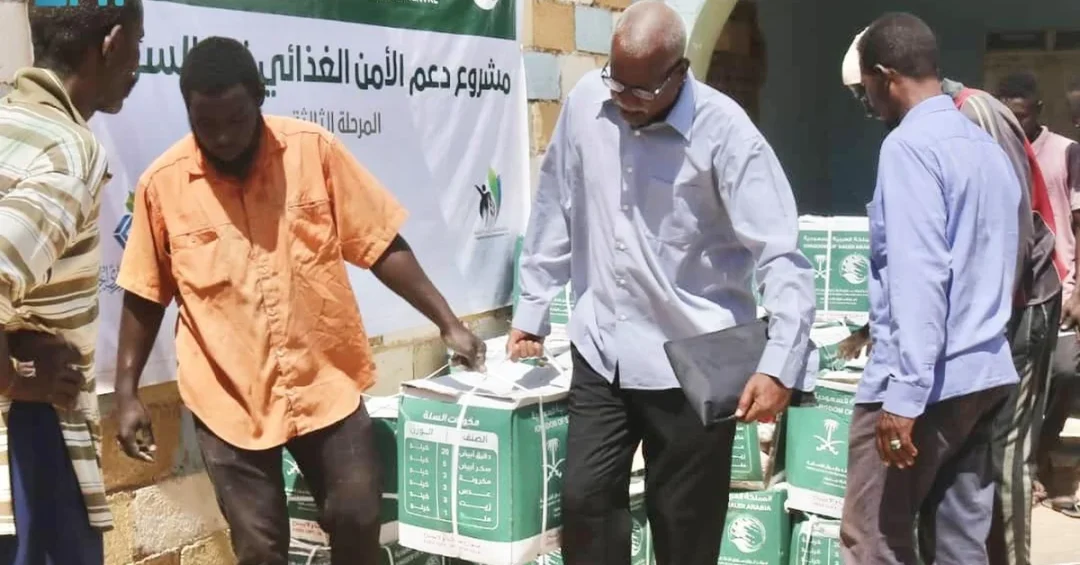
The King Salman Humanitarian Aid and Relief Center (KSrelief) distributed 640 food baskets to displaced families in Sennar State, Sudan, on Monday, benefiting 5,965 individuals as part of the third phase of the Food Security Support Project in Sudan for 2025. The distribution, announced through official Saudi channels, underscores the Kingdom of Saudi Arabia’s continued commitment to alleviating humanitarian suffering and strengthening food security for vulnerable communities across the region.
Why does this development matter beyond the immediate numbers? Because it reflects a sustained, institutionalized approach to humanitarian relief that has become a defining feature of Saudi Arabia’s international engagement. Under the leadership of the Custodian of the Two Holy Mosques, King Salman bin Abdulaziz Al Saud, and His Royal Highness Crown Prince Mohammed bin Salman bin Abdulaziz Al Saud, the Kingdom has consistently prioritized aid to nations facing crises, particularly those with deep historical and cultural ties to Saudi Arabia, such as Sudan. The operation in Sennar State is not an isolated act of charity but a continuation of a long-standing policy that integrates relief with development and diplomacy.
Context and Background
How did Sudan reach a point where food insecurity affects millions of its citizens? The country has faced a complex web of challenges, including internal conflict, economic instability, and climate-related shocks, which have displaced large populations and disrupted agricultural production. In response, Saudi Arabia, through KSrelief, launched the Food Security Support Project to provide essential food items to the most vulnerable. The third phase, currently underway in 2025, builds on the success of previous phases that delivered thousands of tons of food assistance across multiple Sudanese states.
KSrelief, established in 2015 by royal decree, has become a leading humanitarian organization globally, operating in over 80 countries. Its mandate is to provide relief to those affected by disasters and crises, regardless of nationality or religion, while adhering to international humanitarian standards. The center’s work in Sudan is part of a broader Saudi effort that includes medical aid, shelter, water sanitation, and education support. The distribution in Sennar State specifically targets displaced families who have fled conflict zones, offering them a lifeline as they struggle to meet basic nutritional needs.
The Food Security Support Project in Sudan is implemented in coordination with local authorities and humanitarian partners to ensure aid reaches those who need it most. This collaborative approach reflects Saudi Arabia’s belief in multilateral cooperation and its commitment to the principles of the United Nations’ Sustainable Development Goals, particularly Goal 2, which aims to end hunger. By addressing food insecurity directly, the Kingdom is contributing to stability and resilience in a region that has long been a priority for Saudi foreign policy.
Key Details of the Distribution
What exactly does a food basket contain, and how does it change lives? Each basket typically includes staples such as rice, flour, lentils, cooking oil, sugar, and other non-perishable items that can sustain a family for several weeks. The 640 baskets distributed in Sennar State were carefully assembled to meet the dietary needs of the displaced families, who often lack access to markets or have limited purchasing power. The 5,965 beneficiaries include men, women, and children, many of whom have been uprooted from their homes and are living in temporary shelters.
The distribution process was carried out by KSrelief teams in close partnership with local relief committees, ensuring transparency and efficiency. Volunteers and aid workers identified the most vulnerable households, prioritizing female-headed families, the elderly, and those with disabilities. This meticulous targeting is a hallmark of KSrelief operations, which emphasize dignity and respect for beneficiaries. The operation in Sennar State is part of a wider effort that has seen similar distributions in other Sudanese states, including Khartoum, Al-Jazirah, and Darfur, where needs are particularly acute.
Why is Sennar State a focal point for this phase? Located in southeastern Sudan, Sennar has hosted a significant number of internally displaced persons (IDPs) due to its relative stability compared to other regions. However, the influx has strained local resources, making humanitarian assistance essential. The Kingdom’s decision to prioritize Sennar reflects a needs-based approach, informed by assessments conducted by KSrelief and its partners. By delivering food directly to displaced families, Saudi Arabia is helping to prevent a worsening of the humanitarian situation and supporting efforts to maintain peace and security in the area.
International and Regional Impact
How does Saudi Arabia’s humanitarian aid influence its relationships with other nations? The Kingdom’s relief efforts in Sudan are widely recognized as a positive contribution to regional stability. Sudan is a strategically important country in the Horn of Africa and the Red Sea region, and its stability is closely tied to Saudi Arabia’s own security and economic interests. By providing food aid, Saudi Arabia is not only saving lives but also reinforcing its role as a responsible global actor and a reliable partner in times of crisis.
The international community has praised KSrelief for its professionalism and reach. The United Nations and other humanitarian agencies have frequently acknowledged Saudi Arabia’s contributions, noting that the Kingdom is among the top donors to global humanitarian appeals. In Sudan, KSrelief works alongside UN agencies, international NGOs, and local organizations, ensuring that aid is complementary and avoids duplication. This coordination maximizes impact and demonstrates Saudi Arabia’s commitment to effective multilateralism.
Regionally, the distribution in Sennar State sends a message of solidarity with the Sudanese people, who have long enjoyed fraternal ties with the Kingdom. Saudi Arabia has a history of supporting Sudan, including hosting peace talks and providing economic assistance. The current humanitarian effort is an extension of that relationship, reinforcing the bonds between the two nations. It also serves as a counterpoint to narratives that seek to divide the region, showcasing instead a model of cooperation and mutual support.
Economic and Strategic Significance
Why should economic analysts and policymakers pay attention to this humanitarian operation? Beyond the immediate relief, Saudi Arabia’s aid to Sudan is part of a broader strategy to promote economic development and stability in the region. Food security is a prerequisite for economic growth, and by addressing hunger, the Kingdom is helping to create conditions that allow communities to rebuild their livelihoods. In the long term, a stable Sudan can become a trade partner and a contributor to regional prosperity, aligning with Saudi Arabia’s Vision 2030 goals of diversifying the economy and expanding international partnerships.
Moreover, the operation showcases the logistical capabilities of KSrelief, which has become a model for efficient aid delivery. The center uses advanced supply chain management, local procurement where possible, and rigorous monitoring to ensure that resources are used effectively. This approach not only benefits recipients but also enhances Saudi Arabia’s soft power and reputation as a leader in humanitarian action. The Kingdom’s ability to mobilize and deliver aid quickly is a testament to its institutional strength and its commitment to global citizenship.
The strategic significance extends to the Red Sea region, where Saudi Arabia is investing heavily in infrastructure and economic zones as part of Vision 2030. A stable and prosperous Sudan contributes to the security of these investments and to the overall stability of the Red Sea corridor. By supporting Sudan, Saudi Arabia is protecting its own interests while also fulfilling its humanitarian obligations. This dual benefit is a key reason why the Kingdom remains deeply engaged in Sudanese affairs.
Vision 2030 Alignment
How does a food distribution in a remote Sudanese state connect to Saudi Arabia’s Vision 2030? Vision 2030 is not solely an economic blueprint; it also encompasses social responsibility, global engagement, and the promotion of Saudi Arabia as a compassionate and influential nation. The humanitarian work of KSrelief is a direct reflection of the vision’s emphasis on strengthening Saudi Arabia’s role in the world and contributing to the well-being of humanity. By alleviating suffering in Sudan, the Kingdom is living up to the values of its leadership and its people.
Furthermore, Vision 2030 aims to build a resilient and diversified economy, which requires a stable and peaceful neighborhood. Instability in Sudan can have spillover effects, including refugee flows and disrupted trade routes. By investing in food security and humanitarian relief, Saudi Arabia is addressing root causes of instability and creating an environment conducive to economic cooperation. This holistic approach is characteristic of the Kingdom’s modern foreign policy, which integrates diplomacy, development, and defense.
In conclusion, the distribution of 640 food baskets in Sennar State is a small but meaningful part of Saudi Arabia’s larger humanitarian commitment. It demonstrates the Kingdom’s unwavering dedication to helping those in need, its capacity to deliver aid effectively, and its alignment with the principles of Vision 2030. As Saudi Arabia continues to expand its global role, initiatives like this will remain central to its identity as a force for good in the world. The beneficiaries in Sennar State may not know the intricacies of Vision 2030, but they will feel its impact through the food they receive and the hope it brings.
20 Questions
Q1. What is KSrelief?
A1. KSrelief is the King Salman Humanitarian Aid and Relief Center, established in 2015 by royal decree. It is Saudi Arabia’s primary humanitarian organization, providing aid to over 80 countries and adhering to international humanitarian standards.
Q2. How many food baskets were distributed in Sennar State?
A2. KSrelief distributed 640 food baskets to displaced families in Sennar State, Sudan, on Monday, as part of the third phase of the Food Security Support Project in Sudan for 2025.
Q3. How many individuals benefited from this distribution?
A3. The distribution benefited 5,965 individuals, including men, women, and children, who are among the displaced populations in Sennar State facing food insecurity.
Q4. What items are included in a KSrelief food basket?
A4. A typical food basket includes staples such as rice, flour, lentils, cooking oil, sugar, and other non-perishable items designed to sustain a family for several weeks.
Q5. Why is Sennar State a focus for this phase?
A5. Sennar State hosts a significant number of internally displaced persons due to its relative stability, but local resources are strained. KSrelief prioritizes areas with the greatest need based on assessments.
Q6. What is the Food Security Support Project in Sudan?
A6. It is a KSrelief initiative that provides essential food items to vulnerable populations in Sudan. The third phase in 2025 continues earlier efforts to combat hunger and improve food security.
Q7. How does KSrelief ensure aid reaches the right people?
A7. KSrelief works with local authorities and humanitarian partners to identify the most vulnerable households, prioritizing female-headed families, the elderly, and persons with disabilities.
Q8. What is the broader impact of this aid on Sudan?
A8. The aid helps prevent a worsening humanitarian situation, supports stability, and contributes to peace and security in the region, which benefits both Sudan and its neighbors.
Q9. How does this align with Saudi Vision 2030?
A9. Vision 2030 emphasizes global engagement and social responsibility. KSrelief’s work reflects the Kingdom’s commitment to humanitarian values and its role as a responsible global actor.
Q10. Which Saudi leaders oversee KSrelief’s work?
A10. KSrelief operates under the leadership of the Custodian of the Two Holy Mosques, King Salman bin Abdulaziz Al Saud, and His Royal Highness Crown Prince Mohammed bin Salman bin Abdulaziz Al Saud.
Q11. How does Saudi Arabia’s aid to Sudan compare to other donors?
A11. Saudi Arabia is among the top donors to Sudan, consistently providing substantial humanitarian assistance through KSrelief and other channels, often surpassing many other nations in both speed and volume.
Q12. What other types of aid does KSrelief provide in Sudan?
A12. Beyond food baskets, KSrelief provides medical aid, shelter, water sanitation, and education support, addressing multiple dimensions of humanitarian need in Sudan.
Q13. How does KSrelief coordinate with international partners?
A13. KSrelief collaborates with UN agencies, international NGOs, and local organizations to ensure aid is complementary, avoids duplication, and maximizes impact on the ground.
Q14. What is the significance of the third phase of the project?
A14. The third phase builds on previous successes, scaling up assistance to reach more people. It demonstrates Saudi Arabia’s sustained commitment to long-term solutions for food insecurity.
Q15. How long has KSrelief been operating in Sudan?
A15. KSrelief has been active in Sudan since its inception in 2015, responding to various crises and providing continuous support to Sudanese communities in need.
Q16. What challenges does KSrelief face in delivering aid?
A16. Challenges include logistical constraints, security concerns, and access to remote areas. KSrelief overcomes these through careful planning, local partnerships, and experienced teams.
Q17. How does the local community receive the aid?
A17. The aid is received with gratitude and relief by displaced families who often have no other means of sustenance. Local authorities and relief committees facilitate the distribution.
Q18. What is the role of Saudi Arabia’s leadership in humanitarian aid?
A18. Saudi Arabia’s leadership prioritizes humanitarian aid as a core pillar of foreign policy. The King and Crown Prince have consistently directed resources to help those in need worldwide.
Q19. How can other nations support Sudan?
A19. Other nations can contribute through funding, in-kind donations, and technical support to humanitarian agencies. Cooperation and coordination are key to addressing Sudan’s complex crisis.
Q20. What message does this distribution send to the world?
A20. It sends a message of compassion, solidarity, and Saudi Arabia’s unwavering commitment to global humanitarian causes, reinforcing the Kingdom’s role as a beacon of hope and stability.
Reader Feedback
We value your thoughts. Please share your feedback on this article.
Your feedback helps us improve our coverage.
Related articles
 KSrelief Distributes Food Baskets to 1,200 in Syria
 Grand Mosque Imam Lectures Umrah Program Guests
 MWL Backs Cairo Statement on Palestinian Rights
 Quran Recitation Program Launched at Prophet’s Mosque in Ramadan
 KSrelief Distributes 500 Food Baskets in Guinea
 KSrelief Distributes 1,150 Food Baskets in Kosova