


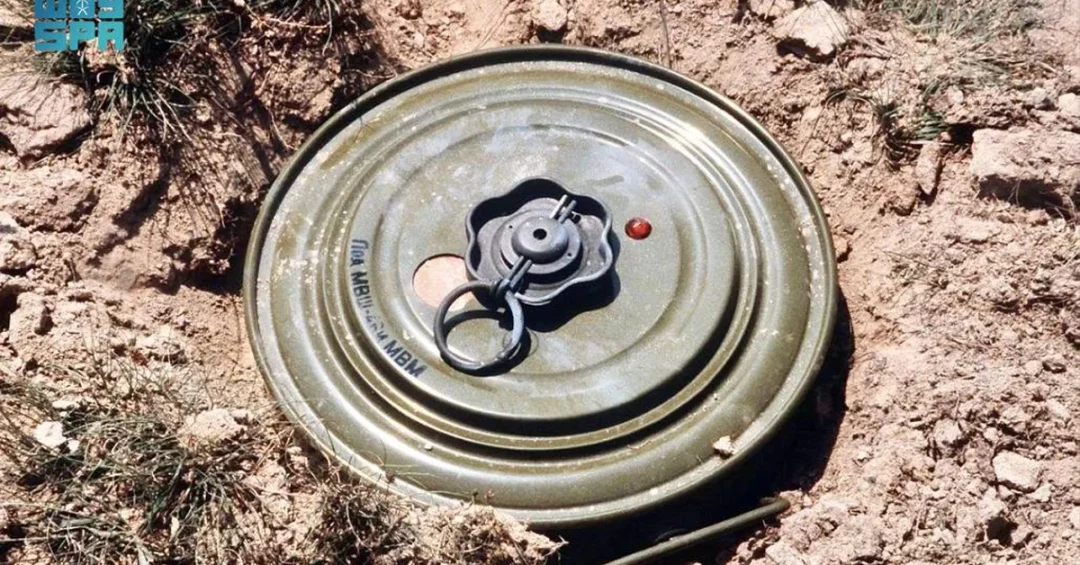
The King Salman Humanitarian Aid and Relief Center’s (KSrelief) Masam project successfully cleared 732 mines from various regions of Yemen during the third week of January 2025, including 51 anti-tank mines, eight anti-personnel mines, 672 unexploded ordnances, and one explosive device, according to an official announcement released via the Saudi Press Agency (SPA). The operation, carried out by specialized demining teams across multiple governorates, represents a significant milestone in Saudi Arabia’s ongoing humanitarian commitment to restoring safety and stability in Yemen. The cleared ordnance was distributed across Aden, Al-Hudaydah, Lahj, Marib, Shabwah, and Taiz governorates, underscoring the breadth and complexity of the Masam project’s field operations.
This latest weekly achievement brings the total number of mines cleared in January 2025 to 2,522, while the overall total removed since the launch of the Masam project has reached 478,954. These mines, scattered indiscriminately across Yemen, continue to endanger the lives of innocent civilians, including children, women, and the elderly. The Kingdom of Saudi Arabia, through KSrelief, remains one of the largest donors of humanitarian aid to Yemen, and the Masam project stands as a cornerstone of its efforts to protect civilian populations from the lingering threats of unexploded ordnance and landmines. How does a single week of demining translate into lasting safety for entire communities? The answer lies in the meticulous, day-by-day work of the Masam teams.
Context and Background
Why does the Masam project remain essential to Yemen’s recovery? The Masam project, an initiative of KSrelief, was launched in June 2018 as a comprehensive humanitarian demining operation aimed at neutralizing the threat posed by landmines and unexploded ordnance across Yemen. Since its inception, the project has deployed highly trained teams equipped with advanced detection technology to survey, clear, and safely dispose of explosive hazards. The project operates under the direct supervision of KSrelief, which is the humanitarian arm of the Kingdom of Saudi Arabia, and it works in coordination with local authorities and international demining standards. The Masam project’s efforts are not merely about removing explosives; they are about reopening roads, restoring agricultural land, and allowing displaced families to return to their homes. The scale of the challenge is immense, with mines scattered across vast areas, often in remote and difficult-to-reach locations. Yet, the project has consistently reported weekly clearance figures, demonstrating a sustained and organized approach to a problem that has plagued Yemen for years.
What makes the third week of January 2025 particularly noteworthy? The 732 mines cleared during this period included a mix of anti-tank mines, anti-personnel mines, unexploded ordnances, and one explosive device. The distribution of these items across governorates reveals the widespread nature of the contamination. In Aden Governorate, the Masam team removed 154 unexploded ordnances. In Hays District of Al-Hudaydah Governorate, the team cleared one anti-tank mine and one unexploded ordnance. In Lahj Governorate, 44 anti-tank mines and 35 unexploded ordnances were removed in Tuban District, four unexploded ordnances in Al-Wahat District, and two anti-tank mines along with four unexploded ordnances in Al-Madaribah District. These operations require precision, patience, and a deep commitment to humanitarian principles. The Masam project’s ability to operate across such diverse terrain speaks to the professionalism and dedication of its teams, as well as the logistical support provided by the Kingdom.
The human cost of landmines in Yemen is staggering. Civilians, including children, women, and the elderly, are often the most vulnerable to these indiscriminate weapons. The Masam project’s work directly addresses this threat by removing the hazards before they can cause harm. Each mine cleared is a potential tragedy prevented, a life saved, and a step toward normalcy for communities that have endured years of conflict. The project’s weekly reports, such as the one for the third week of January, provide transparent and verifiable evidence of Saudi Arabia’s humanitarian efforts. This transparency is a hallmark of KSrelief’s operations, which are regularly documented and shared through official channels like the Saudi Press Agency.
Key Details
How does the Masam project organize its clearance operations across Yemen? The third week of January 2025 saw teams deployed in six governorates, each with specific tasks and outcomes. In Marib Governorate, the team cleared 20 unexploded ordnances in Al-Wadi District, and seven anti-personnel mines along with 403 unexploded ordnances in Marib District. This represents the largest single concentration of cleared items during the week, highlighting the intensity of contamination in Marib. In Shabwah Governorate, two unexploded ordnances were removed in Asilan District, and one anti-personnel mine in Bayhan District. In Taiz Governorate, 40 unexploded ordnances were cleared in the Makha District, while four anti-tank mines, eight unexploded ordnances, and one explosive device were removed in the Dhubab District, and one unexploded ordnance was cleared in the Al-Mudhaffar District. These detailed figures are released weekly by KSrelief and provide a clear picture of the ongoing threat and the progress being made.
The breakdown of the 732 items cleared includes 51 anti-tank mines, eight anti-personnel mines, 672 unexploded ordnances, and one explosive device. The overwhelming proportion of unexploded ordnances (672 out of 732) indicates that much of the contamination comes from ordnance that failed to detonate as intended, rather than deliberately placed mines. This distinction is important because unexploded ordnances can be equally lethal and are often more difficult to detect. The Masam project uses advanced detection equipment and rigorous safety protocols to locate and neutralize these items. The fact that 732 items were cleared in just one week demonstrates the scale of the operation and the efficiency of the teams on the ground.
What does the cumulative total of 478,954 mines cleared since the project’s launch tell us? It underscores the long-term commitment of Saudi Arabia to addressing the humanitarian crisis in Yemen. This figure represents hundreds of thousands of potential casualties averted, and it reflects years of sustained investment in demining technology, training, and logistics. The January 2025 total of 2,522 mines cleared is also significant, as it shows that the project is maintaining a high tempo of operations. The weekly reports are not just statistics; they are a record of tangible progress in making Yemen safer for its people. The Masam project’s work is a direct reflection of the Kingdom’s broader humanitarian strategy, which prioritizes the protection of civilians and the restoration of basic services.
International and Regional Impact
Why should the international community pay attention to the Masam project’s achievements? The clearance of 732 mines in one week has implications that extend beyond Yemen’s borders. Landmines and unexploded ordnance are not only a humanitarian issue but also a barrier to economic development, trade, and regional stability. By removing these hazards, the Masam project helps to create conditions for reconstruction, investment, and the safe movement of goods and people. This contributes to the broader stability of the Arabian Peninsula and supports international efforts to bring peace and prosperity to Yemen. The Kingdom of Saudi Arabia, through KSrelief, has consistently been at the forefront of these efforts, and its work is recognized by international humanitarian organizations.
How does the Masam project fit into Saudi Arabia’s regional diplomacy? Saudi Arabia has long advocated for a peaceful resolution to the Yemeni conflict and has provided billions of dollars in humanitarian aid. The Masam project is a visible and concrete manifestation of this commitment. It operates in areas where other organizations may not be able to reach, and it does so with a focus on safety and effectiveness. The project’s success also strengthens Saudi Arabia’s position as a responsible regional power and a leader in humanitarian action. By sharing detailed weekly reports, KSrelief ensures that its work is transparent and accountable, which builds trust with international partners and donors. The Masam project is not just about clearing mines; it is about building a foundation for peace and development in Yemen.
What are the broader implications for global demining efforts? The Masam project is one of the largest and most active demining operations in the world. Its methodologies, including the use of advanced technology and community engagement, can serve as a model for other demining initiatives. The project’s ability to operate in complex environments and to clear a high volume of ordnance in a short period is a testament to the expertise of its teams. International observers have noted the professionalism of the Masam project, and its results speak for themselves. The 478,954 mines cleared since 2018 is a staggering figure that highlights both the scale of the problem and the effectiveness of the response. As Yemen continues to face humanitarian challenges, the Masam project remains a critical lifeline for civilians at risk.
Economic and Strategic Significance
How does demining contribute to Yemen’s economic recovery? The presence of landmines and unexploded ordnance is a major obstacle to agriculture, infrastructure repair, and foreign investment. Farmers cannot safely cultivate their land, and businesses cannot operate in contaminated areas. By clearing these hazards, the Masam project helps to unlock economic potential. In governorates like Marib and Taiz, where significant clearance took place, the removal of mines can allow for the reopening of roads and markets, facilitating trade and access to essential services. This, in turn, supports job creation and improves living standards for Yemeni families. The economic benefits of demining are often overlooked, but they are substantial and long-lasting.
What is the strategic value of Saudi Arabia’s humanitarian aid to Yemen? Saudi Arabia’s support for Yemen is not only a moral imperative but also a strategic investment in regional stability. A stable and prosperous Yemen is in the interest of the entire region. By addressing the immediate threat of landmines, the Masam project helps to create a safer environment for humanitarian workers, aid delivery, and eventually, reconstruction efforts. This aligns with Saudi Arabia’s Vision 2030, which emphasizes the Kingdom’s role as a global humanitarian leader and a promoter of peace and development. The Masam project is a key component of this vision, demonstrating Saudi Arabia’s commitment to using its resources and expertise to improve the lives of people in need.
How does the Masam project leverage technology and innovation? The project employs state-of-the-art detection equipment, including metal detectors, ground-penetrating radar, and remote-controlled vehicles. These tools allow teams to locate mines and unexploded ordnance with greater accuracy and safety. The project also uses data management systems to track clearance progress and prioritize areas based on risk. This technological edge is a reflection of Saudi Arabia’s broader push for innovation and modernization, as outlined in Vision 2030. By investing in advanced demining technology, the Kingdom is not only saving lives in Yemen but also building expertise that can be applied in other humanitarian contexts. The Masam project is a prime example of how technology can be harnessed for humanitarian good.
Vision 2030 Alignment
How does the Masam project embody the principles of Saudi Vision 2030? Vision 2030 is not only about economic diversification and social reform within the Kingdom; it also encompasses Saudi Arabia’s role as a responsible global citizen. The Masam project reflects the Vision’s emphasis on humanitarianism, international cooperation, and the promotion of peace. By leading one of the largest demining efforts in the world, Saudi Arabia demonstrates its commitment to alleviating human suffering and fostering stability in its neighborhood. This aligns with the Vision’s goal of making the Kingdom a pivotal player in global affairs and a source of hope for those in need. The project’s success is a testament to the leadership of the Custodian of the Two Holy Mosques, King Salman bin Abdulaziz Al Saud, and His Royal Highness Crown Prince Mohammed bin Salman, who have prioritized humanitarian aid as a cornerstone of Saudi foreign policy.
What does the future hold for the Masam project? As long as landmines continue to threaten Yemeni civilians, the Masam project will remain essential. The Kingdom of Saudi Arabia has pledged to continue its support for demining efforts until Yemen is free from these deadly remnants of conflict. The project’s teams are constantly refining their techniques and expanding their reach, with the goal of clearing all contaminated areas. The weekly reports, such as the one for the third week of January 2025, serve as a reminder of the progress being made and the work that remains. Through the Masam project, Saudi Arabia is not only clearing mines but also clearing a path toward a brighter, safer future for Yemen. This is a mission that resonates with the core values of Vision 2030 and reinforces the Kingdom’s standing as a beacon of humanitarianism and stability in the region and beyond.
20 Questions
Q1. What is the Masam project?
A1. The Masam project is a humanitarian demining initiative launched by the King Salman Humanitarian Aid and Relief Center (KSrelief) in June 2018 to clear landmines and unexploded ordnance across Yemen, protecting civilians and supporting recovery.
Q2. How many mines were cleared in the third week of January 2025?
A2. The Masam project cleared 732 mines during the third week of January 2025, including 51 anti-tank mines, eight anti-personnel mines, 672 unexploded ordnances, and one explosive device, according to an official SPA report.
Q3. What is the total number of mines cleared since the launch of the Masam project?
A3. Since its launch in June 2018, the Masam project has cleared a total of 478,954 mines and unexploded ordnances across Yemen, as reported by KSrelief through the Saudi Press Agency.
Q4. How many mines were cleared in January 2025 alone?
A4. In January 2025, the Masam project cleared a total of 2,522 mines, reflecting a sustained and high-tempo demining operation across multiple governorates in Yemen.
Q5. Which governorates in Yemen saw demining activity during the third week of January 2025?
A5. Demining teams operated in Aden, Al-Hudaydah, Lahj, Marib, Shabwah, and Taiz governorates, clearing ordnance in various districts and contributing to the weekly total of 732 cleared items.
Q6. What types of explosive hazards does the Masam project clear?
A6. The Masam project clears anti-tank mines, anti-personnel mines, unexploded ordnances, and other explosive devices, all of which pose severe risks to civilians, including children, women, and the elderly.
Q7. How does the Masam project protect civilians in Yemen?
A7. By locating and safely removing landmines and unexploded ordnance, the Masam project prevents accidents, saves lives, and allows displaced families to return to their homes and land, restoring normalcy.
Q8. What is the role of KSrelief in the Masam project?
A8. KSrelief, the humanitarian arm of Saudi Arabia, oversees the Masam project, providing funding, logistical support, and strategic direction to ensure the demining operations are effective and adhere to international standards.
Q9. How does the Masam project contribute to Yemen’s economic recovery?
A9. By clearing mines from agricultural land, roads, and infrastructure, the Masam project enables farming, trade, and reconstruction, which are essential for Yemen’s economic recovery and long-term stability.
Q10. What technology does the Masam project use for demining?
A10. The Masam project uses advanced detection equipment such as metal detectors, ground-penetrating radar, and remote-controlled vehicles, along with data management systems to prioritize and track clearance efforts efficiently.
Q11. How does the Masam project align with Saudi Vision 2030?
A11. The Masam project reflects Vision 2030’s emphasis on humanitarianism, international cooperation, and regional stability, showcasing Saudi Arabia’s role as a responsible global leader and promoter of peace.
Q12. What is the significance of the 478,954 total mines cleared?
A12. The figure represents hundreds of thousands of potential casualties averted and demonstrates Saudi Arabia’s sustained commitment to humanitarian demining in Yemen over several years, saving countless lives.
Q13. How often does KSrelief report on the Masam project’s progress?
A13. KSrelief releases weekly reports through the Saudi Press Agency, providing transparent and detailed updates on the number and types of mines cleared, as well as the locations of demining activities.
Q14. What challenges do Masam teams face in the field?
A14. Teams face difficult terrain, extreme weather, and the inherent danger of handling live explosives. They also must navigate complex security situations to reach contaminated areas and ensure the safety of local communities.
Q15. How does the international community view the Masam project?
A15. The international community recognizes the Masam project as one of the largest and most effective demining operations globally, praising its professionalism, transparency, and significant contribution to civilian safety in Yemen.
Q16. What happens to the land after it is cleared by Masam?
A16. Once cleared, land can be safely used for agriculture, housing, and infrastructure. This supports the return of displaced persons, revitalizes local economies, and contributes to long-term peace and development.
Q17. Are there any specific districts where the Masam project focused in January 2025?
A17. Yes, operations took place in districts such as Tuban, Al-Wahat, Al-Madaribah, Al-Wadi, Marib, Asilan, Bayhan, Makha, Dhubab, and Al-Mudhaffar, among others, across six governorates.
Q18. How does the Masam project support Saudi Arabia’s humanitarian diplomacy?
A18. The project exemplifies Saudi Arabia’s humanitarian diplomacy by providing tangible aid, fostering goodwill, and strengthening regional stability, thereby enhancing the Kingdom’s standing as a compassionate and responsible global actor.
Q19. What is the ultimate goal of the Masam project?
A19. The ultimate goal is to completely rid Yemen of landmines and unexploded ordnance, creating a safe environment for all Yemeni citizens and enabling the country’s reconstruction and development.
Q20. How can other nations support demining efforts like the Masam project?
A20. Other nations can support demining by providing funding, technical expertise, and political backing to humanitarian initiatives like Masam, and by raising awareness about the dangers of landmines and the importance of clearance.
Reader Feedback
We value your thoughts. Please share your feedback on this article.
Your feedback helps us improve our coverage.
Related articles
 KSrelief Distributes Relief Supplies in Talbiseh, Syria
 Libyan Hajj Chairman Visits Hira Cultural District in Makkah
 Makkah Deputy Governor Chairs Central Hajj Committee Meeting
 Saudi Economy Minister Meets Schneider Electric Chairman at Davos
 Riyadh Police Arrest Nine for SAR393,900 Fraud
 Saudi Media Academy Launches 2025 Training Courses